



 8 Photos
Shinnecock Nation officials said that the Palm Tree Festival on the nation's territory over the weekend went very smoothly and celebrated the coordination of the organizers and the good behavior of the attendees. LANCE GUMBS

Palm Tree Festival-goers arrive at the Southampton Train Station on Saturday afternoon to line of shuttle buses to take them to the venue. DANA SHAW

Palm Tree Festival-goers arrive at the Southampton Train Station on Saturday afternoon to line of shuttle buses to take them to the venue. DANA SHAW

Palm Tree Festival-goers arrive at the Southampton Train Station on Saturday afternoon to line of shuttle buses to take them to the venue. DANA SHAW

Palm Tree Festival-goers arrive at the Southampton Train Station on Saturday afternoon to line of shuttle buses to take them to the venue. DANA SHAW
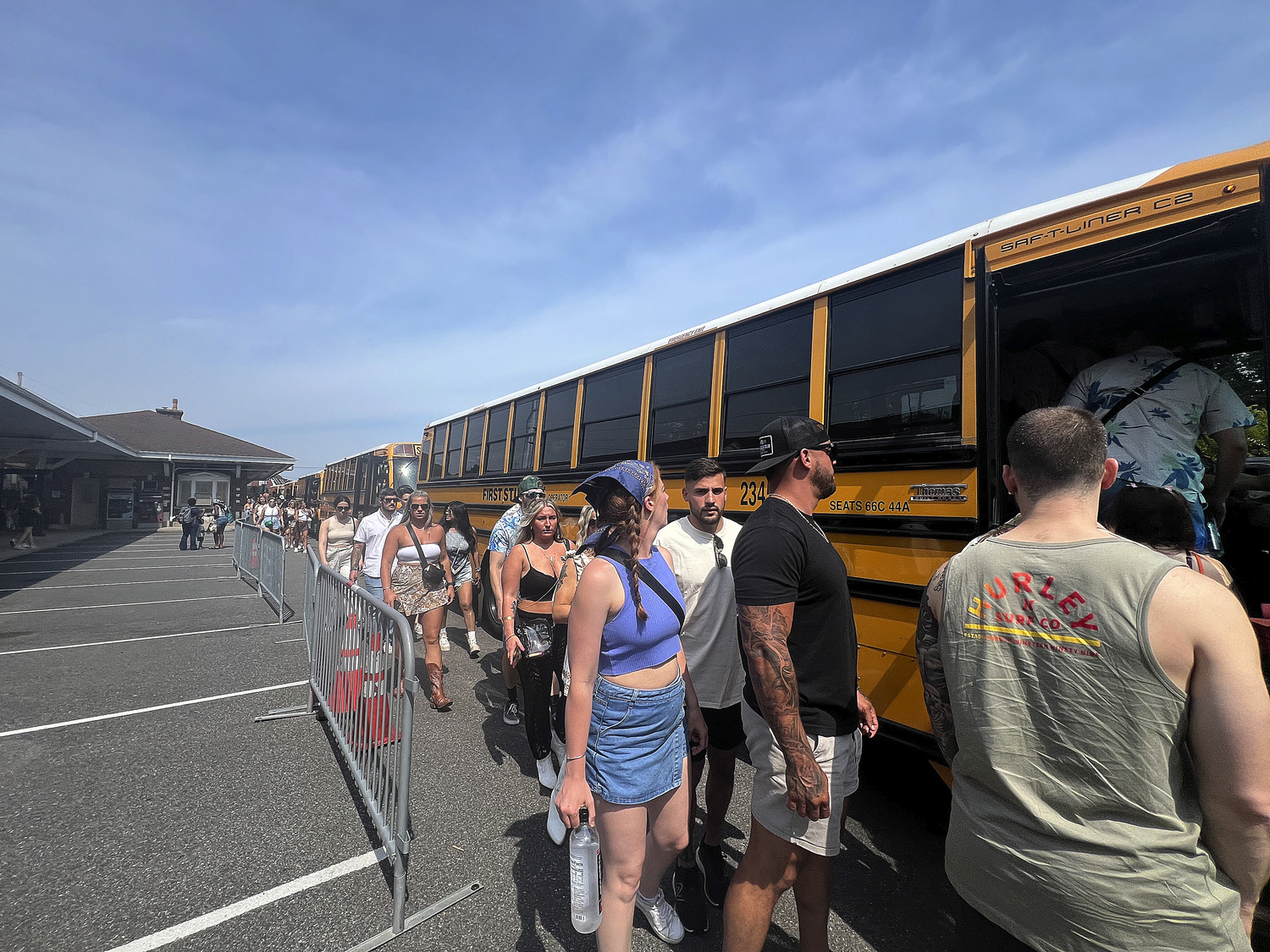
Palm Tree Festival-goers arrive at the Southampton Train Station on Saturday afternoon to line of shuttle buses to take them to the venue on Shinnecock Territory. DANA SHAW

The crowd at the Palm Tree Music Festival on Shinnecock Territory on Saturday. KURSZA

The crowd at the Palm Tree Music Festival on Shinnecock Territory on Saturday. KURSZA
Shinnecock Nation leaders said that the Palm Tree Music Festival held on Saturday, June 22, on the nation’s territory in Southampton went very smoothly, and they celebrated the event as a resounding success for the tribe and for the more than 10,000 music fans who attended.
“We’re sending out a huge thank you to the organizers of the Palm Tree Festival for selecting the Shinnecock Territory as their venue of choice,” the tribe’s Council of Trustees said in a message on its official website, accompanied by photos of dozens of tribe members who worked at or attended the festival. “It was an unforgettable experience, as crowds rocked to the electrifying beats of Kygo, Swedish House Mafia and more. The Shinnecock community truly had an amazing time and thank everyone for visiting our home and treating it with respect.”
The council’s vice chairman, Lance Gumbs, said the festival drew 10,358 people to the venue on the tribe’s Powwow grounds on the Shinnecock Neck territory, and that nearly without exception everyone was very well-behaved and the immense organizational effort by the festival’s leaders went off without a hitch.
Despite nearly a third of the expected shuttle buses that the organizers had arranged not showing up as planned, he said, the festival staff did an excellent job getting people from designated drop-off points and into the concert area.
The bulk of the attendees were dropped off at the festival site by cars, either ride shares or prearranged private transportation, rather than attendees driving or taking one of the shuttle buses and trains offered by the festival. Only about 200 people came in on the LIRR train that arrived in Southampton Village shortly after 2 p.m. on Saturday, and Gumbs said that none of the parking areas at the college or on Shinnecock was completely filled.
“Everything went really excellent — it was an overwhelming success,” Gumbs said. “There were a few glitches, sure, but overall it was a major success. There was not one fight — 10,300 people and not one fight. I can’t say enough about how the patrons treated our community.”
The festival had shifted to the Shinnecock site less than a month ago after the Federal Aviation Administration rejected an application to hold it at Gabreski Airport in Westhampton, where it had been held the past three years.
Municipal agencies had worried that the harried change in venues and the lack of some planning steps normally required for such a large event posed safety and logistical concerns and would cause traffic tie-ups for the surrounding community.
State Police, the only police agency with authority on tribal territory, sent 100 troopers from around the state to augment the more than 200 private security personnel the festival had on site.
Police detoured traffic off Hill Street and Montauk Highway around the festival site, and while the shortage of shuttle buses meant it took longer to get some of the festival goers into the venue than expected, ancillary delays on local roads did not materialize.
Gumbs said the event was a “tremendous boost” to the tribe economically, both from the payment by the festival for use of the territory — which he declined to enumerate — and for the jobs provided to tribal members who worked at the festival site.
He said he thought the fees charged to the festival by local municipalities for reimbursement for emergency services by police and ambulance personnel were far too high, likening them to extortion.
But he said the tribe hopes the festival will return next year and that it proves the tribe can play host to such large events by outside groups much as it does it’s annual Labor Day weekend Powwow.
“I think everyone was underestimating the capabilities of the nation,” he said. “It showed the outside public that we can have an event like this and showed our tribal members that is a possibility. So we are looking for other opportunities to come our way.”


 Michael Wright on Jun 26, 2024