


 5 Photos

A Brdgehampton garden designed by Hal Goldberg. DANA SHAW


Hal Goldberg in a Bridgehampton that he designed. DANA SHAW
One week before a ban on plastic grocery bags will go into effect in Southampton Town, businesses and shoppers are preparing for the new reality.
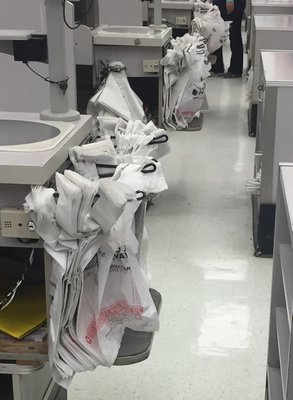
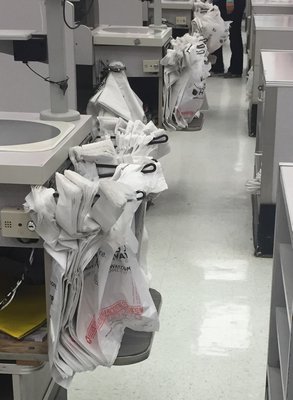
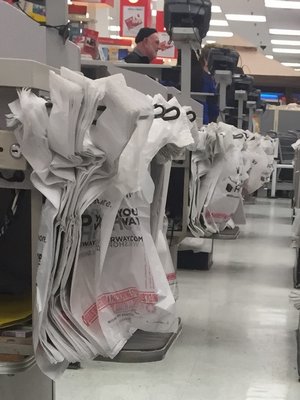
At large grocers and retailers, cases of paper and reusable bags are stacked in storerooms, ready to replace skeins of thin plastic sleeves that will be contraband as of next Wednesday, April 22, when the ban adopted by Southampton Town takes effect—appropriately, on Earth Day. East Hampton Town has adopted a similar ban, which will go into effect five months after Earth Day, on September 22.
For the big companies, adjusting to the new rules has been a speed bump that is simply to be dealt with, and any added costs will be a faint blip in accounting ledgers. But for some smaller businesses, the cost and inconvenience of the change have been a serious headache.
“It’s a pain in the ass is what it is,” said Arthur Seekamp, owner of Brent’s General Store, a deli in Amagansett, which is looking ahead to the ban this fall. “It will slow our operation down. Reusable bags don’t apply to my business—we’re a grab-and-go kind of place. We probably go through a thousand bags a week. The plastic ones are 3 cents apiece, the paper is more. And the one thing I really need the plastic bags for is our big Styrofoam containers, for the larger dinners. They don’t fit in the paper bags.”
Though bunches of plastic bags still hang behind the checkout counters of Brent’s, Mr. Seekamp said he has already begrudgingly started the shift to paper bags for sales other than those large takeout meal orders.
At Kmart in Bridgehampton, plastic was still the order of the day, with shopping carts stacked full of the white bags streaming out the doors on Friday. But new paper bags, with cord handles and the Kmart logo emblazoned on them, were already stacked on shelves under checkout counters. A manager said she wasn’t authorized by the company’s corporate office to talk about the changeover.
The main target of the bag bans, supermarket operators, have likewise been tight-lipped about how the ban will impact their bottom lines.
A King Kullen spokesman declined to discuss the company’s approach to the bag ban, or what the company says the switch will cost in stocking more paper bags. The company, which has two stores in Southampton Town, publicly opposed the bans when they were proposed last fall.
The Waldbaum’s supermarkets in Southampton and East Hampton villages have been operating under the bans on plastic bags at those stores for more than three years. Shoppers must pay 5 cents for each paper bag they use, but get a 5-cent discount if they bring their own reusable bags. Reusable bags are available for purchase for 99 cents.
The company’s grocery store in Westhampton Beach Village will continue to be exempt from the ban because the village has not yet agreed to adopt its own ban on the bags, despite what town officials have said were pledges by village lawmakers to do so.
The only other large supermarket on the East End, Stop & Shop in Hampton Bays, has taken perhaps the most broadly based approach to the coming ban. Signs in the store have been announcing the options that customers will be offered after the ban goes into effect. Standard paper bags (which must be recyclable, according to the plastic bag ban legislation) will be available for free. A heavier plastic bag, thick enough to be considered reusable as many as 12 times and allowed by the ban legislation, will be available for purchase for 10 cents each, and larger, heavy-duty reusable bags will be for sale for 99 cents.
What had been intended to be an East End-wide ban has not materialized. Southampton and East Hampton towns joined their largest villages, which enacted bans on the bags in 2011 and 2012, in adopting the legislation in December. Quogue Village has adopted a ban and Sag Harbor Village was expected to do so on Tuesday night. Westhampton Beach Village has not adopted, or held a vote on, a ban, and Riverhead Town has not secured support for the ban either, on the back of Supervisor Sean Walter citing fears that it would spur lawsuits from the many “big-box” retailers that populate its Route 58 commercial properties.
While the stores in the bustling business districts of the two villages that have had bans in place for three years say there has been little or no impact on its commercial retailers or their customers, some patrons of stores about to be covered in the blanket ban say they are not happy with the idea.
“Don’t ban it,” exclaimed a shopper who asked to be identified only as Eileen, as she left the Bridgehampton King Kullen with a shopping cart carrying seven of the plastic bags that will be outlawed next week. “I reuse these bags over and over. I keep a little stash of them and I pull a couple out each day and use them for cat litter. I am so upset about this.”
Another woman leaving the nearby Kmart, who also declined to give her name, said she is irritated at having to buy paper bags at Waldbaum’s and hopes that the other grocers will not adopt a similar policy, though she said the rule has spurred her to carry her heavier-duty reusable bag when she goes grocery shopping. But, she added, she avoids going to Waldbaum’s on some occasions simply because of the bag policy.
“It really shouldn’t be such a problem really, but when you forget to bring your own bag it’s not right to have to buy paper bags,” she said. “I know they’re bad for the environment and they get caught in the trees, but it’s a hard thing to give up, you know?”


 on Apr 14, 2015