


 2 Photos
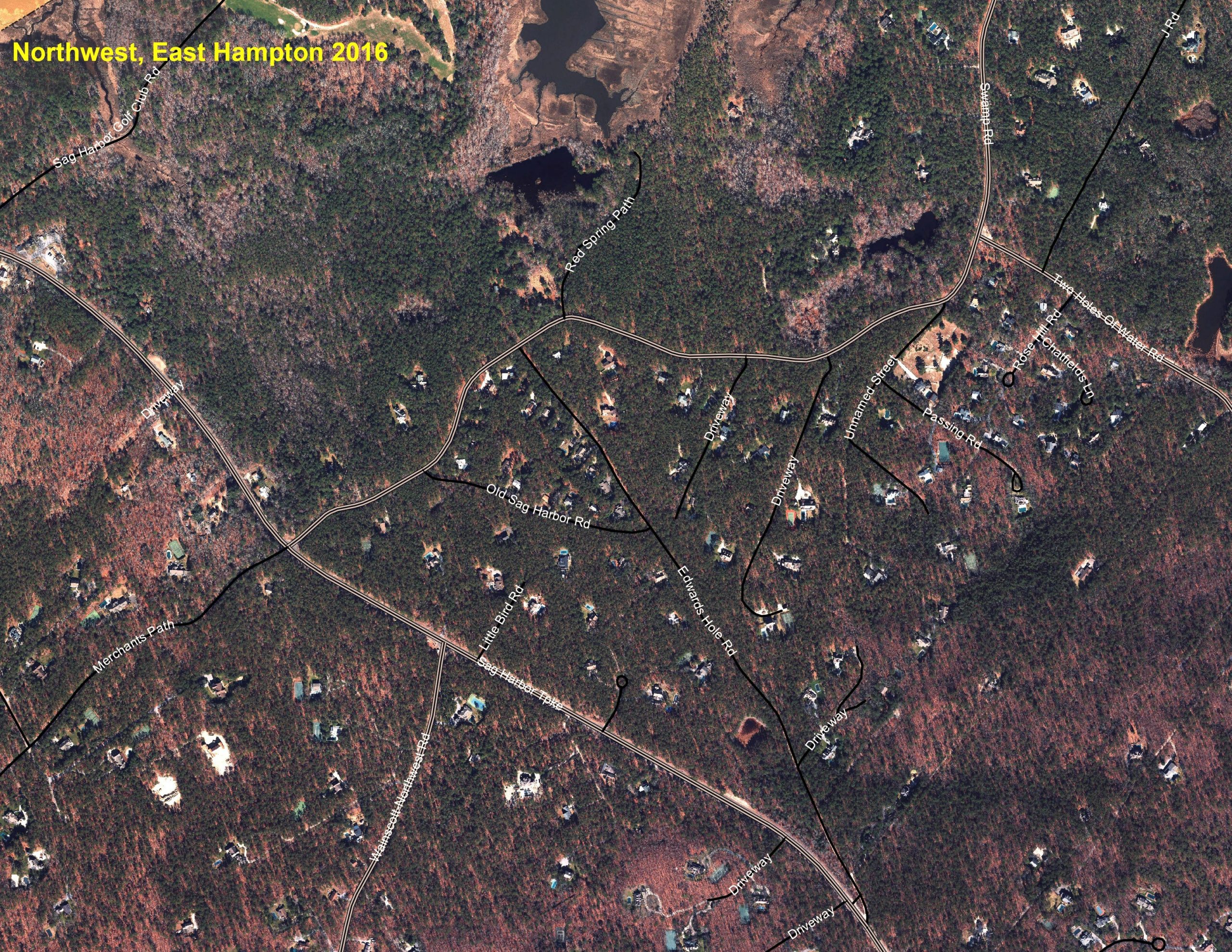
Aerial photos of the Northwest area of East Hampton show the extent of deforestation from the cutting of trees infested with pine beetles since 2017.
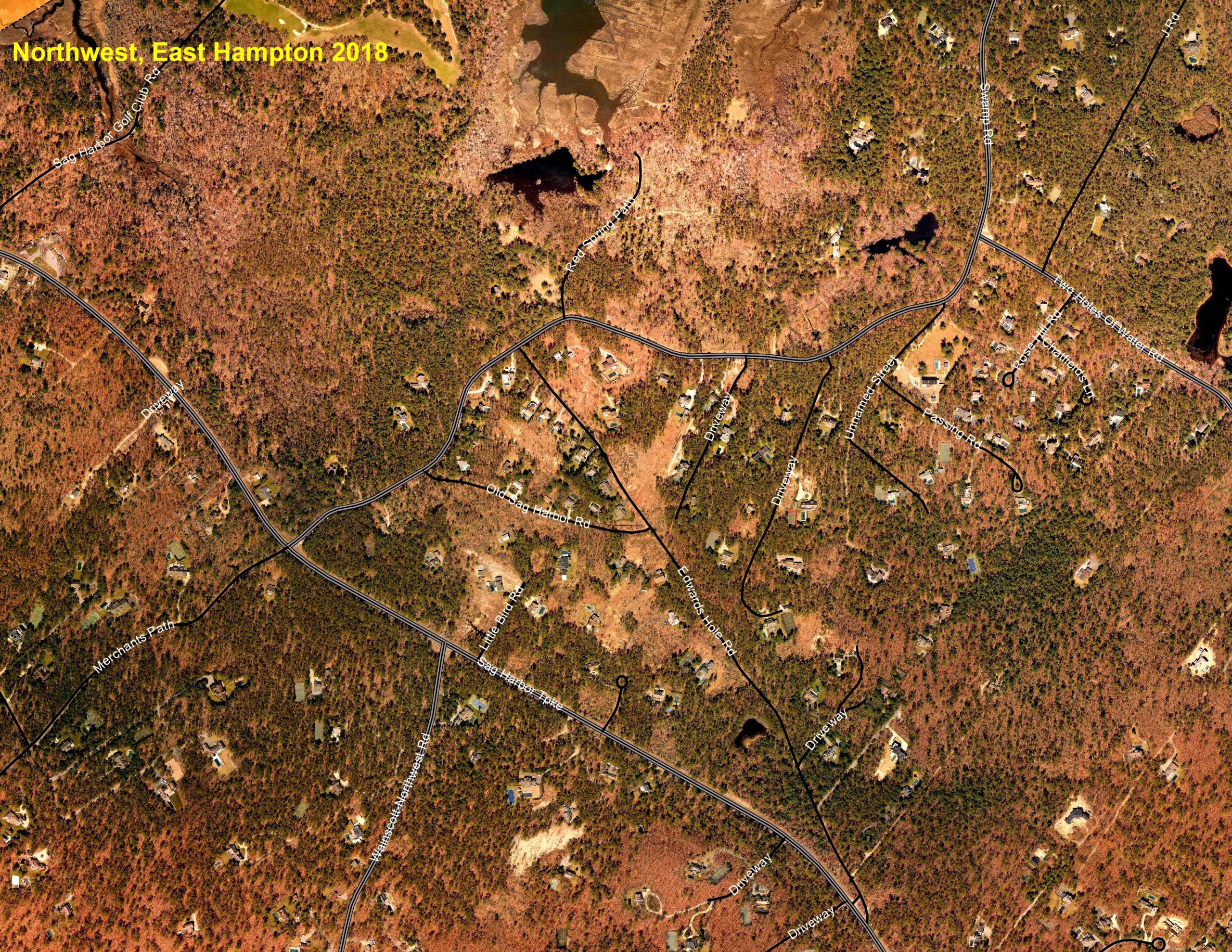
Aerial photos of the Northwest area of East Hampton show the extent of deforestation from the cutting of trees infested with pine beetles since 2017. Courtesy East Hampton Dept. of Land Management
While they are reluctant to say that the general threat to the South Fork’s woodlands from the Southern pine beetle has been stanched, land managers in East Hampton say that they are cautiously optimistic that the spread of the infestation in the town has been halted.
With more than 10,000 trees felled in two years, the battle to halt the spread of the voracious beetles has left scars on the Northwest landscape that will take decades to heal. But town land managers say that the effort appears to have paid off — preventing far more destruction by the beetles than if they had been allowed to spread.
“I wouldn’t say it is over — there is always the potential for them to come back — but we are finding a lot less damage,” said Andrew Drake, one of the Town Department of Land Management’s staff who battled the pine beetles in 2017 and 2018 with chainsaws and hardhats. “We did over a hundred inspections in 2019, and found a lot less damage. It was very spotty.”
The pine beetle infestation began in East Hampton in 2017, two years after the tiny bugs wreaked havoc in portions of Southampton Town.
That year, town staff and crews hired by the State Department of Environmental Conservation cut down more than 8,000 trees. The hard push at the outset paid dividends quickly, and the following year just 3,100 trees were cut down. Last year, town staff identified just 896 infested trees and cut down 593.
Pine beetles are a flying insect but are not able to fly very far, so simply cutting down a tree they have infested usually will put an end to the destruction by that particular swarm of beetles.
If an infested tree is left standing, however, it will likely soon die anyway and if not felled within a week or two of the infestation starting, the bugs could move to another tree.
Mr. Drake said that the infestations found last year were more isolated, in small clumps, and could be getting checked somewhat by happenstance as well as by the onslaught of chainsaws. Climatological conditions can slow the spread of the beetles, as can the mix of tree species.
In northern Northwest, white pines and oak trees become more prevalent than the pitch pine species that the pine beetles favor, so they do not spread as aggressively.
Mr. Drake said the his department will be vigilant again starting this spring for new signs of infestations as the bugs come out of their winter dormancy.
The town continues to offer pine beetle inspections on private properties if requested by a homeowner, free of charge, and the town will waive all dumping fees for disposing of felled trees.
“We always recommend cutting an infested tree,” Mr. Drake said this week. “Thing are happening much slower than they were. It’s not an emergency anymore. It’s a hopeful point, but we haven’t stopped looking.”


 Michael Wright on Feb 25, 2020