


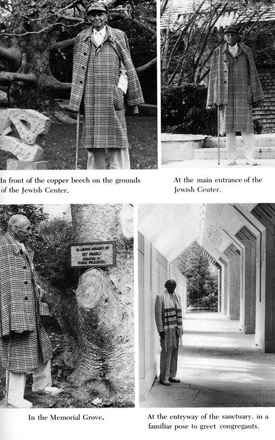
 4 Photos
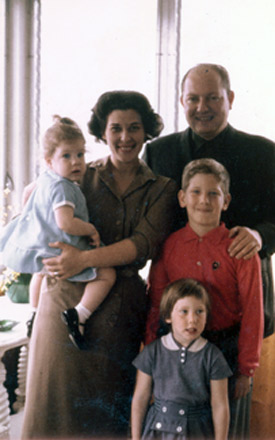
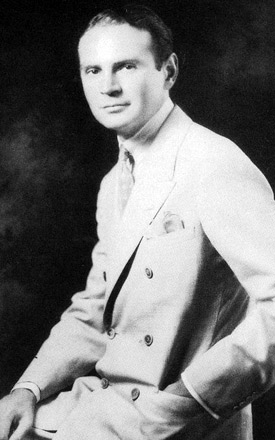
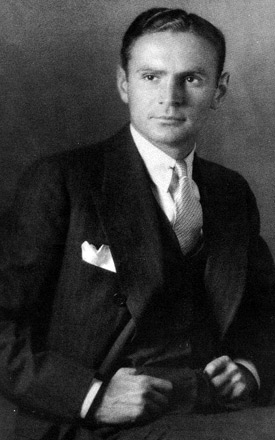
In 1959, when the Jewish Center of the Hamptons was founded, it had 23 individual members who met to worship in their homes. The entire Jewish community of East Hampton was not much bigger. This week, as the center kicks off its 50th anniversary summer jubilee, the congregation’s membership has grown to about 500 families, who meet to worship in a soaring building made of glass, cedar and limestone at the entrance to East Hampton village.
There is much to celebrate.
“It’s interesting, when you come to a special anniversary you do a lot of retrospective,” said Cantor Debra Stein, who has been the cantor at the center for 26 years. “For me it’s almost as though it’s come full circle and returned to a really warm, inviting atmosphere. Rabbi [Sheldon] Zimmerman is in his second year and he has just managed to re-create that community again where everybody is so watchful of each other and cares about each other and their Judaism and their search for knowledge,” she said.
In the 1950s, the East Hampton Jewish community consisted of perhaps 13 families, most of whom ran local businesses.
Bernie Zeldin, one of the Jewish Center’s founding members, moved to East Hampton from Nassau County in 1954, joining the handful of Jewish families already there, including Alan York, an optometrist, and Betty and Bradley Marmon, who owned White’s Pharmacy on Main Street. There was the Brill family, Oscar and Augusta, and their sons Robert, who owned a dry goods store, and Frank, who owned the five-and-dime store on Main Street. There was the Bohack “supermarket” on Pantigo Road, where Citarella is today, where Sy Karp, another founding member of the congregation, was the manager. Even the best pizza in the village was served at Ma Bergman’s on North Main Street.
Irving and Charlotte Markowitz, who is a cousin of Bernie Zeldin, moved out to East Hampton the following year from Brooklyn. “Everyone comes from Brooklyn,” Ms. Markowitz said. “It was a very long trip from Brooklyn, but it was a very exciting. We lived on Gay Lane in a little cottage. I was very pregnant with our second child. It was interesting coming from an 84-family apartment house to a tiny little cottage with guinea hens waking us up in the middle of the night.”
Mr. Markowitz joined Mr. Zeldin in starting an accounting firm that grew and split and merged many times with other firms, and still exists today, as Markowitz, Fenelon and Bank.
This small community worshipped at the Temple Adas Israel in Sag Harbor, the oldest synagogue on Long Island.
“But we were anxious to have a temple in East Hampton,” said Ms. Markowitz, in an interview from her home in North Palm Beach Gardens, Florida. “Many of us went to the Sag Harbor temple and we wanted something in our area rather than having to travel to Sag Harbor. The thing was that we wanted our kids to have a better education than what Sag Harbor was offering.”
“The facilities were not adequate for our kids, and we had a lot of kids starting to grow in East Hampton,” added Mr. Markowitz.
Some members of East Hampton’s original Jewish community, like Joan Brill of the now disbanded Brill-Gaffney Trio, were opposed to the establishment of a new congregation, as they didn’t want to split apart the East End’s small Jewish community.
“I was not in favor of a temple in East Hampton because all my friends were in the Sag Harbor congregation,” Ms. Brill said. “I didn’t have the vision to know how it would grow once the Jewish Center of the Hamptons formed,” she said. But Ms. Brill said that nevertheless she was a key player in the founding of the center as she said she introduced Mr. Zeldin to philanthropist and developer Evan Frankel, who was becoming the Jewish Center’s benefactor and one of East Hampton’s largest landowners.
In the meantime, the small East Hampton group met in their homes to worship and also obtained permission from the First Presbyterian Church to use its session house for Friday night services. Mr. Markowitz and Mr. Zeldin had a regular pinochle game in East Hampton and during games with Danny Duberman and Jack Karp, they often discussed the need for a synagogue with its own religious school.
Soon, those four men and several others took out a loan and bought two acres on the Montauk Highway where they planned to build a synagogue. “But Evan Frankel said ‘if we’re going to build a temple it needs to be in a more prominent place,’” Mr. Markowitz recalled. So he bought the Borden estate at 44 Woods Lane, right at the entrance to the village and gave the congregation the deed. Jacob Kaplan matched Mr. Frankel’s gift with a cash endowment.
“There was a group that stayed in Sag Harbor,” Ms. Brill said, “and did not become active in East Hampton. But then we got a message saying ‘Would you please come and join East Hampton?’ and they couldn’t survive if we didn’t come over, so we did.” The Jewish Center of the Hamptons was born.
Mr. Markowitz and Mr. Zeldin both recalled their early years in East Hampton as wonderful. “East Hampton was a very tolerant town,” Mr. Markowitz said. “It was a place that my kids grew up and where I established myself. And I never compromised on my religion or my politics. Now, Southampton was an entirely different town, much colder than East Hampton.”
“I had no difficulties whatsoever,” Mr. Zeldin said. “I didn’t find any overt anti-Semitism. Everyone was very nice to me.”
Yet there were no Jewish members accepted by the Maidstone Club or the Devon Yacht Club. In the book “Our Crowd, The Great Jewish Families of New York,” author Stephen Birmingham wrote that in order to be accepted by the Maidstone Club, one prominent Jewish New York family “changed their name, applied to the Maidstone, and were taken in.” Mrs. Brill said the Maidstone Club was an example of the anti-Semitism in those days. “Frankel was very annoyed that he had not been accepted there,” Ms. Brill recalled. “It was said that the Jewish Center of the Hamptons was Frankel’s answer to the Maidstone Club.”
In the old Borden estate house, the small congregation quickly converted the big living room to a chapel. Mr. Zeldin led the services for the first two years until the congregation found a rabbi. At the time, Rabbi Albert Friedlander was still a student in New York and would come out to do services every other weekend. He went on to become “a very erudite scholar in Jewish world,” Mr. Zeldin said. He became the head rabbi at the Westminster Synagogue in London, where he was in charge of all the Torahs recovered from the Holocaust.
The congregation and the religious school grew and in the early 1980s, Mr. Frankel asked architect Norman Jaffe to design a new building with a sanctuary. The building was completed and dedicated in 1989 and is today considered an architectural landmark.
Under the leadership of Rabbi Zimmerman, who came to the center two years ago, the 50th anniversary Jubilee celebrations will begin on Sunday, May 24, with an opening ceremony and continue through the summer with many special events, speakers, concerts and classes.
The main highlight of the summer’s celebration will be the writing and dedication of a new Torah. A “sofer,” or scribe, in Israel has already been writing the Torah and it will arrive at the center with only the first chapter lacking. A renowned sofer from New York, Neil Yerman, will work with the congregation to write, letter by letter, the beginning verses of “B’reisheit,” or Genesis.
Each letter of the Torah must be perfectly inscribed, so members will write hand on hand with Mr. Yerman, dipping a quill in ink to write each letter. In doing so, each congregant will have the opportunity to fulfill the 613th commandment, from Deuteronomy 31:19, “Now write this song for yourselves.”


