


 3 Photos
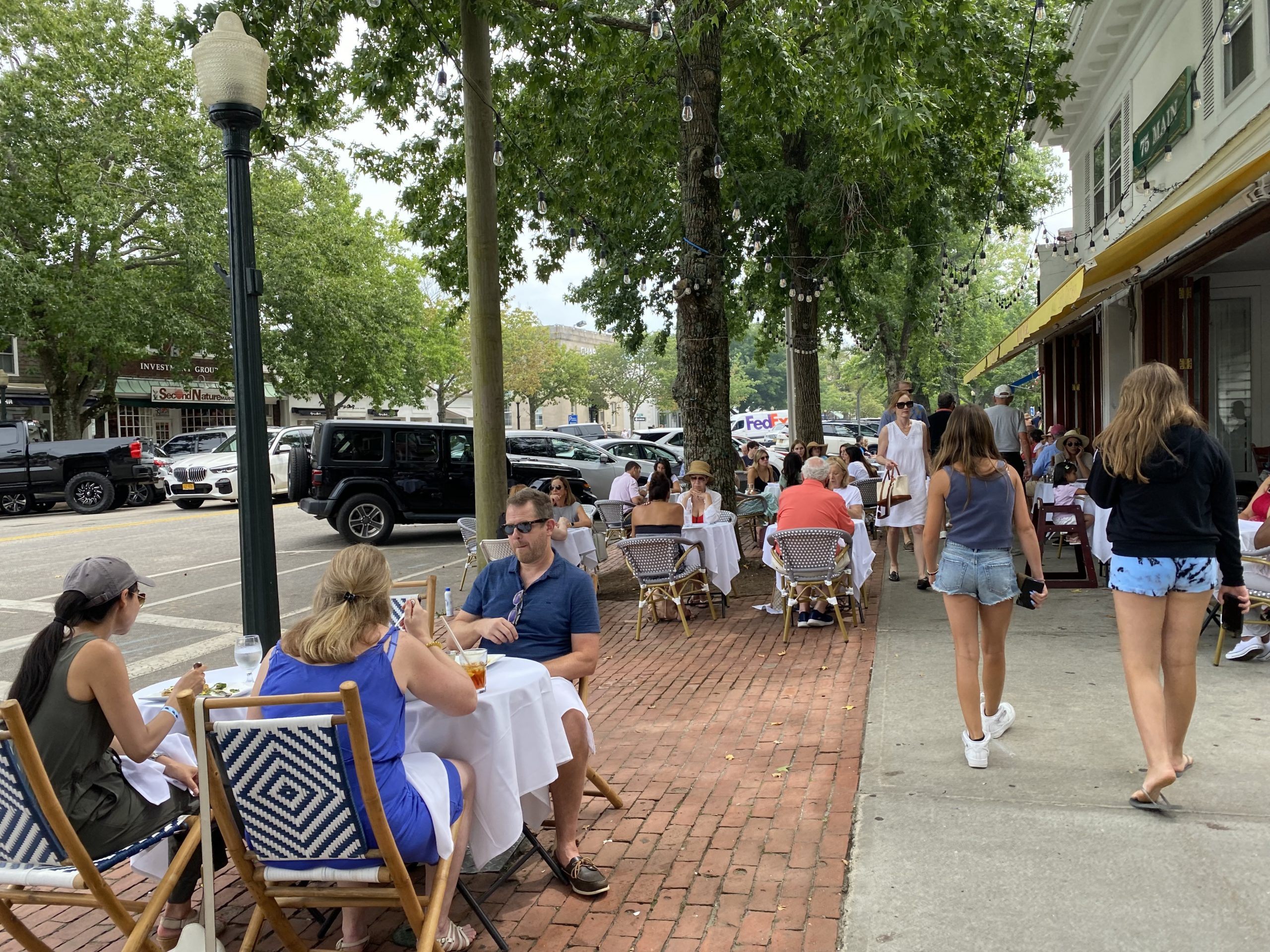
East Hampton and Southampton are making changes to rules to help restaurants continue using more outdoor spaces for dining like they were allowed to do under the pandemic's emergency rules.
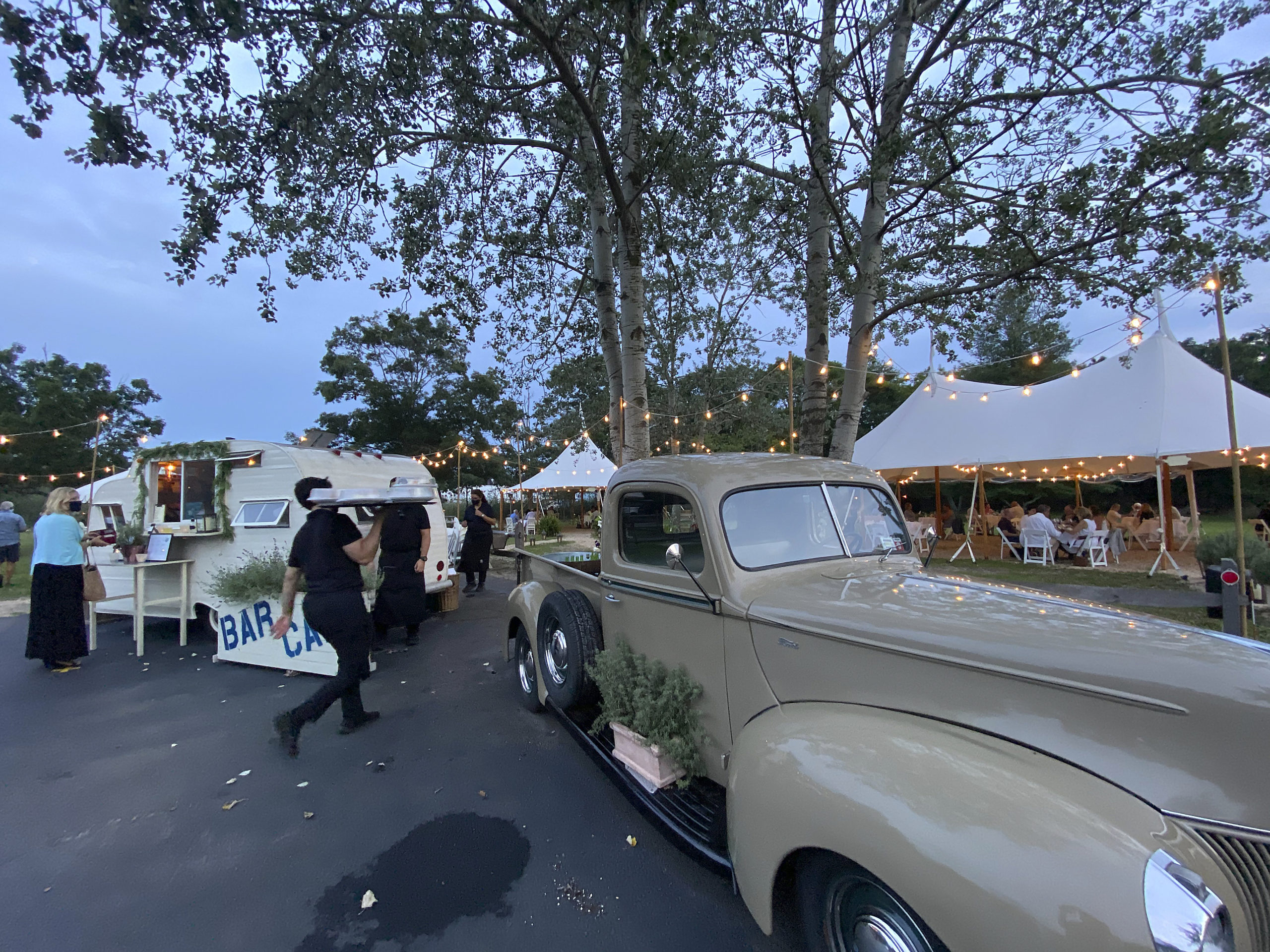
Southampton Town now allows restaurant owners to apply for site plan modification to make outdoor dining areas they created during the COVID-19 emergency permanent. DANA SHAW
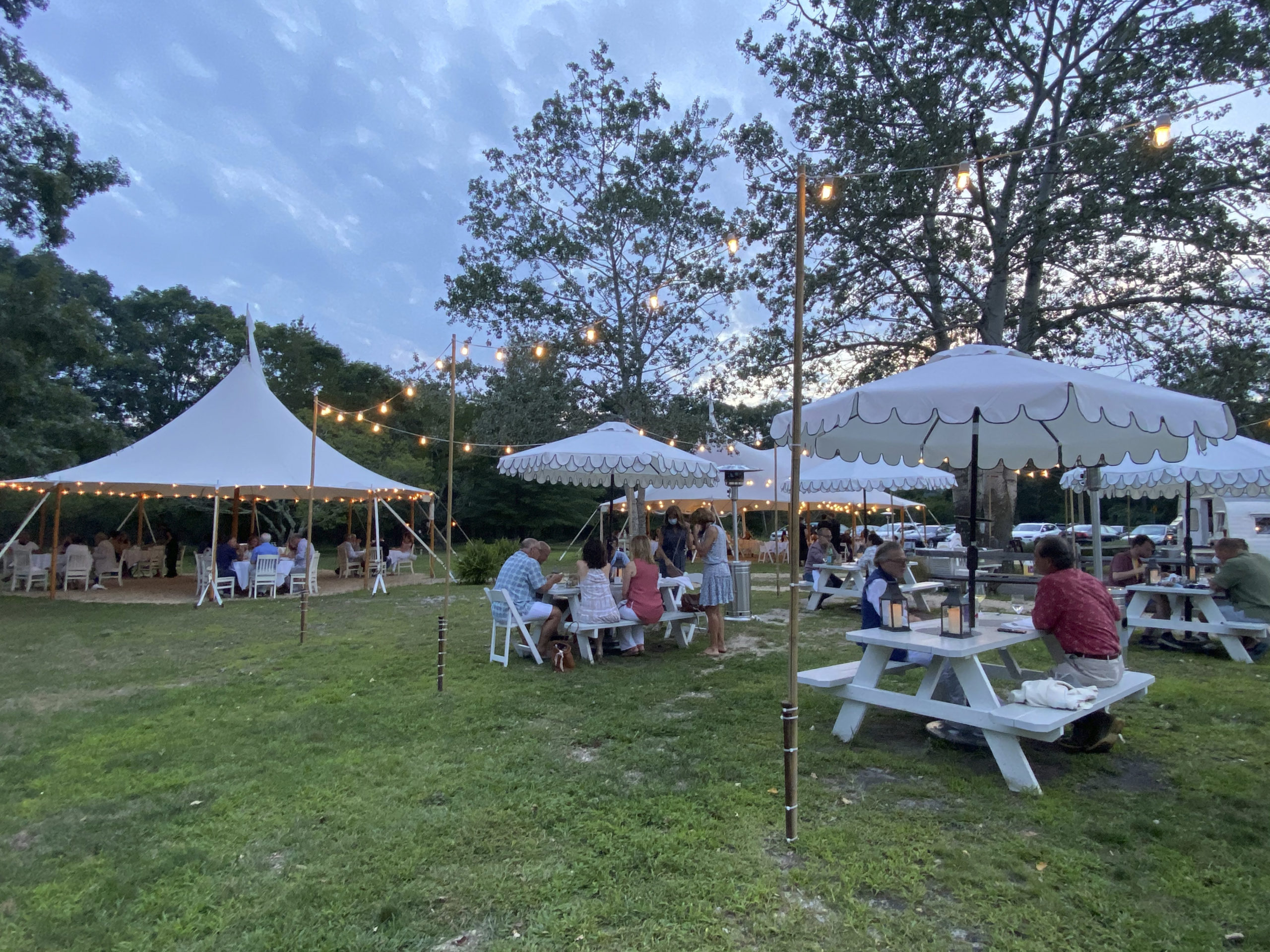
Southampton Town now allows restaurant owners to apply for site plan modification to make outdoor dining areas they created during the COVID-19 emergency permanent. DANA SHAW
East Hampton and Southampton town officials are trying to find ways to help restaurant owners who moved much of their dining capacity outdoors during the pandemic by allowing them to keep using expanded outdoor spaces, even as the emergency orders that freed them from old restrictions expire.
Southampton Town has given restaurants an avenue to make outdoor dining areas created during the pandemic permanent parts of their business plan and has removed some pre-pandemic limitations on heating, lighting and umbrellas.
But restaurants that had relied on sidewalk spaces have been left out — unlike, for example, in East Hampton Village, where the government permanently extended the use of village sidewalks for dining tables last spring.
East Hampton Town officials this week introduced a draft proposal that would let most restaurants have all or most of their seating capacity outdoors, though it too must remain on a restaurant’s property or adjoining property with the proper permissions.
East Hampton’s proposal would allow restaurants in business districts to have up to 100 percent of their seating capacity outdoors, 70 percent if the business is in a residential zoning district. The current law limits just 30 percent of total allowed capacity — a limit imposed by the health department — to be outdoors.
Businesses would have to get a permit for the outdoor seating plan from the Planning Department, but would not have to submit a full site plan modification application, as Southampton Town businesses do. A separate but parallel permit would be needed for lighting.
“The idea was to try to make this relatively simple,” said Richard Whalen, an attorney who worked with the town and its Business Advisory Committee on drafting the new allowances.
Restaurants would not be allowed to increase their total seating capacity, but the logistics of the business means that the town will face a new hurdle for enforcing health and safety codes.
“It was made clear to us by the restaurant owners that the furniture you would use outside is not the same furniture that you would use inside — the raw logistics of moving back and forth just aren’t practical,” Planning Director Jeremy Samuelson said. “That adds an enforcement criteria here, because the temptation will be obvious on a beautiful July 4 weekend to do some business inside as much as you can and do some business outside as much as you can. So, as you consider this, that will be an issue that we need to deal with.”
The town is proposing to approach the new allowance as a pilot program at first before codifying it, allowing it to tinker with the rules. Just three restaurants in the entire town would not be eligible for adding to their current outdoor seating allowances, Samuelson said: Moby’s in Amagansett and Ruschmeyers and the Crow’s Nest in Montauk.
If limited by the permits, Supervisor Peter Van Scoyoc noted, any restaurant may go to the Planning Board and seek to modify their official site plan to permanently incorporate a new outdoor seating area.
That was the approach Southampton Town has embraced thus far, although Supervisor Jay Schneiderman said that the Town Board may be open to liberalizing the seating rules further in the future.
“I have always been a fan of outdoor dining and never understood why the towns were so restrictive of it,” said Schneiderman, who is also a former East Hampton Town supervisor and the owner of a Montauk motel with a restaurant space that contains almost entirely outdoor seating. “We want to work with restaurants to allow more outdoor dining — people enjoy the vitality it brings.”
The town has already eased rules that had limited the use of portable outdoor heaters and umbrellas for outdoor spaces, extended the outdoor dining allowance to year-round instead of just seasonal and has made site plan modification an option — although thus far only one business, Channing Daughters winery, has taken that route, according to Ryan Murphy, the town’s public safety administrator.
Murphy noted that the one situation the town has not taken steps to address is the use of public spaces by restaurants, like sidewalks. That has been less of an issue in the town than in the downtown village business districts. Only in Bridgehampton had sidewalks become a widespread outlet for expanding dining. Pierre’s, Almond, Bobby Van’s and Elia Trattoria had all taken advantage of the emergency allowance to push tables onto the sidewalks when indoor dining capacities were halved.
Now that pandemic safety protocols have been lifted, the town has lifted that special allowance as well. It had originally been set to expire last fall, but the delta surge and pleading by restaurant owners convinced town officials to extend it to the end of the year.
Murphy said that town planners are looking at how accommodations can be made for the restaurants left out.
Eric Lemonides, co-owner of Almond, which had more than doubled its outdoor seating capacity during the pandemic using a town right-of-way on the Ocean Road side of the building, said that the pandemic and the shift to having more seating outside and less inside had completely changed the way customers were comfortable dining that he sees as crucial for his and other businesses going forward.
“We still have customers who don’t want to eat inside at all — people have PTSD from this, and just because we don’t have mask mandates and people filling up hospitals doesn’t mean people are ready to sit in the middle of a crowd,” Lemonides said. “And having the outdoor seating allowed us to thin out the dining room and still make our money. And that used to be something only wealthy people got to experience at really expensive restaurants, where the check is going to be $400 or $500, and us moderate places have to pack everyone right on top of each other.
“Plus,” he added, “when people would sit outside and it’s quiet and there’s a deer in the field across the street, they’d just go, ‘Oh, yeah, this is why I moved here.’”


 Michael Wright on Mar 9, 2022