


 1 Photo
The attorneys for Amagansett homeowners who won a contempt of court claim against East Hampton Town have submitted a bill for more than $500,000 pertaining to the contempt case, which a judge has said the town must pay.
The attorneys for the Amagansett homeowners who successfully charged East Hampton Town officials with contempt of court over the enforcement of a court ruling that privatized the beach long known as “Truck Beach” have submitted bills totaling more than $570,000 for the legal fees for handling the adjudication of the contempt proceeding — which the judge in the case said the town must pay.
The work of attorneys from the New York City-based law firm Pillsbury Winthrop Shaw Pittman comprise the vast majority of the billing, at more than $537,000. The bills are for time and expenses the firm’s lead attorney on the case, James Catterson, said in an affidavit had accrued solely in relation to the request for a temporary restraining order in the wake of the February 2021 court ruling that declared the beach private, and the contempt charges filed by the homeowners claiming that town officials tried to sidestep the order to block access by vehicles to the beach.
The fees include billing of more than $1,285 per hour for Catterson himself and between $395 and $1,070 for the seven other attorneys that Catterson attests worked on the TRO and contempt matters, along with an extensive spreadsheet accounting for all of the time spent on the case — from emails between attorneys on the matter, which are billed at 0.3 of an hour, to hours of legal research.
In his affidavit, Catterson says that the hourly rates billed are reasonable and on par with what attorneys at other major law firms in the New York area charge, and for attorneys with similar bonafides and experience. Further, the case was a complex one that required reviewing extensive documents and exhibits.
“Here, the town flagrantly violated a lawful order of the Second Department and this court’s judgment and TRO,” Catterson wrote in his affidavit to the judge in the case, Justice Paul J. Baisley, who will have the power to deem the submitted billing as reasonable or not.
“Additionally, the matter went to a hearing that lasted three days, where seven witnesses testified across 440 pages of transcript and testimony and twenty-five exhibits were introduced. Discovery motion practice was necessitate because of the town’s intransigence related to discovery … Significant time and skill were required to address such violations.”
The other firm that worked on the case, Riverhead-based Esseks, Hefter, Angel, Di Talia & Pasca, billed just $32,685 for its work, at rates of $450 per hour for lead attorney Steven Angel, who handled most of the firm’s work, and between $350 and $400 per hour for four other attorneys who contributed.
Attorneys for the town have already filed objections to the fee claims from the homeowners’ attorneys, calling both the claims of time spent and the hourly rates charged by Catterson’s firm excessive, and the total fee claims “disproportionate to the results obtained.”
The town is also appealing the finding of contempt itself.
In the weeks before Memorial Day 2021 — about three months after the court ruling that declared the beach to be privately owned — East Hampton Town officials put a sign at the entrance to the beach east of Napeague Lane in Amagansett station that a court order had said the beach was accessible by 4x4 vehicles only for fishing-related purposes.
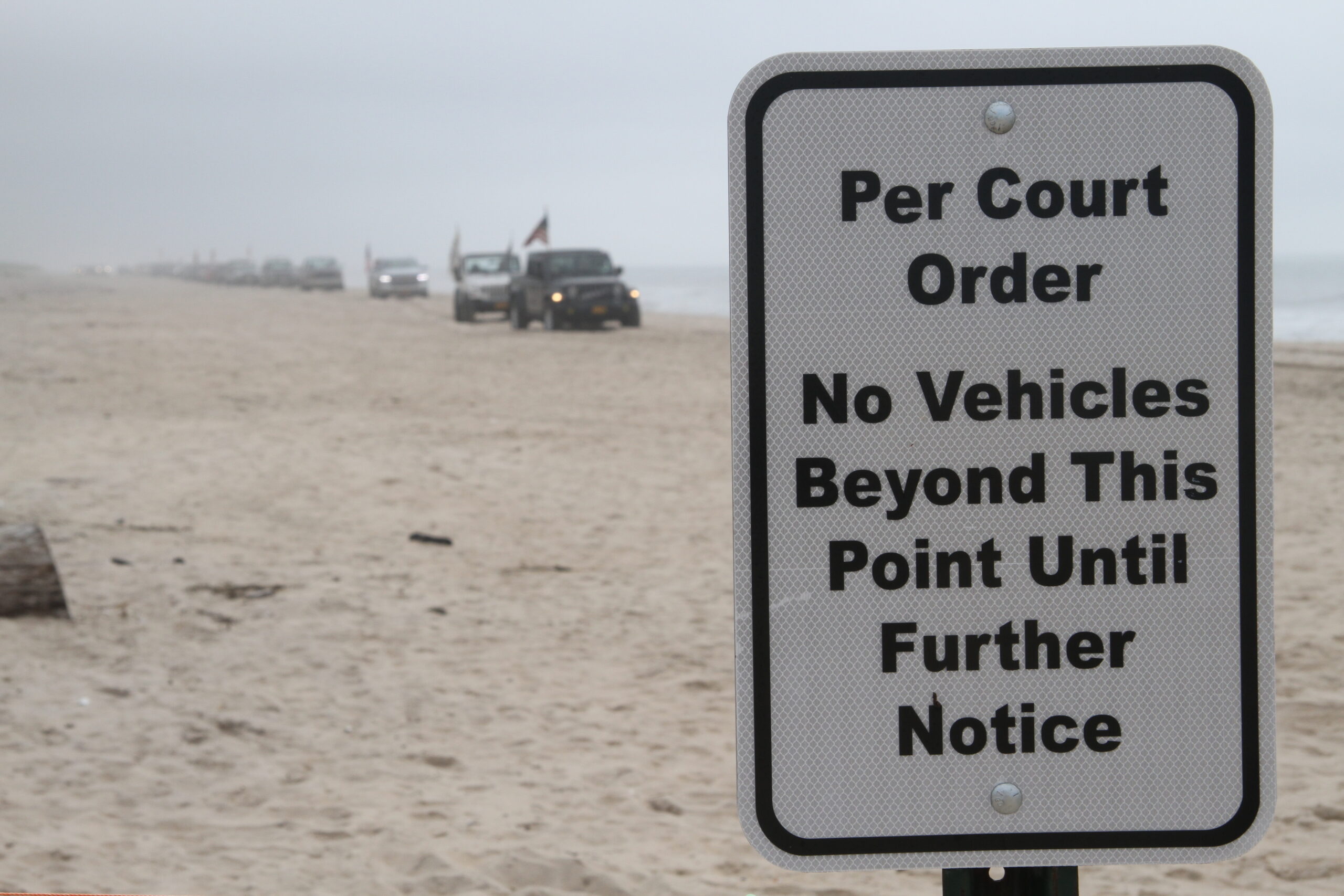
The homeowners quickly asked for and were granted a temporary restraining order against all vehicles using the beach. The town erected new signs saying no vehicles were allowed. But when commercial fishermen led two protest parades of 4x4s onto the beach that summer, Town Police did not stop them.
And after the homeowners filed contempt of court charges and demanded that town officials turn over text and email messages documenting their discussions of the access issues, and testify as to how they responded to the court orders, some — Supervisor Peter Van Scoyoc, in particular — said they did not recall, while others said they were never told to turn over documents to the court.
Last month, Baisley agreed with the plaintiffs’ claims, holding the Town Board and East Hampton Town Trustees in contempt of court and levied a $239,000 fine and whatever the plaintiffs’ legal costs had been for the proceedings surrounding the TRO and the contempt claims.
In a subsequent letter to the town’s attorneys, Catterson threatened to ask the court to hold the members of the two boards personally liable for the damages if the town did not abandon its efforts to contest the charges against it and the details of the original court ruling that were left unspecified.
Van Scoyoc said this week that he could not discuss the matter other than to say that the town has the right to audit the fee claims from the plaintiffs and question their reasonableness.
“And we are appealing the contempt finding and therefore the legal fees obligation,” he said. “So, ultimately, we hope not to have to pay the legal fees at all.”
An attorney for the 14 fishermen who led the protest vehicles last summer and were issued summonses but not halted by town police, said that the tactics employed by the homeowners of the neighborhoods between Napeague Lane and Shipwreck Drive, amounted to vindictiveness and greed.
“The attempt by these billionaire homeowners to steal a beach that belongs to the public … define greed,” he wrote in a statement sent to the media. “The threat to financially bankrupt public servants unless they bend to the will of the homeowners in their quest to steal a beach, is outright gluttony.”


 Michael Wright on Aug 10, 2022