


 8 Photos
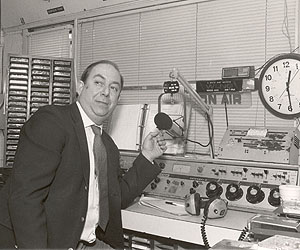
Paul Sidney in the WLNG on-air studio in 1989.
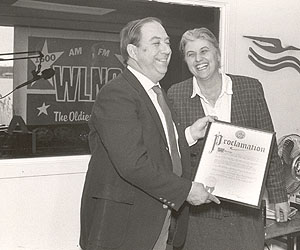
Paul Sidney receives a proclamation in 1989 from Southampton town Supervisor Mardythe DiPirro.
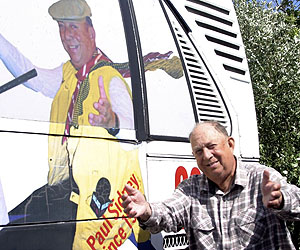
Paul Sidney in 2007.
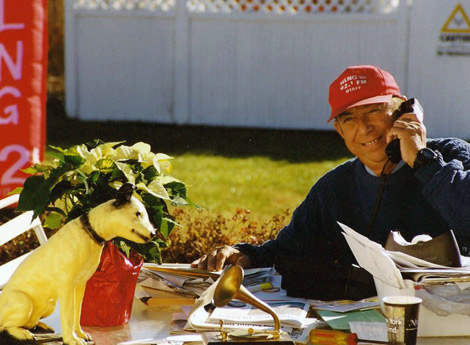
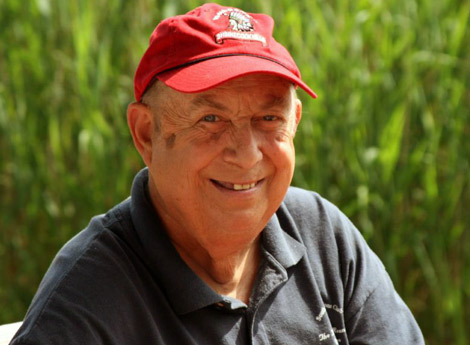
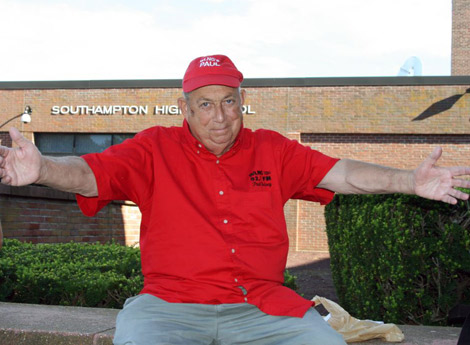
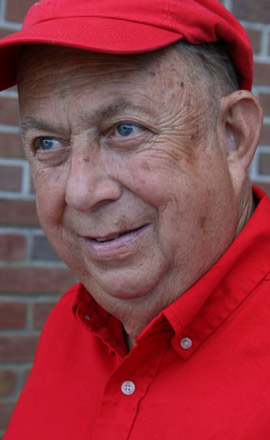
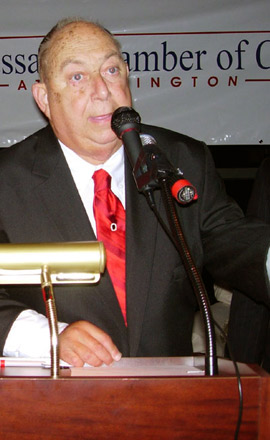
Paul Sidney, the president emeritus, general manager and ubiquitous on-air host of WLNG 92.1 FM radio in Sag Harbor, died on Wednesday night, April 1, after a long illness. He was 69.
Mr. Sidney had been an on-air voice at WLNG since the station began in 1963. He started as a part-time contributor while still working at WLIS in Connecticut before WLNG’s owner recruited him to be its first program manager in early 1964.
Since then, he had become the station’s most well-known voice and face, and an icon in local communities, particularly Sag Harbor, where he regularly took up an observation post on a sidewalk bench outside his apartment when not on the air.
“He had a way of reaching the people,” said Gary Sapian, Mr. Sidney’s on-air co-worker since 1964 and a co-owner of WLNG. Mr. Sapian said Mr. Sidney had been battling leukemia for four years. “His personality made everybody a part of what was going on. The listeners were more the stars than he was.”
Mr. Sidney’s unique voice, hurried speech and eagerness to talk to anyone passing his microphone, about anything, made him a fixture at numerous events on the East End in the last few decades, be they community block parties, antiques shows or grand openings of new retail stores. His remote broadcasts, from a mobile broadcasting booth set up in a converted public bus, were one of the signatures of the programming format Mr. Sidney developed and made famous at WLNG.
He also pioneered a number of broadcasting trends, including allowing business owners to read their own commercials on-air.
He was inducted into the New York State Broadcasters Association Hall of Fame in 2007.
Mr. Sapian said Mr. Sidney’s love of the radio and the local community will carry on with every broadcast of WLNG and the distinctive format he established there. “We’ve all been with Paul so long that we know what he wants,” Mr. Sapian said. “It’s his baby, still. We carry on.”
Growing up in Brooklyn, Mr. Sidney caught the broadcasting bug early in life. At the age of 8, he set up a small studio in his bedroom and by 11 had taken to hanging around DuMont TV studios, one of the first in the country, near his childhood home until the station operators gave him commercials to read, according a biography of Mr. Sidney provided by WLNG.
By the end of his teens, he was working full time as an on-air broadcaster for a radio station in Waterbury, Connecticut, and then for WLIS in Old Saybrook, Connecticut. It was from WLIS’s broadcast booths that Mr. Sidney’s voice floated across Long Island Sound and was heard by Fitzgerald Smith, WLNG’s founder, who recruited Mr. Sidney for the fledgling station. Mr. Sidney came to Sag Harbor to work for WLNG as its station manager in 1964, when the station was found only on the AM dial and had just 500 watts of broadcasting power.
With the limited reach of the station’s broadcast, Mr. Sidney tied the station’s programming to the immediate community and focused on the individuals who made up the fabric of Sag Harbor’s community.
“He took that station from nothing and built it into an East End institution,” State Assemblyman Fred W. Thiele Jr., a Sag Harbor native who remembered Mr. Sidney’s earliest local broadcast from his youth, said this week. “Sag Harbor has a very strong sense of community, and what Paul did played a very important part of building that community. For Sag Harbor, the radio station is part of our identity.”
As WLNG’s range increased, Mr. Sidney simply extended the formula he had applied to Sag Harbor. After acquiring the first of the station’s broadcasting buses in the 1970s, his remote broadcasts branched out across the East End. At grand openings or big sale days at local businesses, carnivals and fairs, or just from the street after a big blizzard, storm or, famously, the great fire that ravaged Sag Harbor’s Main Street in 1994, Mr. Sidney would wander his mobile booth’s perimeter, talking constantly and eagerly thrusting a microphone in front of any passerby who would pause for him. The broadcasting buses—there have now been several—all with Mr. Sidney’s face featured prominently on their exteriors, have become the hallmark of WLNG, across both forks of the East End.
“When he did those remotes, he was the show,” Mr. Sapian said.
The broadcast buses and Mr. Sidney’s wanderings figured prominently in most recollections of him by friends this week.
“He was all over the place,” Ann Buckhout, one of WLNG’s longtime employees and shareholders, said last week. “If you were an occasional listener to WLNG, he and the buses are probably what you know about us.”
His longtime girlfriend, Debbie Tuma, recalled a night when Mr. Sidney, who was private about his personal life, stayed at her Sag Harbor apartment more than 30 years ago.
“He kept saying, ‘You can’t tell anybody, you can’t tell anybody.’ He wouldn’t shut up about it,” Ms. Tuma recalled. “I get up the next morning and look out the window—and there is the bus, with his face on the side, taking up three blocks, picking him up to go to work.”
Mr. Sidney’s parents died many years ago; he was an only child. He is survived only by an elderly cousin, Sharon, of Brooklyn—and his adopted family at WLNG.
“His family was WLNG,” Ms. Tuma said. “He created a family.”
After being diagnosed with leukemia in 2005, Mr. Sidney pared back his on-air hours and relinquished some of his responsibilities in the station’s management. But he remained the guiding force behind the station’s programming. The WLNG website and, of course, its buses still feature his face.
A wake was held at Yardley and Pino Funeral Home in Sag Harbor last Friday, with burial following at Chevra Kodeta Cemetery. To allow the community additional time to mourn with Mr. Sidney’s WLNG family, an informal gathering was held, fittingly, at the WLNG studios in Sag Harbor on Sunday afternoon. More than 200 people attended.
“I never wanted this. I never asked for this,” Mr. Sidney said in an interview in 2007 after being inducted to the broadcasting Hall of Fame. “All I wanted to do was my job, and my job is my hobby. I love it.
“I’ve got the greatest thing. I love my job and serving people, and helping find that lost dog, and staying at the station all day and all night for storm coverage and the snowstorms.”


