


 2 Photos
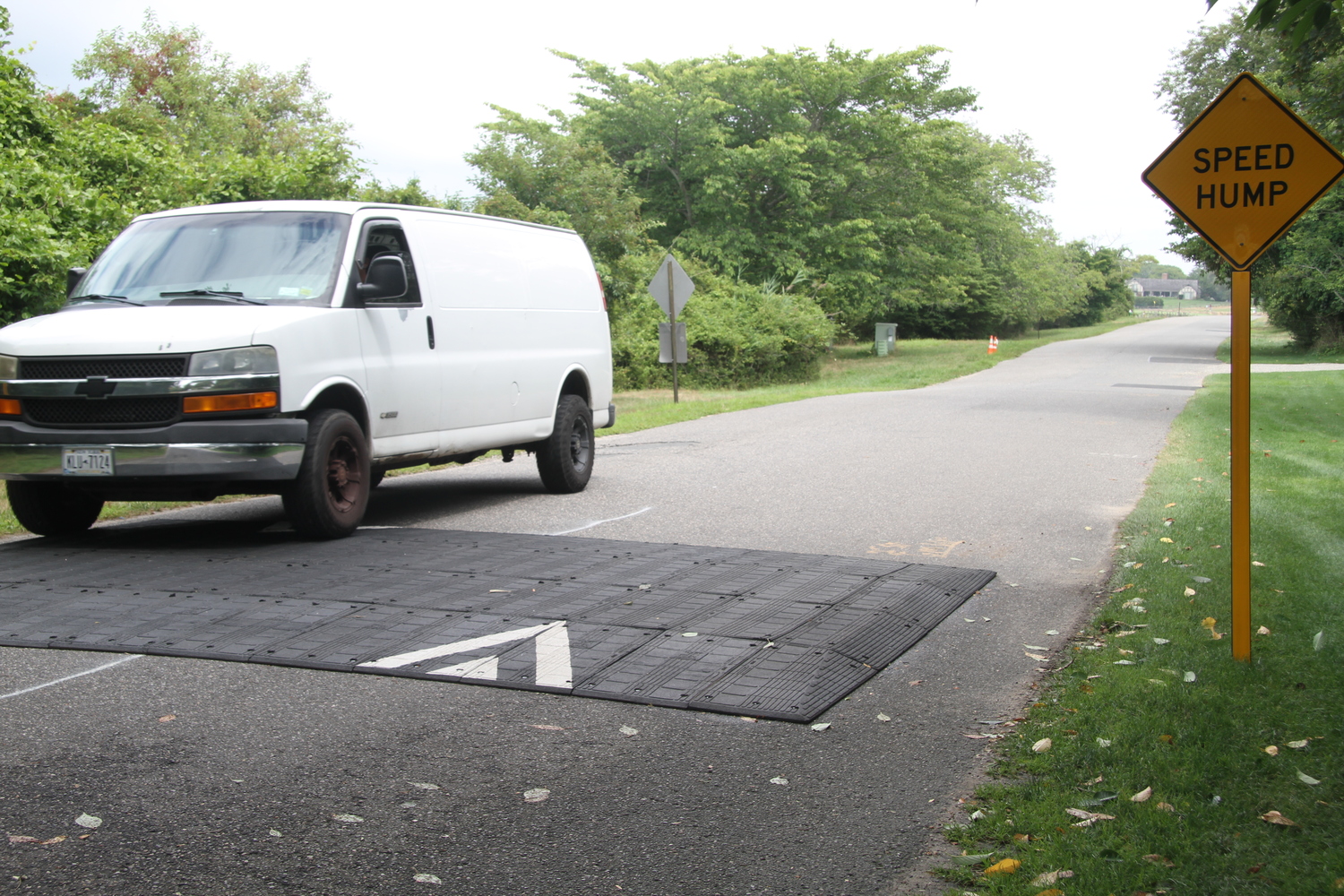
East Hampton Village installed three "speed humps" on Highway Behind the Pond as a pilot project testing the effectiveness of the speed deterrents, as it looks to reduce speeds and, ultimately, the use of village's residential roads as bypasses for Montauk Highway. MICHAEL WRIGHT
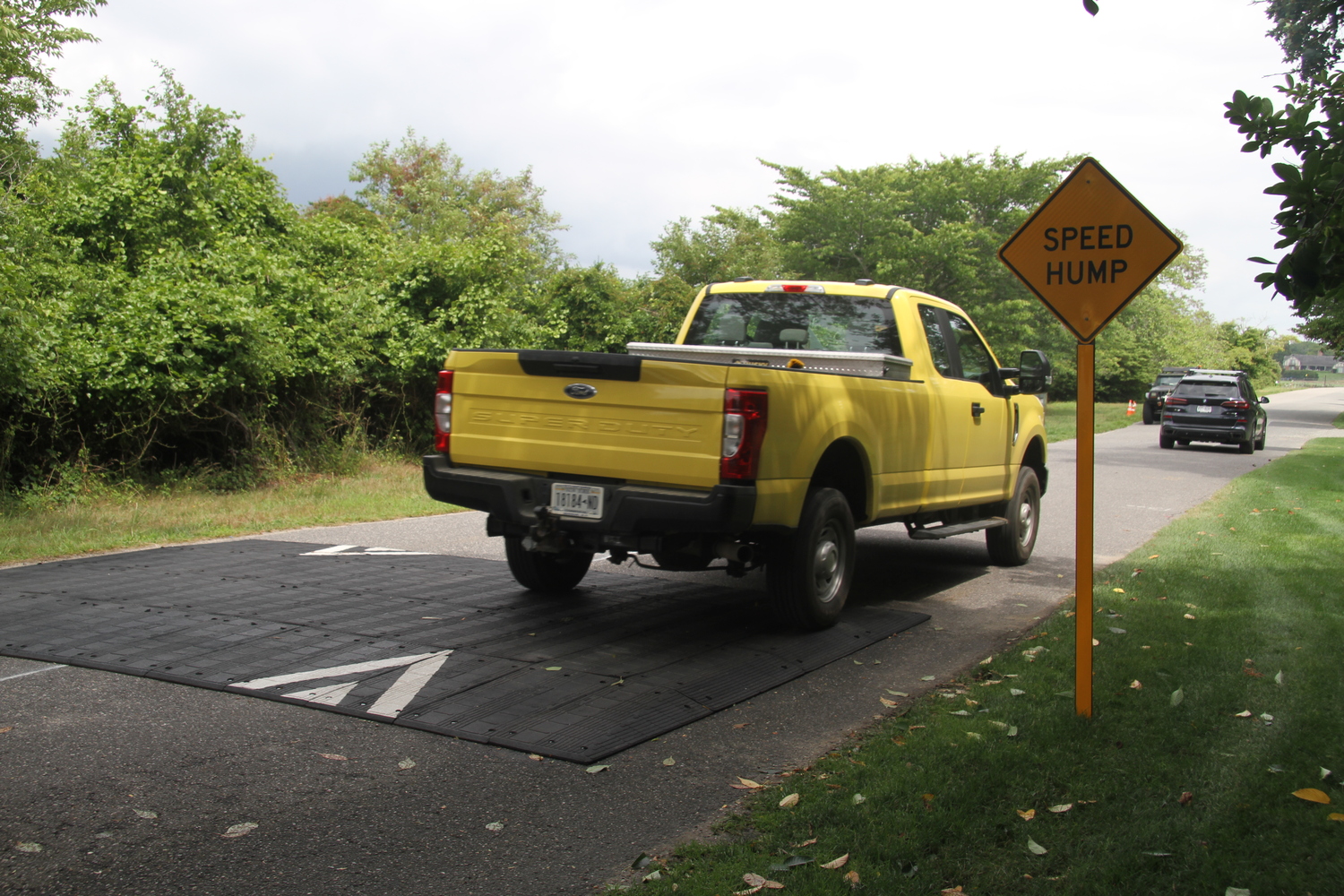
East Hampton Village installed three "speed humps" on Highway Behind the Pond as a pilot project testing the effectiveness of the speed deterrents, as it looks to reduce speeds and, ultimately, the use of village's residential roads as bypasses for Montauk Highway. MICHAEL WRIGHT
East Hampton Village has installed three temporary “speed humps” on the winding beach road Highway Behind the Pond as an experiment of the effectiveness of the costly speed deterrents — with an eye to a much broader adoption of a variety of speed deterrents that officials hope will drive speeding bypass traffic off back roads.
The humps, which are about 6 inches high and 6 feet wide, are made of high impact plastic and bolted to the street below — unlike the permanent paved ones that Sagaponack Village has employed on several of its roads.
Mayor Jerry Larsen said the pilot project, which cost the village about $20,000, could be expanded to other village back roads as the Village Board searches for ways to slow traffic on the village’s residential streets and discourage more motorists from using them as bypasses for Montauk Highway.
If the village is pleased with the effect the humps have on Highway Behind the Pond, which is a dead end road leading only to Wiborg Beach, the prefab humps or more permanent ones could be destined for busier bypass roads with chronic speeding problems, like Dunemere Lane and Further Lane, the mayor said.
And humps may not be all the village has in mind as it tries to steer traffic off its residential streets. The mayor said he would like to see the village explore a variety of other options, including using cameras to enforce traffic laws.
“What I would like to do is get state legislation passed that allows towns and villages to use speed enforcement cameras like they do in other places,” Larsen said. “That would really help us reduce speeds and that would affect how the traffic apps work.”
If humps in the roadways and cameras that sent out automatic speeding tickets to drivers force motorists to maintain the speed limit on back roads, the apps that track the speed at which thousands of phones are traveling to calculate the fastest routes through an area would stop recommending the back roads as speedier alternatives to keeping drivers on the main highway as they pass through the village.
While speed cameras are in use on some state roadways and counties can deploy red light cameras on Long Island, new state legislation would be needed to clear the way for digital summonses to be issued by local municipalities.
Larsen said that he has made the case to state Assemblyman Fred W. Thiele Jr. that villages and hamlets of the South Fork are in a particularly different situation than other villages on Long Island that have multiple major thoroughfares guiding traffic past their residential neighborhoods.
“It’s a very unique situation here,” Larsen said. “Other villages to the west don’t have the same problem of people using their residential streets as bypasses. They use the highways.”


 Michael Wright on Aug 9, 2023