


 2 Photos
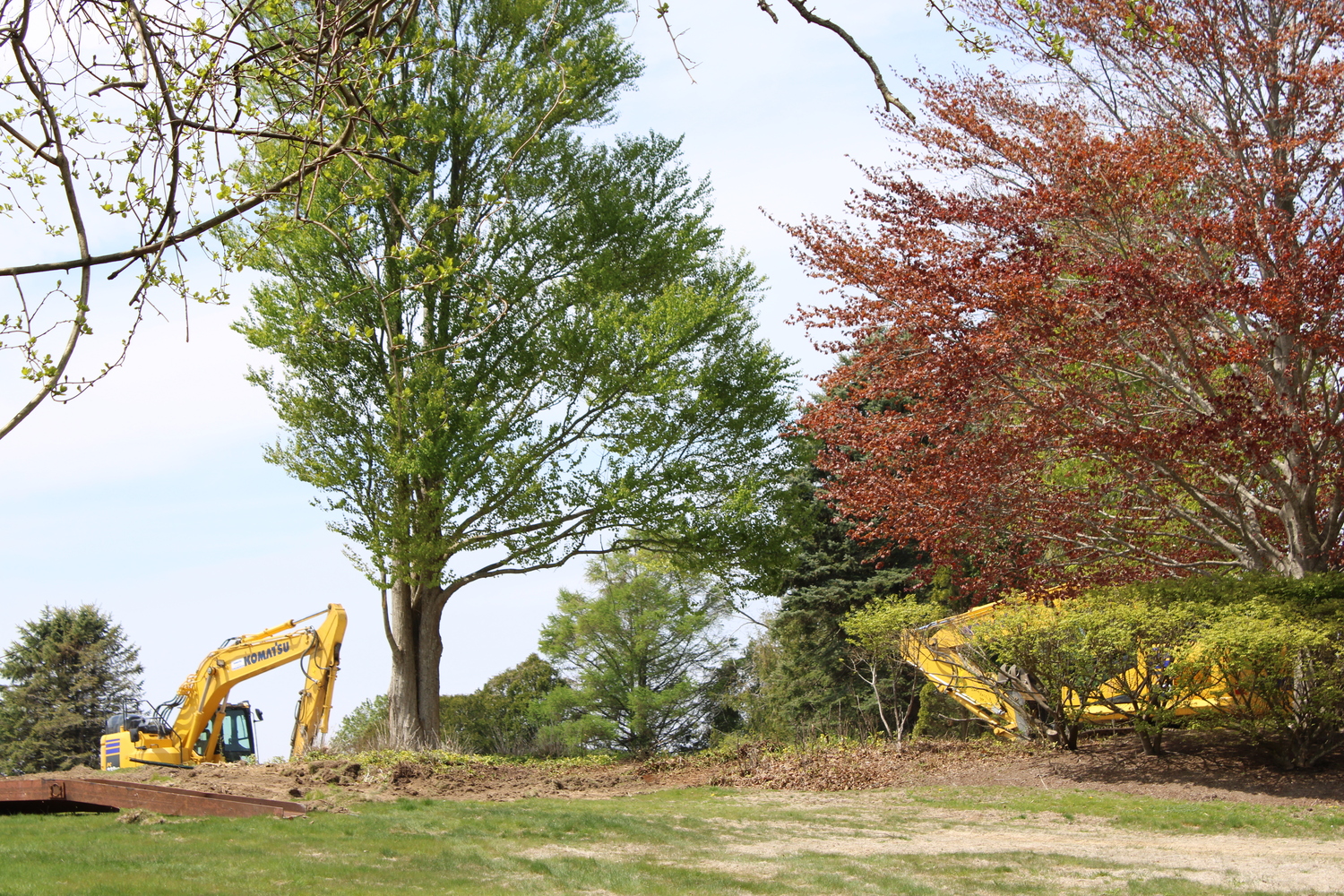
On Wainscott Hollow Road recently, construction crews demolished a house to make way for a much larger one. Twice, the East Hampton Town Architectural Review Board shot down an application for a controversial spec house. A Suffolk County Supreme Court judge vacated those decisions. JACK MOTZ
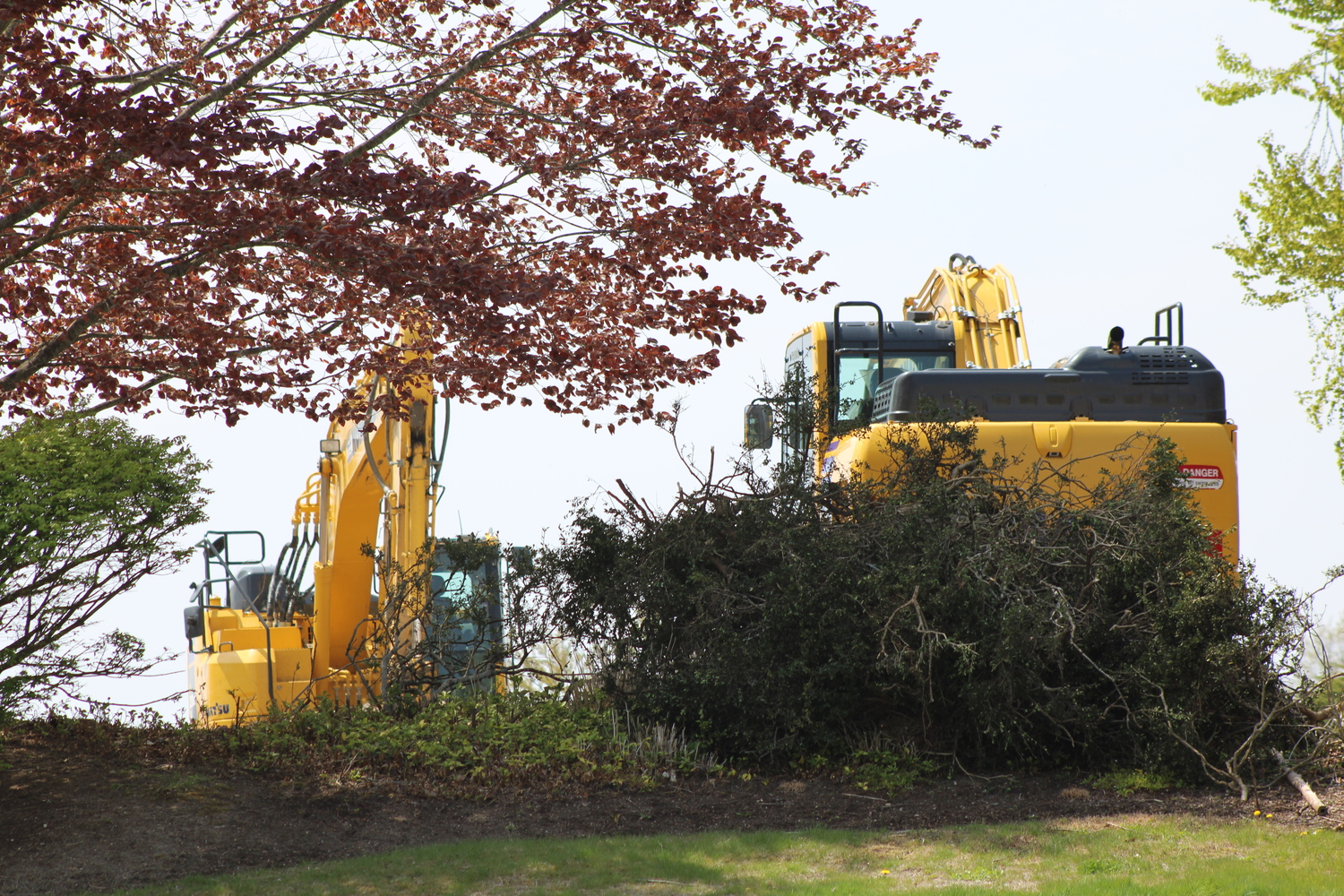
On Wainscott Hollow Road recently, construction crews demolished a house to make way for a much larger one. Twice, the East Hampton Town Architectural Review Board shot down an application for a controversial spec house. A Suffolk County Supreme Court judge vacated those decisions. JACK MOTZ
A battle between a Wainscott Hollow Road property owner and the East Hampton Town Architectural Review Board ended last week with the demolition of a house to make way for a controversial replacement.
At the core of the issue — which spawned two lawsuits — was a question of whether the new spec house would fit the historic character of the surrounding area. In the end, a Suffolk County Supreme Court judge sided against the town, deeming the property owner’s concessions sufficient.
Last May, the 1.4-acre property sold for $6.75 million, down from an original asking price of about $9 million, according to Out East, a company owned by Zillow. Two months later, the new owners listed the spec house for $24 million. Not long after, in September, it was taken off the market.
The property owners — a limited liability company — first brought the plan before the Architectural Review Board in July 2024, pitching a move to tear down an existing 5,000-square-foot house and put up a 7,374-square-foot, eight-bedroom alternative, which would include a 945-square-foot attached garage and a 480-square-foot open air pavilion.
Taken in total, the spec house would have been almost twice the size of the recently demolished house.
Twice, the ARB rejected the plan for the spec house, deeming it discordant with the character of the surrounding area — a determination allowed under the town’s zoning code, which permits the ARB discretion in ensuring new construction be harmonious with the existing buildings in an area.
However, in a petition to the Suffolk County Supreme Court, attorneys for the LLC argued that the board’s actions in rejecting the plan were “arbitrary,” “capricious” and “contrary to law.”
Last year, when the application first appeared, the board was “predisposed” to denying it, the plaintiff’s attorneys argued. At the time, the ARB deemed the project “ambitious,” due to the height, size and color of the new building.
During a meeting, the ARB vice chairman went on a “strange diatribe” about the house’s compliance with town code, the attorney argued, citing its inconsistency with the historic character of the hamlet, the petition went on, apparently referring to Vice Chairman Frank Guittard.
Then, the applicant agreed to make some alterations, such as changing the color from black to gray. Attorney Brian Matthews argued to the court that the changes were made in response to the board’s comments.
At another meeting in September, the ARB reiterated its responsibility to examine the application closely, and it discussed the house’s location at the “historic” center of Wainscott.
However, Matthews countered to the court that there is no “historic district” in Wainscott protected by town code.
The property, though, is located within an Agricultural Overlay District.
In advance of an ARB meeting in October, the applicant made more changes, such as reducing the height of the garage. At that meeting, Matthews said to the court that it “became clear” that the ARB was responding to “community opposition.”
Having apparently received several letters in opposition from the public, the board denied the application in November, sparking the first lawsuit.
Ultimately, in a quick decision in January, a Suffolk County Supreme Court judge determined that the application complied with town code, despite the ARB’s objections, and largely agreed with the LLC’s telling.
In his remarks, the judge said the new house would be surrounded by similarly large residential homes, listing three total, and although it would be in an agricultural overlay district, it would not impact “prime agricultural soils.”
Throughout the process, the judge said, the ARB — “rather than praising petitioner for adapting suggested changes” — elevated its scrutiny of the house.
Then, the judge said denial is allowed under town code “only” when the applicant fails to make reasonable changes. Here, the applicant listened to the board, the judge said, and the changes made were “generous.”
Concluding his remarks, the judge also noted the ARB received seven oppositional letters that were never entered into the record.
Then, in February, the litigation flared up again with a new case. In a court filing, Attorney Deborah Choron said the ARB denied an application offered as a settlement before the judge’s decision. Again, Choron said the denial was “arbitrary,” “capricious” and “contrary to law.”
Choron then cited the judge’s previous order — particularly his note about the ARB’s capacity to deny applications — and asserted the ARB “completely ignored” limitations on its power.
Essentially, Choron said, the board acted as if it had the ability to deny the application if her client “failed to capitulate to every issue raised by the board.”
However, she went on, “this is not the case.”
In her argument, Choron said the grounds for the ARB’s denial — that is, that the house wouldn’t fit the character of the community — were “fundamentally incorrect” and “legally and factually unsupportable,” noting her client ensured that the plan would have no impact on the surrounding agricultural lands.
In March, the attorneys requested an adjournment to work on a settlement agreement for the second lawsuit, ultimately suggesting that the second court case would be just as speedy.
However, by the end of April, the house was demolished and large yellow work trucks were onsite. There was no building permit clearly visible on the property. However, upon inquiry, a town spokesman provided a copy. It allowed for the clearance of the previous house and the construction of the new spec house.
In an Instagram reel on “demo day,” the Wainscott Heritage Project showed the trucks at work, looping in a string rendition of “Another One Bites the Dust.”


 Jack Motz on May 7, 2025