


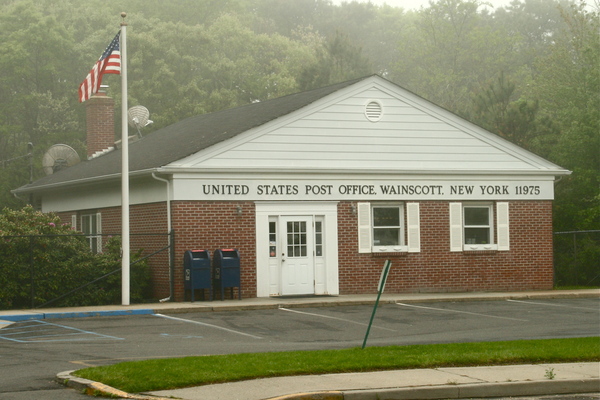
 1 Photo
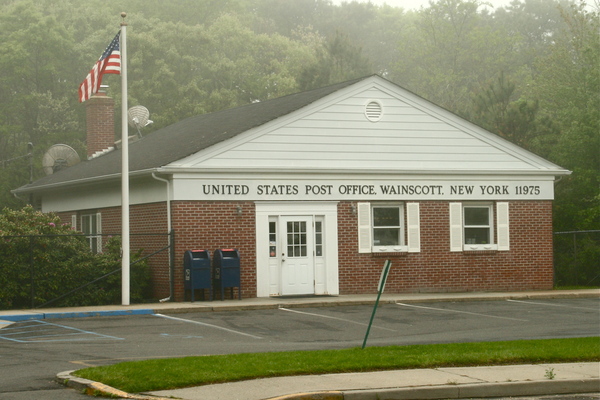
East Hampton businesspeople rallied around a push to rezone the Wainscott Post Office property, citing the case as an example of business-hampering zoning practices, during a hearing before the Town Board on Thursday.
The hearing escalated into a clash over larger themes, like the plight of local businesses and the need for the Town Board to adhere to the town’s Comprehensive Plan.
Pro-business activists used the hearing as a forum to lament what they described as a profusion of “pre-existing, non-conforming uses”—situations in which businesses that pre-date local zoning operate outside of their property’s current zoning. Zoning restrictions make it difficult to expand or improve stores and offices, they said.
“These operations often look like businesses left over from years ago, not the state-of-the-art commercial facilities one would expect to see in such a well-known and frequented community,” said Perry “Chip” Duryea, representing the Montauk Chamber of Commerce.
The corporation that owns the Wainscott Post Office property, Wainscott Pooh LLC, asked the Town Board last year to change the zoning of the 1-acre parcel from residential to central business. The U.S. Postal Service’s lease expires in 2019, and the change of zone would open the property up to a wider range of uses, should the owners choose to redevelop it.
The Town Board did not vote on the application Thursday evening.
In contrast to business advocates, former Councilwoman Debra Foster characterized the application as an assault on planning, saying its approval would collapse a “house of cards” and spur the downzoning of many similar residential properties.
“What you just heard is the beginning of the undoing of the Comprehensive Plan of 2005,” Ms. Foster said, adding that she heard many arguments similar to those of the business advocates when a previous Town Board took the radical step of abolishing the Planning Department in 1983. “It’s almost like déjà vu.”
Some Wainscott residents decried the proposal, saying they had concerns over traffic and feared an influx of applications for downzoning along Montauk Highway, the hamlet’s main corridor. The Planning Department has also opposed the rezoning in a memorandum to the Planning Board.
Laurie Wiltshire, a planner working as a consultant to the applicant, echoed the cries of business advocates, saying the 2005 Comprehensive Plan update upzoned 190 acres in town from commercial to residential, and added only 13 acres of industrial zoning that does not even allow for office or retail uses. Only 4 percent of the town’s land is zoned commercial and a large part of that is sand pits, she said.
The applicant’s attorney, Stuyvesant Wainwright, said his client was willing to file a covenant to restrict many of the uses that would open up if the zone change goes through, disallowing a fast food restaurant, gas station, nightclub, garage, car sales lot and other potential uses. If the zone change is denied, he said, the only feasible use of the lot, with a special permit, would be as a medical clinic or medical arts facility. The small size of the lot, he said, would not allow for many of the uses that are legal under the current zoning or would be under commercial zoning.
Joseph Giamboi, another attorney representing the applicant, raised the prospect that the Postal Service, facing massive deficits, could close the Wainscott Post Office after its lease expires. But Barbara Miller, a Wainscott resident, said she was assured by the Wainscott postmaster that the post office is doing well financially and unlikely to be marked for closure.


 Will James on May 23, 2011