


 15 Photos
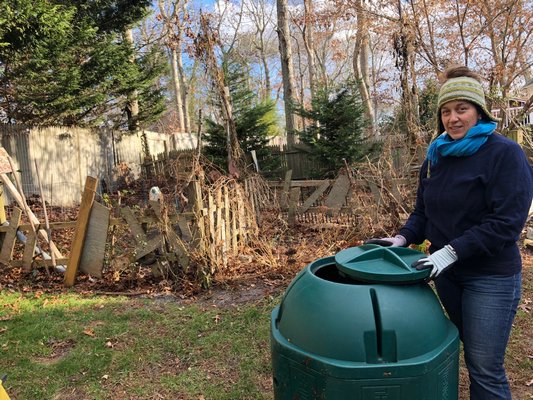
Carolyn Munaco of Hampton Bays is a diligent composter. Composting is a good way to reduce waste that is sent to landfills. CAILIN RILEY
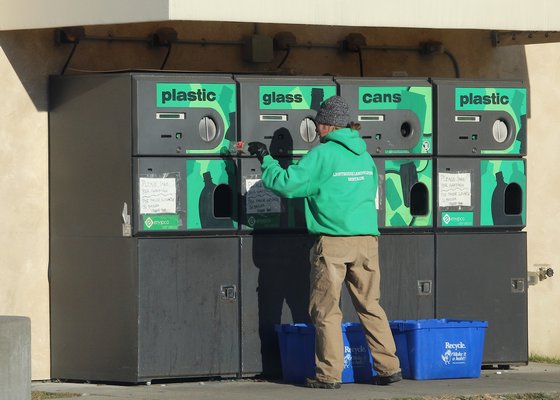
Returning recyclables for deposit in East Hampton. KYRIL BROMLEY
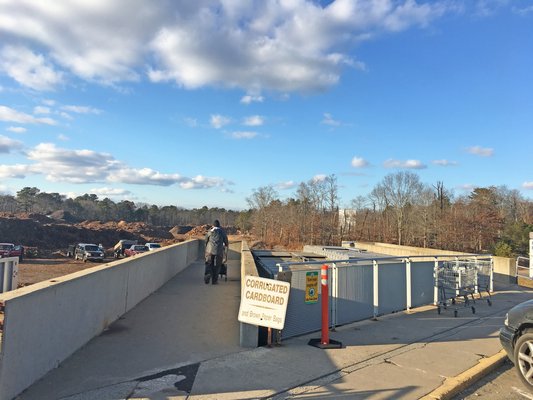
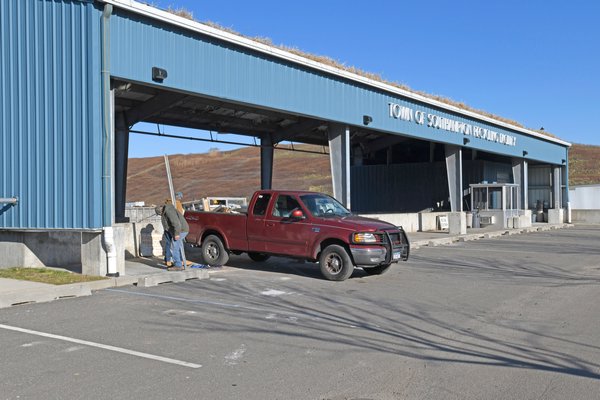
The Southampton Town transfer station in Hampton Bays. DANA SHAW

The Southampton Town transfer station in Hampton Bays. DANA SHAW

Reusable sandwich bags are a good alternative to thin plastic sandwich bags
which are never recyclable. CAILIN RILEY
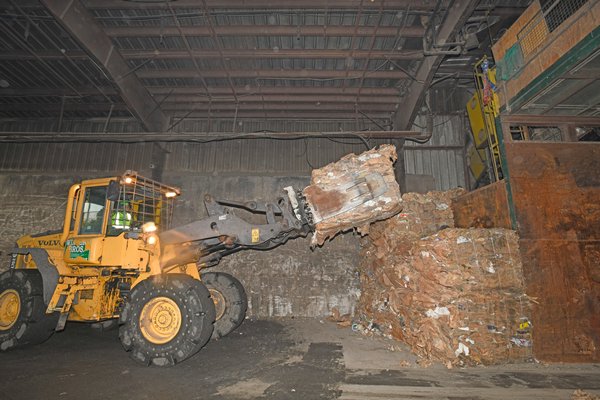
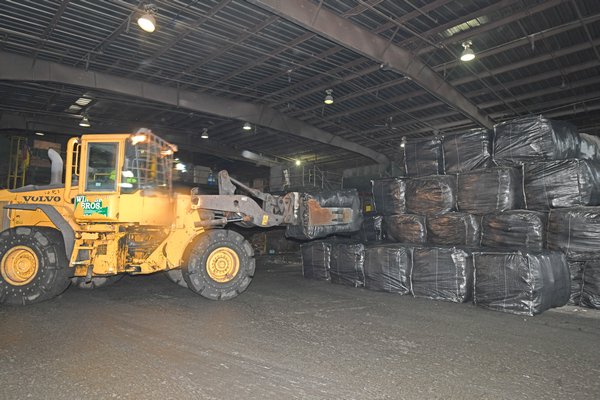
Baled solid waste at the Winters Brothers transfer station in Holtsville. Efforts to reduce waste need to accompany better recycling practices to help solve the problems the industry is currently facing. DANA SHAW

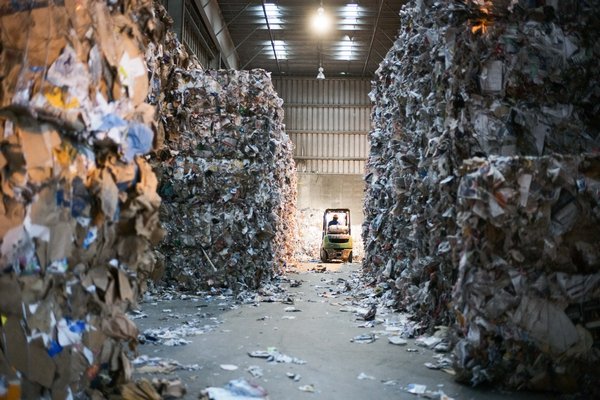
Bales of cardboard that were pulled from the waste stream at the Winters Brothers transfer station in Holtsville. Corrugated cardboard remains valuable because so many people have items delivered to their homes from online companies such as Amazon. DANA SHAW

Skip Norsic

owner of Emil Norsic and Son
and yard manager Chris Zorko at Norsic and Son in Southa


The men and women who work in the recycling industry describe it these days in bleak terms. From a business standpoint, recent market changes have made it much harder for recycling vendors or any entity that offers recycling services to make a profit.
At the same time, as man-made impacts on the environment continue to accelerate, people want to believe in recycling more than ever. Yet the unfortunate truth is that the rate at which Americans consume products and produce waste is outstripping society’s ability to responsibly re-use and re-purpose that waste. It’s largely being piled into landfills and forgotten.
The Press’s exploration of what happens to garbage and recyclable material in both Southampton and East Hampton towns has led to some grim discoveries. Many materials that people believe are recyclable simply aren’t, either because of changing market conditions caused by China’s recent decision to stop accepting most material, or because of other challenges companies face in processing and collecting it. Sometimes, it’s just due to a simple lack of understanding of what products are truly recyclable.
An even more depressing reality is that, compared to other parts of the country, the South Fork of Long Island isn’t faring so badly. Recycling vendors in many states are being forced to landfill stockpiled recyclables because they can’t find a market for them—at any price. Some towns and municipalities have greatly restricted the materials they will accept in their recycling programs, or, in extreme cases, have discontinued recycling programs altogether.
The way forward, according to stakeholders—from government officials, to garbage and recycling collectors, to processors and peddlers of recycled goods—is a combination of improving collection models and, perhaps more importantly, changing consumer habits.
Compare And Contrast
As reported in Part Two of this series, transfer stations in East Hampton and Southampton towns provide the best option for residents who want to ensure their recyclables are being recycled. Diligent separation of those materials, from the moment of collection, makes it attractive to recycling vendors like Great Northern Fibers, which still has strong relationships with China and, by and large, can still process and move the material.
Of course, a sizable part of the population of each town—the numbers suggest it’s a bigger number in Southampton than East Hampton—don’t take their recyclables to a town transfer station, and instead rely on private carting companies to haul it away from curbside. So the town facilities are currently underutilized.
Towns that have municipal curbside collection—the nearest ones are Brookhaven, Riverhead and Islip—make it easier for residents to recycle, offering separate pick-up of garbage and recyclables. Residents in most of those towns are required by law to participate in the municipal collection program.
In Brookhaven, single-family households are charged $360 per year on their property tax bill for the service. Paper and cardboard is picked up one week, co-mingled containers the next. Glass, which is heavy and difficult to recycle, is no longer collected.
Islip and Riverhead towns also add the collection fee onto property tax bills. In Islip, a single-family residence pays $489 per year; in Riverhead, the fee is $287. In all three towns, commercial entities and people living in condos, mobile homes or apartments cannot get municipal pick-up, and so must contract with a private carting company to take care of their garbage and recyclables.
Shelter Island and Southold do not have municipal pick-up and use the pay-as-you-throw model, charging residents for each town-issued bag of garbage they dump at a transfer station. In those towns, even trash that is picked up by private carters must be put in a town-issued bag. The idea is to encourage more recycling townwide, even for those who don’t self-haul.
The Roadblocks To Municipal Pick-Up
The different models in those towns beg the question: Could East Hampton and Southampton residents ever see municipal pick-up? And what would be the financial impact for the towns and their residents? And would it lead to the recovery of more recyclable materials?
According to officials in both towns, a switch to municipal pick-up is not likely, for several reasons.
Both Christine Fetten, the director of municipal public works for Southampton Town, and East Hampton Town Board member Sylvia Overby, who is the liaison to the town’s Solid Waste Advisory Committee, had similar thoughts on the matter. Municipal pick-up, they say, could take business away from local private carting companies, and they are not eager to do that.
The rural nature of the area also presents a problem. It can be difficult for carters to get down long private roads, and hauling the garbage to the curb is difficult for some of those households. The fact that the area has a seasonal population that would not require the service year-round also complicates matters.
And while the majority of residents don’t self-haul, those who do typically pay less than those who hire private carters. A move to municipal pick-up could require them to pay more, making the proposition politically unappealing for officials in those towns.
The municipal pick-up models used in the nearby towns of Brookhaven, Riverhead and Islip, put simply, do not reward residents who produce less garbage and recycle more, at least not in the way the transfer station model does. It makes it easier for them to recycle by offering curbside pick-up, but it doesn’t necessarily provide them an added incentive to do so.
“When you go to taxing districts, it doesn’t matter if you are a single person in a residential structure or a family of eight in a residential structure—as long as the assessment code is the same, you will spend equivalent amounts to dispose of waste,” Ms. Fetten explained. “The pay-as-you-throw program that the town operates allows for residents to pay for what they are actually disposing, and provides a financial incentive to recycle by taking those for free.”
Ms. Fetten added that Southampton Town looked into a pilot curbside pick-up program in 2014 for the Flanders/Riverside/Northampton area. She noted that prices came in similar to adjacent municipalities, but she said there was “local resistance” due to the impact it would have on local carting companies, and the concern that, in curbside taxing district programs, the price can potentially change drastically when contracts are up, because of factors like transportation and disposal costs.
Those are real concerns and roadblocks to generating political will for a switch to municipal pick-up. But Jim Bunchuck, the solid waste coordinator for the Town of Southold, pointed out that municipal pick-up has real, environmental advantages. A drive through any neighborhood, he pointed out, will reveal that as many as four different private companies have their rolling carts out at people’s curbs, meaning that multiple trucks are burning fuel on multiple days to collect garbage from that area.
It’s not exactly a model for reducing the carbon footprint.
Another Option
There are townwide pick-up models employed in other parts of the country that seem to offer the convenience of curbside pick-up along with the incentives to recycle that the “pay-as-you-throw” town bag systems provide.
Sag Harbor resident Chris Husband lived on the West Coast for several years and owned a company, Cleanscapes, that was the garbage hauler in a number of municipalities in and around Seattle, Washington. His job, as he described it, was to bid on contracts with municipalities.
“We would provide the collection service, the billing and the customer service, but it was the cities that would issue requests for proposal and have the solid waste contracts,” he explained.
In the municipalities where his company provided trash and recycling pick-up, residents were not charged a flat rate but rather were charged according to the volume of waste they produced, and the payment model was based on the size of the trash carts—the bigger the cart, the more it cost.
Mr. Husband described that model as “no different from the green bag model,” saying it gave residents the financial incentive to recycle, in an effort to reduce the amount of garbage they had to pay to have hauled away.
He agreed that some of the concerns raised by Southampton and East Hampton town officials would add an extra degree of difficulty in making that kind of model work in the area. But he said he didn’t believe those obstacles were insurmountable. He admitted that the move to that model would likely cause some consolidation of the local carting industry, and he said the seasonal population fluctuations also would pose a challenge. But if the service was structured like a utility—as is done in Seattle—a second-home owner could simply subscribe to the service for the summer months.
Mr. Husband added that there is one other essential element in making a move to this kind of system—data.
“If I was a private carter [in this area], I would want really good data,” he said. “We had really good data, and that allowed us to give a decent, accurate price.”
Southampton Town is hoping to do just that. Beginning next year, it is requiring private carters to collect information on the number of vehicles they operate, the routes they cover and the approximate quantities of materials they pick up—regular waste, co-mingled containers, paper, cardboard, etc.
Ms. Fetten and town officials are hoping the data can help inform their future decision making when it comes to waste management and recycling in the town.
The Way Forward
While there is debate about the best way to pick up and process trash and recyclables, it’s clear that to deal with what is a global crisis, people simply need to produce less waste.
Skip Norsic owns Emil Norsic and Son, one of the longest-standing private carting companies in the area. He has a word for this: “pre-cycling.”
Mr. Norsic refers to a copy of a speech he made years ago, where he explained the concept.
“The best way to handle the problem of waste is to not create so much of it in the first place,” it says. “Given a choice, we should use products that have as little packaging as possible. As consumers, we should make sure that those we buy from understand that we refuse to accept wasteful practices.
“We can stop buying drinks in plastic and start employing reusable bottles. We’d save resources and eliminate the problem of recycling the stuff. We would have, in essence, nipped it in the bud. We would have ‘pre-cycled’ it.”
Like other private carters, Mr. Norsic is feeling the effects of trying to run a business in a challenging market while keeping his customers happy. He has competitors in the business—there are many private carters that serve the area—but Mr. Norsic says he believes they are all “trying to do the right thing” when it comes to handling waste and recyclables in a cost-effective way.
He fondly remembers the 1990s, when there were five carting companies in the area, and they all offered separate pickups of paper and cardboard and co-mingled containers, with strong participation from customers. The companies split up the territory for the recycling pick-up, working together for a common goal of reducing cost, and at that time could take those materials to the town facility in North Sea.
“We were competitors, but everyone was friendly,” he said.
Norsic and S&P Carting still work in tandem to gather recyclables—these days, paper and cardboard only, because they remain the most valuable recyclable materials—but participation has dwindled sharply, and the companies do not make any money on the material they collect. The cost to dispose of waste and recyclables increases each year as well, as they are forced to send material farther and farther away for processing.
Mr. Norsic said he doesn’t foresee the carting companies enacting price increases “on the immediate horizon,” but did not rule it out as a possibility in the more distant future.
It’s all part of the reason why he is so passionate about making people realize that recycling “cannot be the centerpiece of our efforts to solve the waste problem.”
And while his speech is nearly 25 years old, its lessons and observations are as insightful today as when it was first delivered.
“The bottom line is, we have created a waste problem of immense proportions, and, as with any problem this big, it will take more than one approach in order to get a handle on it.
“In my opinion, at least, pre-cycling offers the best place to start. New technologies and recycling do have a part to play as well.
“But when you consider the mountains of garbage on land, the incredible rafts of trash floating in the oceans, the scary fact that we continue to add to it by producing stuff that will never be completely consumed, and the immorality of leaving it to future generations to fix—it’s easy to see that, more than anything else, our era will be defined by our garbage.”


 Cailin Riley on Dec 11, 2018