


 4 Photos
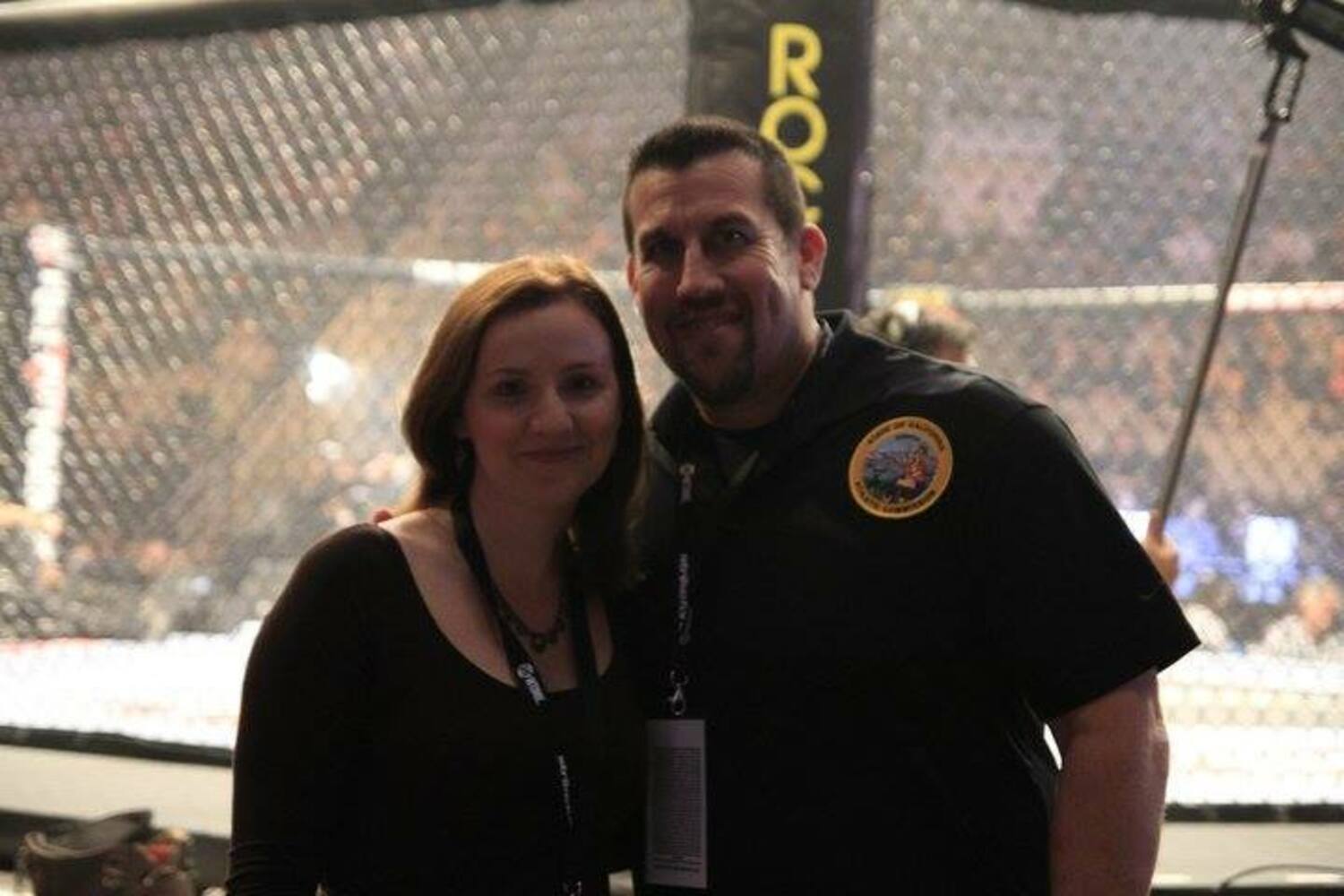
Loretta Hunt cageside with legendary MMA referee John McCarthy. COURTESY LORETTA HUNT
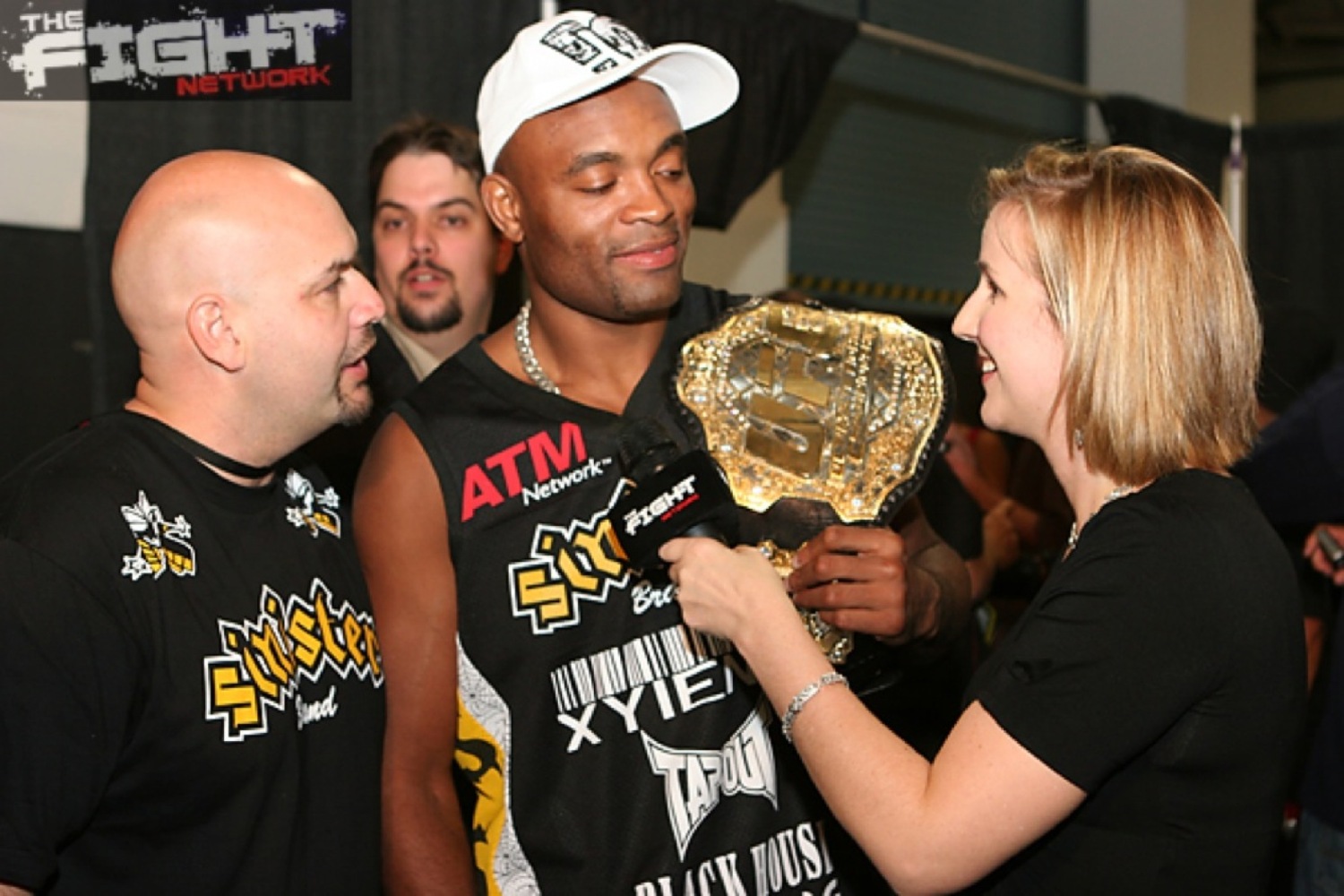
Loretta Hunt interviews UFC champion Anderson Silva for The Fight Network. DAISY ROSAS SANTIAGO
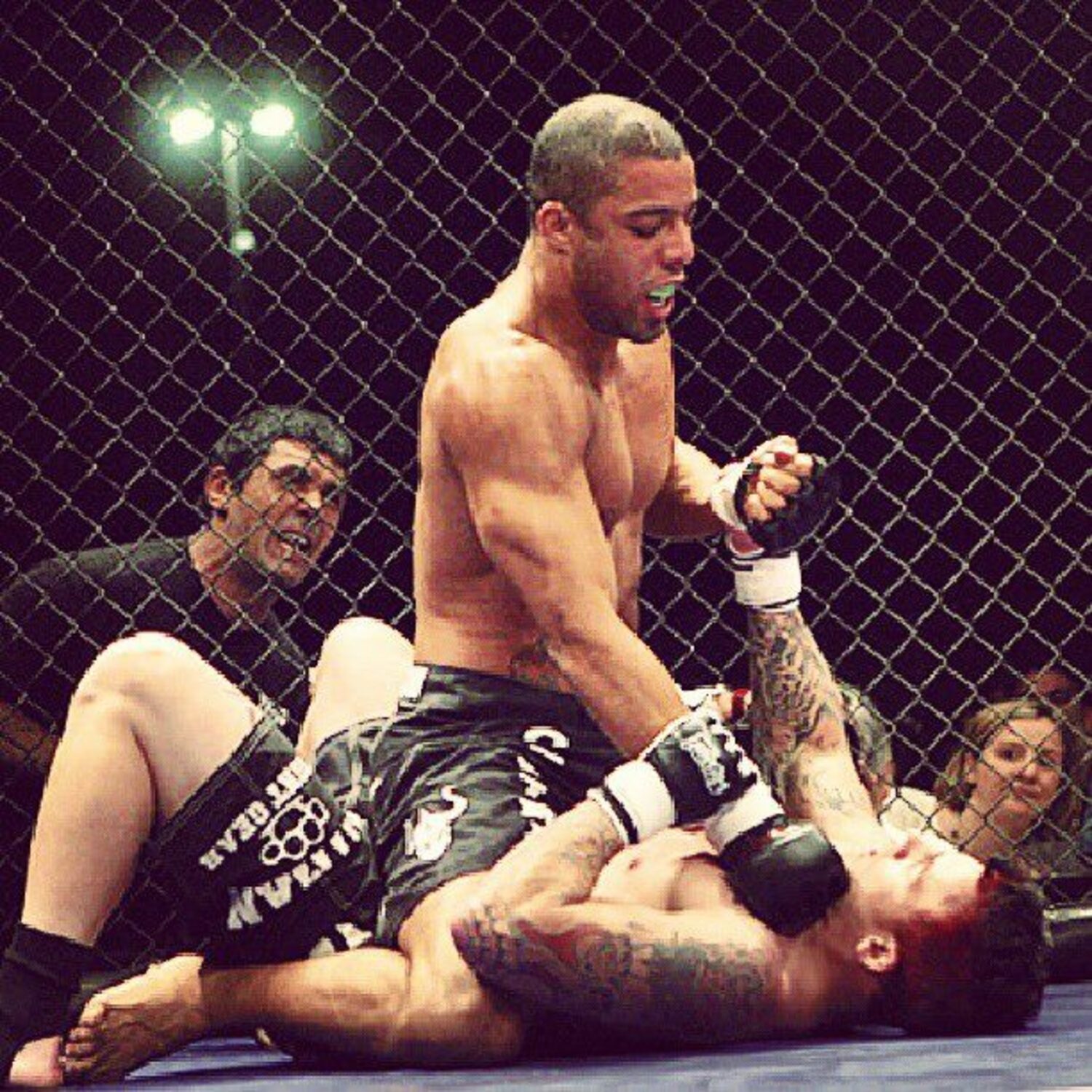
A day in the life of MMA journalist Loretta Hunt. DAISY ROSAS SANTIAGO
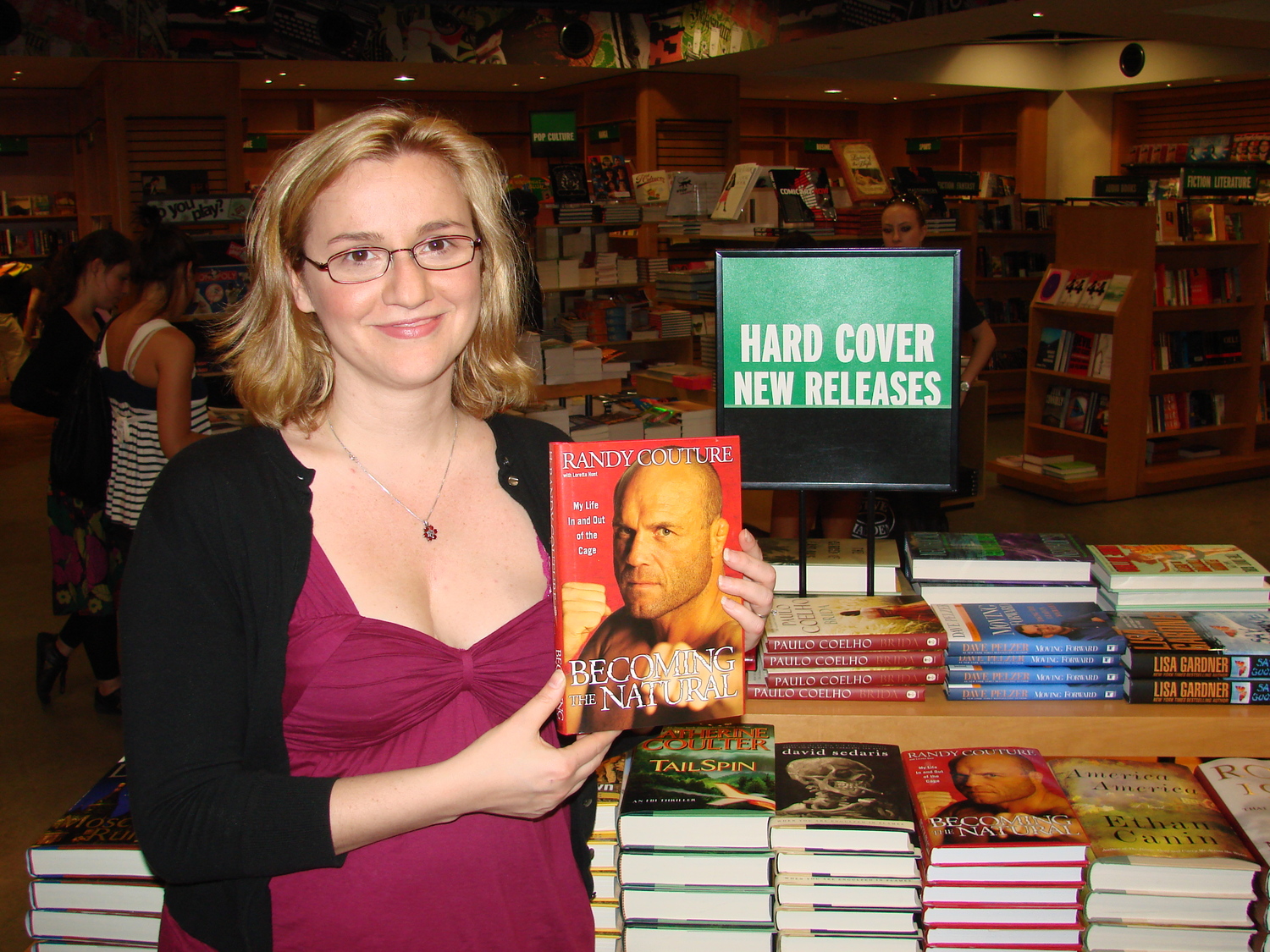
Loretta Hunt's first book was one of the first of its genre and a New York Times bestseller. COURTESY LORETTA HUNT
There was a time when Ultimate Fighting Championship had next to no rules.
The fringe sport — known as UFC — was brutal and borderline barbaric, pitting martial artists of different styles, abilities and even weight classes against each other as a gaggle of fans looked on, cheering for their favorite fighters battling inside the cage. No time limits, no rounds, no judges, and only a knockout or submission ended the fight.
They were the pioneers of what would become one of the biggest sports in the world — and Loretta Hunt, who grew up in Springs, was on the ground for it all.
Match after match, she had a front-row seat to sports history. But it wasn’t the fighters in action that kept her coming back.
It was their stories.
She wanted to know what brought them to the octagon — their backgrounds, their struggles, their whys. Her enthusiasm starkly juxtaposed the sport’s grittiness, and it made her stand out, getting her places her counterparts couldn’t go.
Hunt cemented herself as a part of UFC’s history, becoming the first female journalist to cover mixed martial arts full time in the United States — reporting stories that mattered, she explained during a recent telephone interview from her home in North Carolina.
“Sports are great because it’s all about overcoming obstacles,” she said. “It’s so symbolic of life in general. You’re constantly overcoming little obstacles, gigantic obstacles. People give up, people stick with it. And usually athletes are the ones who stick with it. They have that innate ability within them to keep going.
“I love telling stories like that because I know little kids, other adults are reading these stories,” she continued, “and it’s hopefully helping them in some way.”
As a child on the East End, sports were not Hunt’s forte, despite her best efforts. She tried out for every team she could, but ultimately served as the “ultimate bench warmer,” she said with a laugh.
At East Hampton High School, she made her way to the gymnastics team, where she gravitated toward the storytelling through choreography and music. She joined the school’s singing and acting groups, but never forgot her love for athletics.
“My mind connected with that,” she said of the musical storytelling. “It’s such a small, simple thing, but I did have a passion for watching sports.”
After graduating in 1992, she studied drama at NYU Tisch School of the Arts and, by the late 1990s, was pursuing professional acting. And sometimes, in the evenings, she watched the UFC fights with her brother, Jim Genia — who would go on to become an MMA writer himself.
“I was fascinated,” she said. “From the get-go, it wasn’t so much about what was happening live in the cage. It was watching these guys walk to the cage with a team of guys around them and wondering why the hell they decided to do this, what their background was, how they got to the ramp.”
In 2000, UFC 28 came to Atlantic City and the siblings knew this was their chance to see the fights live. They hopped on a bus at Penn Station and, for Hunt, it was the adventure that started it all.
“By then I was hooked,” she said. “Somehow, in all the watching it, I was like, ‘I really want to see this live, I’m really into it.’ I’m starting to learn the moves; I’m starting to recognize these guys.”
Even though it was nearly a decade into the sport — UFC was founded in 1993 — security was minimal, allowing Hunt direct access to many of the athletes she watched on Pay-Per-View. She approached them with excitement and enthusiasm, she said, and treated them all like professionals — whether they were the title fighters, or the lowest on the card.
“You could literally just walk up to these fighters,” she said. “For people like us, we were fans. We watched Matt Hughes fight five times over the years, so we kind of felt like we knew him. We walked up to him and he’s talking to us, and I’m like, ‘Holy crap.’”
Two years later, Hunt landed her first paid MMA writing gig — $25 to cover a meet and greet — and “that’s how it all got going,” she said. At the time, the sport was struggling and, in 2001, Semaphore Entertainment Group sold UFC to brothers Frank and Lorenzo Fertitta, who formed the company Zuffa and placed Dana White as its president.
With the takeover, new rules were introduced and some fans worried it would be a death blow to UFC. But, instead, it transformed into a real sport.
“There was a point where I had people very close to me that were like, ‘Okay, time to give up on this MMA thing because you’re not going to make any money doing it. It’s not a career, it’s a hobby,’” Hunt said. “And I was like, ‘Nope. It’s going to be a career. I don’t know how, but it’s going to be.’ I just refused. There was just something that was very strong in me that just said, ‘Stick with it.’
“There were a lot of people in it that were just like me,” she continued. “The fighters wanted the sport to survive. The referees wanted the sport to survive.”
The surge in popularity propelled Hunt into the spotlight. She established herself as a regular contributor to SportsIllustrated.com and CNN.com, appeared as a guest on CBS, ABC and ESPN, and wrote for People.com, Sports Illustrated Magazine, LATimes.com, ESPN.com, and other publications.
While at Sports Illustrated, Loretta was nominated for a 2014 GLAAD National Media Award for her feature article on Fallon Fox, the first out transgender fighter.
“I wanted to be a really, really good writer. I wanted to be top five, top three — and I feel like for a period of my time in MMA, I was definitely there, running with the men,” she said. “Some of the fighters were great to me and treated me special, but I was also not afraid to talk to them about personal things. I wanted to know more about who they were — ‘Do you have kids?’ And the other male fighters were hesitant to do that, I think. So I had a leg up in that way.”
Today, there are still very few female journalists covering the UFC and mixed martial arts in general, Hunt acknowledged — but it is not lost on her that she helped blaze their path forward.
“It’s very touching,” she said. “It brings tears to my eye because I do have people from time to time, other women, say, ‘You’re the reason I got into this, you’re the reason I kept doing this, other people told me it was dumb.’”
She paused. “I never thought I’d write outside of MMA — never,” she continued. “I thought my career was MMA; I didn’t think I was good enough to do writing in other sports.”
In 2008, she wrote her first book, “Becoming The Natural: My Life In and Out of The Cage,” the memoir of UFC legend Randy Couture, which spent multiple weeks on The New York Times bestseller list. Two more followed — “Let’s Get It On: The Making of MMA and Its Ultimate Referee” in 2011 and “Fight for the Forgotten: How a Mixed Martial Artist Stopped Fighting for Himself and Started Fighting for Others” four years later.
But last October, she broke out of the sport with her fourth collaboration, “Every Shot Counts: A Memoir of Resilience,” the story of 13-year NBA veteran and two-time All-Star Carlos Boozer.
And she writes about all sports, from the NFL to figure skating, for The Guardian.
“I walk around looking for stories,” she said, “but ones with purpose — and they have to connect with me.”


 Michelle Trauring on Jul 24, 2024