


 1 Photo
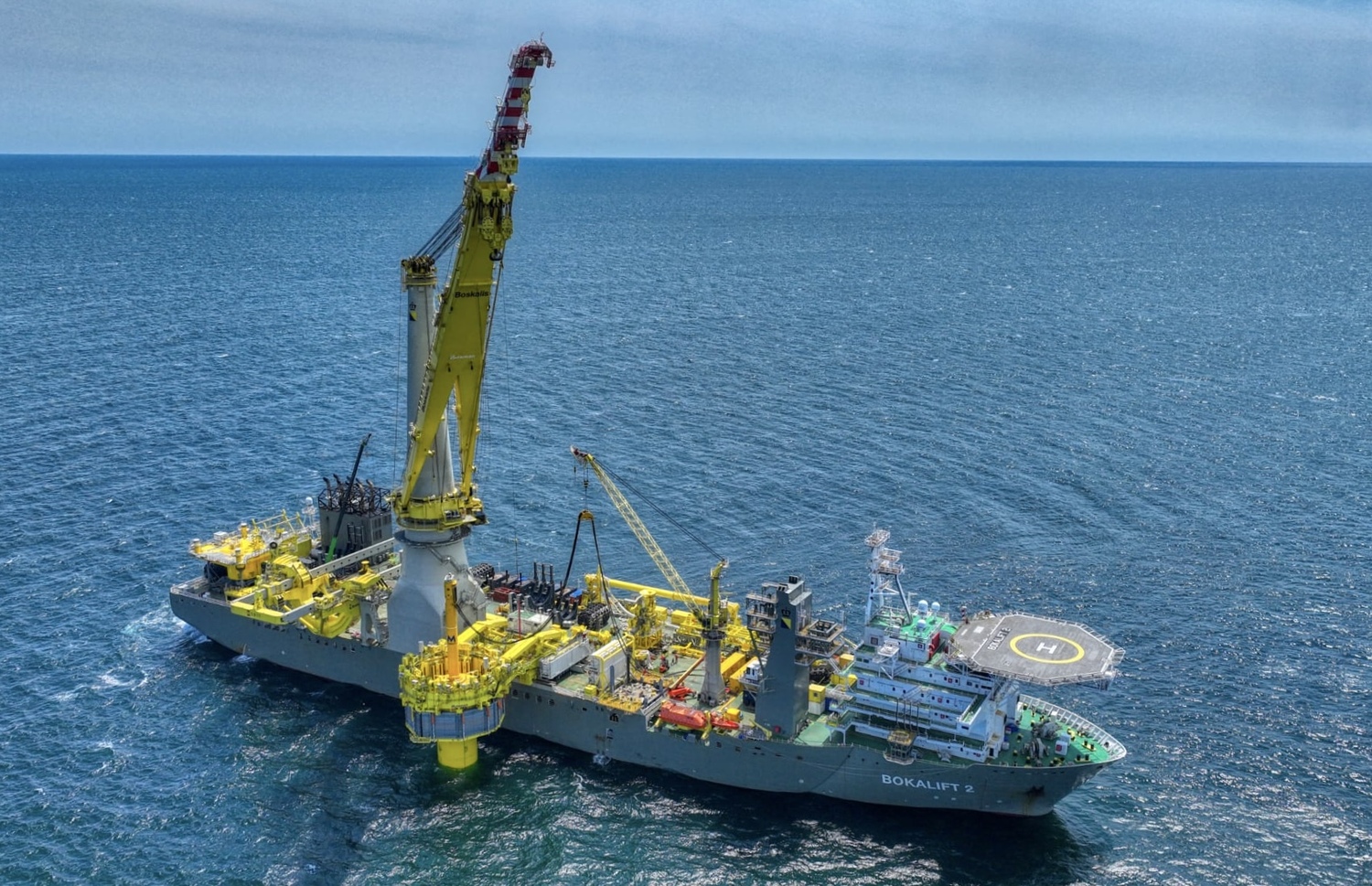
The first of 13 foundations that will hold the equipment for the South Fork Wind Farm was installed in the ocean southeast of Block Island last week. The foundations will hold 12 turbines, each some 800 feet tall, and the offshore substation that will send power to shore in Wainscott and eventually to a LIPA substation in East Hampton. ORSTED PHOTO
The first of 13 steel foundations that will comprise the South Fork Wind project was installed in the ocean southeast of Block Island last week, the latest milestone in the construction of the first utility-scale wind farm in U.S. waters.
The steel “monopile” foundation was driven into the seafloor in an area of ocean known as Cox Ledge, an undersea plateau about 30 nautical miles southeast of Montauk that is popular for its history of good fishing for cod.
This first foundation will be the support base for the wind farm’s electrical substation, which will step up electricity from the 12 turbines and send it toward shore in Wainscott, more than 50 miles away, via undersea cable.
The substation itself, the first of its kind built in the United States, was ferried north from Texas, where it was manufactured, last month and is currently moored in Providence, Rhode Island, awaiting installation on the new foundation next month.
Ørsted, the wind farm developer, is basing most of its construction operations in New London and Providence.
The installation of the foundations and the construction of the turbines is being conducted by the “crane ship” Bokalift 2, a 750-foot converted offshore oil drilling ship.
Installation of the other 12 foundations will continue through next month, with the towers and, ultimately, the turbines and their three 320-foot blades each installed later this summer.
When completed, the tips of the turbine blades will tower more than 770 feet above the sea surface. Still, the turbines are not expected to be plainly visible from land on Long Island.
The work is expected to be completed sometime in the fall, and the wind farm is scheduled to be on line by the end of this year.
Ørsted has claimed that the 132 megawatts of electricity that South Fork Wind will generate at peak capacity is enough power for about 70,000 homes.
The monopile foundations that Ørsted is using for South Fork Wind and other wind farms in the area are being driven into the seafloor using a “hydraulic hammer.” The practice is one that fishermen and scientists said could pose a threat to cod and other fish species in the region of the construction, because of the concussive sound waves caused by the hammering of the foundations into the rocky ocean bottom.
Ørsted says that a curtain of bubbles is generated around each of the pilings as it is driven in, to dampen the effect of the noise emitted by the hammering.
An Ørsted spokesperson said that the laying of the undersea power cable between Wainscott and the wind farm has been completed and the cable has been buried — though some sections are to be covered with concrete “mattresses” to protect it in places where the seafloor composition did not allow for the cable to be completely buried.
The completion of the construction of the first component of the wind farm drew applause from supporters of the budding offshore wind energy industry.
“New York is leading offshore wind development and building a green economy that will support hundreds of good-paying jobs and benefit generations to come,” Governor Kathy Hochul said. “This progress on building the first utility-scale offshore wind project in the country cements New York as a national hub for the offshore wind industry.”
New York State has set a goal of generating nearly 30 percent of its power needs — 9,000 megawatts — from offshore wind by 2035, and has already inked contracts with at least four wind farm developers for more than 300 turbines.
Ørsted has two other projects with more than 150 additional turbines in the development pipeline that are expected to be constructed in 2025 in the ocean near South Fork Wind.
The exploding industry continues to draw staunch criticism from commercial fishermen and many others who fear the impacts the noise and electrical emissions from the wind turbines might have on migrating fish and marine mammals.


 Michael Wright on Jun 28, 2023