


 4 Photos
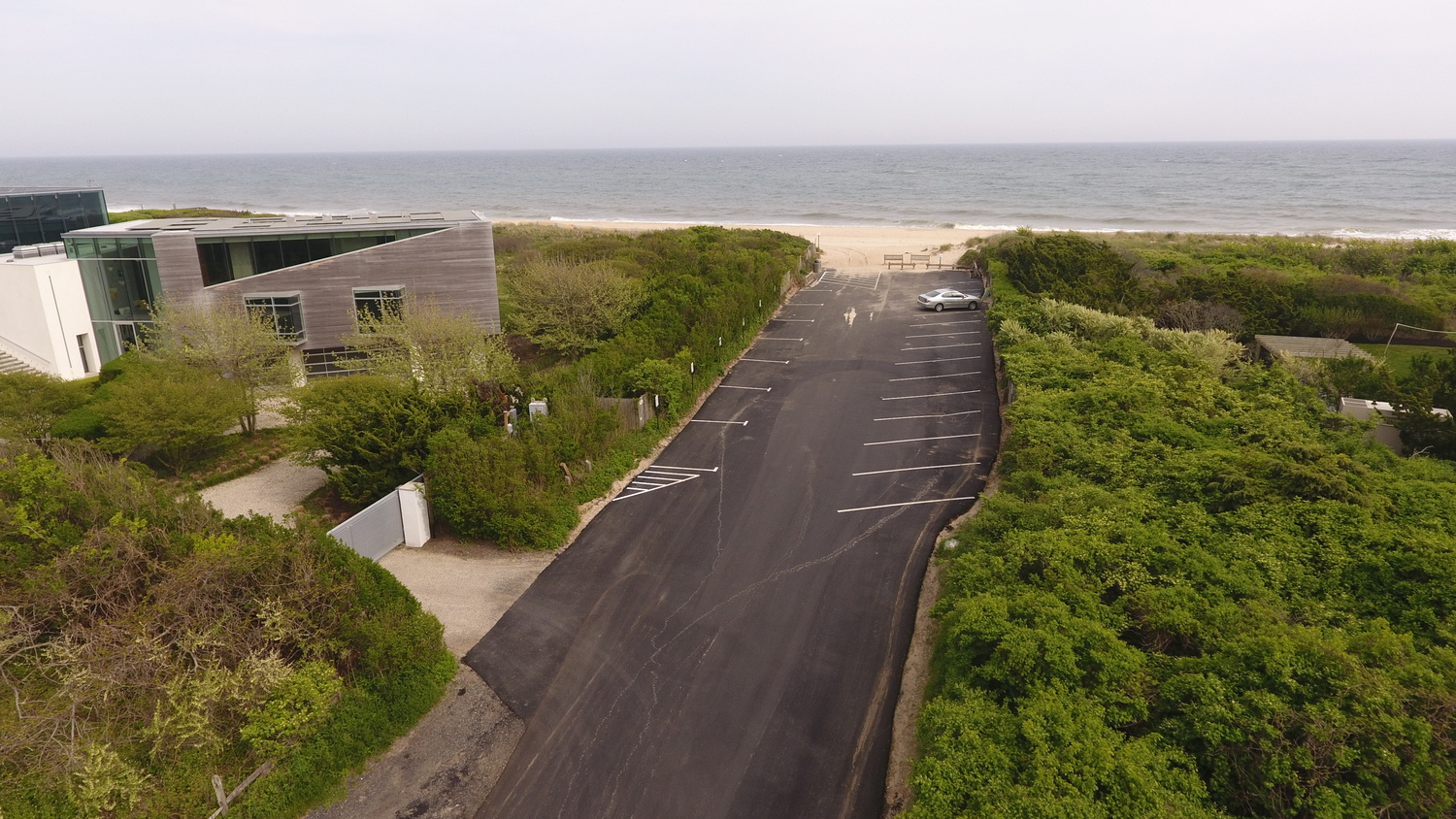
The installation of the power cable for the South Fork Wind Farm has been concluded and Beach Lane repaved, following a winter in which drilling equipment took up most of the street.
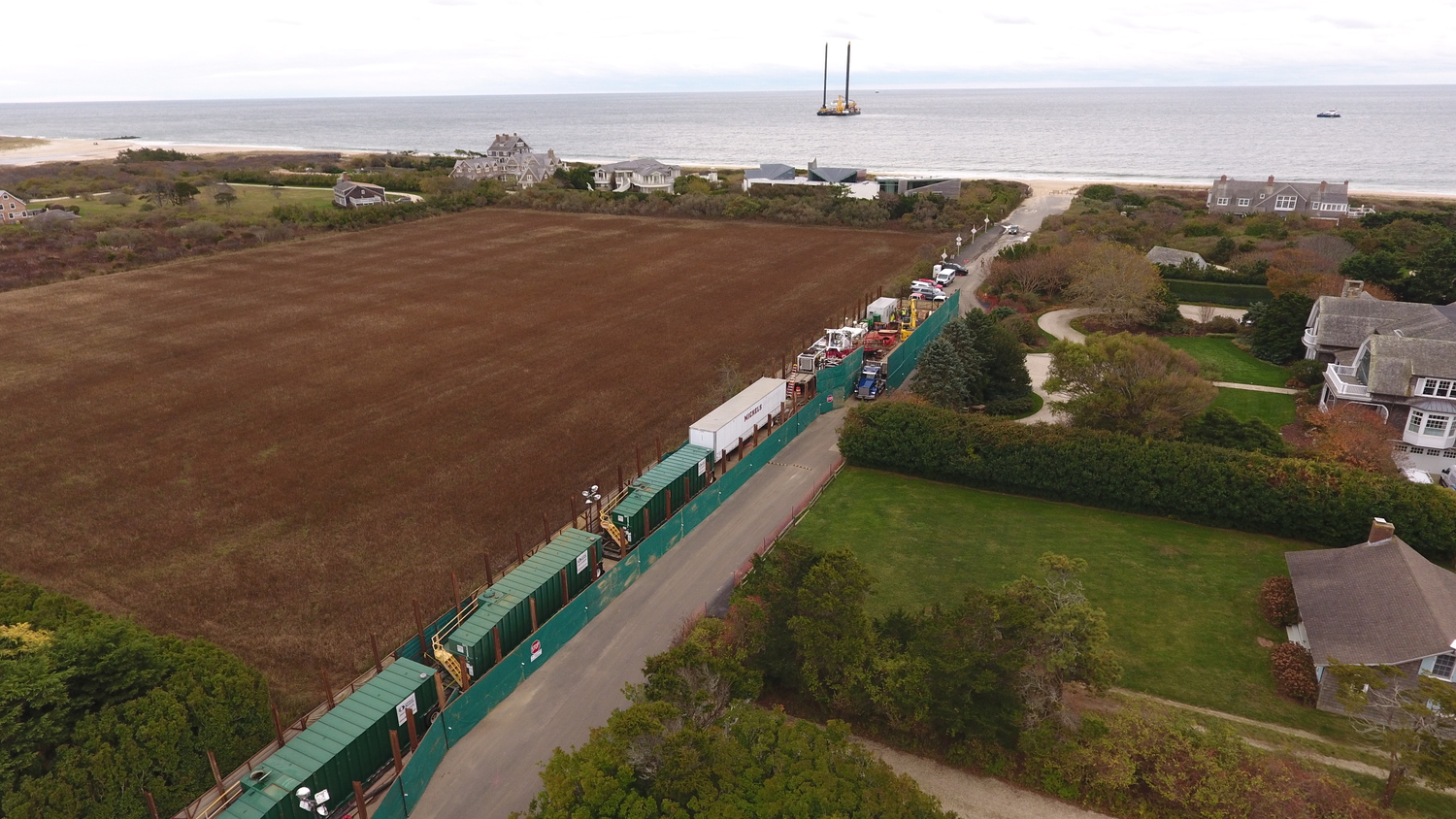
Much of Beach Lane was clogged with construction equipment, shielded behind 15-foot-high sound barriers, through the past fall and winter. Michael Wright
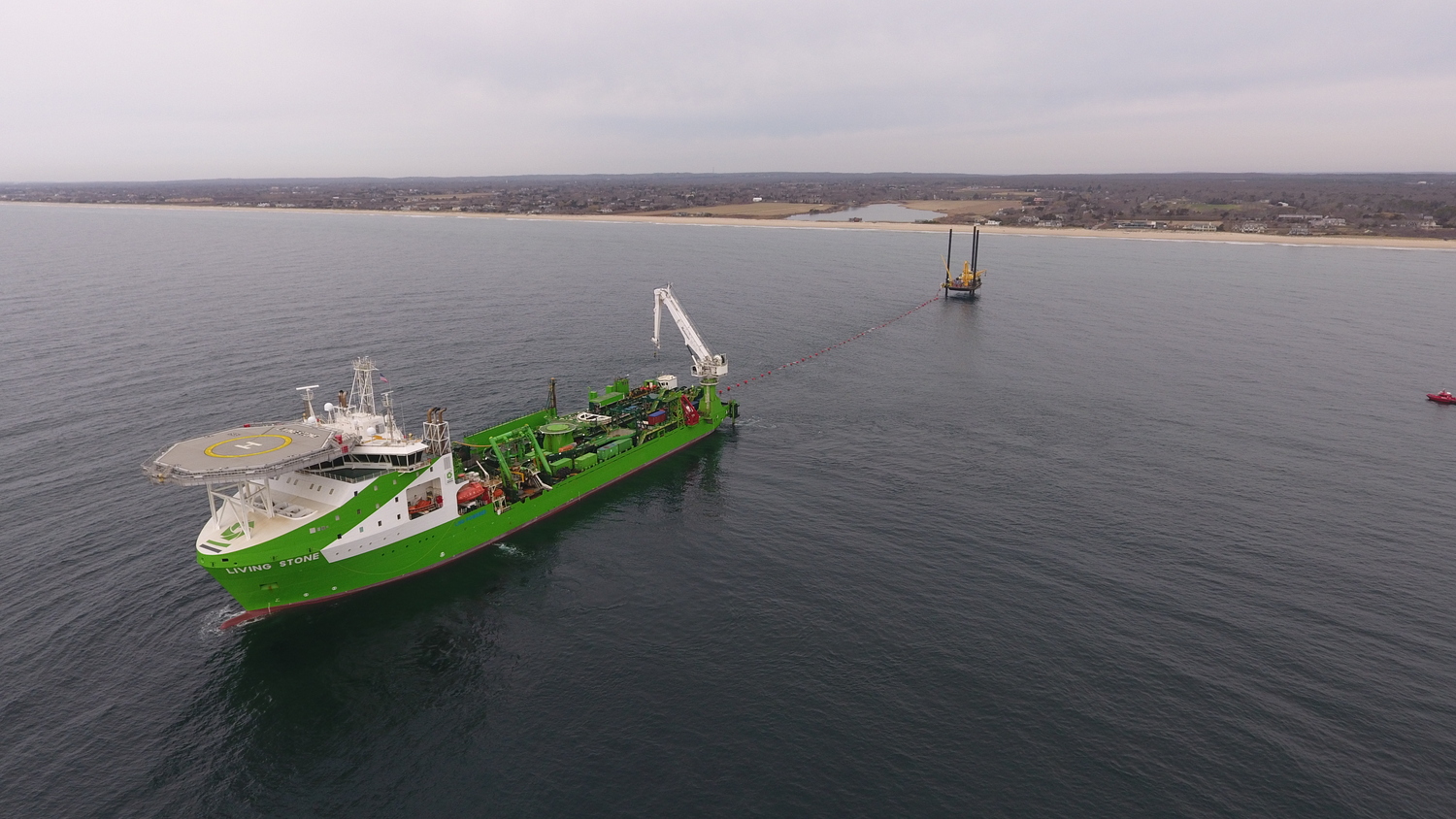
A cable ship is currently in the process of laying the 60-mile power cable on the seafloor between Wainscott and Cox Ledge, the area southeast of Block Island where South Fork Wind's turbines will be constructed. MICHAEL WRIGHT
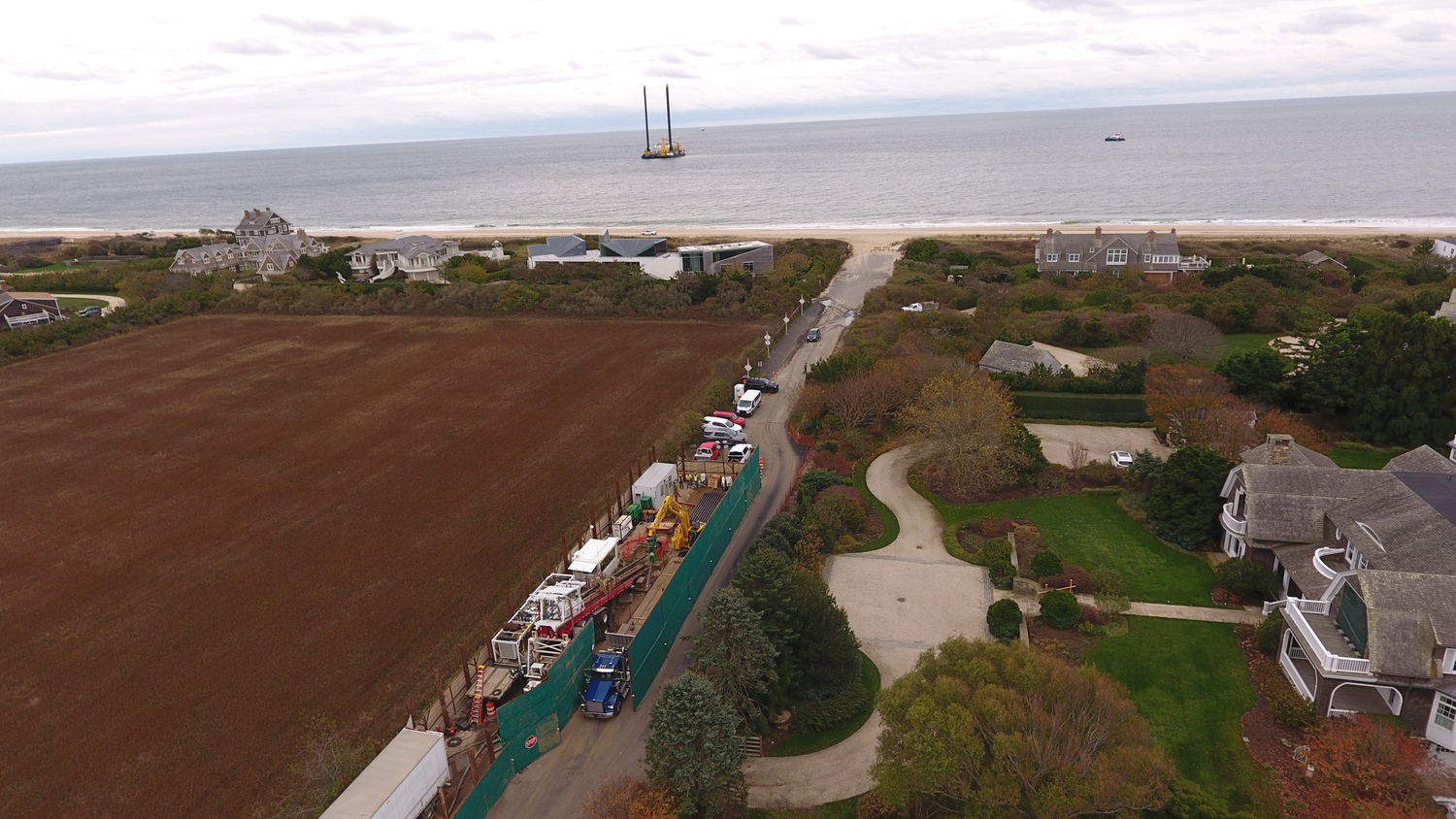
Over the winter drilling crews working for South Fork Wind connected a cable running beneath Wainscott roads to a cable that will ultimately connect to the 12 wind turbines that will be constructed this summer more than 60 miles to the east, southeast of Block Island. MICHAEL WRIGHT
Summer visitors returning to Wainscott this week for the first time since last September might never know the extent of the industrial construction that had taken place there over the last several months, or the pioneering efforts now underway just over the ocean’s horizon.
Someone pulling up to the beach at the end of Beach Lane may only notice the fresh blacktop and brightly repainted parking stripes on the roadway, without realizing that a foot-thick power cable that will soon pulse with 130 megawatts of power streaming ashore from 60 miles to the east lies just a few feet beneath.
In late April, the wind farm developer Ørsted finished removing the drilling equipment that had bored a 1,700-foot-long conduit from the Beach Lane parking lot, 80 feet below the ocean beach and through the seafloor to where it emerges and connects to the cable that will link to the South Fork Wind turbines later this year.
The last repaving of the roads in Wainscott that had been torn up to lay the cable was completed earlier this month. Construction of the new power substation in Cove Hollow is still underway.
At sea, a 500-foot ship is currently laying the power cable on the sea floor, in 14-mile sections, all the way to the turbine site. Separate vessels will begin using hydraulic jets to bury the cable beneath the sea floor soon. Construction of the turbines themselves is expected to begin in July.
The project is a partnership of the Danish energy giant Ørsted, and New England’s largest electrical utility, Eversource.
Several New England news outlets have reported that Eversource indicated in early May that it plans to sell off its share in the South Fork Wind project and another that it partnered with Ørsted on. The company had said nearly a year ago that it was looking into selling its offshore wind interests.
But an Eversource spokesperson said that the sale of its divestments of the Ørsted partnership is not a done deal. The company is still exploring its options, he said.
“The strategic review remains ongoing, and a final decision on whether to divest from offshore wind has not yet been made. We expect to announce a decision in the second quarter of this year,” the spokesman, John Oliveri, said in an email earlier this month. “Regardless of the outcome of the review, we will continue to play an important role in the fight against climate change through our work integrating new clean energy resources as well as our investments in energy efficiency, EV charging infrastructure, and geothermal technology. As we move forward, we also expect that we will play a key role as a potential buyer of offshore wind energy. Importantly, we continue to believe in the strategic importance of offshore wind and its ability to create jobs and drive economic investment in local communities across the region.”
The burgeoning offshore energy industry has been facing some headwinds as production costs and interests rates have soared almost in lockstep — forcing some companies to reconsider the financial calculations that had led them to jump into the fledgling market with both feet.
Last winter, one company, Avangrid, said it was pulling out of its contract with the state of Massachusetts to sell power from the 1,200 megawatt Commonwealth Wind project, and would submit new bids with reworked pricing due to the rising costs it now expects to have to shoulder to build the 100-plus turbines.
Eversource paid $225 million to buy a 50-percent interest in South Fork Wind and the vastly larger Revolution Wind, which is expected to someday deliver 700 megawatts of power to Connecticut and Rhode Island from nearly 100 turbines erected just east of where the South Fork Wind turbines are to be built.


 Michael Wright on May 24, 2023