


 2 Photos
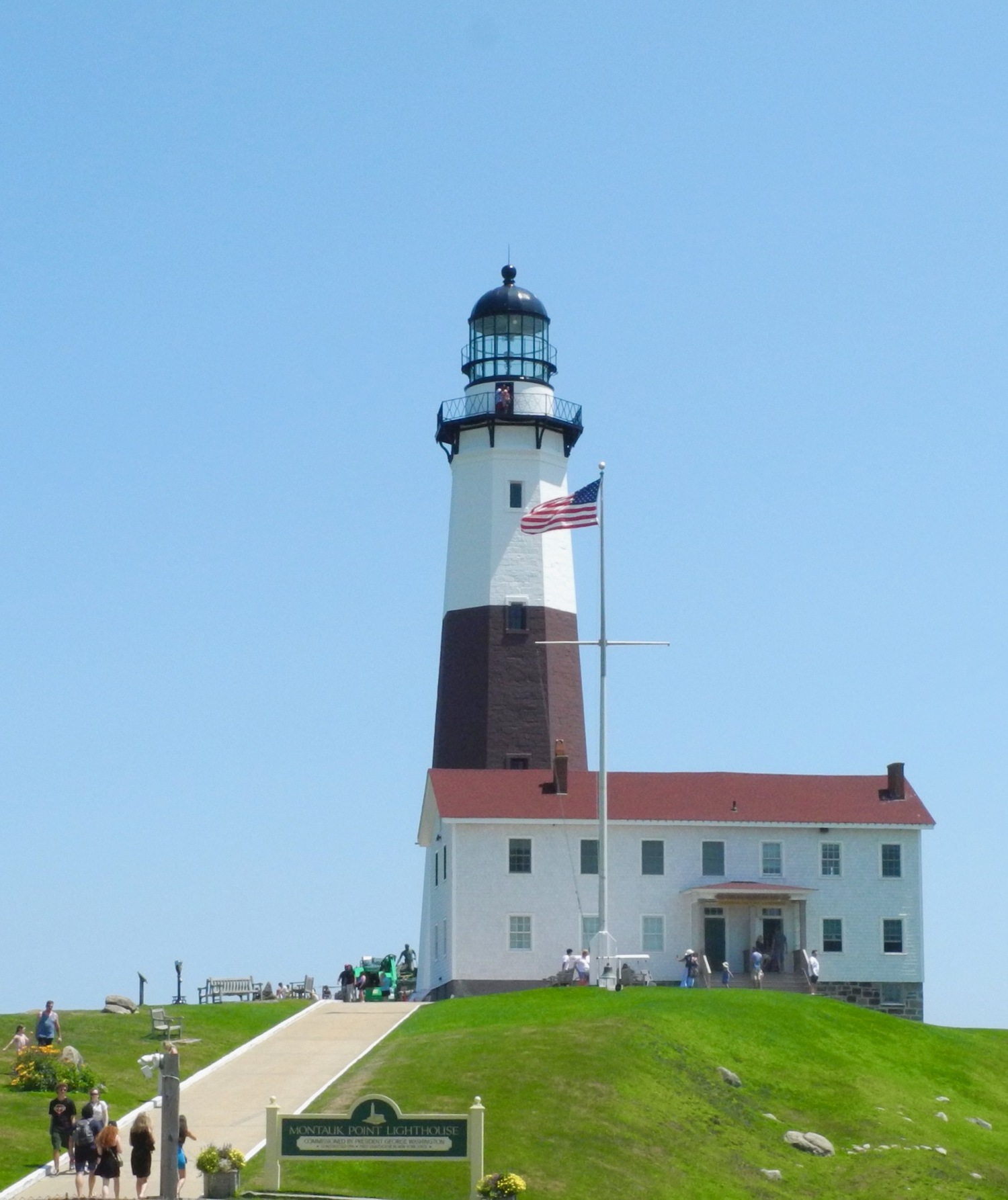
A lighthouse restored, and protected. The three-year renovation of the Montauk Lighthouse and construction of a new revetment around its base is near complete and the Montauk Historical Society and New York State officials will celebrate its renewal next week. KYRIL BROMLEY
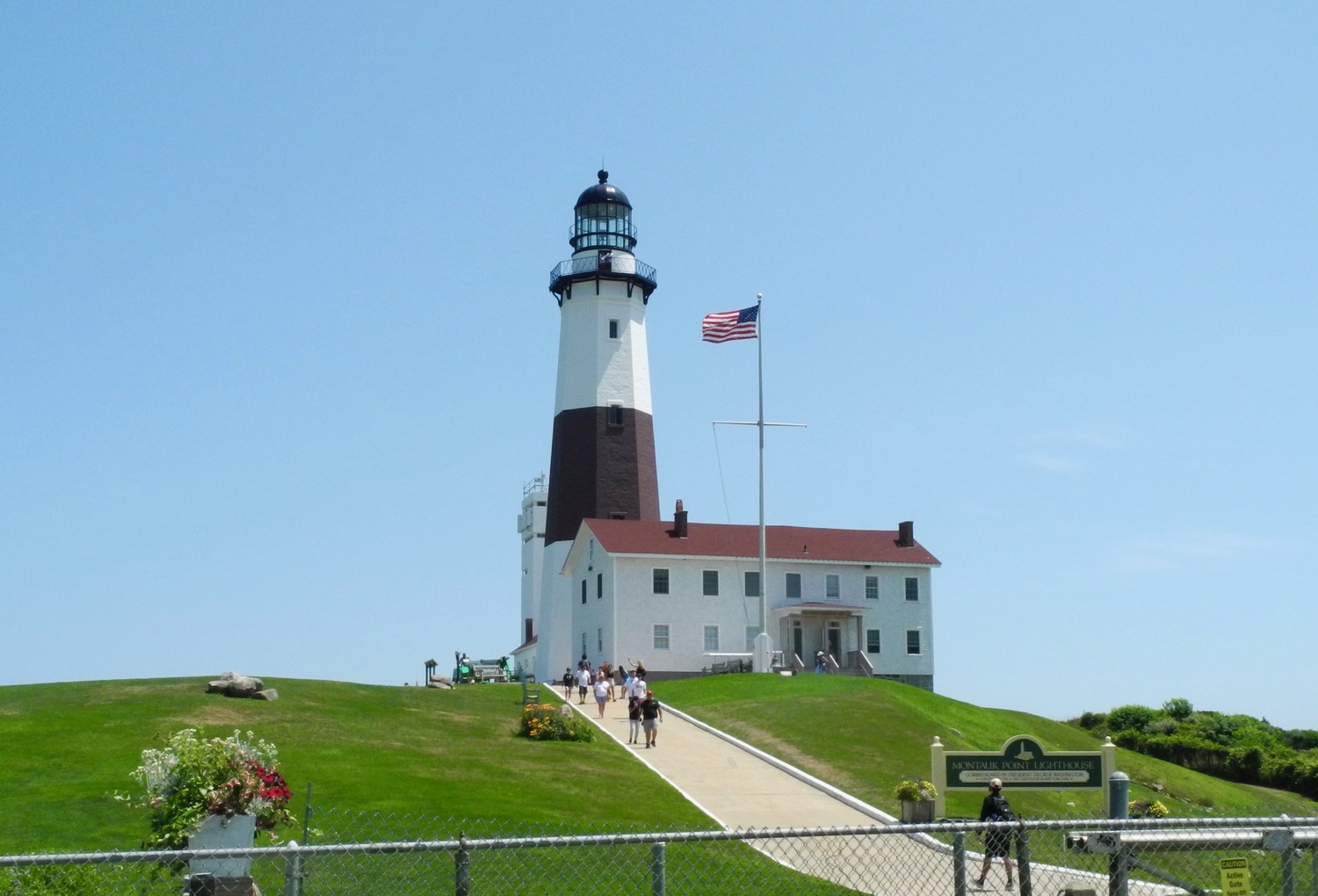
The Montauk Lighthouse's signature white and red markings are in the last brushes of being fully restored after two years of renovations that had left the sandstone blocks beneath exposed. The lighthouse museum building, a former U.S Coast Guard station that had been re-sided with cedar shingles at some point has also been restored to its original appearance KYRIL BROMLEY
Painting crews are putting the last finishing brush strokes on the three-year restoration of the Montauk Lighthouse, returning its brilliant red and white navigational daymark atop the brownstone blocks that comprise the tower and the newly restored facade of the former U.S. Coast Guard station that now is home to the Montauk Lighthouse Museum.
The Montauk Historical Society will celebrate the restoration of the lighthouse at its annual Lighthouse Weekend on August 5 and 6, and with a ceremonial ribbon cutting on August 16 for supporters of the lighthouse and the renovation project.
In parallel with the historical society’s renovations of the lighthouse, the U.S. Army Corps of Engineers recently completed a $38 million expansion of the stone revetment that protects the bluff below the lighthouse from the relentless pounding of the ocean surf.
When the lighthouse was built in 1796, it stood some 300 feet from the ocean. But erosion ate away most of the promontory it sat behind, known as Turtle Hill, over the ensuing century.
Efforts to stave erosion were started in the 1970s by volunteers who worked by hand to terrace the bluff to slow the crumbling of its slopes. The first stone revetment to protect the bluff was built in 1992, and it finally halted the retreat of the bluff, with the lighthouse now less than 100 feet from the sheer cliff.
The extended and bolstered revetment — which added several hundred linear feet of new stone to the its western end and extended its sloping forehead further seaward to absorb more pounding from waves — is forecast to stave off the need for further erosion prevention measures for at least 50 more years.
“We feel like we’re in really good shape for a long time now,” said Mia Certic, executive director of the Montauk Historical Society, which owns the lighthouse.
“Everything has finally come together — the tower is done, the revetment is done, we were able to restore the museum to the 1930s Coast Guard look — it’s really thrilling,” she said. “We had this project, we put people’s minds together, we did the fundraising and we achieved this goal with all our supporters, big and small.”
The Historical Society’s fundraising for the project was so successful that it was able to also fund the re-siding of the museum building at the foot of the lighthouse. Originally, it had been a Coast Guard station with the signature white clapboard siding and red shingled roofing of Coast Guard stations around the nation. But at some point in the past, that look had been replaced with cedar shingles more common of local cottages. The Historical Society deemed the historical Coast Guard look of the building worth restoring.
While the federal engineers and New York State were planning the bolstering of the revetment — the idea of moving the lighthouse back from the bluff long ago dismissed as logistically impossible because of the slopes of the hill it sits atop — the Historical Society had set about planning the restoration work to the tower itself.
To solve the water infiltration issues that had been identified as the ultimate enemy of the lighthouse’s structural integrity, a new steel cap was fabricated and thousands of feet of Portland cement that had been used for decades in the late 19th and 20th centuries to repair the joints between the brownstone blocks that comprise most of the tower’s outer walls had to be painstakingly chipped out. It was replaced, one block at a time, with the more porous lime putty mortar that had been used in the original construction 227 years ago.
Before the work could begin, two centuries worth of paint had to be removed, in 2-foot square sections, one at a time. That process alone took nearly two years to complete, and left the lighthouse naked in a way that had never been seen before — its layers of granite, brownstone blocks and brick exposed in their raw form.
Certic said she enjoyed the raw facade of the lighthouse for the last two years, because it gave visitors a clear view of what the real bones of the lighthouse looked like. But as much as the removal of the paint signed the start of the project, its return is a fitting conclusion, she said.
“Seeing it repainted now,” she enthused, “makes my heart soar.”


 Michael Wright on Jul 26, 2023