


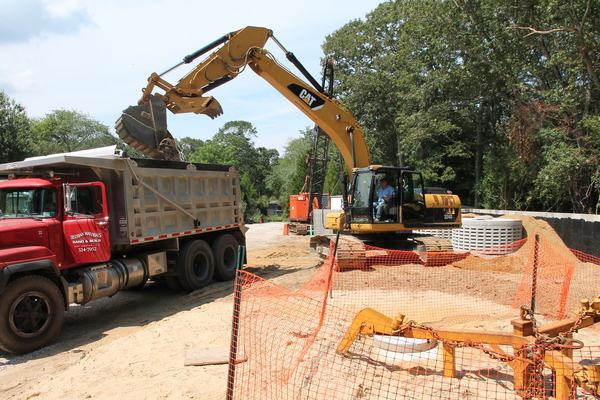
 4 Photos
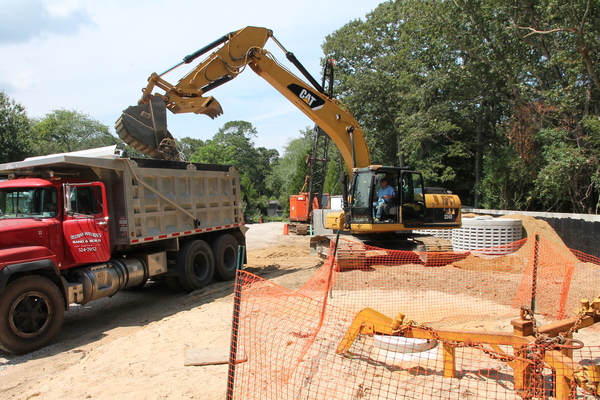
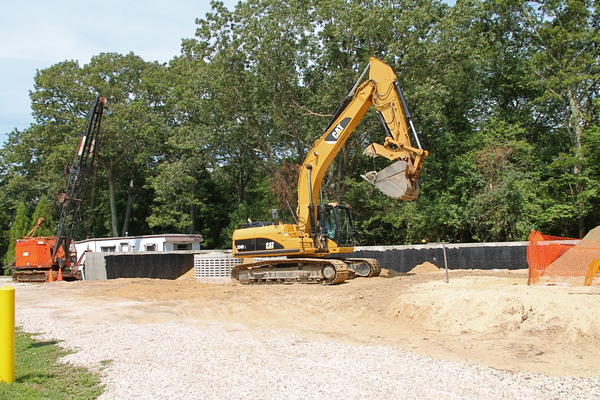
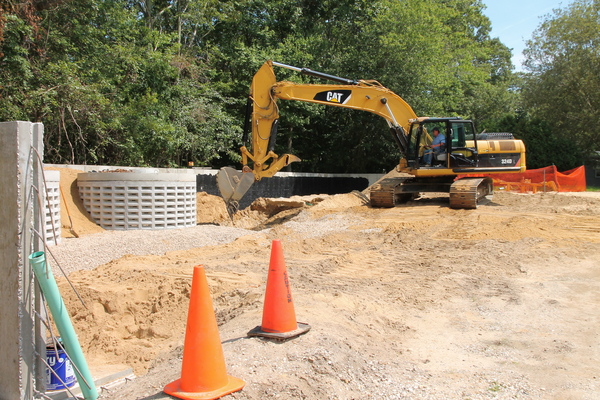
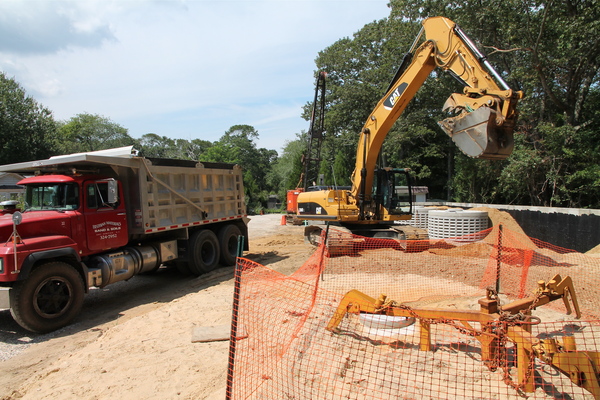
Residents of the Three Mile Harbor Mobile Home Park in East Hampton have taken out a $390,000 loan to repair a failing septic system on their property and began repairs earlier this month.
The overhaul, which should be completed within several weeks, follows the rejection earlier this year by the East Hampton Town Board of a proposed $600,000 capital project to replace the system.
The park has been in dire need of some kind of septic system repair for years, park residents have argued because septage often rises from a defective leaching field and floods the community’s streets during heavy rains.
“It needs to be fixed,” said Mae Bushman, the president of the board of directors of the Three Mile Harbor Mobile Home Park, last week. “We can’t wait for the town to do anything. We’ve had conversations and nobody’s gotten back to us. It has to be fixed. We can’t wait for the town. They’ve been promising us for the last 10 years to fix it and nothing’s been done.”
The park has a building permit to install an upgraded septic system, according to a copy obtained from the town’s Building Department. The permit was issued on January 31, 2012. Ms. Bushman said the park also secured approvals from Suffolk County and the New York State Department of Environmental Conservation to go forward with the work.
But despite that, some East Hampton Town Board members said they did not know about the project. Councilwoman Sylvia Overby, who along with Councilmen Dominick Stanzione and Peter Van Scoyoc voted to hold off on seeking financing for the project, said she wished residents of the park had talked to the town about their plans, considering “the town was working with them on a $600,000 septic for them, so I’m curious as to the difference in the amount.”
“What concerns me the most is that there was no guarantee this was going to solve their problem,” Ms. Overby said on August 22. “So I think they’re taking a risk in doing this that they might not otherwise have to take. I’m concerned for their health and safety and the health of the bodies of water that are affected by the septic runoff.”
Mr. Stanzione said he didn’t know about the project. While he said he remained concerned about “the environmental conditions affecting groundwater at the park,” he also said that he has sympathy for the residents and their urgency to complete the project. “I hope whatever they’re doing works,” he said.
The town sold the land to the park in 2001, said Ms. Bushman and Stephen Agudo, the secretary of the corporation. Three months after the purchase, the septic system, which had been installed by the town before the sale, failed, they said. For the last three years or so, the park’s septic system has required regular weekly pumping that has amounted to almost $50,000 a year—a cost that is especially painful to bear for the low-to-moderate income families at the park, they said.
The septic situation got to the point “where we either had to fix it or basically close the park down,” Mr. Agudo said.
“It’s been a 10-year fight,” Mr. Agudo said. “We’ve been through, what, six or seven [Town] boards.”
The park is comprised of 16 units, with 15 families—one unit is unoccupied. All told, there are about 30 residents of the park, said Ms. Bushman.
Councilwoman Theresa Quigley said she supported the long overdue septic upgrade.
“I’m glad that the problem will be solved,” Ms. Quigley said. “It needed to be solved and this is a good a way as any, and maybe even a better way. The circumstances there were unsustainable.”


 Rohma Abbas on Aug 22, 2012