



 1 Video & 11 Photos
Is Sag Harbor the Canary in the Coal Mine?
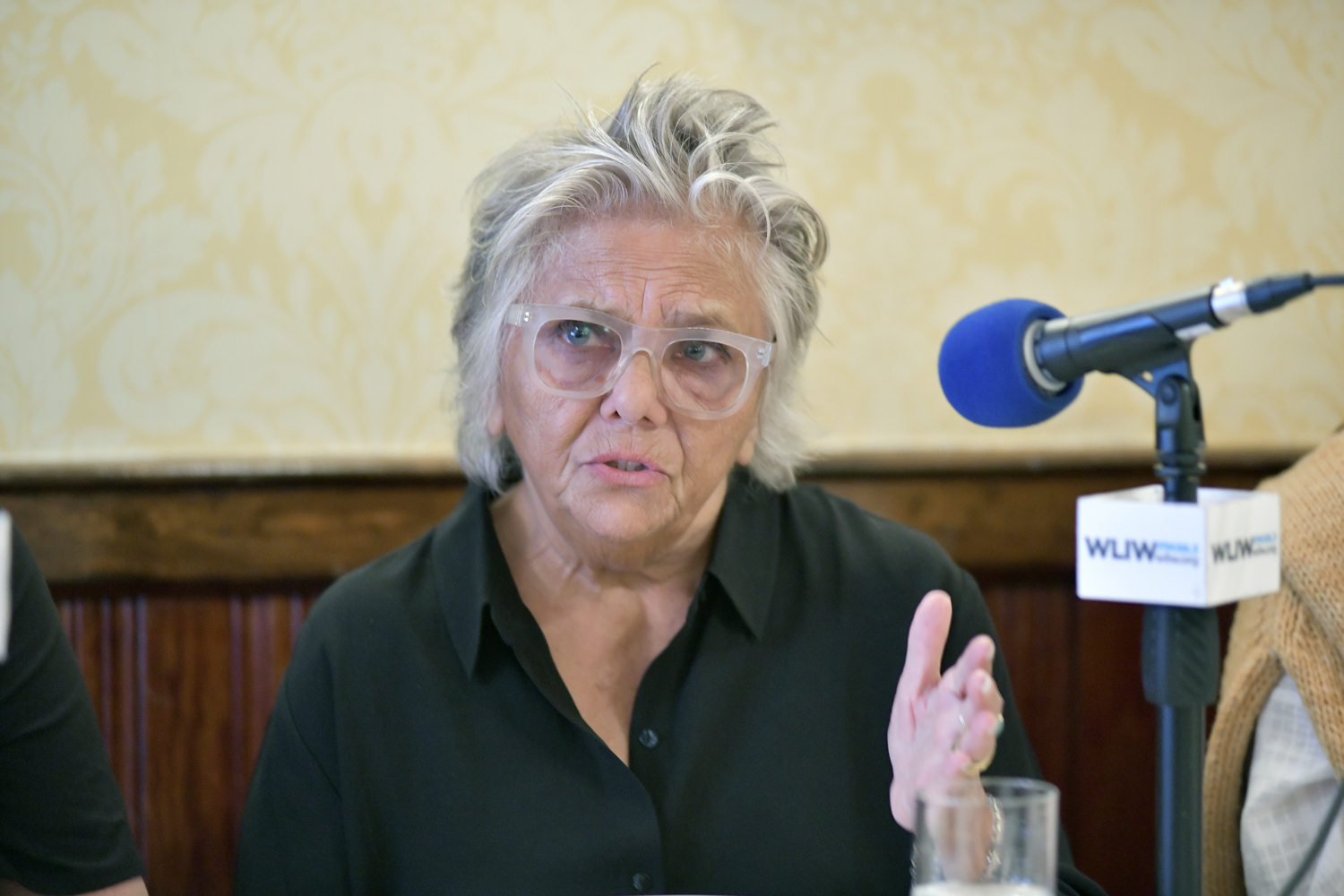
Panelist Lynda Sylvester, the owner of Sylvester & Co. Modern General. DANA SHAW

Panelist Lisa Fields, owner of the Sag Harbor Variety Store. DANA SHAW

Panelist Kevin Menard, the owner of Dragon Hemp Apothecary. DANA SHAW

Panelist Ellen Dioguardi, the president of the Sag Harbor Chamber of Commerce. DANA SHAW

Panelists Nicole Delma, the owner of Mind Offline and the Local Wool Company and Kevin Menard, the owner of Dragon Hemp Apothecary. DANA SHAW

Panelist Nicole Delma, the owner of Mind Offline and the Local Wool Company. DANA SHAW

Audience member Jane Holden. DANA SHAW

Sag Harbor Village Mayor Tom Gardella. DANA SHAW
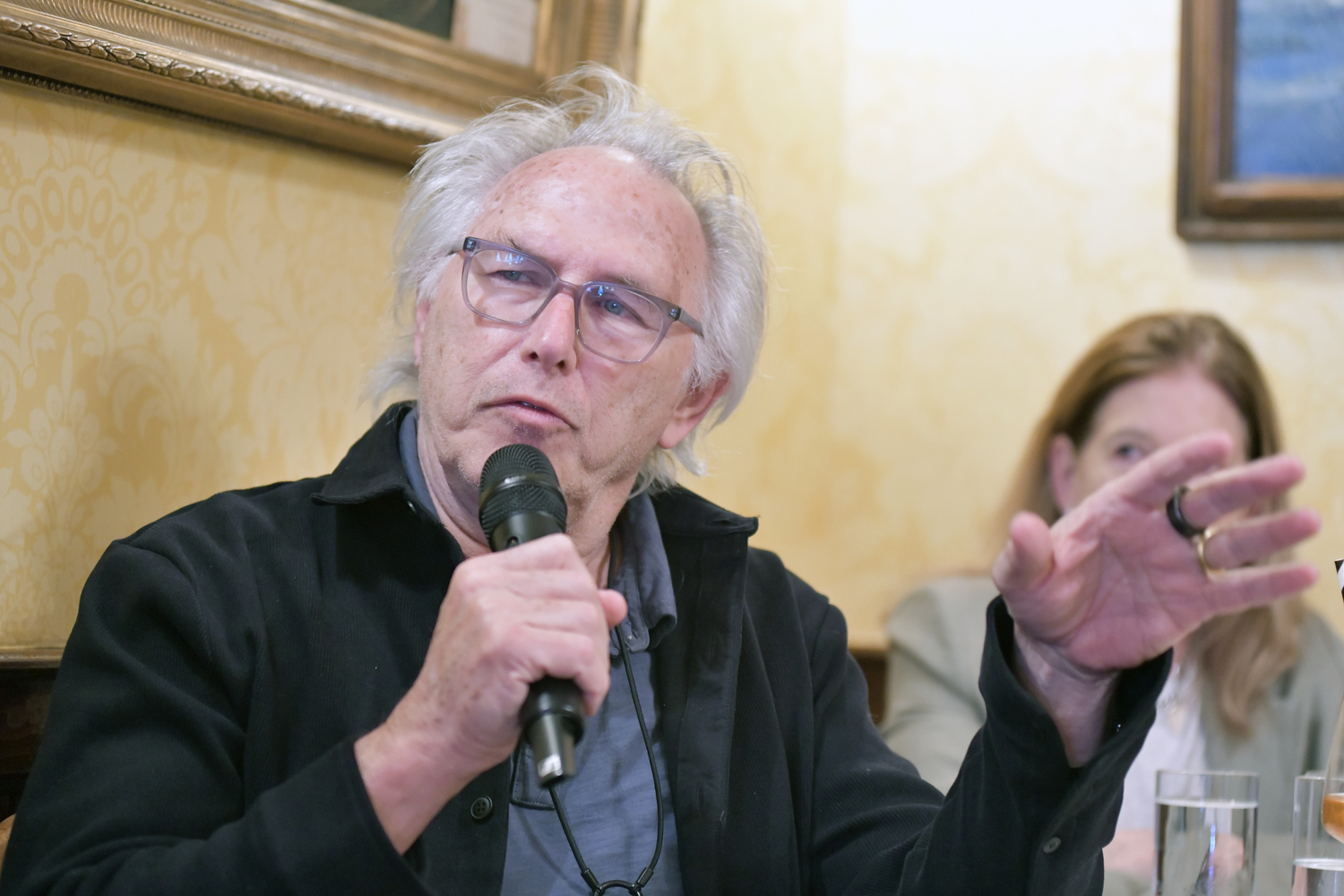
Audience member Eric Fischl makes a point. DANA SHAW

David Brogna of In Home on Main Street. DANA SHAW

The panel for the Express Sessions panel discussion in Sag Harbor.
How Sag Harbor businesses are coping with the changing dynamic of the local retail landscape was the topic of the most recent Express Sessions panel conversation, “Is Sag Harbor the Canary in the Coal Mine?” which was held on Thursday, April 24, at The American Hotel.
A five-member panel discussed the challenges facing local businesses: Lisa Field, owner of the Sag Harbor Variety Store; Lynda Sylvester, the owner of Sylvester & Co. Modern General; Nicole Delma, the owner of Mind Offline and the Local Wool Company; Kevin Menard, the owner of Dragon Hemp Apothecary; and Ellen Dioguardi, the president of the Sag Harbor Chamber of Commerce. The conversation was moderated by Joseph P. Shaw, the executive editor of The Express News Group.
The topic was spurred by anecdotal evidence collected by local shopkeepers that while the streets are often crowded with pedestrians, sales in a variety of shops have been flat or off over the past year or two.
Field, whose family has owned the Sag Harbor Variety Store for 55 years, said the business, which depends on a brick-and-motor presence and a steady stream of local customers, has faced challenges before.
“When my parents bought the business, Bulova was the biggest part of Sag Harbor,” she said. “We were a factory town.” When Bulova shut down in the early 1980s, the store had to adapt from serving a purely local clientele to a growing tourist population.
Field cited the COVID-19 bubble, when many New York City residents moved to the East End and boosted business for a couple of years, as example of a temporary boom, which has now receded.
To survive, she said her store would have to continue to adapt with the knowledge that it could not compete with the online behemoth, Amazon, or huge big-box retailers such as Walmart.
“I’m happy to be a part of this,” Field said of the panel discussion, “because I really would like to hear from other people. I don’t have the answers, but I’m committed to sticking it out.”
Linda Sylvester, who recently closed her Main Street shop to shift her focus to an online model, said it was proving to be a formidable challenge.
“I decided to move to Main Street Online, which I’m working on, which is a huge education for me, because there are no seduction keys that I’m used to,” she said. “I’m used to good smells and great music and things that organically put people in the mood to shop. Online is very cold, very boring, very driven by value and discounts.”
Despite the challenges, Sylvester said she was beginning to have “a little fun now because the more I learn, the more I realize, ‘Oh, I can do that, I can play with this.’ And so it’s beginning to develop differently.”
Many of the skills required to run a brick-and-mortar store don’t translate to an online setting, Sylvester said. “It’s much harder than I expected it to be. It’s not going to be immediate. It’s not like you’re going to have a rush to the counter, but I think it’s going to work enough.”
Delma said she literally grew up in the retail world because her parents were both buyers for The Bon Marché in Seattle. She had a career in digital marketing before shifting gears and founding her store Mind Offline “when I had a 2- and 3-year-old at home during COVID, and realized I didn’t want them to learn what Mommy did was sit in front of a computer all day.”
Delma said she worked with local artists to create ceramic and natural dye kits that she eventually delivered to homes before renting space in Amagansett and East Hampton. She later opened her shop on Route 114 on the edge of Sag Harbor. Despite sponsoring a range of events and activities, she has since closed that store and is focusing on selling her wares at markets.
Kevin Menard, an acupuncturist, is also the owner of Dragon Hemp Apothecary, which sells products based on hemp extracts and Chinese herbs. After opening in 2022, Menard said he enjoyed two solid years of growth and was expecting increased sales again last year when he hit a wall that saw his sales flatten, even when there was heavy traffic in the village, and decline during the offseason, when there were fewer people in the village.
“One of the things I have realized,” he said, “is I have to diversify my products.” He also is expanding online sales, ramping up his advertising, and exploring other promotions to bring people into his store.
The Chamber of Commerce is always searching for ways to promote village businesses, Dioguardi said, Most recently, it held a “Keep It Local” promotion, where participating retailers gave a discount to shoppers who came into their stores with special shopping bags.
“I think people forget that if you love Sag Harbor and you love whatever village you live in, and it’s got something, some local stores, if you’re not shopping there, they’re not going to stay in business,” she said.
“Shop local is a vehicle to make people feel guilty,” Sylvester added, “and it’s usually effective.”
But she said the reality is that most people in the area do very little of their shopping on Main Street. Sylvester added that while “a little guilt here and there is fine,” shopkeepers need to be optimistic and present “a more positive force” to the community.
Although Delma noted that Amazon advertises that half of the businesses on its site are small, it does not mention that to make sales those businesses have to reduce their prices because the basic Amazon shopper “is a bargain shopper” looking for the lowest price.
David Brogna, an owner of In Home on Main Street, said it was important to note that many business owners in Sag Harbor own their own buildings and that many of those same owners are approaching retirement age.
He also cited demographic change in the type of people who now own second homes. “They don’t come shopping on Main Street as much,” he said. “They don’t come out every weekend.”
Brogna said that parking is an issue because many employees take up valuable spaces.
Mayor Tom Gardella, who attended the event, said the village is close to finalizing a deal with the Sag Harbor School District to allow employees to use school lots in the summer and is also planning to provide parallel parking on a portion of Bay Street that will be reserved for employee parking.
Jeff Sander, the former mayor of North Haven, said many people avoid coming to Sag Harbor during the summer because of traffic problems, but he added that he was optimistic that technology, from driverless cars to mobile parking apps, would help solve parking problems.
Sander said he saw a day in the not-too-distant future when ParkMobile would be able to monitor where the owner of a vehicle was. “When I walk into the Hotel, they zap my phone so it registers that I’m eating there, and I’m a patron,” he said. “So now the thing in the sky is not going to give me a ticket.”
The artist Eric Fischl said that Sag Harbor has always been a community that manufactured a product that could be sold in the global marketplace, from whale oil to watches. Today, he said, the village’s product is its attractiveness to visitors.
Many of the businesses on the panel are already responding to the new marketplace, he said, by providing limited edition products and catering to interests in health.
“To me, the opportunity lies in a development and promotion of things that are small production, handmade — they are things that have a high quality of creative execution to them, they are things that are identified specifically with here as opposed to anywhere, those kind of things,” he said. “And it’s there. It’s like it’s been happening, but we haven’t capitalized on it.”


 Stephen J. Kotz on Apr 30, 2025