



 1 Video & 14 Photos
Express Sessions Local Matters, Sag Harbor

The panel at the Express News Group's latest “Local Matters” themed Express Sessions panel discussion on Thursday, October 23, at the American Hotel in Sag Harbor. DANA SHAW

Panelist and Sag Harbor Village Deputy Mayor Ed Haye at the Express News Group's latest “Local Matters” themed Express Sessions on Thursday, October 23, at the American Hotel in Sag Harbor. DANA SHAW
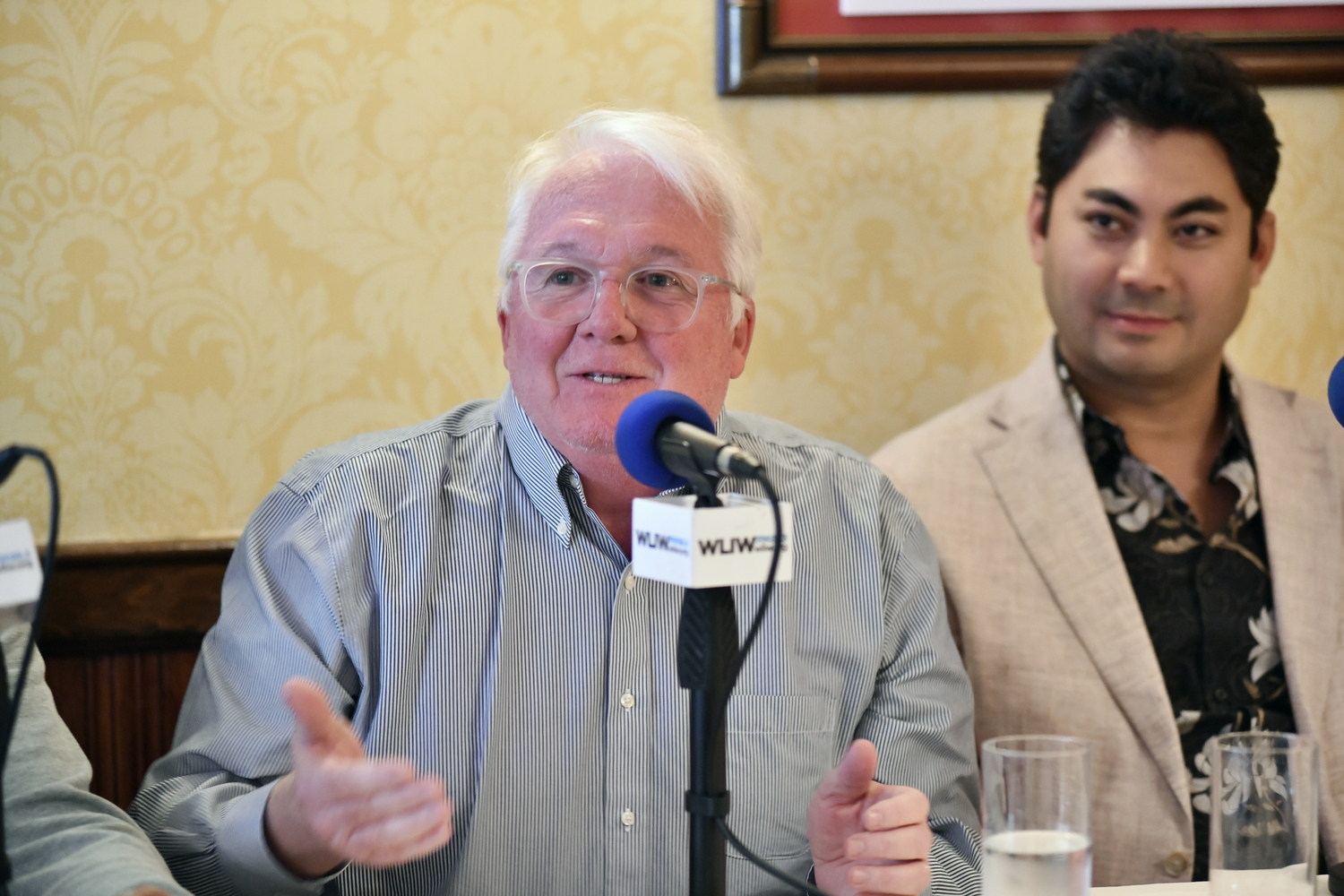
Panelist and Sag Harbor Village Trustee Aidan Corishat the Express News Group's latest “Local Matters” themed Express Sessions on Thursday, October 23, at the American Hotel in Sag Harbor. DANA SHAW

Panelist Jesse Matsuoka. DANA SHAW

Panelist Lisa Field. DANA SHAW

Panelist Tracy Mitchell. DANA SHAW

Panelist April Gornik. DANA SHAW

Panelists Ed Haye and Aiden Corish. DANA SHAW

Audience member Jim Larocca asks a question. DANA SHAW
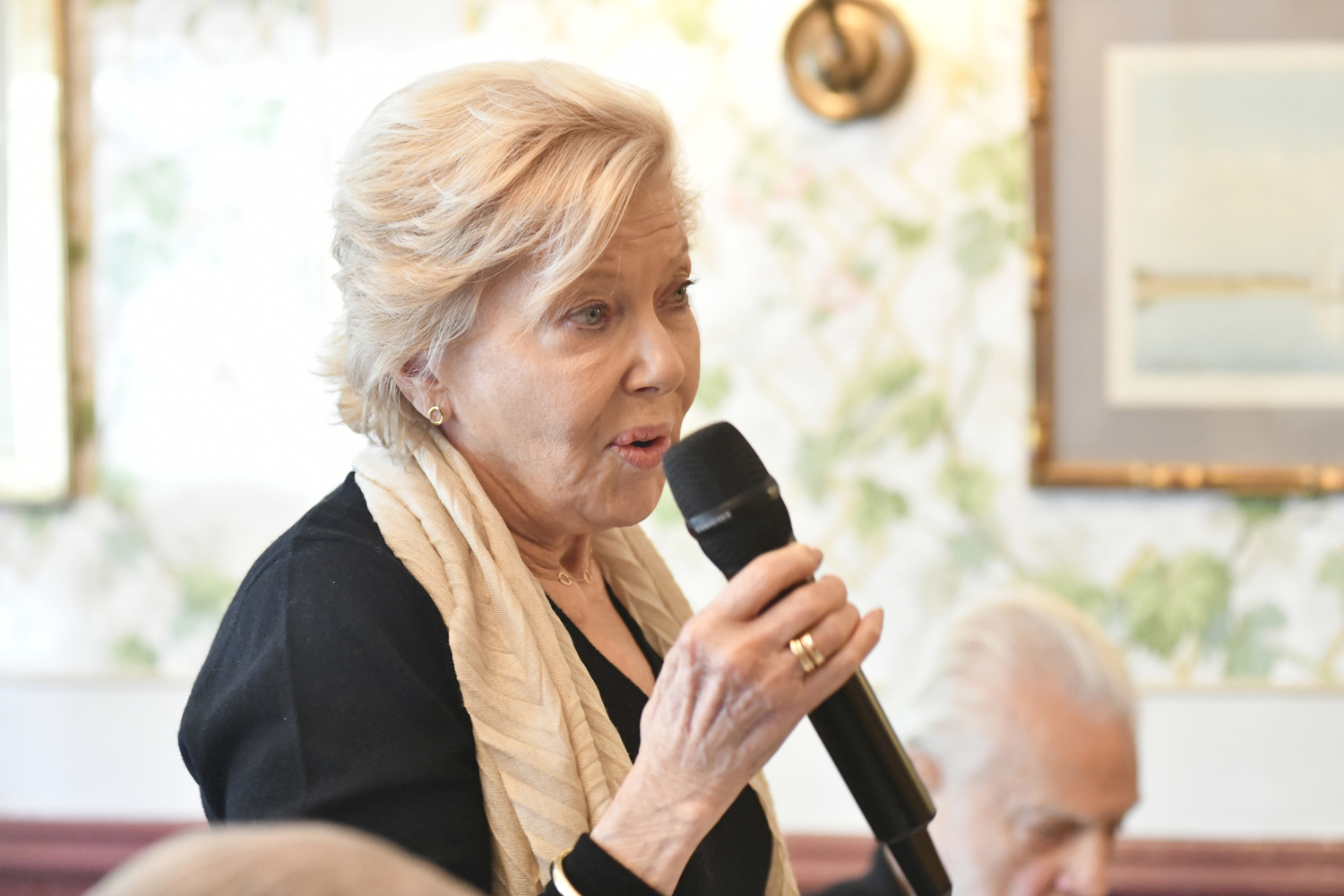
Audience member Hillary Loomis asks a question. DANA SHAW

Panelist Tracy Mitchell. DANA SHAW

Audience member Ray Pettigrew makes a point. DANA SHAW

Audience member Kevin Menard. DANA SHAW

Audience member Peggy Gallagher.
Parking, or the lack thereof, which has become a perennial issue in Sag Harbor, was the principal topic tackled at an Express Sessions panel discussion on “Local Matters” held on Thursday, October 23, at the American Hotel.
Unlike previous events in the series, which typically have a set subject, moderator Joseph P. Shaw, the executive editor of The Express News Group, urged the six-member panel and the audience “to really drive what we talk about today.”
And that six-member panel, which was made up of representatives of local government, business and nonprofit cultural organizations, made it clear that parking was a major concern.
“I’m here to listen in the spirit of this discussion,” said Trustee Aidan Corish, one of the panelists. “I’ve heard a lot of people complain about the parking, complain about the system we have set up, even though the same system is used around the country.”
Corish spearheaded the effort to bring paid parking to the village, first to Long Wharf and more recently to the gas ball and Meadow Street lots, as a means to raise money for transportation-based infrastructure improvements without relying on village taxpayers “who share their village with hundreds of thousands of visitors” each summer.
“Parking needs to be shared,” said Corish. “There is never going to be enough for everybody at the same time.”
Tracy Mitchell, the executive director of Bay Street Theater, who also served as a panelist, said the system Corish described may work in East Hampton Village, but it doesn’t work in Sag Harbor because “we don’t have the internet capabilities or the cell service of other areas.”
She said one of the biggest complaints of theater patrons is they can’t figure out how to work the ParkMobile app. “So they are all frustrated before they even experience what they’ve come to town for,” she said.
This year, the problem reached a crescendo, she said, as many patrons told her they would not put up with the hassle of trying to park again.
Jesse Matsuoka, an owner of Sen and K Pasa restaurants, chipped in. “It’s problematic, because it won’t even open,” he said of the parking app. Often, he added, it stops working “in the middle of processing.”
Corish said the village would be open to new ideas, including installing kiosks, where patrons could sign in, to replace the app.
Trustee Ed Haye, who also served on the panel, stressed that the village needed to get a handle on what he described as “a really very complex” parking system, with paid parking in some lots, unenforced three-day parking in others, and a variety of time limits in other lots.
“We need some data,” Haye said. “We are hiring a traffic consultant to help us analyze our current parking system.”
The village wants to encourage turnover among visitors, provide parking alternatives for residents and accommodate employees, Haye said.
“We will not fix this by next season,” he said. “But we can start the process of building a more coherent, rational system going forward.”
April Gornik, a founder of The Church arts center, called the paid parking system “an abysmal failure.” She also said she did not see much enthusiasm for a proposal raised last summer to bring in a shuttle system for employees and others who park outside the business district.
“It’s an American blight that people can’t imagine having to walk 15 minutes into the village,” said. “It’s just unimaginable.”
By comparison, if someone went to New York City and found parking within a 15-minute walk of their destination, “you’d be so happy,” she noted.
Fellow panelist Lisa Field, an owner of the Sag Harbor Variety Store, said the paid parking program the village expanded last summer has been a burden on business owners. The system, which provided a number of exceptions for residents of both the village and the surrounding areas, “made it really clear who we are targeting,” she said. “We are targeting our customers — and they figured that out, too.”
As a result, she said, some customers had begun to skip the village when they go shopping.
“If businesses fail, then the parking and traffic issue is going to solve itself, too,” she said. “The businesses on and off Main Street around this village are what keep people coming. They come to shop, they come to dine, they come to go the theater, they come for the arts.”
When the discussion was opened to the audience, former Mayor Jim Larocca pointed to a specific development — Jeremy Morton’s proposal to redevelop the 7-Eleven building and 2 Main Street — as having the potential to exacerbate many of the problems facing the village.
“They will overburden the traffic you talked about, the sewage system, the parking system, they will complicate every single element that is on your minds,” he said of the extensive renovations and expansions proposed for the two buildings.
Larocca then charged that the village’s review boards were working with the developer “to perfect their application.” In doing so, he continued, they would put the village in legal jeopardy if the developer didn’t obtain approvals for what he thought had been promised.
Larocca then distributed copies of renderings of the buildings that were presented to the Board of Historic Preservation and Architectural Review as a discussion item last month.
Both Haye and Corish reacted to Larocca’s comments.
“Our boards have been very diligently working through them at the appropriate time, at the appropriate pace, in the appropriate way,” said Haye.
Corish said Larocca was off-base. “I reject completely Mr. Larocca’s inference that there is some sort of coordination going on with these projects,” he said. “That’s really an abysmal thing to say, and shame on you.”
When Larocca sought to continue the exchange, Shaw moved on to other topics, asking panelists what could be done to help the village thrive.
“Support the things you love,” responded Mitchell, who pointed out that each seat in the Bay Street Theater auditorium needs to bring in $23,000 a year for the theater to break even.
Gornik called for stricter zoning laws to rein in development in flood-prone areas like Bridge Street. Kevin Menard of Dragon Hemp Apothecary urged the village to not allow landlords from papering over windows when shops are vacant. Matsuoka said he was concerned about franchise businesses moving into the village. Others asked if there were ways the village could prevent limited liability corporations from buying village real estate and transforming houses into high-end rentals.
Shaw closed the discussion by asking panelists to rate the village on a scale of 1 to 10. Most gave it high scores despite the challenges facing it.
Corish, who has traveled extensively for his work, rated the village a 9, saying “99.99 percent of the people on this planet would only wish they had our problems. I think we need to take a step back, appreciate what we have and protect it.”


 Stephen J. Kotz on Oct 29, 2025