


 3 Photos
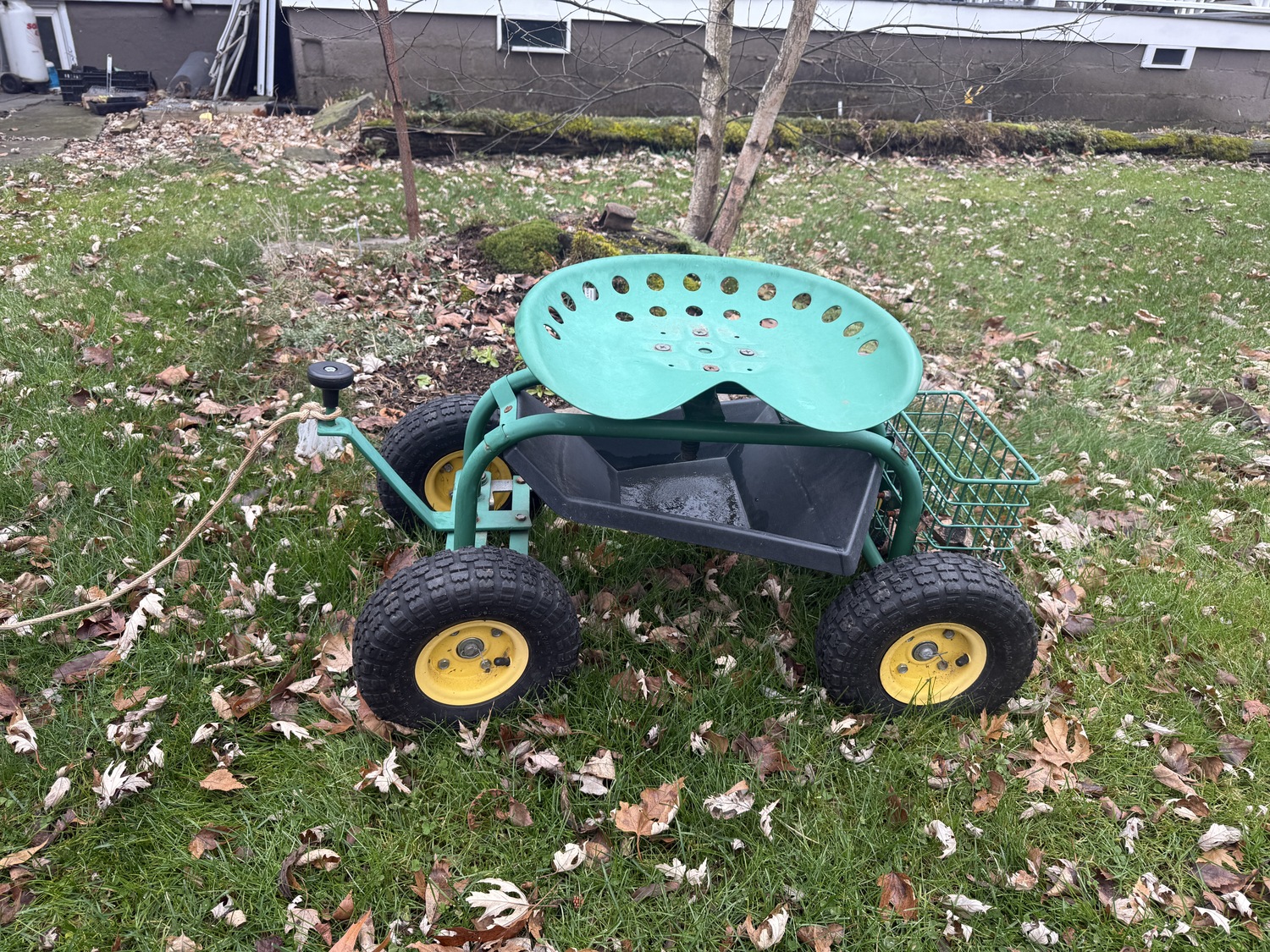
This is my trusty garden scooter, as mentioned in this week’s column. The orange one noted is nearly identical, but if you want green, there’s another choice. ANDREW MESSINGER
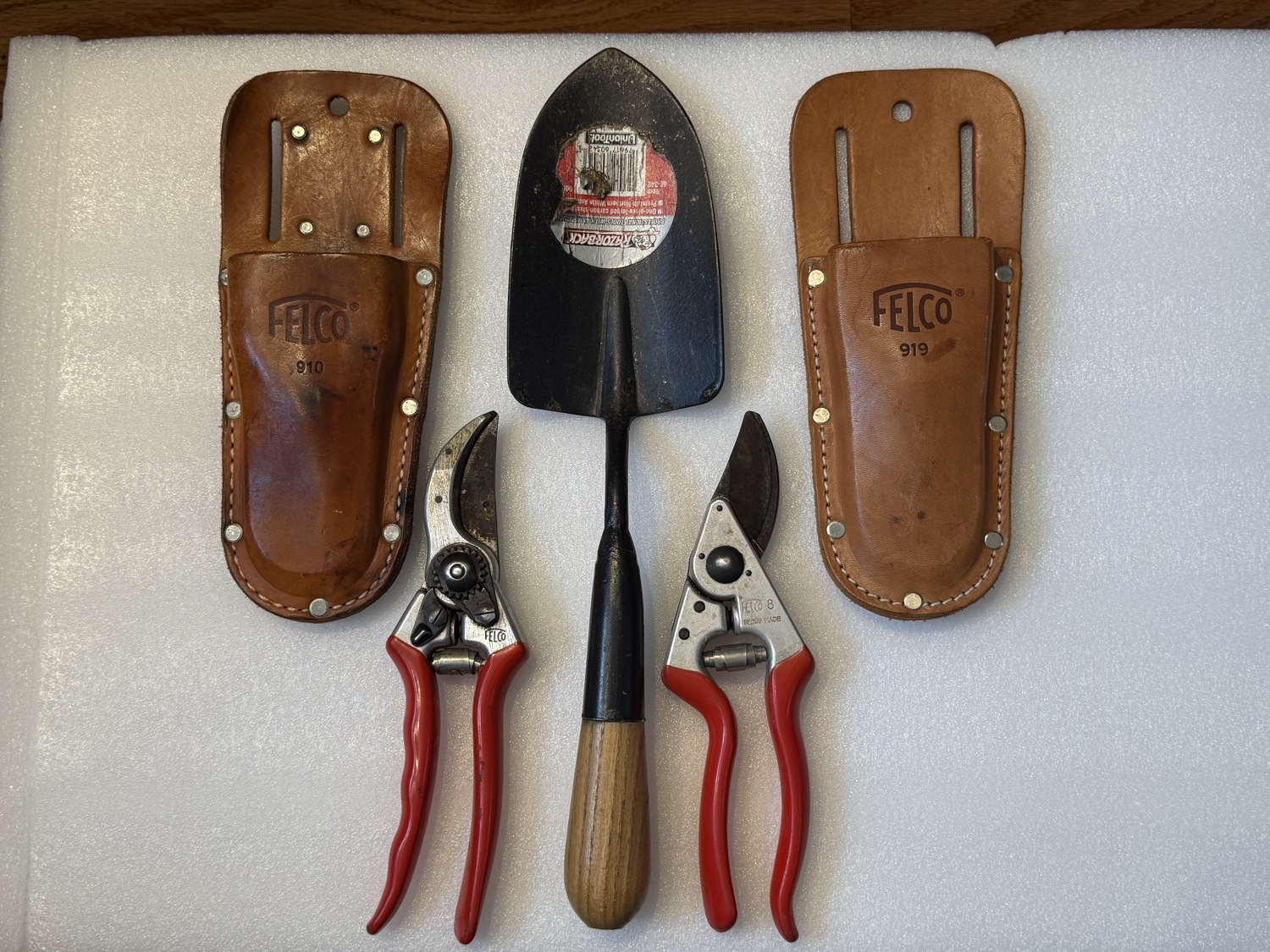
On the far top left, a Felco #910 pruner holster with belt loops and a metal belt hook on the back. On the far right, a Felco #919 holster with just the belt loop. On the bottom left, a classic Felco #2 pruner and, to the right, a Felco #8. In the center is a steel garden trowel with a wooden handle. Any or all of these will make lasting holiday gifts for the gardener in your life. ANDREW MESSINGER
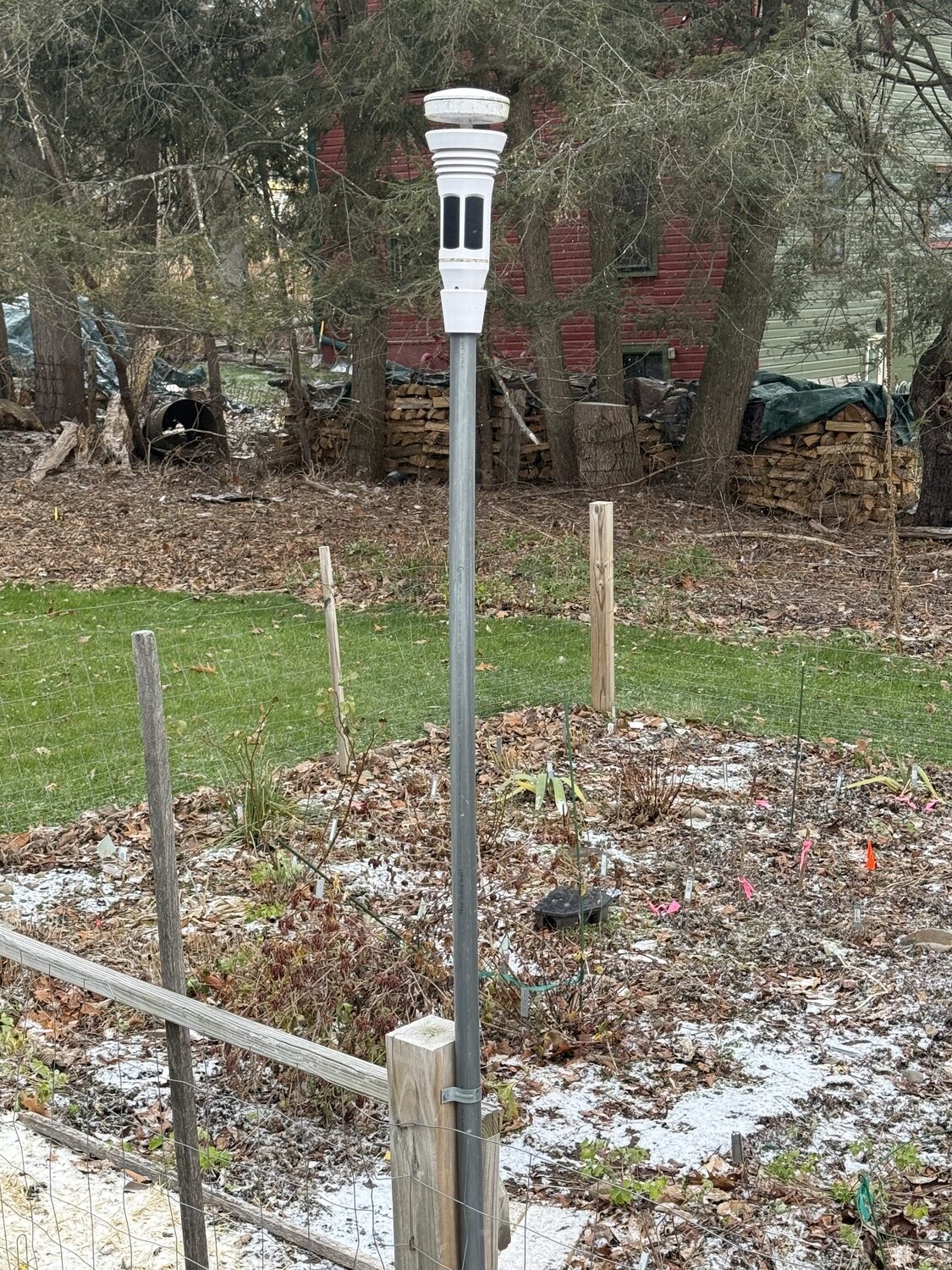
The Tempest weather station sits on a pole and has no moving parts, so nothing to break or get stuck. Transmitting direct to your phone, or other device, it’s a great home weather station. It does not have a soil probe for soil temperature, but not every gardener needs that information. ANDREW MESSINGER

So, what will you be giving your favorite gardeners for holiday gifts this year? Running out of ideas?
Ah, well, the Hampton Gardener is here to help with suggestions that will please your recipient and maybe even help you drop some hints. To find these gifts, look in local garden centers, Amazon, A.M. Leonard and other retailers.
For starters, no gardener should be without a hand trowel. It’s one of the most basic garden hand tools. The problem is that many of the ones sold in garden centers and online are poorly built and little more than junk. They fall apart, break when overexerted and can be very frustrating.
My favorite hand trowel is the A.M. Leonard steel nursery trowel (14 inches), available at amleo.com for $23. This trowel lasts forever and I’d be lost without mine. Unlike most other hand trowels, this one will never break or bend. It’s made from thick and hardened steel for both the blade and shank, with a wooden handle that fits well in the hand. Mine lasts for years and the only reason I have to replace it is because I lose it. One trick is to wrap a piece of red electric tape around the top of the steel neck so it’s visible on the ground or lawn. There is a version that has a longer handle and is 20.5 inches, but I’m partial to the shorter model.
If you’re a regular reader, you know that I think every single gardener should attend the Philadelphia Garden Show at least once in a lifetime. It can be a nearly religious experience for us. You can give the gift of the flower show by buying tickets for your favorite gardener as a holiday gift. It can be a day trip from out here, but a long one, so maybe book an overnight. You can get information on dates and ticket prices at phsonline.org/the-flower-show.
I’ve raved and written extensively over the years about Felco pruners, especially their #2 and #8 models, but they’re expensive to lose. The solution? A Felco pruner holster, which can be clipped to or threaded onto a belt. It holds the pruner in place and, for under $20, it will certainly save a gardener four times that amount — the replacement cost of a good Felco pruner. These are available online and at most garden centers for about $18.
Plants, especially houseplants, need fertilizer. There are dozens of products available from liquids to tablets and tiny spikes you push into the soil. In my humble opinion, though, the best houseplant fertilizer is an organic one, since organics by their nature are slow releasing and easily absorbed by plant roots. We used to shun these because the older types were derived from fish extracts and unpleasant from an odor standpoint. However, an odorless, 16-ounce bottle of Espoma organic liquid indoor houseplant food, or Marphyl Organic Liquid Fertilizer, is under $15.
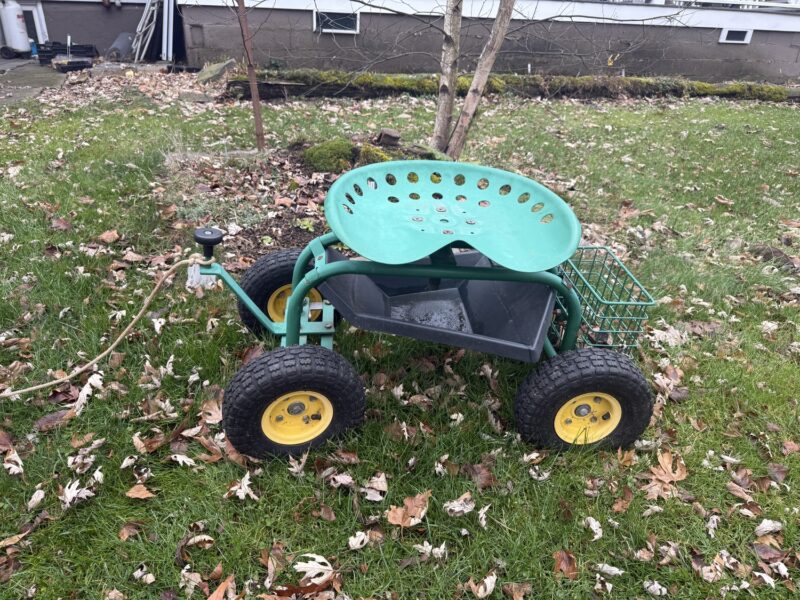
Crouching down in the garden and working on your knees can be a killer. A garden scooter solves this problem and a few others. With large air-filled tires, it has a steel frame and a 360-degree turning seat that you can store things underneath. There’s also a storage basket behind the seat, which can be raised or lowered by turning the seat on its screw axle. Stick with a metal one and avoid the plastic types. Mine must be at least 15 years old and gets heavy use for planting, weeding and pruning on low shrubs and roses. A.M. Leonard sells one for about $180, but it’s orange. Gardener’s Supply sells one for $130 that’s available in four colors and while it’s not as sturdy as the A.M. Leonard model, it will suit the casual gardener well.
For gardeners with larger plots that need to be tilled and planted, a mini tiller can be a great gift that saves time and backs. The Mantis two-cycle model 7924 (about $390) is the one I’ve used for years and, with four removable tines, you can till in two widths to a depth of 6 inches or more. It has a kickstand for keeping it upright when not in use, with speed and other controls on the handlebar.
There are accessories available for seed furrows and dethatching. There is also a four-cycle model, but it’s heavier and more expensive, though a bit more powerful. There are battery-powered and corded models that simply scare me — with a power cord that might tangle with the tines. No need for those, though. Just about every time I pull the starter cord, it works.
For the gardener with hedges, there’s the Black & Decker 20-volt cordless hedge trimmer. At just over 6 pounds, it’s relatively light and, with a 20-inch double-sided cutting bar, it can get work done fairly fast. It does great work on privet hedges and I even used mine to cut a stand of multiflora rose canes to the ground. It comes with a battery and charger, but if you think it’s going to be used a lot, an extra battery can come in handy. This is not a toy, so remind your giftee to be careful.
For smaller trimming jobs, Sun Joe sells a hedge trimmer that easily converts to a grass trimmer. Battery operated, the HJ604C two-in-one model is a great pair of grass shears for edging and other places where the mower doesn’t reach. It’s less than $40, just under 3 pounds and easy to handle, perfect for a gardener who just needs to touch things up.
And lastly, there are the Felco pruners. Yes, them again. There is no other pruner like a Felco. You can easily get replacement parts, a blade sharpening kit, replacement blades and the pruners just plain work. Not inexpensive, though, but considering that a Felco can last a decade or longer, even at $80 they are still a great value. I recommend the #2 or the #8, but there’s also a left-handed model, as well. Sweeten the gift with an extra spring and blade.
I think that every serious gardener should have a weather station, which makes for a great holiday gift. Remember, weather is local and the forecast you see on TV isn’t — and neither are the forecasts from the National Weather Service.
For a home weather station, there’s one feature that most don’t have: soil temperature. Knowing the soil temperature is critical for understanding when the ground is warm enough for any given seed to germinate. My favorite weather station from Tempest (around $350) rings all the bells and rings them very well. But it has no soil temperature probe. Other than that, it tells gardeners everything they need to know, sends the data to your phone and allows you to store historical data. The Tempest also has lightning detection, which can be very helpful. It will tell you approximately how far away the lightning strikes are, but not in which direction.
The Ambient WS-5000 station with a soil temperature probe will run about $385 and, like the Tempest, it has no moving parts to break. It transmits data wirelessly to a console that’s about 6-by-8 inches, which can sit on a windowsill to receive the signal from the station. It too can send data to your phone, as well as alerts.
Both the Ambient and the Tempest will tell you that it’s raining and at what rate, and the total rainfall for that event.
For quite a bit less money, there’s the Ambient WS-2902, but this one measures the wind speed with wind cups and wind direction with a wind vane. Both can be affected by ice and snow, though, so it tends to be less accurate in those areas. But for a beginner, the $160 price can be a deal maker — especially if frozen wind cups and a frozen wind vane that may only happen once a year is an acceptable trade-off. You can add a soil temperature probe for about $25.
There are many other weather stations to choose from and many are less than $125. After looking at the reviews, testing and comments, though, these appear to be little more than junk and after a short time, your gift may not fill your intended with glee.
In the near future, a column on stocking stuffers for gardeners and seeds that kids will love to plant. Keep growing.
More Posts from Andrew Messinger


