


 3 Photos
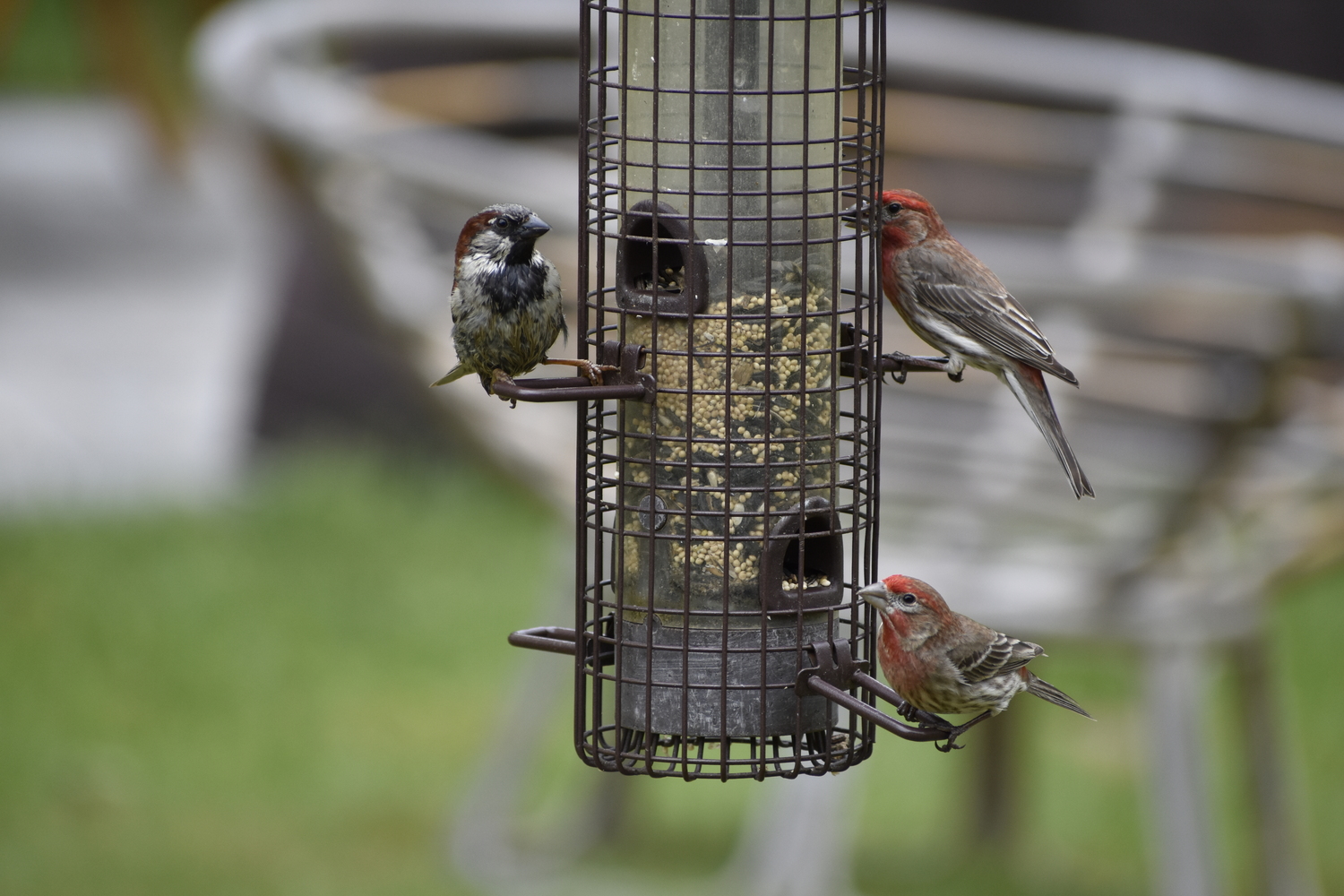
An Old World sparrow and house finches on a tube feeder. BRENDAN J. O'REILLY
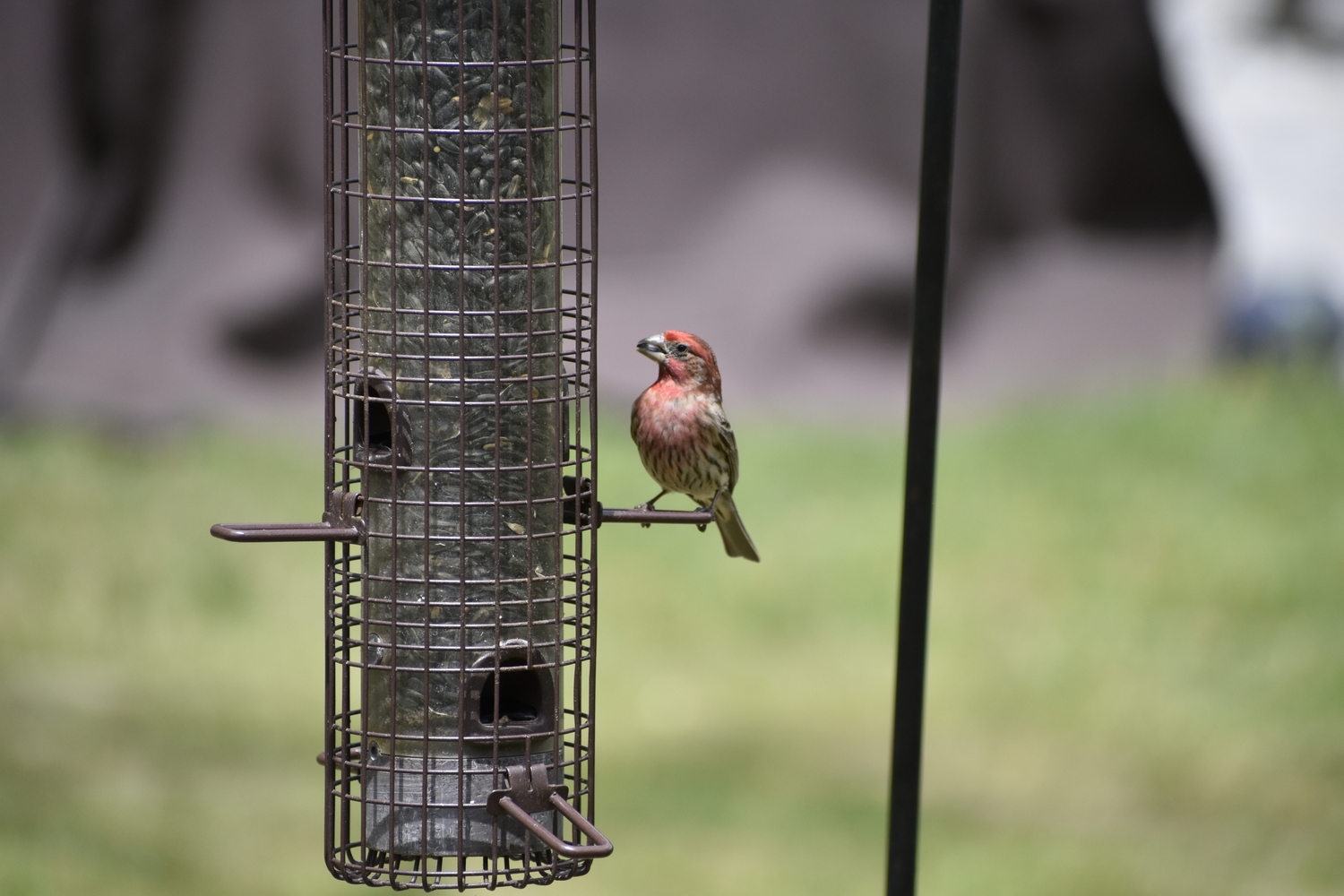
A house finch on a tube feeder. BRENDAN J. O'REILLY
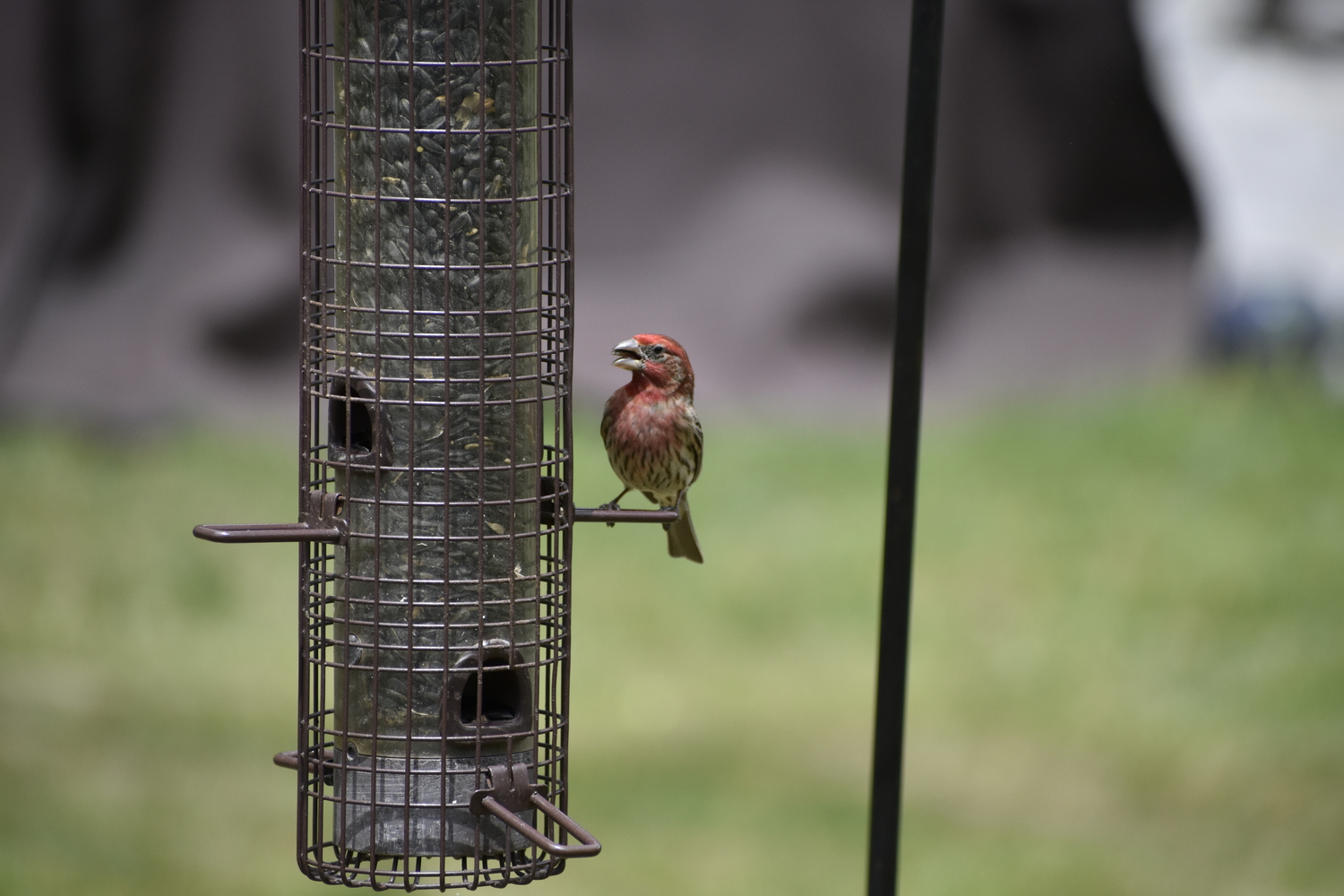
A house finch on a tube feeder. BRENDAN J. O'REILLY
Have you ever wondered how the birds you see that don’t migrate during winter survive freezing temperatures and lack of food? Birds that never leave their home environment are known as “resident birds” who have traded the dangers of migration for the struggle against the bitter-cold. These birds need to solve two immediate problems, how to stay warm and how to find enough food.
We can help our feathered friends with both challenges. The easiest and most immediate step to counter any food shortages is by providing bird feeders on your property. The added reward is the opportunity to watch the birds’ antics up close and in flight.
There are a variety of feeders designed for different food and birds. Hopper or house feeders, window feeders, tube feeders, suet feeders, and nyjer feeders are some of the most common. If you are limited to having one feeder the Audubon Society recommends a tube feeder with black oil sunflower seeds. Placed 5 feet off the ground, it is a good choice to attract small birds such as sparrows, chickadees, titmice, finches and grosbeaks.
Suet feeders can be hung from trees, poles or a wire stretched between trees to attract starlings, woodpeckers and crows. Place hopper feeders on a pole 5 feet off the ground for larger birds such as jays, grackles, cardinals and blackbirds. Thistle or nyjer feeders are good for small-beaked birds like finches, redpolls and pine siskins. Hang from trees or place on a pole 5 feet off the ground and near other feeders.
It is essential that feeders are kept clean and free from bacteria. Clean every few weeks with hot soapy water or with diluted bleach, rinse thoroughly and allow to dry completely before refilling. Damp seeds allow bacteria and fungus to grow. Move feeders periodically and clean up waste and droppings that may have accumulated under the feeder. Always use gloves when handling your feeders. Your reward is a delightful daily “air show.”
For the longer-range effort, your landscaping choices can positively affect the bird population and combat the effects of climate change. Drought, floods and unpredictable weather directly threaten birds’ habitats and food sources. Planting native trees and plants that can provide essential seeds, nuts and even insects into the autumn and through the winter will also help restore the ecological system for our region. Planting for three seasons — spring, summer and fall — will help our resident birds survive. A great resource for your choices is the Audubon Native Plant Database. Just enter your zip code and email to receive a list of the best flowers, shrubs and trees for birds in our area as well as local resources.
Surviving winter is no easy task, but we can help our feathered friends with feeders and, over time, by augmenting our landscapes strategically. If we all do our part, we can ease the stress on our resident birds and enjoy their winter company.
Peggy Veziris is a member of the Westhampton Garden Club Conservation Committee and the chair of WGC Gardens.


