


 4 Photos
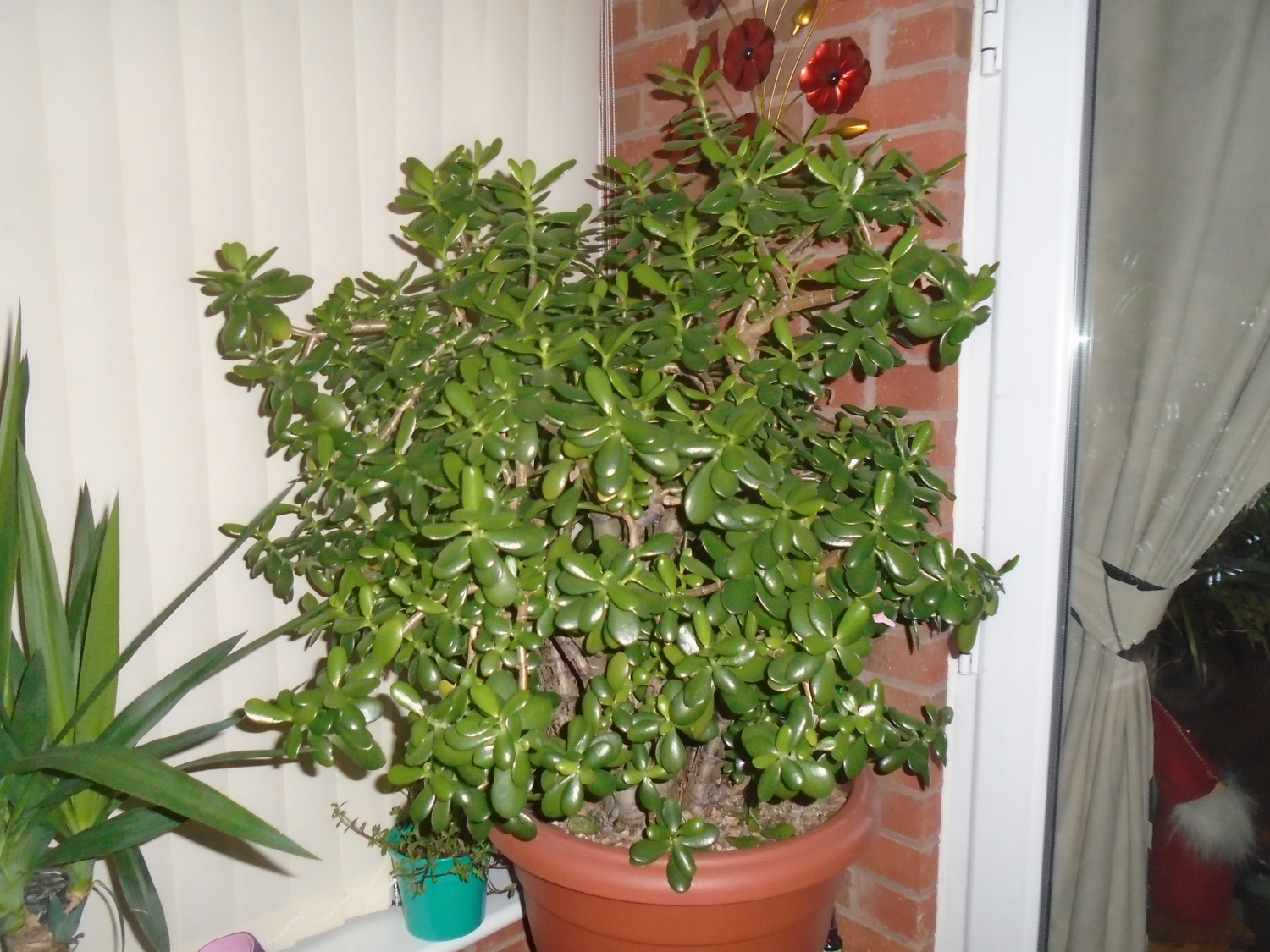
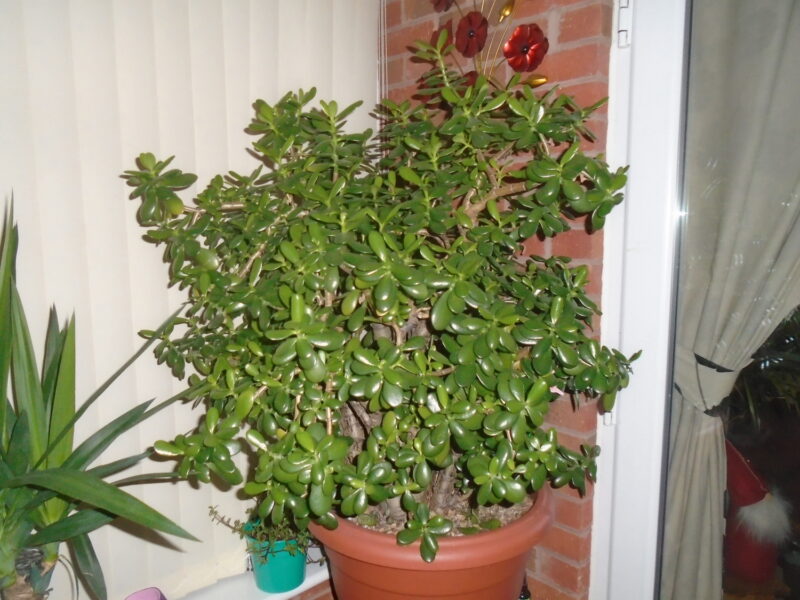
A 40-year-old jade plant.

A panda plant (Kalanchoe tomentosa) in a 4-inch pot at a garden center. The upper leaves look fine and characteristic, but the lower leaves are a bit yellow, which may indicate this isn’t the specimen you want. ANDREW MESSINGER

Jade plants in 5-inch plastic pots. Remember, this is a succulent and needs very little water. The plant (lower center) has a leaf that’s showing signs that the plant has been overwatered (brown center with yellow margin), or is in a non-breathable plastic pot. Find a healthy one, move it to a clay pot as it grows and go easy on the water. ANDREW MESSINGER

This aloe vera is way over-potted in this 8-inch pot. I’d chose the smaller plants to the right in 4-inch pots, which cost far less and can be potted up in the spring (or sooner) to larger pots where they’ll thrive into the spring and summer. ANDREW MESSINGER

This week marks the final installment of my current suggestions for houseplants. Some are easy, while others are not so easy — but all are possible for any indoor gardener.
There are two succulents that I’ve really enjoyed growing and having as houseplants, though few realize that both flower and are relatively easy to grow. One of them was actually so easy that it got me a blue ribbon several decades ago at the New York Flower Show.
Since both of these plants fall into the category that we refer to as “succulents,” what exactly does this mean? These are plants with the ability to store water in their fleshy leaves — a natural adaptation that allows them to survive in warmer, arid climates. For this reason, they are considered to be low maintenance houseplants and easy to care for. And while all cacti are considered to be succulents, not all succulents are cacti.
Case in point: the aloe vera. This plant is obviously a succulent, but lacks the spines we find on most cacti. They will survive if you forget to water them occasionally, but at the same time, they will not survive if you overwater them. That is their death knell.
While many of us have had an aloe vera at one point, few know of its origin. This plant is actually an evergreen perennial that originated in the Arabian Peninsula. It also grows in the wild in other tropical and semi-tropical regions of the world. Most of us start with an aloe that comes in a 4-inch pot and only gets about a foot tall, at most. However, when grown outdoors in Florida and a few states to the north, it can often be found at a mature height of 4 feet. Many will thrive indoors for a dozen years. Outdoors in the tropics, they have been documented to live as long as 100 years.
But it’s not just a plant to look at in a sunny window. For centuries, the extract from the aloe leaf has been used for its medicinal properties. The gel inside the aloe leaf contains several bioactive properties, including minerals, vitamins, polysaccharides and antioxidants, that can be used to treat burns — especially sunburns — eczema and other skin issues, as well as some digestive problems.
To grow this plant, you need a bright window with indirect light from the south or west. A few hours of early- or late-day sun is fine, but too much sun in an indoor setting can burn the leaves. Sounds odd, but true. You will always do well if the plant is in a clay pot, as this will reduce any chance of overwatering and allows better air exchange into and out of the soil. The clay pot will also add some weight to keep the plant stable as it grows and becomes heavier.
The soil needs to be fast draining, similar to what you would use for other succulents or cacti, in a ceramic pot or plastic pot. Just be very careful to keep the soil on the dry side. When you water, most of the water should only moisten the soil and never stand in the saucer.
Keep your plant tight in the pot and watch for new plants that emerge from the sides of the parent. There are two ways to go here. Let the side shoots continue to grow and pot the plant up as they fill the original pot, or reduce the side shoots leaving only a couple in the pot. You can usually stick a finger into the soil and, by hooking your finger around the root of the side shoot, easily remove it to be repotted or gifted.
But if you leave the plant alone and let it get crowded in the pot, you may be lucky enough to see a flower stalk emerge and grow about a foot above the plant before its small orange flowers open at the top of the stem. This can take two years or more. When the flowering is over, cut the stem and continue caring for the plant.
The best fertilizers to use are fish- or kelp-based organic varieties, applied in late spring and into the summer. You can use a regular houseplant fertilizer once or twice, but diluted at half the label rate.
The only insect problem I’ve ever seen with this plant is when it’s got mealybugs. Inspect the plant at purchase time, as this is the only way you’ll get them. If you see them develop on the leaves — small white dots or fuzzy white dots like cotton — simply put a cotton swab in some rubbing alcohol and twirl it on the mealy bug, which will turn red and get tangled in the swab that you’ll throw away.
You may come across variegated aloe plants with patches of cream, white or yellow in the leaves, and there’s also an uncommon variety called the Tiger Aloe. Others are the Gold-Tooth Aloe and Aloe “Vito.”
Our next succulent houseplant is the jade plant, or Crassula ovata, that you may also find as Crassula argentea. Native to South Africa, the genus “Crassula” means thick or fat, referring to the leaves. The species, “ovata,” refers to the egg shape of the foliage.
This is another plant that prefers to be pot bound and since the branches, stems and leaves can add a good deal of weight, it should be well stabilized by growing it in a clay or ceramic pot — but the largest I’ve seen were grown in wooden pots. Best of all, though, is that this plant seems to survive on neglect, where it tolerates our dry indoors that are similar to its native habitat.
This plant is tolerant of some direct sunlight. The more light the foliage gets, the more red tinge will develop along the leaf margins and edges. If the plant gets too much sun, the leaves may brown and fall off, but are replaced with new leaves in several weeks.
The plant is photoperiodic and will develop tiny star-like white to pink flowers in mid-winter in response to our long nights. The flowers have a faint, sweet scent, and as long as you continue to rotate your plant, the entire plant will flower at once in a magnificent and lightly scented show. You can also encourage the flowering with night temps in the mid-50s going into the winter, preceded by a fall when you reduce watering — and they need very little water, anyway. Keep in mind, though, that any stray light from even a streetlight can affect when and how much flowering you’ll get. And the more light your jade gets during the day, the more compact the plant will remain, instead of getting long and heavy stems that may break off.
The soil for this plant should be a fast-draining loose soil similar to what you would use for the aloe. A commercial cacti soil will be much easier to buy and use than to make your own. Use a balanced houseplant fertilizer at half the label rate, but only every four to six weeks from spring through the summer. No feeding at all in the fall or winter, as the plant will be dormant (but it will look fine). Water sparingly at other times; once every three to four weeks should be ample, but a small amount will go a long way.
The last plant for this week is still a succulent, but it has soft, downy, velvety leaves and generally won’t flower. This is the panda plant (Kalanchoe tomentosa), often called the “Chocolate Soldier.” While this plant can grow 2 feet tall, it’s mostly seen in smaller pots and often available in 3- or 4-inch pots in stores. While it’s a cute plant, it is toxic to cats, dogs and humans if eaten, so it does well on a table or setting where pets can’t get to it.
There are several other varieties, including “Flapjacks,” which has large paddle-shaped leaves, and “Variegata,” with scalloped leaves variegated in white, cream and pink.
As for lighting, it will do well in bright, indirect light, but not in direct sunlight where the leaves may brown. Let the soil totally dry before watering and keep the water off the leaves as they may spot. The plant will do well with normal (dry) house humidity. Fertilizer is only necessary once in the spring, using a cactus or succulent variety.
You can propagate this plant and the jade plant from leaf cuttings. The panda plant will be the most difficult and the jade the easiest. Simply snap off a single leaf and keep the polarity right. If you turn the leaf over by accident, it will never root. Cut off a leaf and let the end heal for several hours. Next, place the leaf on damp sand, or a mix of sand and peat, and provide some bottom heat — though in the summer, you may not need to do this. Keep the soil moist, but not damp or wet, and in bright light, but no sun at all. In two to six weeks, a new plant will begin to grow at the end of the leaf (stem side). And once it’s large enough to be handled and cut from the leaf, it can be potted up.
Three plants for bright spots — two of them will flower if you take care of them right — all perfectly suited for beginning to advanced houseplant parents. Keep growing.
More Posts from Andrew Messinger


