


 5 Photos
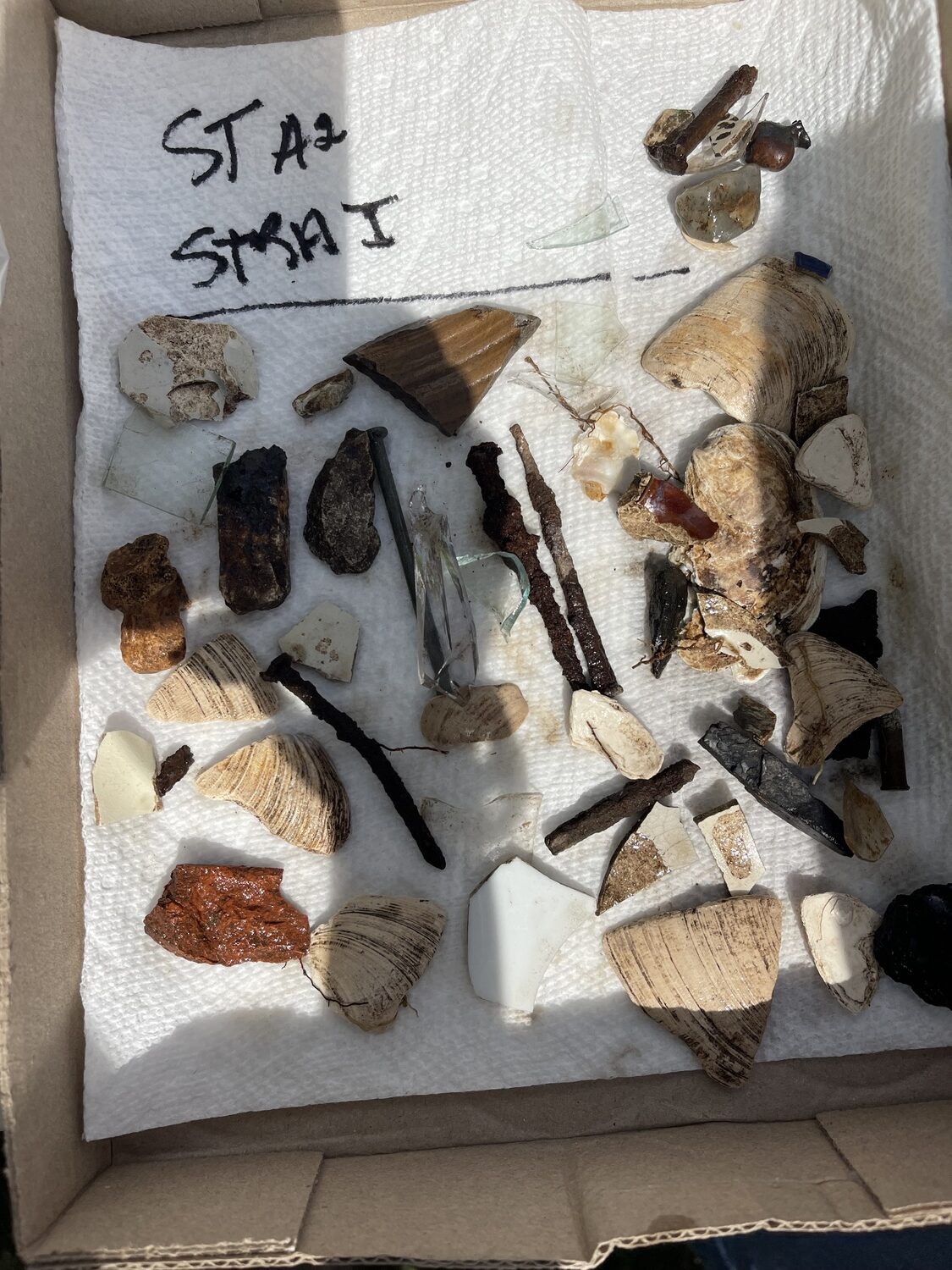
Some of the objects that were found during an archeological dig behind the Sag Harbor Historical Museum's Annie Cooper Boyd house. COURTESY NANCY FRENCH ACHENBACH
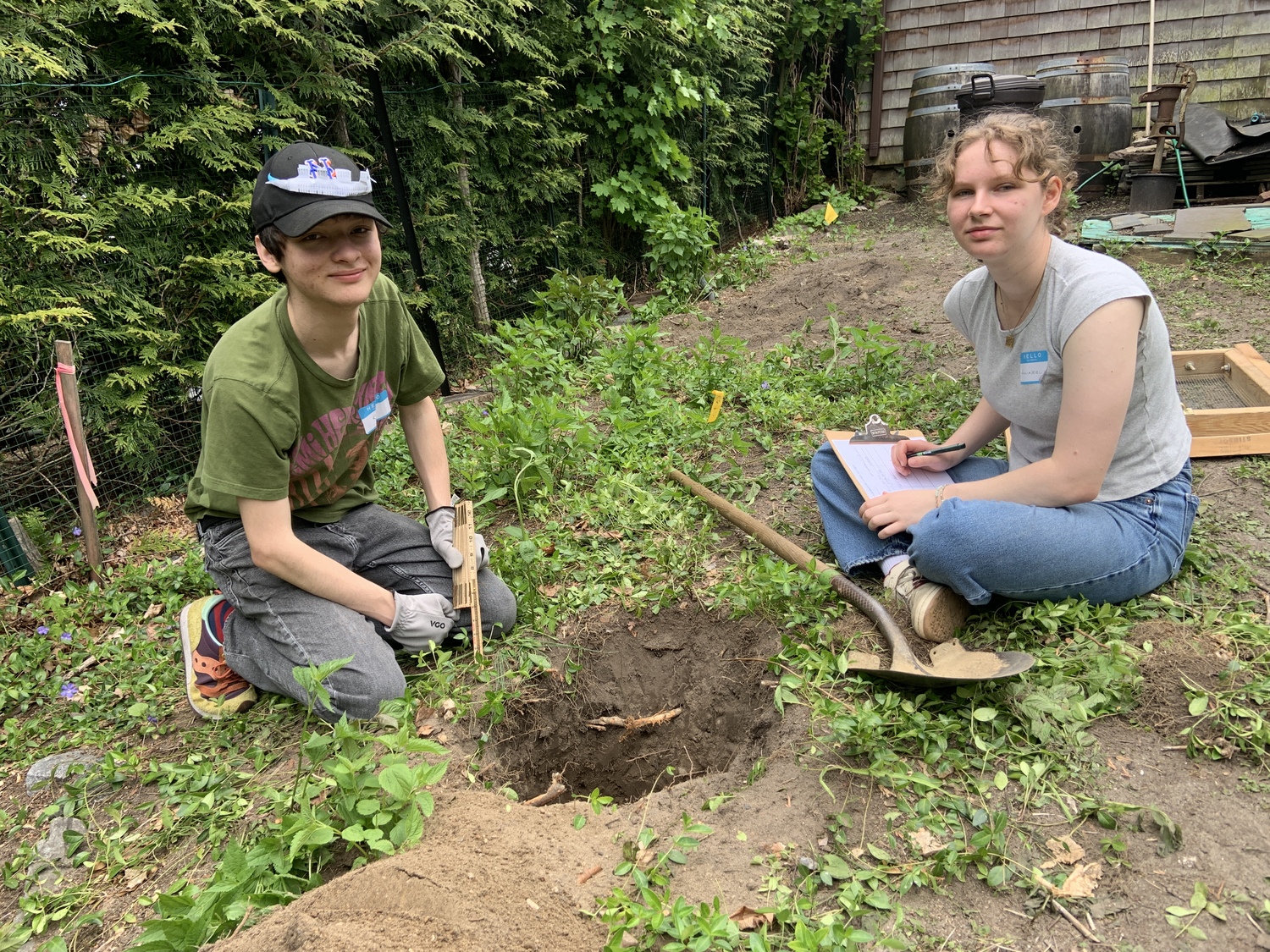
Kai Basseches, left and Annabelle Roussel, Pierson High School students who are also docents at the Annie Cooper Boyd House, helped out with the archeological dig. STEPHEN J. KOTZ
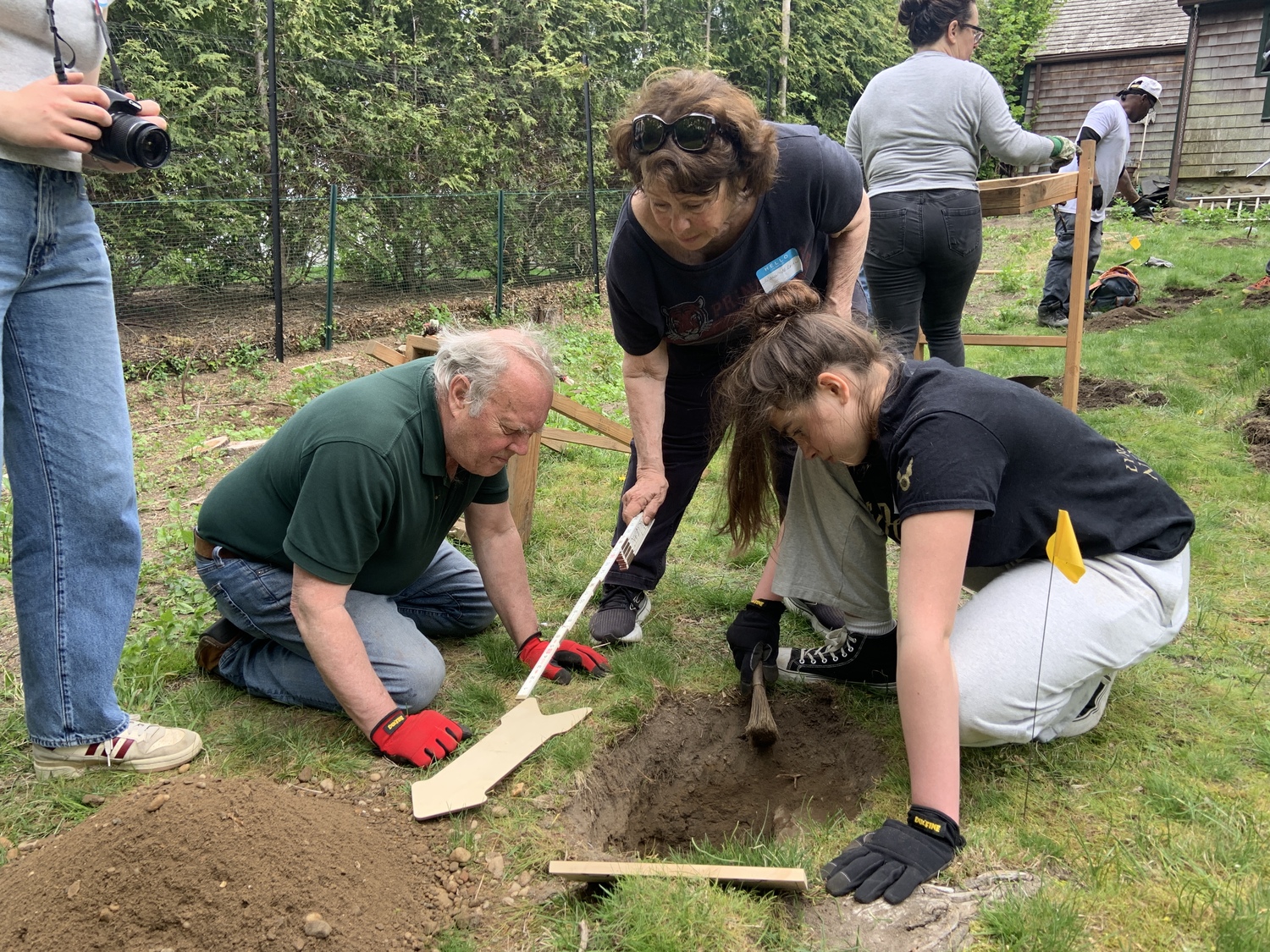
From left, Zach Studenroth, president of the Sag Harbor Historical Museum, archeologist Jo-Ann McLean and Isla McLean examine one of several holes dug behind the Annie Cooper Boyd House for artifacts. STEPHEN J. KOTZ
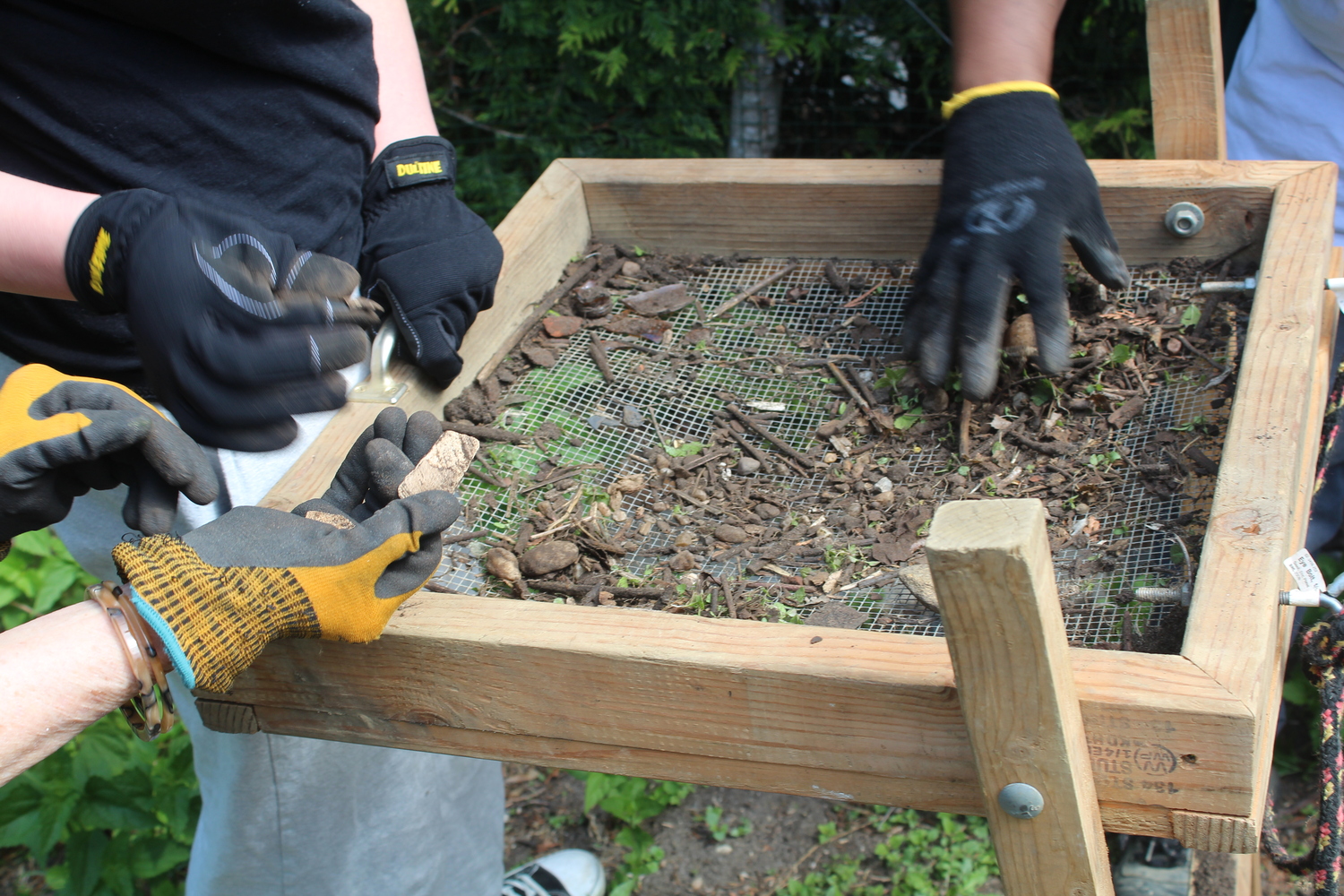
A screening box used to search for artifacts during the archeological dig at the Annie Cooper Boyd House on Saturday. ANNABELLE ROUSSEL
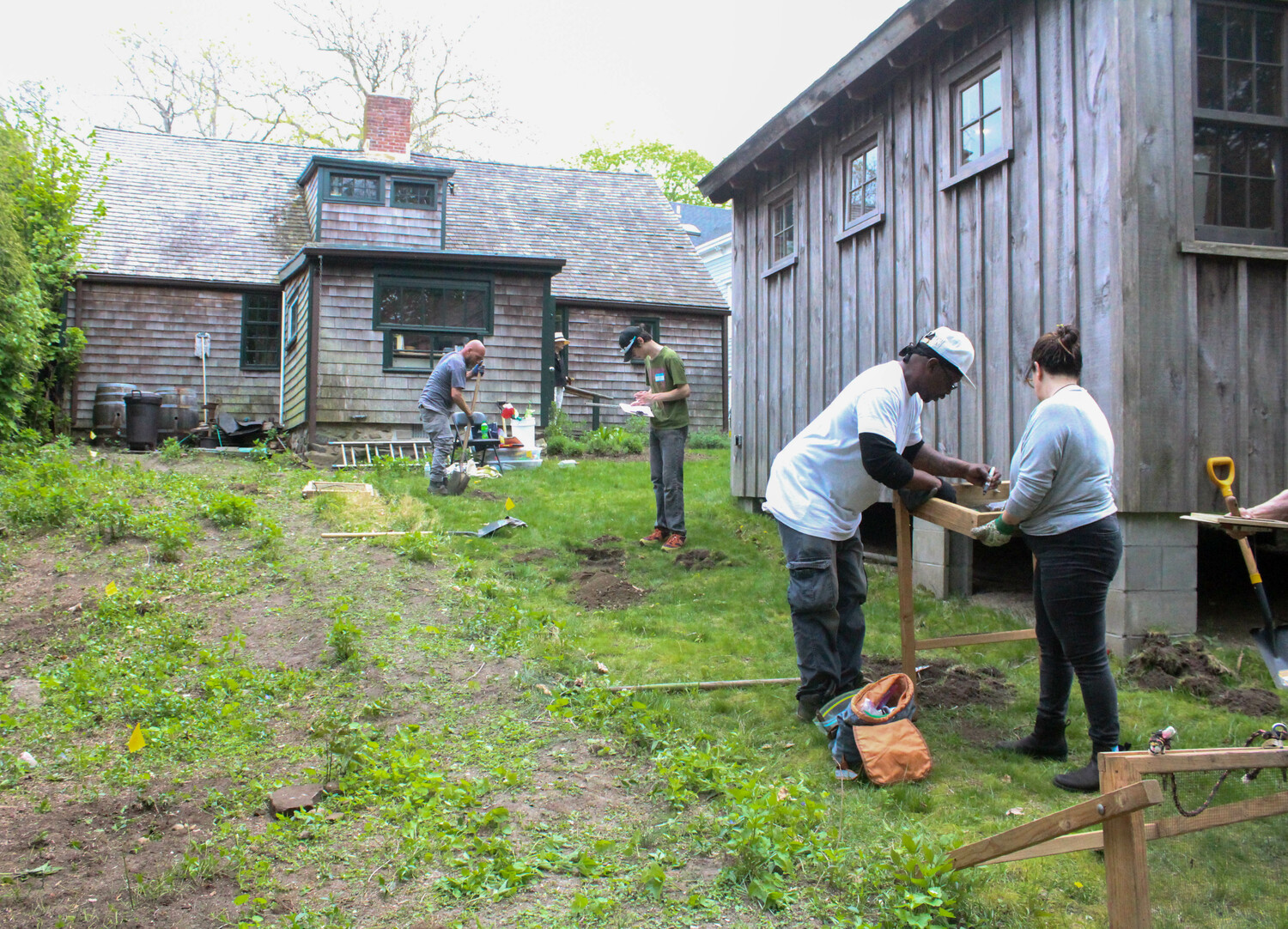
Volunteers gathered at the Sag Harbor Historical Museum's Annie Cooper Boyd House over the weekend for an archeological dig. ANNABELLE ROUSSEL
Saturday afternoon, a half dozen volunteers could be found in the cramped backyard of the Sag Harbor Historical Museum’s Annie Cooper Boyd House, digging away at a series of holes, stopping occasionally to measure the depth and to screen the soil they were scooping out.
The activity was part of an archeological dig led by archeologist Jo-Ann McLean, who recently joined the museum’s board of directors. The dig focused on the area where the museum’s new archive building will be constructed.
“We, as the historical museum, wanted to be sure that we checked in the backyard for anything that might have been significant debris that would have given us more information about the residents of the house, before the archive is built,” McLean said.
If anyone was expecting to find a mastodon bone or a treasure chest full of gold coins, they would have been disappointed.
“We found what I expected to find, which is trash bits from the 19th century: kitchen debris, broken ceramics, a bird bone,” said McLean, who will write a report about the findings that will be incorporated into the museum’s archives. “Maybe they can tell a story about the ceramics that were used at the house.”
Nancy French Achenbach, the museum’s executive director, called it a matter of principle for the museum to investigate its own backyard.
“I think it’s important, because we are in a historic village,” she said. “And this 1760 house is, as far as we know, the only house that has ever been here. Why not find out what is buried in the earth?”
In the days before home garbage pickup, or even transfer stations, most people dug pits behind their homes to dispose of food scraps, broken dishes and other household trash.
Last weekend’s dig focused on nine holes that were dug to a depth of about 2 feet through three levels: the topsoil, a secondary level, and, finally, the sandy base. Each shovelful of earth was screened, with workers pulling out tiny shards of ceramic dishware, shells and other detritus from the 19th century.
Achenbach said the museum’s team was aided by four high school students, Annabelle Roussel, Kai Basseches, Angela Diaz and Isla McLean, who gave up their weekend to take part in the work.
Achenbach said she hoped the museum’s decision to investigate its own backyard might encourage other village residents to do the same thing before they build an addition or undertake other excavation work on their property. “I think it’s important for anyone who buys an old house, especially an old house, to do a dig to find out what is under that land,” she said.


 Stephen J. Kotz on May 7, 2025