


 1 Photo
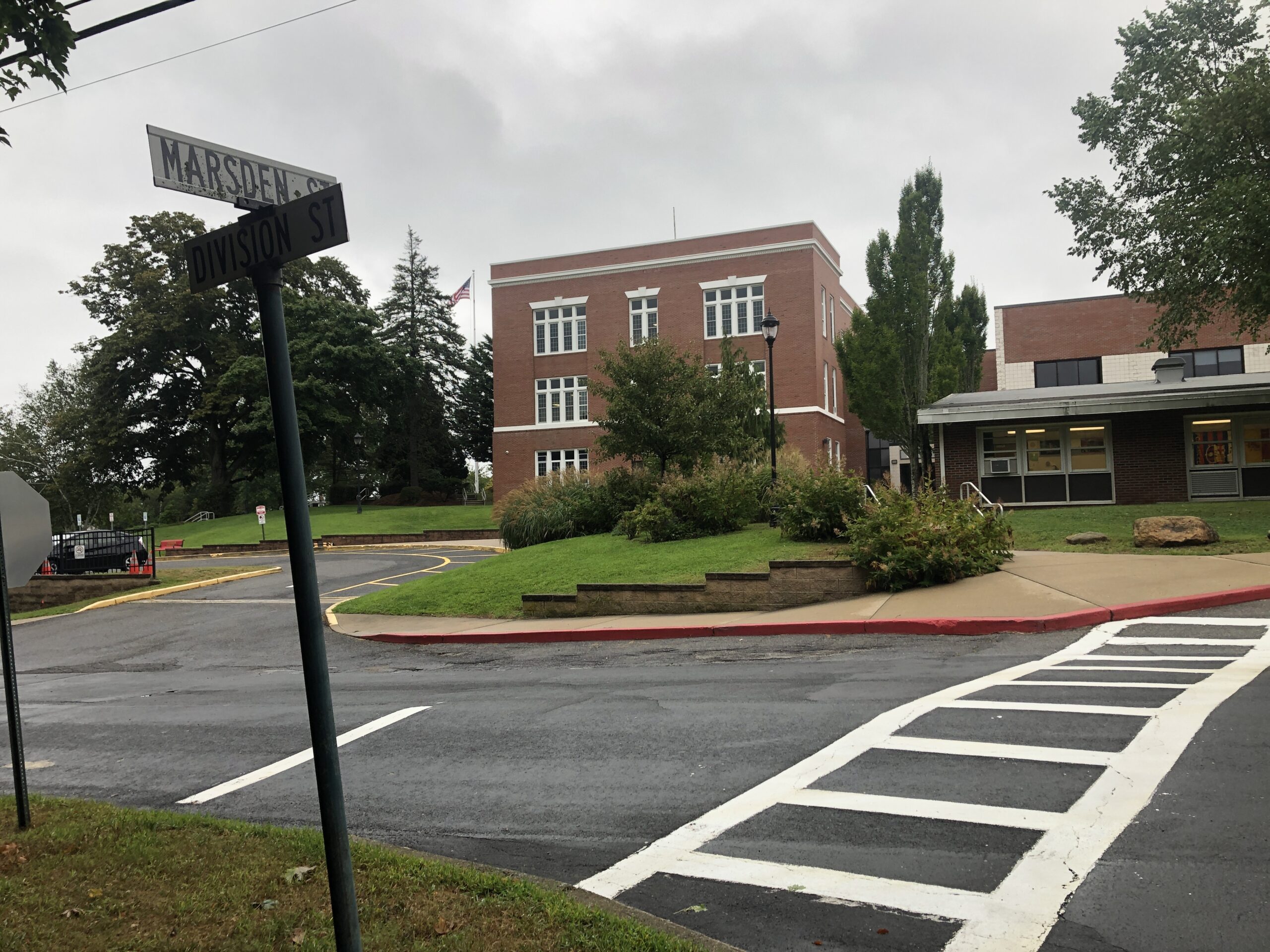
The Sag Harbor School District will use capital reserve funds and money from the Southampton Town Community Preservation Fund to purchase land on Marsden Street, across the street from the school, where it plans to build a new athletic facility.
Sag Harbor residents showed up to Monday night’s Board of Education meeting to share their thoughts on the district’s plans to purchase property on nearby Marsden Street — with a combination of capital reserve funds and money from the Southampton Town Community Preservation Fund — and eventually turn it into an athletic facility for nearby Pierson Middle-High School.
There was a mixture of support and opposition, but mostly questions about the details surrounding the project, how it will all play out, and what impact it will have on residents, especially those living nearby.
Superintendent Jeff Nichols noted that the district has already signed a contract to buy one lot on the south side of Marsden, exclusively with capital reserve funds. However, the closing of the sale of that lot is contingent on the sale of the four adjoining lots on the north side of the street, which would be purchased with a combination of money from the district’s facilities improvements capital reserve fund and the town CPF.
Nichols and the rest of the board made it clear that they would develop the four adjoining lots into an athletic field that could be used by the school’s soccer and field hockey teams, and they would possibly include a track as well.
“The first step is for the contracts to be signed, and we’re working on those now,” Nichols said at the meeting, referring to the four adjoining lots. He also pointed out that the district will hold a vote on November 3, for authorization to use the capital reserve funds for the purchases.
Once those steps are taken and the property belongs to the district, Nichols said they will start the process of surveying the community to seek input on what they would specifically like to see the project include. While the overall goal is to build an athletic field — or possibly two — on the property, conversations about what other details or features should be included will be part of the public discussion.
Nichols pointed out, as he has in past discussions about the project, that the use of CPF money means that the facility will need to be available for public use whenever it is not being used by the student-athletes, so that the facility can be a community resource as well.
Several community members who weighed in during the public comment portion of the meeting, particularly residents who live nearby, had questions about what the impacts would be, and about what the process was when it comes to conducting environmental and feasibility studies.
Raymond Pepe, a resident of Madison Street who lives very close to the proposed site, said he and other nearby residents are “very interested” in what will happen with the lots on Marsden.
“We love Sag Harbor for its history and charm and have been here for well over 20 years,” he said. “My questions are fairly obvious as a neighbor anticipating development.
“Some of my concern is about process,” he continued. “Normally, when you buy a property, you do due diligence in conducting an engineer’s study, feasibility studies and environmental impact statements … But if you buy the property and do it after, what do you do with the property if it doesn’t work out?”
Pepe wanted to know specifically if the district planned on doing a study to determine whether or not the project would create any kind of adverse impact related to the historic district, “pursuant to the state historic preservation office,” he said.
“We’re very concerned about what the impact will be to traffic, lighting, sight lines and the general use of these fields,” he added. “And what the quality of life changes might be for the neighbors immediately adjoining the property or within the broader Sag Harbor community.”
He said he was also eager to hear more about what the opportunities will be for community engagement regarding the project. “When will that happen and what will be the format of that?” he asked.
Jennifer Buscemi, the school business administrator, shared that the district is currently in the middle of doing an environmental impact study, and said that it will be complete before the November 3 vote. She said that studies, when they are finalized, will be available for viewing on the district website before the vote as well.
While several nearby residents seemed wary of the plan for the school to acquire the property and turn it into an athletic facility — citing concerns about noise and traffic, and wondering if it would comply with zoning laws and historic district regulations — there were several residents who showed up to express support.
Jeff Ziglar, a parent in the district, spoke as a representative of a group of parents in support of the purchase, saying there were several reasons they were on board with the plan to develop the property into an athletic facility. He pointed out that it will preserve the land as open use park space for both students and community members, will stop the potential for it to be overdeveloped into residential or mixed use properties, and will increase safety and productivity for students because of the proximity to the school, as opposed to the distance students have to walk for games and practices at Mashashimuet Park. The district still plans to move forward with a capital improvement project at the park, although it has put those plans on pause for now as it works on the Marsden project.
“It’s a great demonstration of the value this community places on education, the environment, and its children,” Ziglar said.
Former longtime board member Chris Tice voiced her support for the purchase as well. She pointed out that the district has long struggled to provide access to quality athletic facilities for the students because the school buildings are on relatively small pieces of property, and also because the district does not have full control over what can be done at Mashashimuet Park.
“We always hoped that surrounding property might come on the market,” she said. “We prayed for it because the footprint [of the school property] doesn’t serve the student needs. It’s more than half a mile walk to the park, and you have a limited amount of control when you’re on someone else’s land.
“This represents a once-in-a-lifetime opportunity to provide a better space for our students,” she continued, adding that the fact that the district was in a position to make the purchases with capital reserve funds and CPF money makes it even more appealing.
Tice said she understands and respects the concerns neighbors have about the project, but said it was the right move for the district.
“Our students deserve this,” she said. “They don’t have competitive fields here. They deserve it, and we have an obligation to provide that for them.”


 Cailin Riley on Oct 5, 2022