


 3 Photos
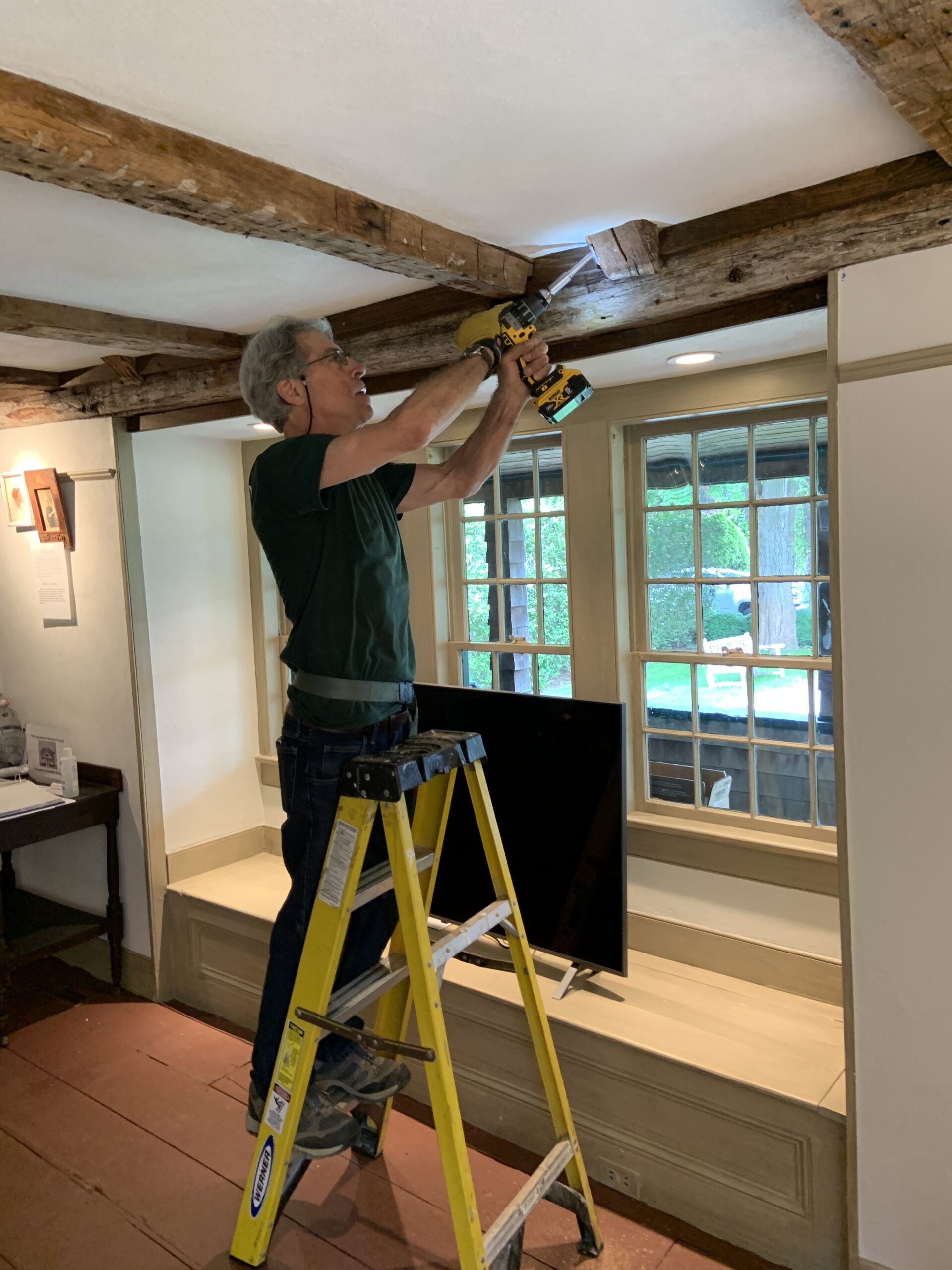
Bill Flynt removes a sample from a wood beam in the Sag Harbor Historical Society's Annie Cooper Boyd House. STEPHEN J. KOTZ
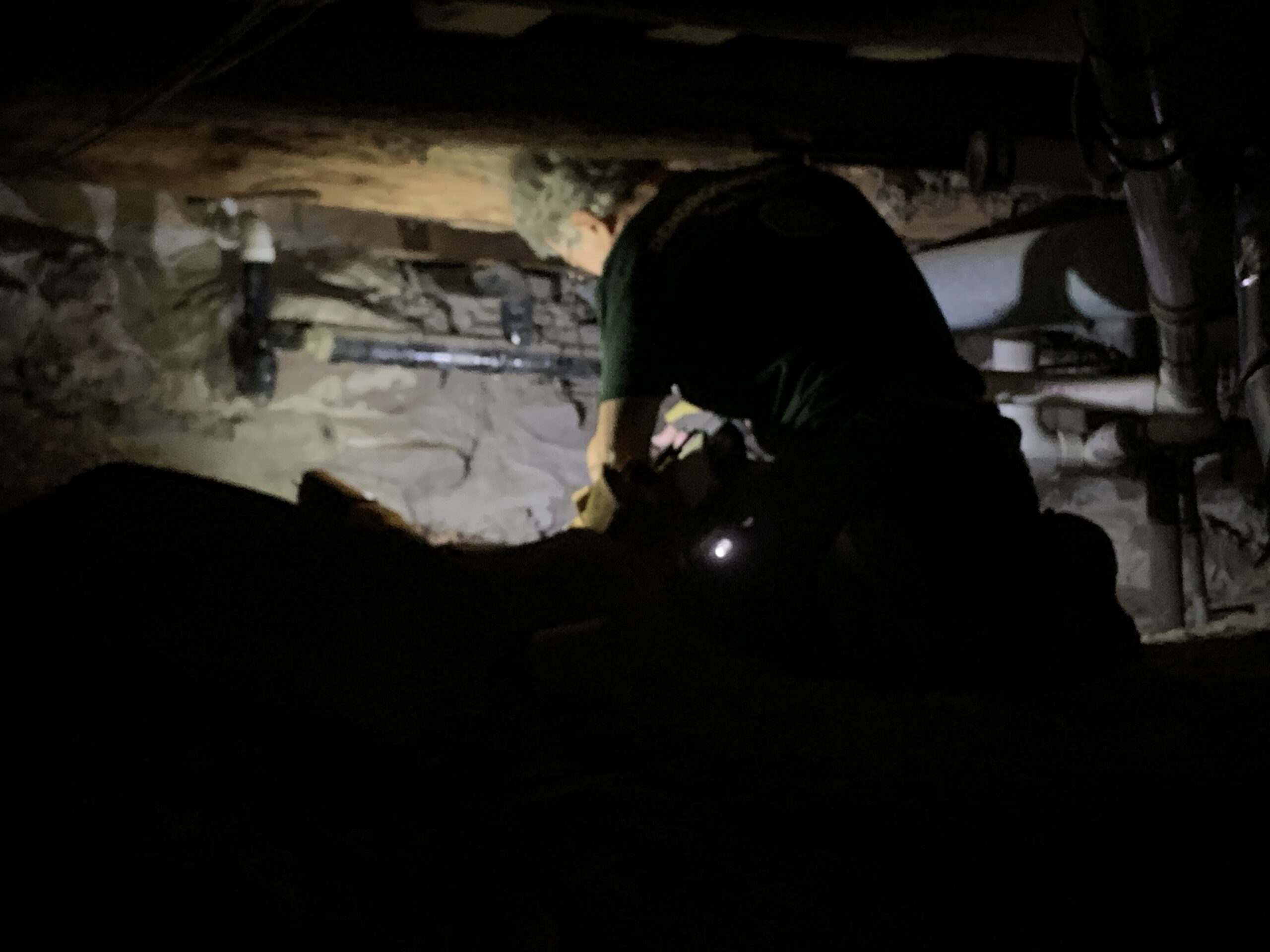
Bill Flynt works in the tight confines of the crawl space of the Sag Harbor Historical Society's Annie Cooper Boyd House. STEPHEN J. KOTZ
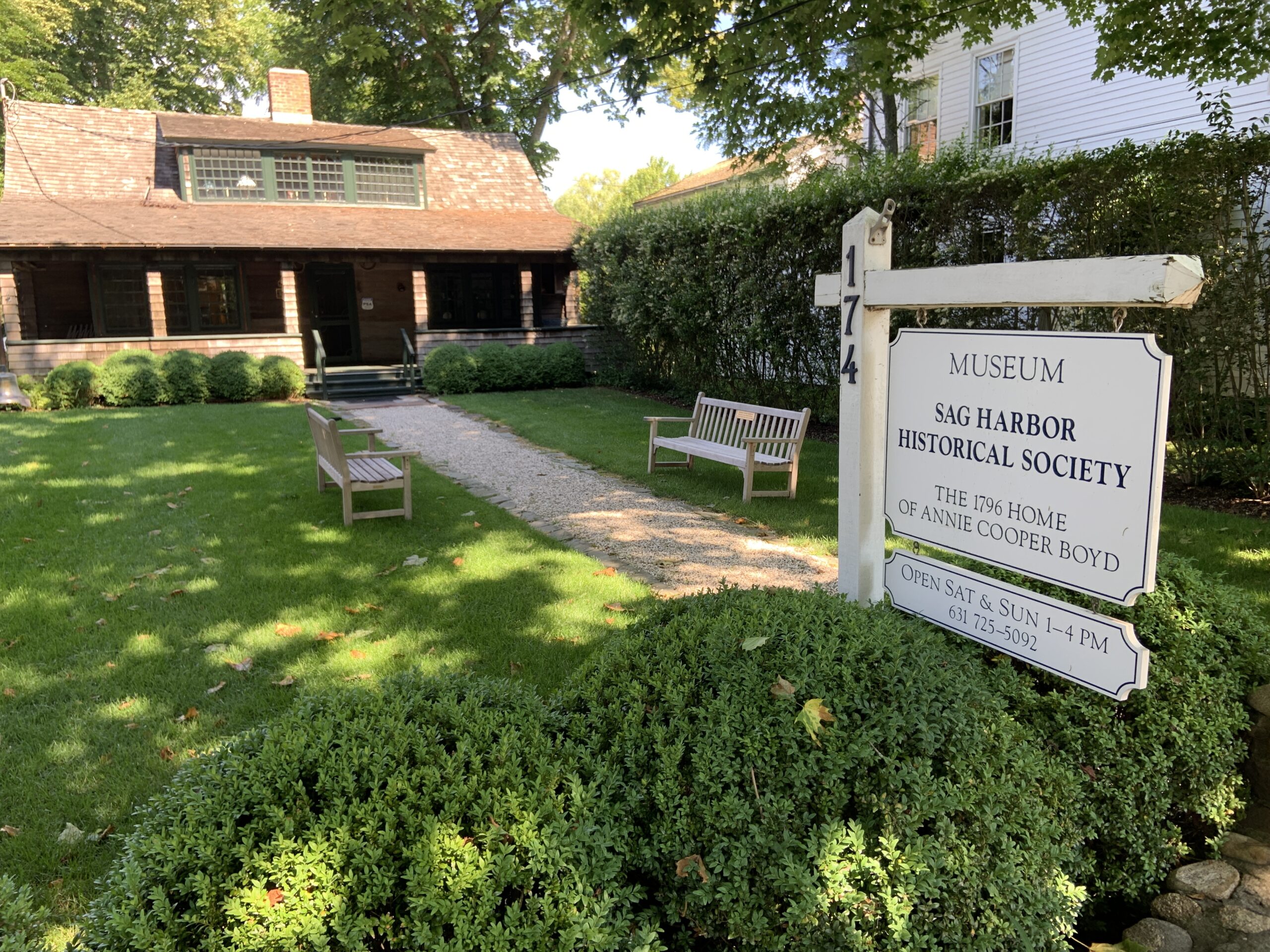
Although the sign says the Annie Cooper Boyd home was built in 1796, members of the Sag Harbor Historical Society hope to prove it is much older. STEPHEN J. KOTZ
Anyone who has ever stepped inside the rickety Annie Cooper Boyd House in Sag Harbor, with its listing floors and low ceilings, knows it’s old. It says so right on the sign out front: 1796.
But some think the house, which is home to the Sag Harbor Historical Society, may be several decades older.
Among them is Zach Studenroth, the society’s vice president and a historic preservation consultant for the village, who said this week he was confident the house predates the American Revolution — and may have existed in its original form at a time when the village was little more than an encampment of about a dozen modest dwellings.
That’s why on Monday, Bill Flynt, a Vermonter whose grandparents founded Historic Deerfield in Massachusetts, was standing on a ladder slowly drilling into exposed beams in the front room.
Flynt’s T-shirt, which spelled out “DENDROCHRONOLOGY” in block letters across the back, with Tree Ring Dating in smaller letters below, helped explain his mission.
Dendrochronology is the science of using a tree’s rings, which spell out its annual growth patterns, to determine both the tree’s age and climate conditions during its lifespan. For the past century, scientists have been compiling an ever-growing collection of databases to accurately date trees from all over the world, including New England.
Early settlers couldn’t just run over to the nearest Home Depot when they needed supplies. If someone needed lumber for a house, they simply felled the nearby trees themselves and used axes and other hand tools to roughly square them off for use as floor joists and ceiling beams.
Flynt, who used a hollow point drill to take about 15 to 18 core borings from beams scattered about the house, is hoping they contain enough data to give a better date for the construction of the house.
“The assumption is that when you cut the tree down, that tree doesn’t sit there as a building element for a long time,” said Studenroth. Instead, it was put to immediate use because, well, winter was probably coming, and nobody had time to waste.
Through dendrochronology, one knows that the vast majority of trees in a given area responded to the same environmental conditions over time, and experts like Flynt, with the aid of a database stretching back more than 500 years, and a handful of good core samples showing, say, 50 years’ worth of rings, can narrow down a period of construction.
“This will put a precise year on the house if he is successful with the data he gets,” Studenroth said. “The only other historical artifact you can do that with that I know of is a headstone — that tells you the year.”
Studenroth said it was important for the historical society to know when its headquarters was built as a matter of principle.
He pointed to the Old House Cutchogue, which used to date itself to 1649. About five years ago, it was discovered the house was actually built in 1699, considerably changing the narrative.
“That was a big fuss because it was being misinterpreted,” Studenroth said. “You are not entitled to your own set of facts” in historic preservation.
Barbara Schwartz, a longtime society volunteer and former board member, said the historical society had put 1796 on the sign outside because that was the earliest date it could authenticate, thanks to a mortgage taken out by its owner. The society has pegged the date of a north addition to the house to the early 1800s, because the property was reassessed at that time.
Schwartz said a search of early town records suggests it’s possible the house dates to 1761 and was owned by an early settler, Thomas Foster, who handed it down to his heirs. Eventually, the house was inherited by Henry Clay Foster, the nephew of Thomas Foster’s grandson, who sold the property to William Cooper, Annie Cooper Boyd’s father, in 1871. She and her husband, William John Boyd, used the house as a summer cottage after their marriage in 1895.
Flynt, the former architectural conservator at Historic Deerfield who is semi-retired, said Sag Harbor residents would have to be patient. He said he has at least one job ahead of this one. The first order of business, he said, is to sand down the core samples to reveal the tree’s rings. Then they have to be polished, so they can be properly scanned.
Asked when he expected to have an answer, he replied, “Watch the weather. If it’s sunny and nice, I’ll be outside. If it’s raining, I’ll be working.”


 Stephen J. Kotz on Jun 28, 2022