


 1 Photo
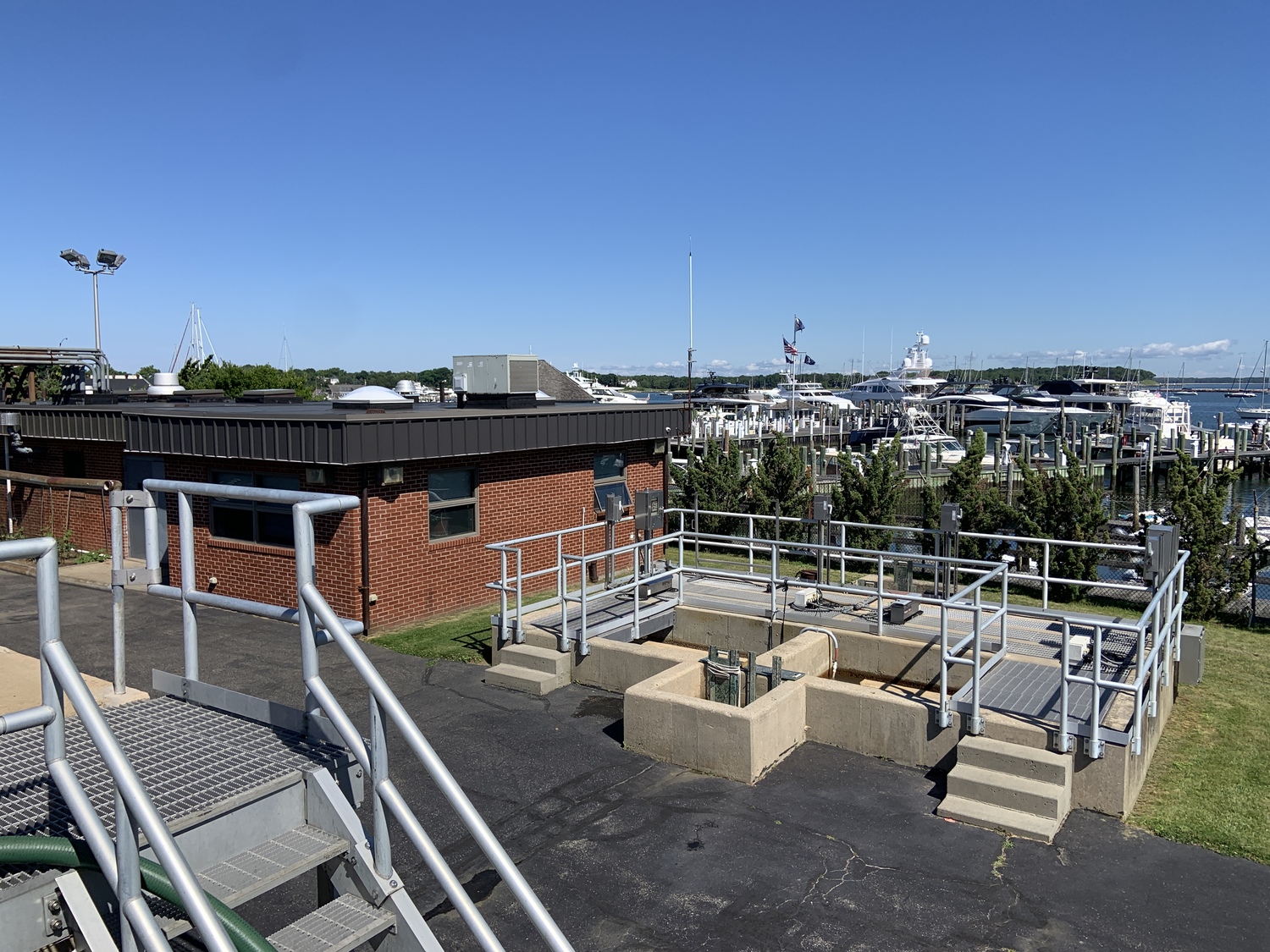
Last month after a heavy rainfall, the Sag Harbor sewage treatment plant saw a spike in the amount of water coming in from treatment. Officials say it was likely caused by property owners illegally pumping out water from basements and diverting it to the sewage system. STEPHEN J. KOTZ
Amid the hum drum of Sag Harbor departmental reports that are reviewed at each Village Board meeting, Trustee Aidan Corish announced on Tuesday, June 11, that after a recent heavy rainfall when nearly 5 inches of rain fell on the village overnight, its sewage treatment plant was nearly overwhelmed the following days with an inflow of thousands and thousands of gallons of water.
It wasn’t normal sewage, Corish told the board, but relatively clean water that village officials say was likely being illegally pumped from basements that flooded during the storm.
“This caused mayhem, real mayhem, down there… while this water just kept coming and coming,” Corish said. “The fact that it is regular, or almost regular water, upsets the biology of the plant and upsets the working of the plant and becomes very difficult to balance.”
The way the system is supposed to work is that homes and businesses that are connected to the village’s sewer system are required to also be hooked up to Suffolk County Water Authority lines. The amount of water they take in is used to bill them for the amount of water that is discharged through sewer lines to the treatment plant on the waterfront.
But Corish said some people, who experience problems with flooding basements, have learned to circumvent the system by directing the flow of water collected by sump pumps into toilets or drains. Some have gone even farther by having sump pumps connected directly to waste lines. Besides the fact that it upsets the balance of the plant, “it’s just plain wrong, it’s illegal,” Corish said.
To prevent the problem from occurring again, Corish said the village would begin to schedule inspections of every address that is connected to the sewer system to look for illegal connections.
“Everybody thinks ‘It’s just me,’ but when you add it up, 50,000 gallons over the course of eight hours is a phenomenal amount of water that came into the plant that was not expected,” Corish said.
Workers at the plant keep daily logs of rainfall and the amount of water coming in. Overnight on May 16, 4.85 inches of rain fell. Over the next few days, the plant saw the amount of water coming in spike from about 61,000 gallons on May 15, to 73,000 gallons on May 16, 111,000 gallons on May 17, 100,000 gallons on May 18 and 101,000 gallons on May 19 before it subsided again.
The plant’s total capacity is 250,000 gallons. During normal periods, it operates well below capacity. The village, which is undertaking a multi-million-dollar extension of the sewer system, is counting on that excess capacity being available for that expansion.
“We understand there’s a problem with water rising in people’s cellars, but the solution is not to pump it into the sewage treatment plant,” Corish said.


 Stephen J. Kotz on Jun 12, 2024