


 3 Photos
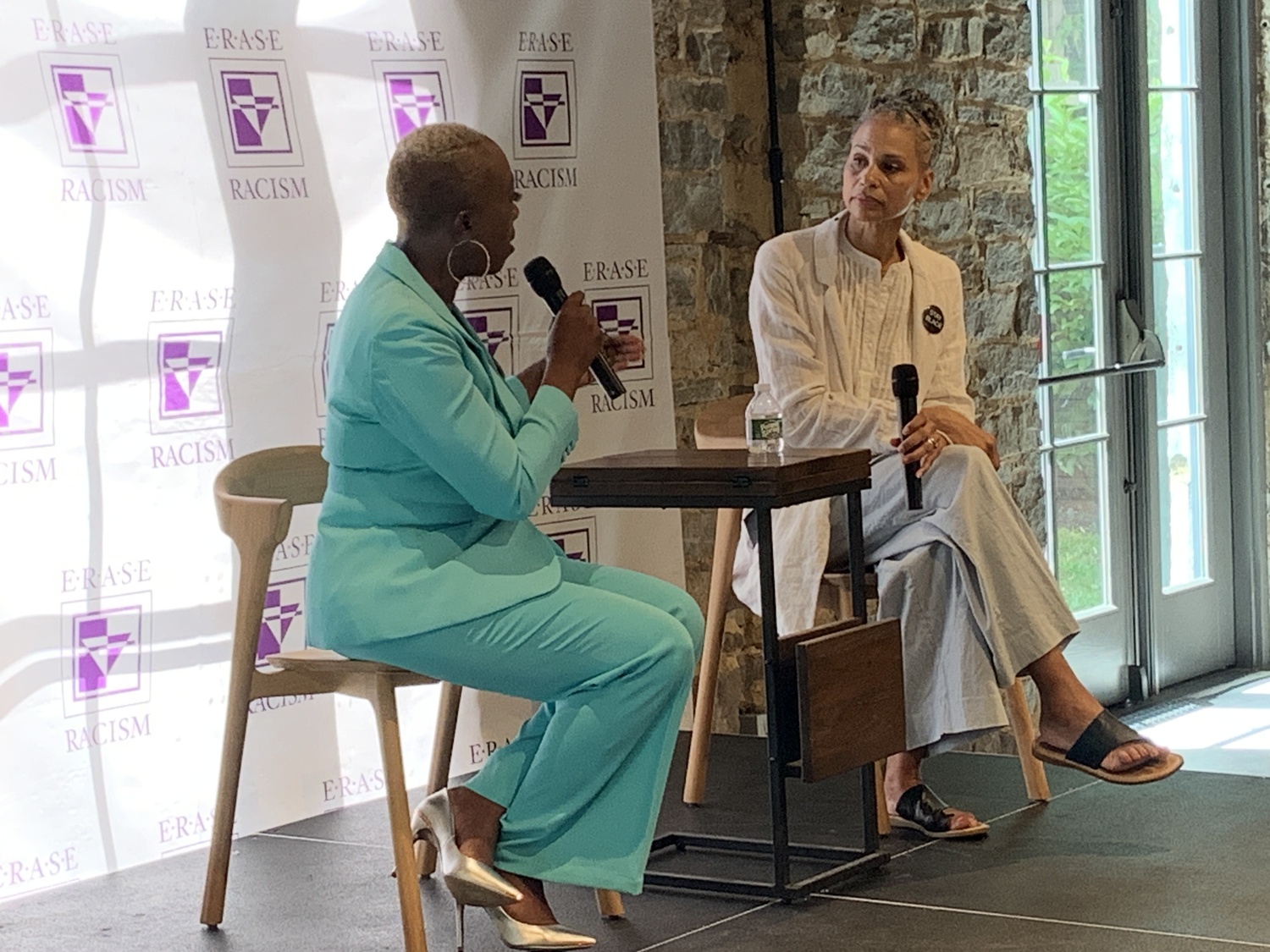
MSNBC anchor Joy-Ann Reid, left, and attorney and civil rights activist Maya Wiley discussed "Black Women Politics and Power" at an event sponsored by Erase Racism at The Church in Sag Harbor. STEPHEN J. KOTZ
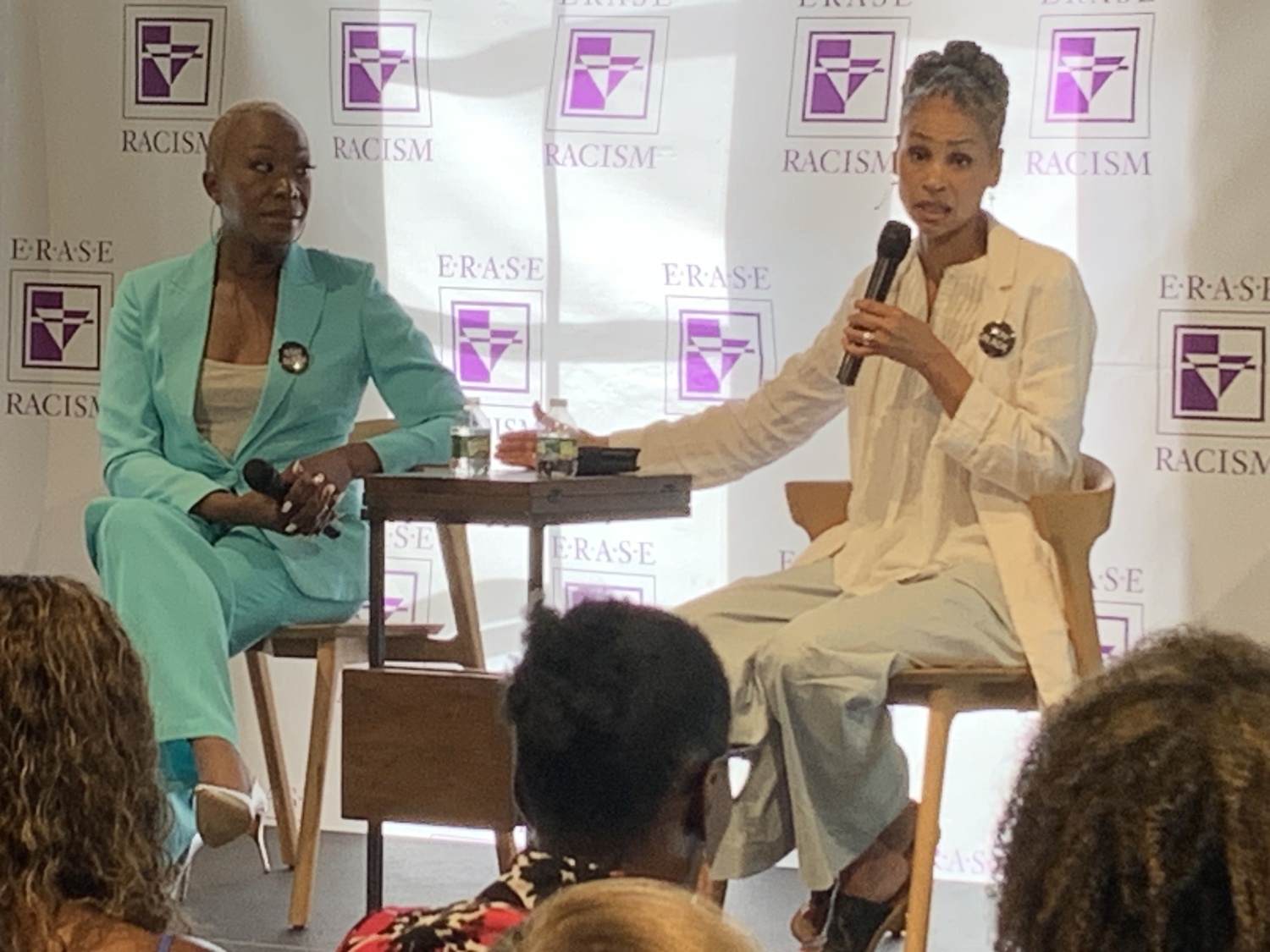
MSNBC anchor Joy-Ann Reid, left, and attorney and civil rights activist Maya Wiley discussed "Black Women Politics and Power" at an event sponsored by Erase Racism at The Church in Sag Harbor. STEPHEN J. KOTZ
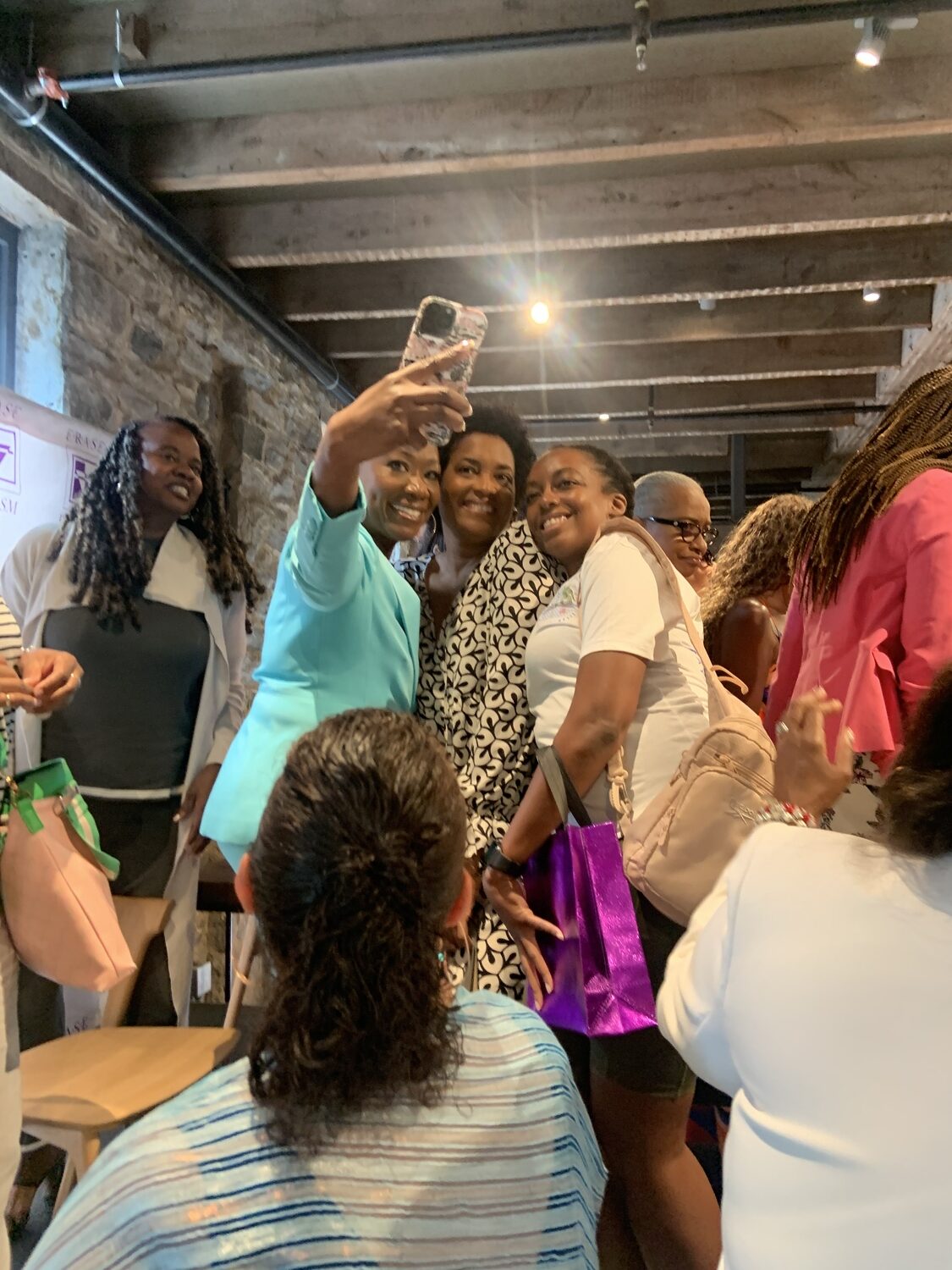
Joy-Ann Reid poses for a selfie after her presentation with Maya Wiley at The Church in Sag Harbor. STEPHEN J. KOTZ
MSNBC anchor Joy-Ann Reid and attorney and civil rights activist Maya Wiley had the rapt attention of their audience as they discussed “Black Women, Politics and Power” on Saturday morning at The Church in Sag Harbor.
Their talk, which focused on their books — Reid’s “Medgar and Myrlie: Medgar Evers and the Love Story That Awakened America,” and Wiley’s memoir, “Remember You Are a Wiley” — was sponsored by Erase Racism, an organization created to combat the structural racism that is present in Long Island’s segregated communities and school districts.
During their hourlong conversation, which was followed by a question-and-answer period, Reid and Wiley discussed the many barriers confronting Black women in American politics.
The speakers dived into the thick of things with Reid mocking the media for questioning Vice President Kamala Harris’s right to identify herself as Black. She said that CNN reporter Dana Bash posed the question when she interviewed Harris last month “when there was literally a Black person sitting as close to her” as Wiley was to her.
“White America is imposing the idea of race upon Black people and presuming to question us about our race,” said Wiley. “They use race to belittle the qualifications of the qualified, hyper-credentialed, and they question race to try to divide us.”
She cited how the media had accepted former President Donald Trump’s false claim that Harris had only recently begun to self-identify as Black “as a legitimate fact-based question,” adding, “That’s not journalism. That’s racism.”
Wiley’s mother was white and born and raised in segregated Abilene, Texas. Despite her upbringing, “she actually grew up with a deeply ingrained notion that racism was real and wrong,” Wiley said. Her mother eventually moved to Harlem, where she would marry a Black man, who gave up a successful career as a chemist to become a civil rights advocate.
But even among Black members of the community, her father “had to fight about his own Blackness because his wife was white,” she said.
Wiley said she experienced a similar type of bias when she ran in the New York City Democratic mayoral primary against Eric Adams, who, she said, began to show his anger toward her, even though both candidates were Black, when her polls looked good.
“And that is what we are seeing now,” she said of Harris’s presidential run. “People are getting angry that there’s a contestant who is competent, qualified, and will win.”
Reid said that white women account for 30 percent of all voters, the single largest block in the country.
“Literally, white women hold the keys to the kingdom,” she said, noting that historically they vote 60 percent Republican to 40 percent Democratic.
If their votes were split 50-50, she said Democrats would hold a lock on the presidency. But now, she added, “white women are facing this moment when they are being asked to join the party” because of Republican extremism.
Reid said it was less about political party and more about policies, with conservatives focused on restricting personal rights of all Americans. White people are learning, she said, “They come for you eventually.”
Republicans may have made a mistake, Wiley added, because “they said the quiet part out loud” when the U.S. Supreme Court overturned Roe v. Wade.
“I think they did us a favor,” she added. “We saw it in the mid-terms.”
Reid added that until Roe v. Wade, they had only seen rights added to them and never taken away.
Both agreed that with early voting starting this month, progressive voters would have to be organized to get out the vote in the face of voter suppression efforts.
Most of the conversation involved Reid interviewing Wiley, but toward the end of the event, Reid was asked to discuss her book as well.
Medgar Evers was a giant of the Civil Rights movement who was gunned down when he returned home late one evening. He was at first refused treatment at a local hospital because of Mississippi’s strict segregation laws.
Reid said his wife, Myrlie, was more cautious and would have hoped for her husband to choose a safer profession. But when their home was firebombed and her husband assassinated shortly afterward, she became an activist as well, Reid said.
The day after her husband’s death, “she gave the speech of her life,” Reid said, telling an audience that had gathered in a local church, “You have to keep this movement going, because my husband literally died for it.”


 Stephen J. Kotz on Sep 3, 2024