


 1 Photo
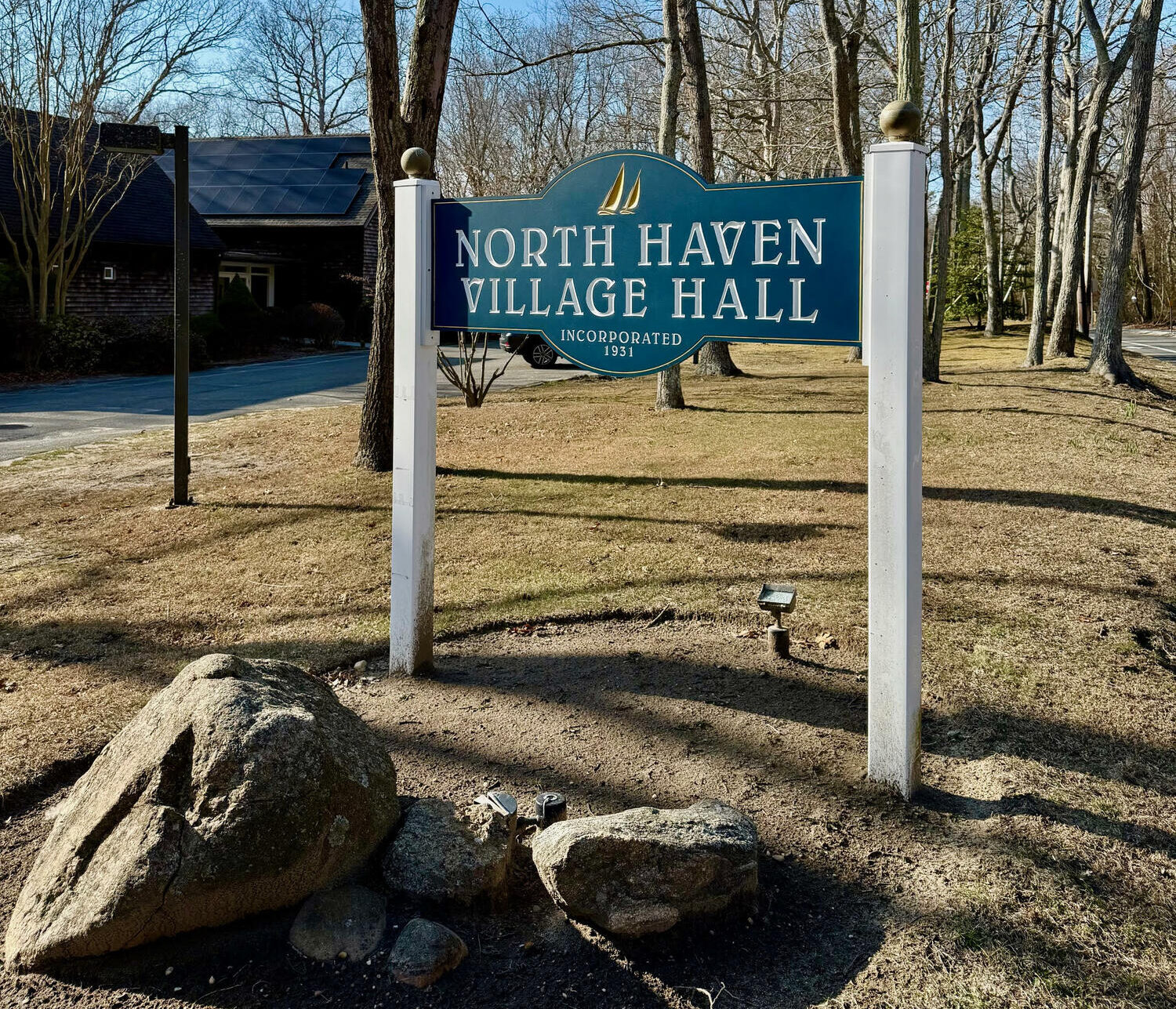
North Haven Village Hall
That cellular service stinks in the Village of North Haven is a given, but what the village should do about it has been the subject of debate for years.
Now, village officials are hoping that recommendations given by CityScapes Consultants Inc. will offer a path forward.
Trustee Claas Abraham this week said the village has formed several committees over the years to tackle the cellular coverage issue, and “we didn’t get anywhere, because we are all amateurs.”
But last year, with CityScapes working in neighboring communities, including Southold, Shelter Island and Sag Harbor, the Village Board set aside $25,000 in its budget to have the consulting firm “study every nook and cranny of the village” to try to see what could be done to improve the village’s cellular coverage, he said.
Abraham said the company had come up with three options to improve service. The first would be for the village to hire a company to erect a 110-foot-tall monopole behind Village Hall, on which it could mount antennas for the four main carriers: Verizon, ATT, T Mobile and Dish. Under such an arrangement, the village would earn rental income from each company.
But that single pole would still leave some dead spots, Abraham said, leading CityScapes to offer a second recommendation, one that would include a single monopole on village property with four 45-foot smaller towers across the village.
A third option would be to erect a total of 11 towers, each 45 feet high, and scatter them along the Route 114 right-of-way and conceal them as best as possible, he said.
Abraham said in the past, when cell towers were proposed for the Village Hall property, the opposition was fast and furious. While that predicted opposition might lead the village to move forward with a plan for 11 smaller towers, he said it was not quite that simple.
“Until a few weeks ago, we thought we controlled the narrative,” he said, including overseeing how many towers could be erected in the village. The problem, though, is the village has no control over the state right-of-way.
Since cell providers prefer to not share poles with other companies, it is possible that each company could request permission to erect their own poles on the state right-of-way, resulting in more than 40 poles being erected throughout the village, he said.
State approval is just a formality, Abraham continued, and companies have not already begun to request permission “because they are waiting to see what the village is going to do.”
Last week, Susan Rabold and Elizabeth Herington-Smit of CityScapes presented a webinar outlining the options. Only 22 residents signed up to watch it, Abraham said.
The village has also sought public comment via a survey, which Abraham said the Village Board would review when it met this week. The board’s meeting was scheduled to take place on Wednesday, April 16, at 5 p.m., too late to be included in this week’s edition.
Abraham said he did not know how many people had completed the survey. He did say that not a single resident had contacted village officials with questions about either the webinar or the survey.
With a year-round population of about 800 people, Abraham said he believed that many people simply expect the village to improve cellular service one way or another. “It’s so widespread,” he said of cellular demand. “It’s not only phones, but medical devices, car navigation systems and alarm systems.”
The question the village needs to answer, Abraham said, is: “Do we want one tower that allows us to make money and have control over the design, or do we simply want to say ‘no’ and leave it to the carriers to come in with their poles and plaster them all around and have no say in how they are going to look or where they will place them?”


 Stephen J. Kotz on Apr 15, 2025