


 1 Photo
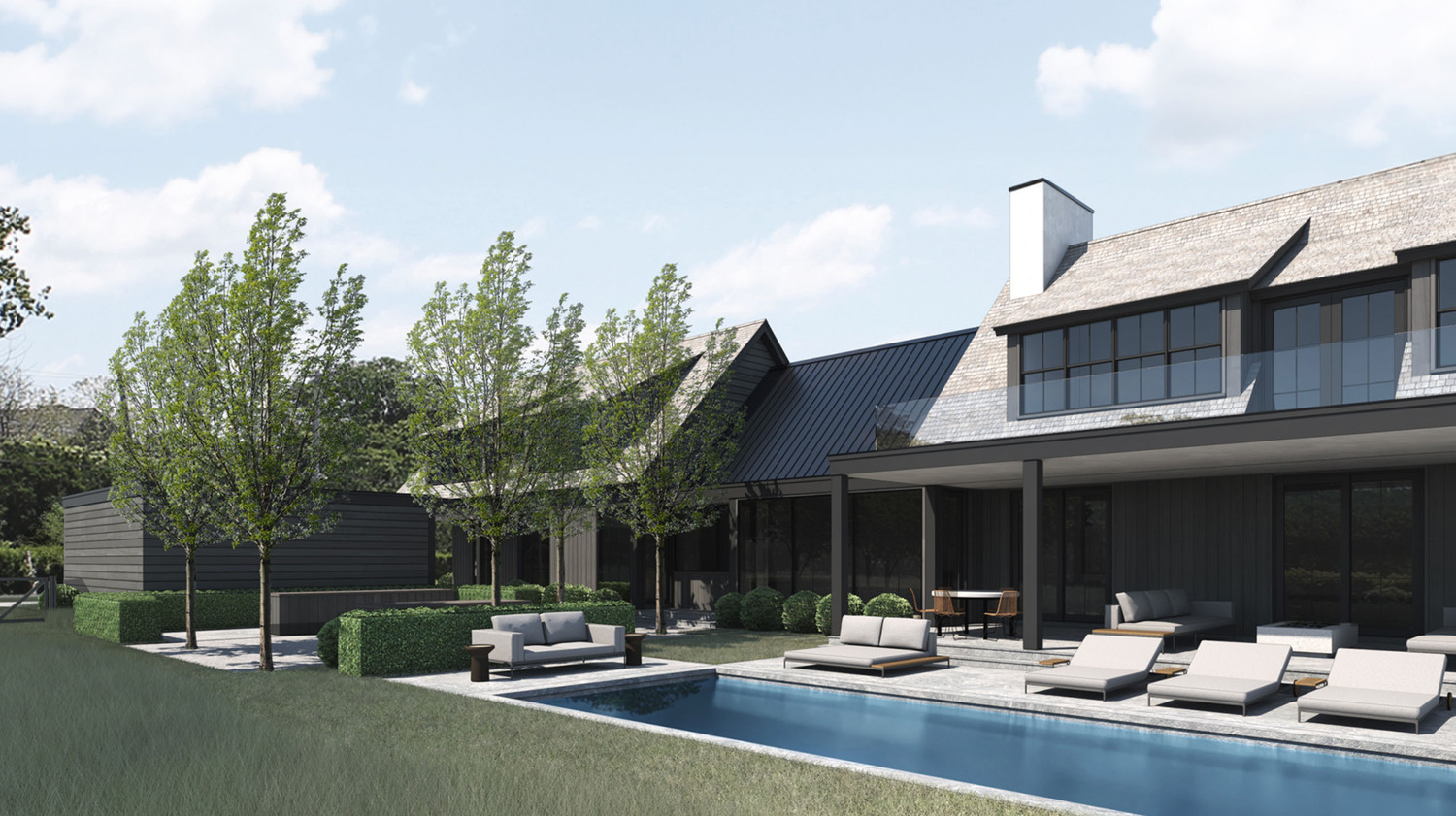
Rendering of proposed house at 100 Glover Street, site of the old Cilli farmhouse.
As expected, the Sag Harbor Village Harbor Committee this month granted a wetlands permit to allow the construction of a two-story house containing 4,100 square feet of floor space at 100 Glover Street in Sag Harbor, the former site of the 1920s Cilli farmhouse, which was demolished last year to make way for the project.
The vote was 3-0 in favor, with two members absent.
The proposed house conforms to all zoning and wetlands setback requirements. The 26,997-square-foot building parcel — slightly more than half an acre — will include a 50-foot-wide vegetative buffer to protect wetlands that begin 105.3 feet from the rear of the house site. Sag Harbor’s wetlands code requires a setback between structures and wetlands of at least 75 feet.
In January, the committee’s chairman, Will Sharp, praised the proposal with its nitrogen-reducing septic system and advanced drywell network designed to contain all projected stormwater runoff as a “very clean application.”
The board voted unanimously then to instruct the panel’s environmental consultant to draft a permit to be approved at the February 1 session.
Neighbors attending the January session expressed concern about increased flooding in the low-lying neighborhood as Glover Street has been redeveloped in recent years with large new houses and expanded old ones.
This month, committee member Mary Ann Eddy expressed concern about the flooding issue.
She wondered if the panel could “look at” the standards for calculating the potential demand on drywell systems in flood-prone areas during big storms and perhaps establish an “overlay with more stringent rules.”
That would be a matter for the Sag Harbor Village Board to consider, said the committee’s environmental consultant, Brant Reiner, of the firm Nelson Pope Voorhis. The Village Board “has the right to set its own standards” for runoff containment, he added.
“It’s only going to get worse,” Eddie said of heavy rain events.
Also at its February 1 session, the Harbor Committee agreed to schedule for its meeting next month a vote to approve the application of Angela E. Vallot and James G. Basker to build a 4-foot-by-25-foot beach-access stairway traversing the bluff at 27 Harding Terrace. After a discussion, the panel referred the application, subject to conditions, to Reiner to draft a permit to be approved at the March meeting.
The applicant accepted Reiner’s suggestion that the proposed stairway be mounted eight inches higher than planned to allow more of the sunlight that passes through its plank gaps to disperse across the ground, helping beach vegetation to thrive.
Also on February 1, another planned beach structure — this one a wooden walkway with an attached platform — was informally discussed by the committee with members of the Sag Harbor Hills Improvement Association. The walkway would be laid along a long-established pathway to the beach at the association’s beach entrance on Hillside Drive East.
A resident since 1953, Edward Dudley noted that the pathway has been in use for years but “lots of elderly” people who have had homes there for decades need easier access now than sand affords. The question, he said, was whether the plan required a wetlands permit.
After some discussion, it was agreed by committee members that — with the edge of the beach parking lot 130 feet from mean high water — the association would have to submit a formal permit application because the code requires it for any structure planned within 150 feet of the shoreline or wetlands.
Association president Lisa Stenson told the panel that the neighboring Azurest association put in a similar structure at its beach access point about five years ago. “They never came to us,” Eddy said.
When Dudley, referring to his own home, added that “both of our neighbors” have done it, Eddy told him he was “doing the right thing” by consulting with the committee. She said the wetlands code is “a good law because it protects our beaches” even though “sometimes it’s an inconvenience.”
“Thanks for coming to us instead of doing the Wild West thing,” she added.


