


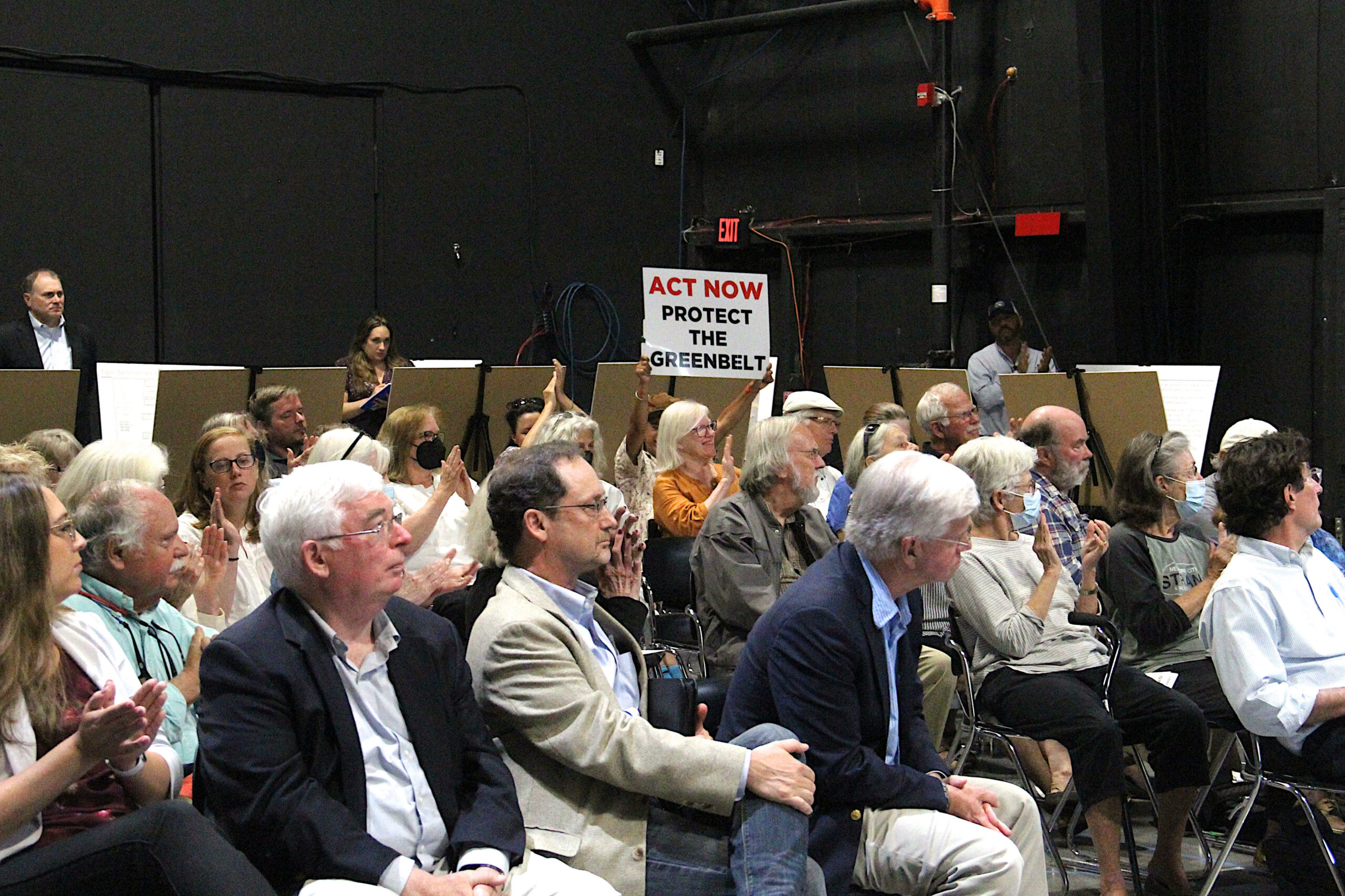
 6 Photos
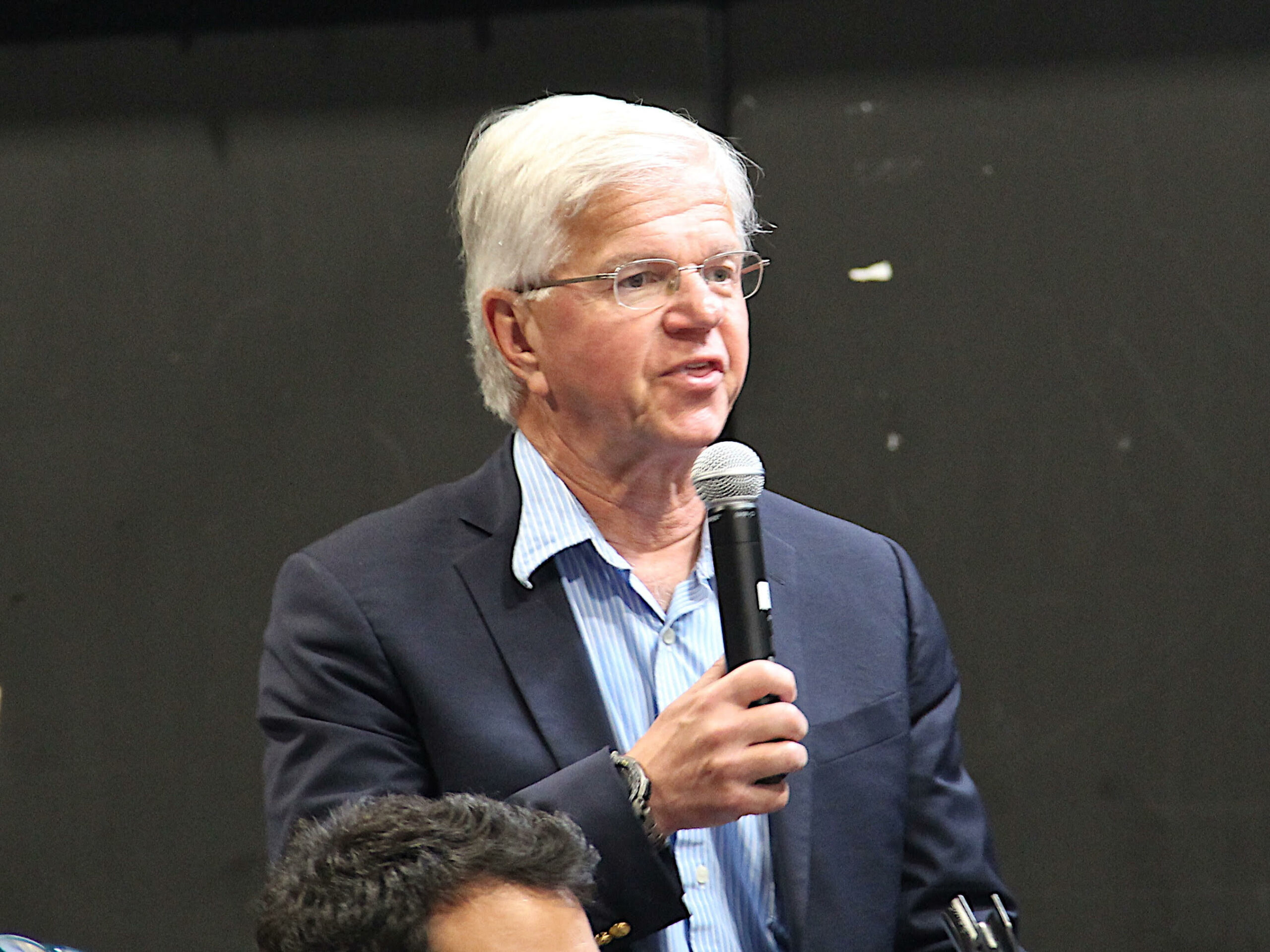
State Assemblyman Fred W. Thiele Jr. urged PSEG to work with the community to find an alternative route for the cable it has proposed to run through the Long Pond Greenbelt. KYRIL BROMLEY
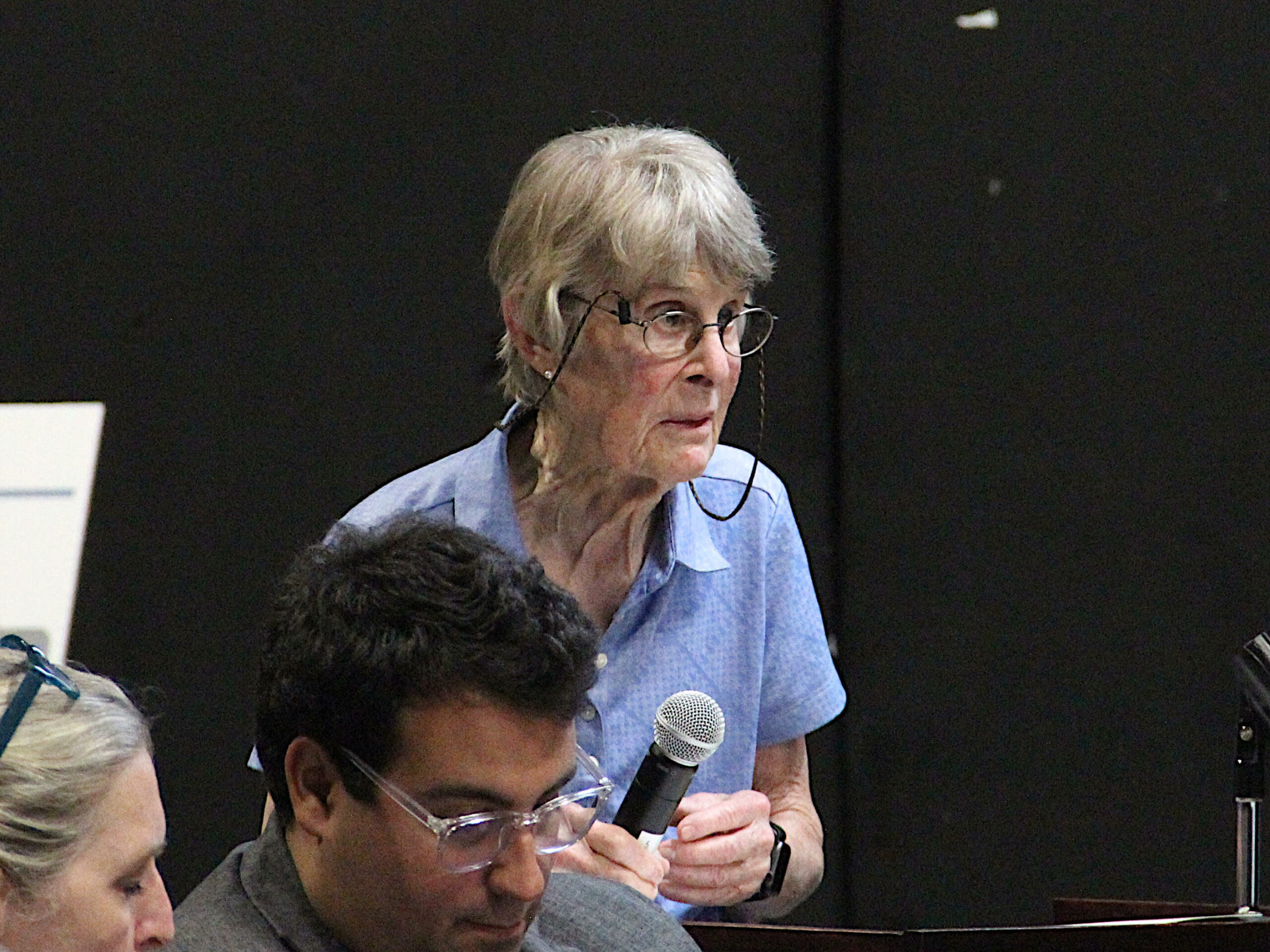
Bridgehampton resident Julie Burmeister said horizontal directional drilling may be a good way to lay cable under a paved road, but could cause irreparable harm to the Long Pond Greenbelt. KYRIL BROMLEY

Other than providing a brief overview of the project, PSEG officials did not engage the audience. KYRIL BROMLEY
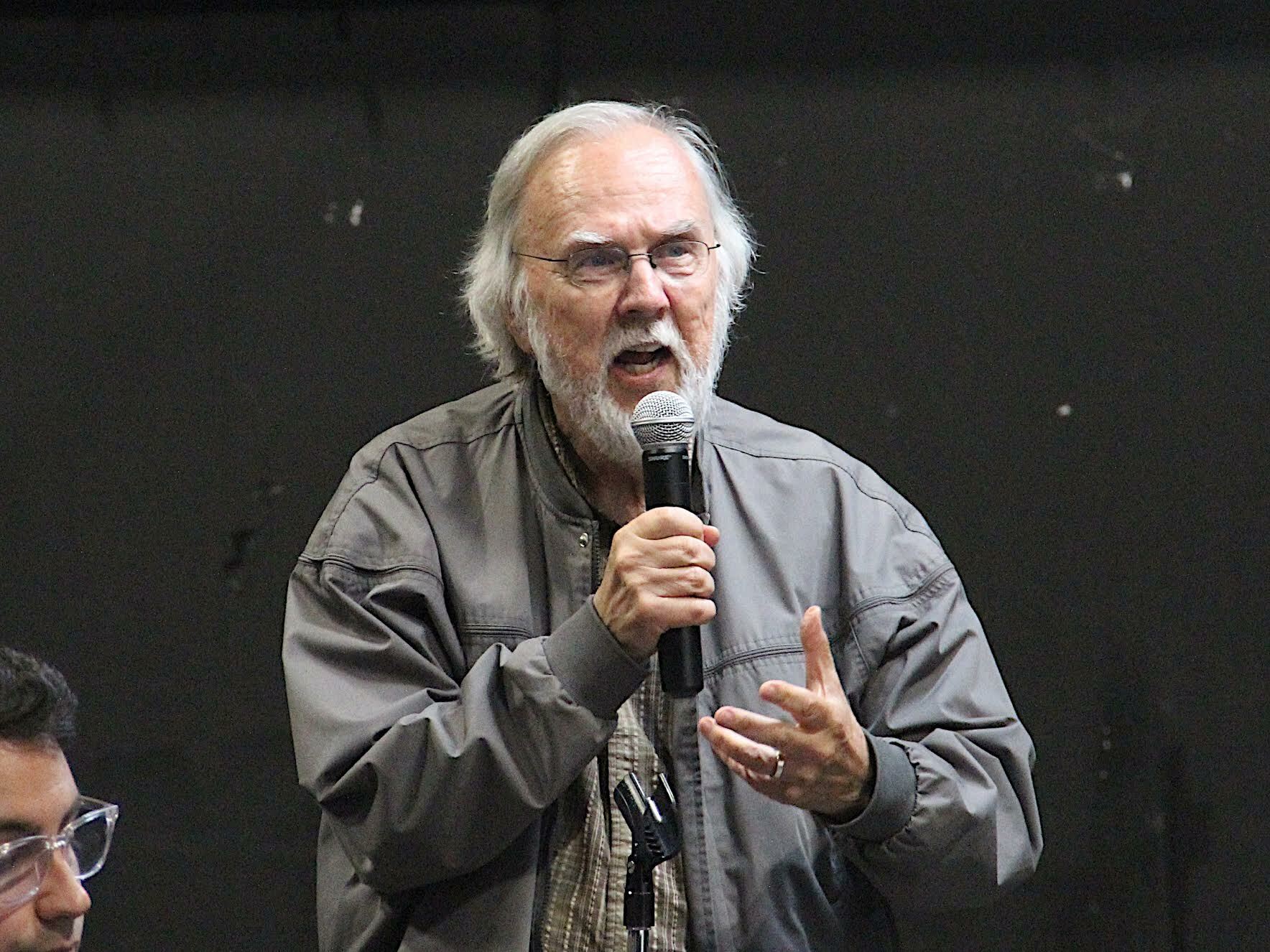
Tom Oleszczuk told PSEG representatives that because not one member of the audience had expressed support for their project they should rethink the whole project. KYRIL BROMLEY
PSEG employees were stationed next to posters describing the cable project before Thursday's hearing. KYRIL BROMLEY.
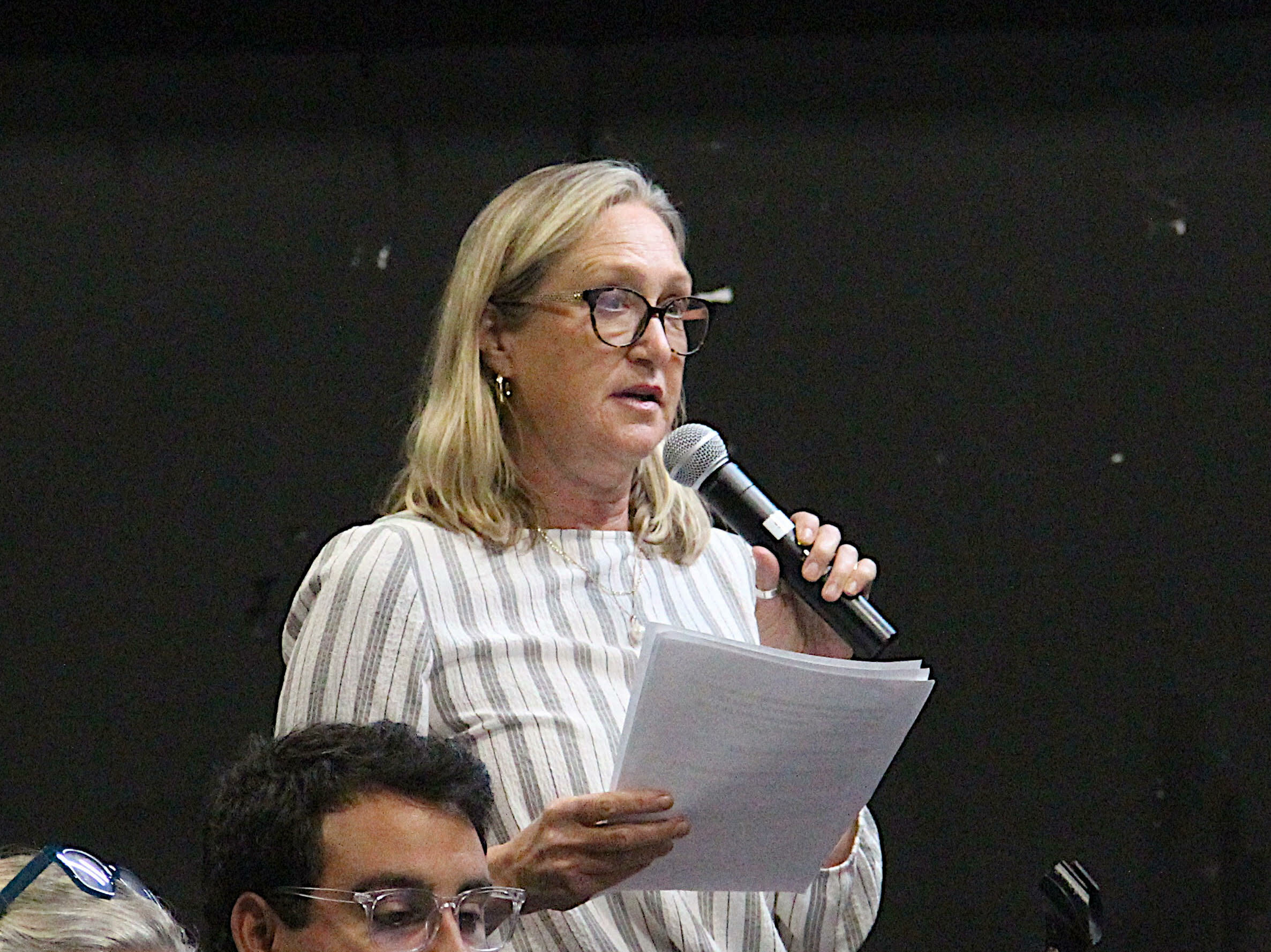
Suffolk County Legislator Bridget Fleming. KYRIL BROMLEY
PSEG Long Island’s proposal to run a 5.2-mile underground power cable between its substations in Bridgehampton and East Hampton was roundly panned by the approximately 50 people who turned out for a public hearing on a draft environmental impact statement for the project held Tuesday, June 28, at LTV Studios in Wainscott.
A group of speakers, starting with State Assemblyman Fred W. Thiele Jr. and ending with neighbors, urged the company to abandon the plan to run the cable through a Long Island Power Authority right-of-way that bisects the Long Pond Greenbelt, a roughly 800-acre expanse of coastal plain ponds, wetlands and woods stretching from Sag Harbor to Sagaponack.
PSEG says it needs the 69kV-power source to make up for shortages in East Hampton that typically crop up in the summertime, when demand is at its highest.
Most urged PSEG to explore an alternative that would run the cable south down the Bridgehampton-Sag Harbor Turnpike from its substation there to Montauk Highway, and east to the Buell Lane substation in East Hampton. Others urged the utility to focus instead on promoting efficiencies and the use of renewable energy.
The company plans to clear an acre of property it owns near its Bridgehampton substation that is close to the Great Swamp preserve for use as a staging area. Although most of the cable would be laid in open trenches, PSEG has proposed using horizontal directional drilling, or fracking, for an 0.8-mile portion — including under a vernal pond in the greenbelt that is a known habitat of the endangered tiger salamander.
“It’s not just the eastern tiger salamander. I know that may have triggered in your mind the need for an environmental impact statement,” said Thiele, “but this resource is so much more. It has species of global significance. It is an area that lends itself not only to the appreciation of nature but recreation. It is one of a kind, and it can’t be replaced.
“Literally tens of millions of dollars have been spent in public money to protect the resource that is the Long Pond Greenbelt,” Thiele added.
He said running a cable through the greenbelt should be the last alternative instead of the first, and he urged PSEG to not ignore the concerns being raised.
“We want you to come back and work with us and work with the community,” he said. “All these alternatives have issues. We need to work together, and this needs to be a collaborative process to reach a solution that protects everything that is special about the Long Pond Greenbelt.”
Suffolk County Legislator Bridget Fleming said she was concerned that PSEG officials were acting as though the proposed cable were “a fait accompli.”
Although PSEG projects that power use in East Hampton will continue to rise by 2 percent per year over the next decade, Fleming said the company often overstates future demand needs and said it has consistently overlooked improvements in efficiencies in things like home construction that have reduced demand for electricity.
Last month, at Fleming’s urging, the Suffolk County Legislature passed a measure requiring it to approve PSEG’s plan before allowing it to cross county-owned land.
Bob DeLuca, the president of the Group for the East End, said removing the project from the greenbelt had to be the first priority. He said running the cable south and east along established roads would be more costly but would pose the least environmental threat, and he suggested PSEG establish “an environmental benefit fund” to offset potential damage the project could cause.
Other environmentalists who spoke against the cable included Natalie Ryan of The Nature Conservancy, Frank Quevedo, the executive director of the South Fork Natural History Museum, and Dai Dayton, the president of the Friends of the Long Pond Greenbelt, whose organization rallied opponents to attend the hearings. All agreed the greenbelt was too valuable environmentally to risk.
“There is no way you can repair anything that goes wrong with this, and you cannot guarantee that something will not go wrong,” said Dayton.
On Wednesday, the company issued the following statement:
“PSEG Long Island, as agent for the Long Island Power authority, is committed to delivering best-in-class system reliability to our customers. As there has been significant increase in demand for the electrical capacity on the eastern end of Long Island, upgrades to the transmission infrastructure are necessary,” it said. “The proposed project has significant advantages over the five alternatives studied. For example, the project would utilize the existing LIPA right-of-way which contains transmission towers, is the most economical and horizontal directional drilling (HDD) will be used to minimize disturbances to and protect sensitive natural resources. HDD is a common construction method utilized for underground cable placement.”
Shawn Sachs, a Sag Harbor resident, who runs a communications business, commented on the appearance of the four-member PSEG panel, who received testimony, with next to no reaction or comments.
“We all know. We see the looks on your faces,” he said. “You didn’t even introduce yourselves to the room. You don’t care.”
But he added that PSEG had better be ready for the next hearing, because there was bound to be more people. “You are going to need more chairs,” he said. “This is just the beginning of how we are going to push back and fight back.”
Tom Oleszczuk also urged PSEG to reconsider.
“How many people have you heard speak?” he asked. “How many have said, ‘This is a great idea, let’s go ahead’? The overwhelming opinion is this is not a good idea.”
Like Oleszczuk, Julie Burmeister, a resident of Bridgehampton, said PSEG is charging such high rates it could afford to run the cable down existing roads. “There is an alternative route that is longer and more expensive, but we are paying the highest electric rates in the country,” said Burmeister, who also called on PSEG to offer “more positive outreach to the community.”
Ken Dorph, a Sag Harbor resident who lives on the edge of the greenbelt, compared it in size and value to Central Park for New Yorkers. He said the coastal plain ponds environment is found in only three places: Cape Cod, the New Jersey Pine Barrens and in the greenbelt.
“Can you imagine if we destroyed Central Park?” he asked. “This place, to us, is really as valuable.”
Another neighbor, Robin Foster, who lives on Crooked Pond, said the environment of the area has already come under attack from overdevelopment. “If there is a mistake, it will be absolutely priceless,” she said. “You won’t be able to spend enough money to fix what you have done.”
“This is just a nuts situation. This is just absurd that we are talking about this kind of work,” added her neighbor, Leslie Schultz.
One of several speakers to weigh in over Zoom, Jay Schneider, who lives in the greenbelt, said he didn’t have anything to add, but he panned his camera over the surrounding area. “This is Lily Pond. This is the greenbelt,” he said. “This is one of the most beautiful places in the world. Leave it alone.”
PSEG will accept comments on the environmental impact statement until July 12. Comments can be emailed to: PSEG-LI-B2BSEQR@pseg.com or sent by mail to: Erin Gorman, Manager, Environmental Projects and Permitting, PPSEG Long Island, 175 East Old Country Road, Hicksville, NY 11801.


 Stephen J. Kotz on Jun 29, 2022