


 2 Photos
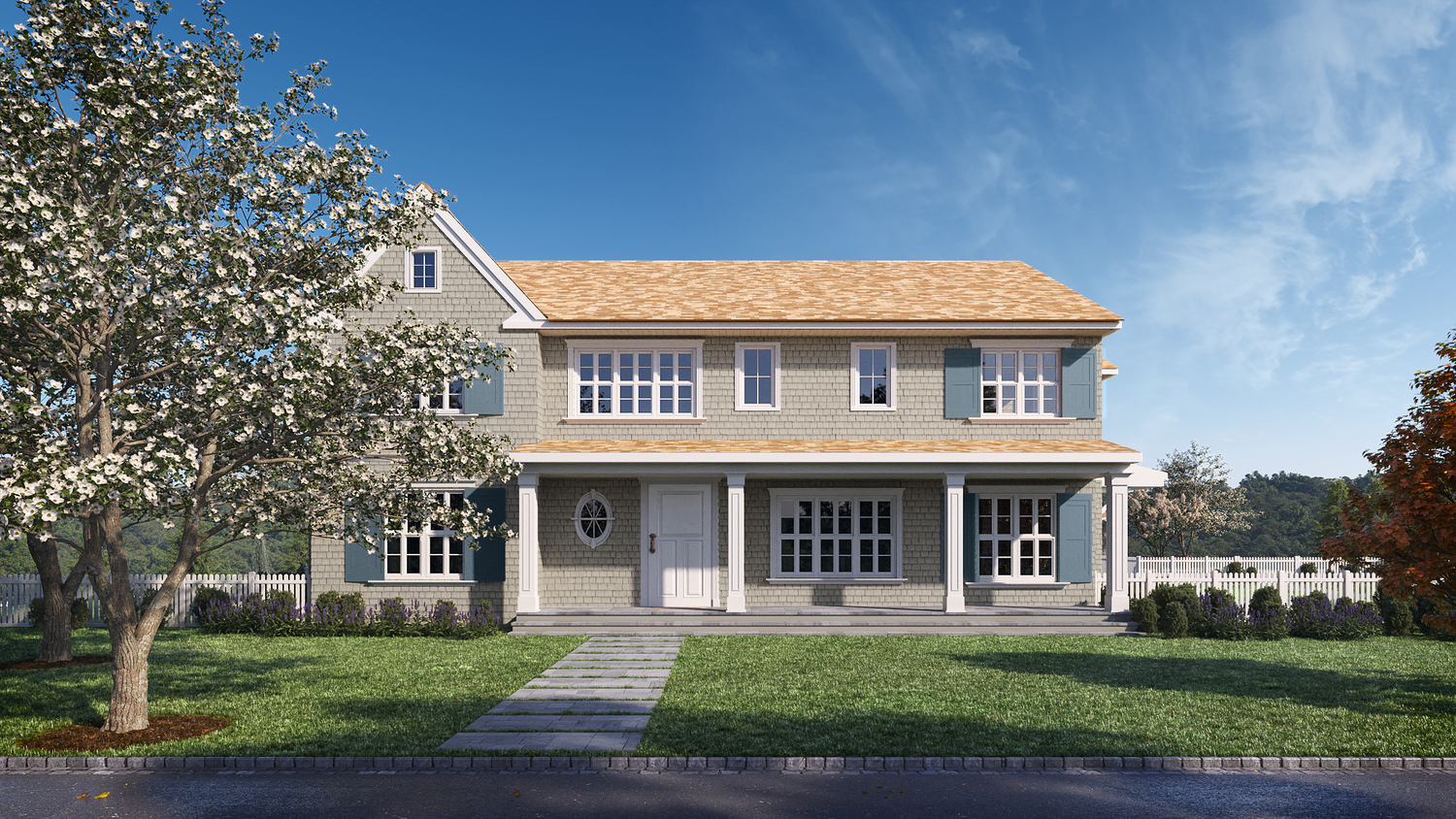
The front view of a house proposed to be built at 7 Marsden Street. MCDONOUGH AND CONROY ARCHITECTS
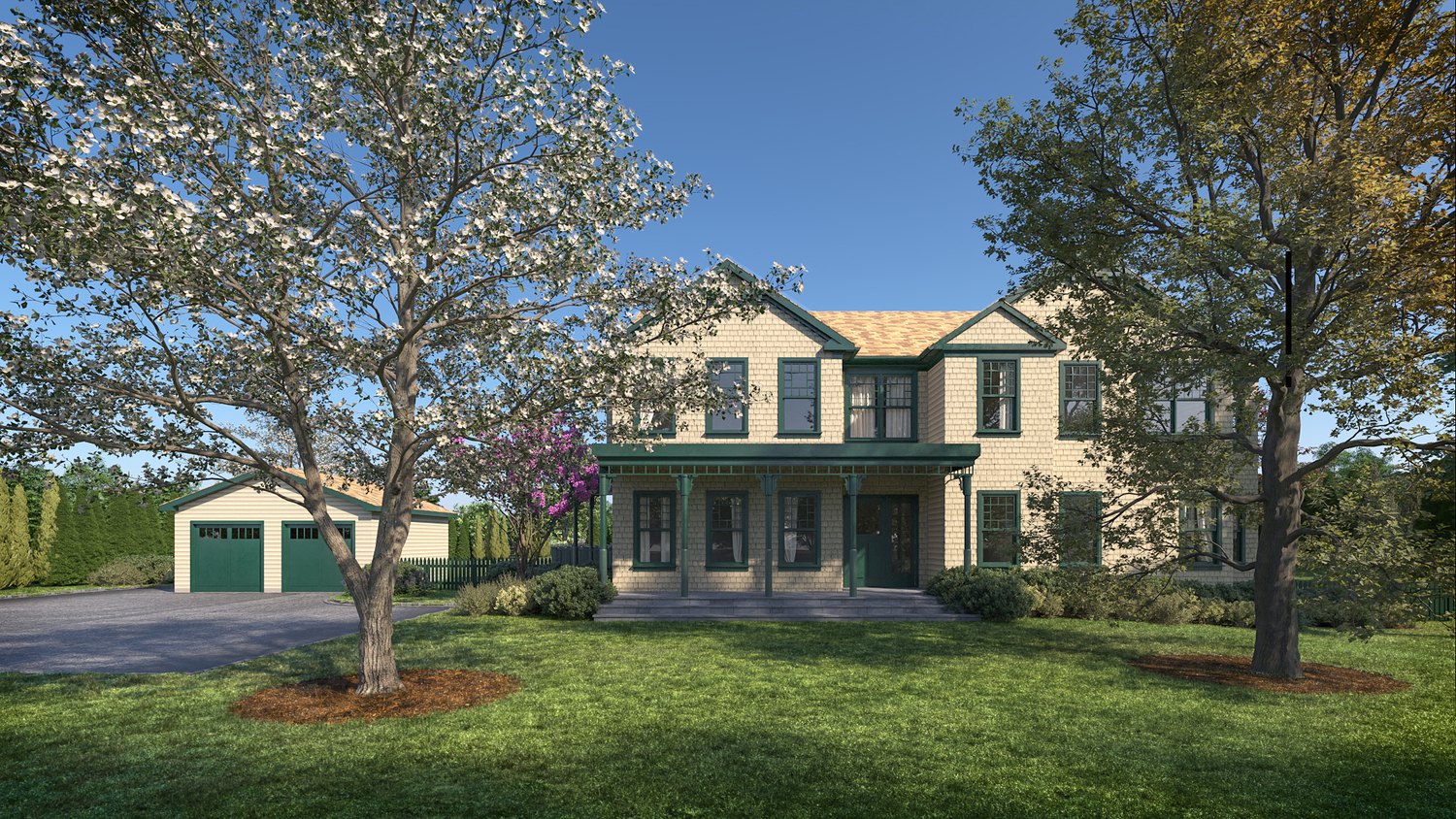
The front view of a house that has been proposed for 9 Marsden Street. MCDONOUGH AND CONROY ARCHITECTS
The Sag Harbor Village Board of Historic Preservation and Architectural Review continued its review of four new houses proposed for a nearly 4-acre site on Marsden Street, focusing on two of the designs, at a hearing on Thursday, September 12, before adjourning the matter until October 10.
The board agreed to consider two of the houses, one at 7 Marsden, which fronts on the street, and the other at 9 Marsden, which is on a flag lot off the street, at the request of attorney Denise Schoen, who is representing Matthew Pantofel of BJC Custom Builders of Southampton. Pantofel purchased the property from Pat Trunzo after voters last year rejected a Sag Harbor School District referendum to buy the land for school use.
“We felt that rushing and trying to make four of them perfect was too much,” Schoen told the board. “We tried making two of them perfect for you.”
The houses proposed for the other two parcels, 11 and 15 Marsden, will be considered at the October 10 meeting.
The board, which was shorthanded, with only three members present, offered a number of suggestions for minor changes to the plans — but several audience members continued to oppose the designs as too large and out of place for the village’s historic district.
Board member Bethany Deyermond was absent, and member Megan Toy, at the request of Schoen, recused herself from reviewing the application.
In large part, Schoen focused her presentation on reviewing changes that the board had requested at an earlier hearing and updates to the initial landscaping plans, which she described as having been “a little too suburban” because they mostly consisted of screening the various houses with evergreens.
With the houses all in the range of approximately 5,000 total square feet, the board’s chairman, Steve Williams, asked Pantofel to try to reduce their mass when he returns before the board next month.
That was also the request of Dr. John Oppenheimer, who lives across the street from the Marsden property. Oppenheimer asked if the board had the authority to limit the size of the houses, which fall within the maximum size allowed for their lot size.
When the board’s attorney, Elizabeth Vail, responded that the ARB could, in fact, rule on mass and size, Oppenheimer asked it to step in.
“Respectfully, these 5,000-square-foot houses don’t belong in the historic district,” he said. “They are out of proportion to the other houses in the neighborhood, and I respectfully ask that you do something to make the houses smaller.”
Williams, in turn, praised Pantofel for having made an effort to meet the board’s request, but he asked him to take it a step further.
“The house has come a long way, and I thank you for that,” he said, adding that he hoped to proceed by negotiation, not conflict. “Is there any room here where you can drop it down a couple of hundred square feet?” he asked.
Pantofel, who has insisted that his proposed houses will appear smaller because their lot sizes are so big — they all measure about three-quarters of an acre — and they will be so well screened, said he had already worked hard to reduce the sizes of the houses.
“It’s relatively small for this property,” he said of the house under consideration. “The only one who is going to see this house is the guy who owns it.”
The landscaping plans came under scrutiny from some residents, including Eileen Rosenberg, who worked to help craft a tree preservation law that was passed earlier this year. Rosenberg urged the board to require that more trees be planted, given the size of the property.
Dawn Smith echoed her concerns. “This is almost an acre property,” she said. “Seven canopy trees is so insufficient with the proportion and the size of that house.
“With all due respect, it really should be many more trees. This home is considerably larger than anything in the neighborhood.”


 Stephen J. Kotz on Sep 17, 2024