


 4 Photos
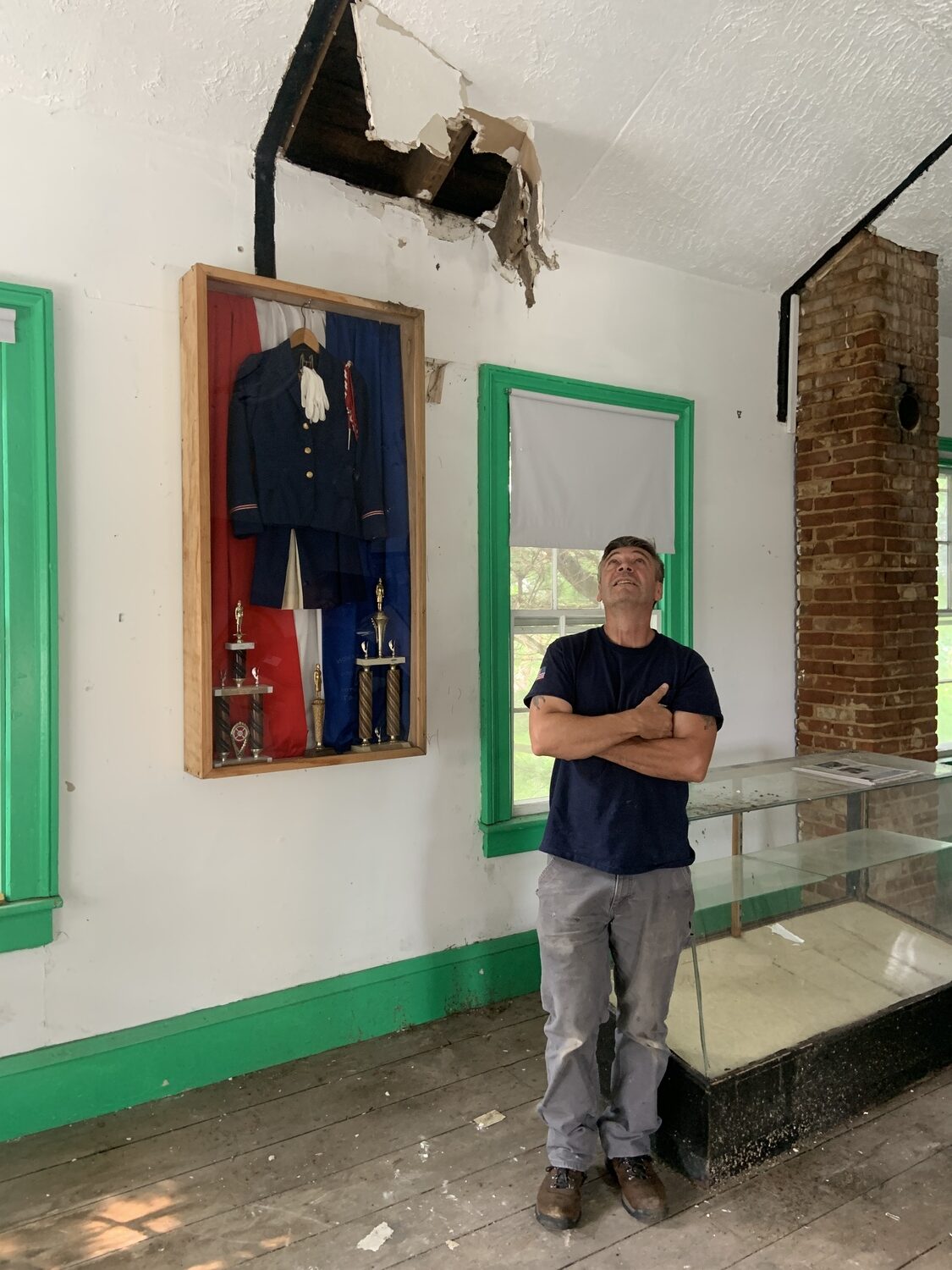
Sag Harbor Mayor Tom Gardella inspects a recently patched hole in the roof of the Sag Harbor Fire Museum, which has been closed for more than four years. STEPHEN J. KOTZ
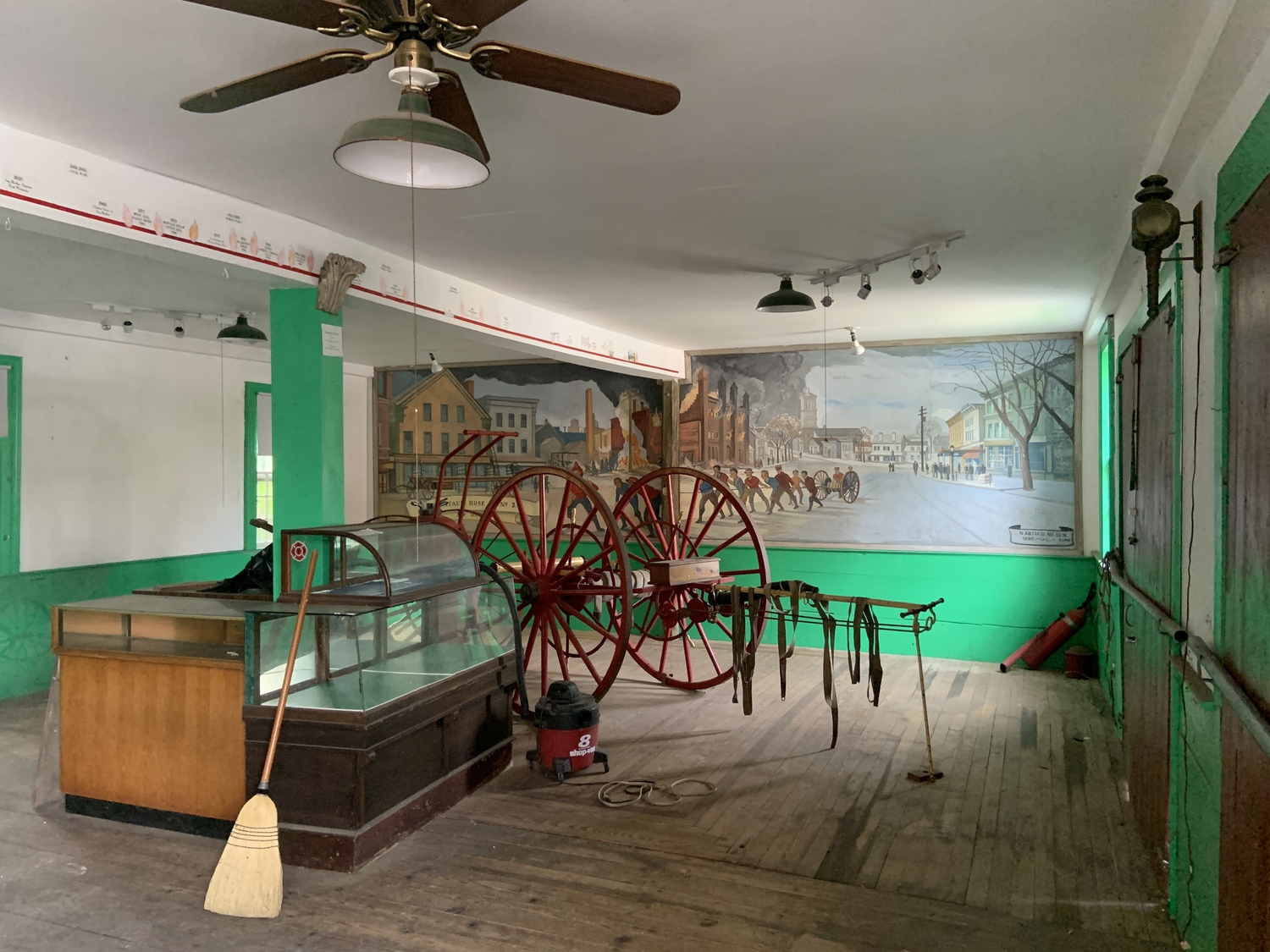
The Sag Harbor Fire Museum has been largely cleared out as it awaits a decision on what should be done to protect the historic building, which has served over the years as the one-time home of the First Presbyterian Church, a school house and village hall. STEPHEN J. KOTZ
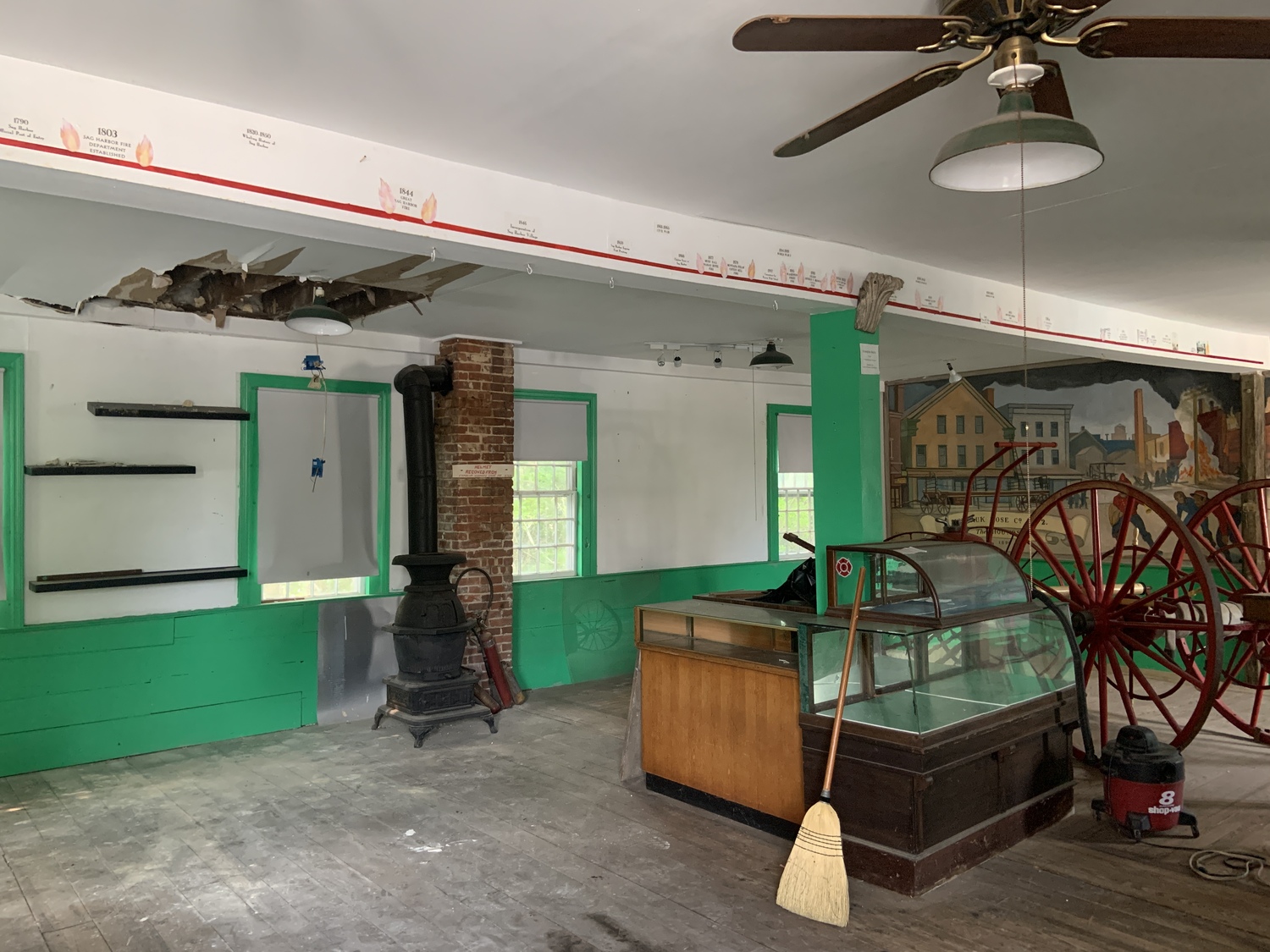
The Sag Harbor Fire Museum has been largely cleared out as it awaits a decision on what should be done to protect the historic building, which has served over the years as the one-time home of the First Presbyterian Church, a school house and village hall. STEPHEN J. KOTZ
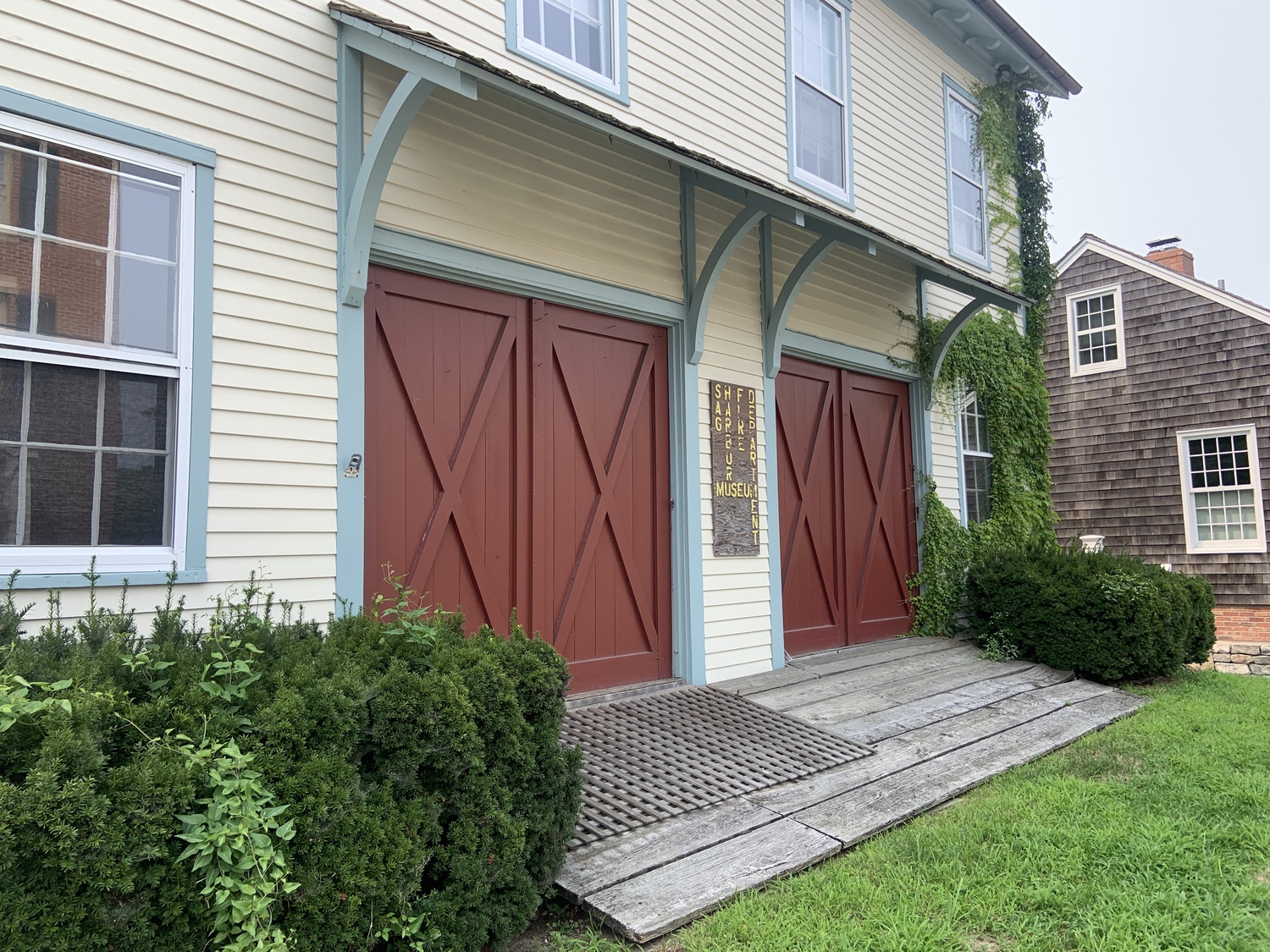
The Sag Harbor Fire Museum, which was once a church and later village hall, was also a working firehouse. STEPHEN J. KOTZ
Mayor Tom Gardella has made the restoration of the currently abandoned Sag Harbor Fire Museum a priority.
Gardella made the announcement, almost as an aside, at a recent Sag Harbor Village Board meeting, before elaborating on the still-preliminary proposal in an interview this week.
“This has been a project I’ve been wanting to do for five years,” he said, adding that when he was a trustee he could only ask the board to consider the project, but, as mayor, a position he has held since 2023, he has more leeway to direct village resources.
He said he would like to tap into a $1.3 million village capital repairs fund to undertake a preliminary assessment of what needs to be done to protect the building until a more complete restoration plan that would continue to use the space primarily as a museum, perhaps with a public meeting room on the second floor, can be put together.
He stressed, however, that he did not envision using anywhere near the total amount in that fund and would seek other funding sources.
“I’m the type of guy, you get a vision, you get your ducks in a row and then you figure out how you are going to pay for it,” he said, adding that, too often, proposed village projects get derailed by arguments over how to pay for them.
He added that he also wants to see much needed work done on the Murray Hill Firehouse on Elizabeth Street.
The museum occupies a historic building at the intersection of Church and Sage streets, which was built in 1833 and served as the one-time home of the First Presbyterian Church. It was later a schoolhouse and Village Hall. It has been closed since the 2020 death of Thomas Horn, who pretty much served as a one-man staff for the museum. After Horn’s death, volunteers from the fire department removed many of the displays and put them into storage in 2021.
A leaky roof, which has been patched for now, has caused damage all the way to the first floor. There are other signs of water intrusion along walls and windows, and wooden floors are sagging
Gardella said his goal is for the village to put up enough money to have the interior of the building gutted to its framing, so architects could make an assessment of what needs to be done for long-term preservation. “It will need a new roof and some work on the foundation,” he said. “The plumbing and electrical will have to be updated.”
The fire museum was one of the village assets that the village’s newly formed Capital Planning Advisory Committee has been inventorying with a goal of providing long-term maintenance plans for them. It was also one that the committee feared might not make it to the list of top priorities for funding.
When the board discussed a controversial proposal that would have created a local development corporation that could issue bonds to cover the cost of renovating buildings like the fire museum, some in the audience urged the board to explore grants and outside donations instead.
To that end, Gardella said he had reached out to the Sag Harbor Partnership to seek its assistance.
Although partnership Co-President Jayne Young said this week the organization had not as of yet discussed the proposal with its board, she said that Karen Arrigoni, an architect who specializes in historic preservation, had toured the building with Gardella and produced a site assessment. April Gornik, another board member, had also collected for preservation a batch of photographs that chronicled an earlier restoration effort in the 1970s.
“Our full board will meet in the next couple of weeks to discuss the project,” Young said in an email.
Arrigoni said her initial inspection revealed “a pretty straight-forward building typical of buildings of that period. I’ve seen a lot like this, particularly in Sag Harbor and the surrounding areas.”
She said that the building had been used for many different purposes over the decades “and each of those lives can be read on the building.”
Although Arrigoni’s initial inspection showed the building was not in imminent danger, it definitely needed some attention. “It’s better to do the work sooner than later,” she added.
Architect Randy Croxton, who is also a preservationist, said the museum is an important historic building in the village and was one of three Presbyterian churches to be built in the general area.
The first church, known as the “Old Barn” Church, was built just across the street in 1767. When it was torn down in 1817, services moved to an old arsenal on Union Street that dated to the War of 1812. The building now housing the museum was constructed in 1833 and served as the church until the Old Whalers’ Church was finished in 1844.
In 1856, the building, which had served as a schoolhouse for a time, became Village Hall.
“There is an opinion that it is the earliest public building still standing” in the village, said Croxton, who added that it would be nice if a future museum includes “an interpretation of that story.”
Architect Lee Skolnick, whose firm has designed museum and exhibition spaces, has also visited the building and discussed possible design concepts with the mayor.
He said the museum offered an opportunity to both celebrate a historic building and educate visitors about the world of firefighting over more than two centuries.
“We approach a topic from as many different perspectives as possible,” he said, “so people can engage with the information in a natural way.”
“People love to see real things that were used by real people to put out fires,” he said, adding that interactive displays could be designed to give visitors that experience.


 Stephen J. Kotz on Aug 21, 2024