


 1 Photo
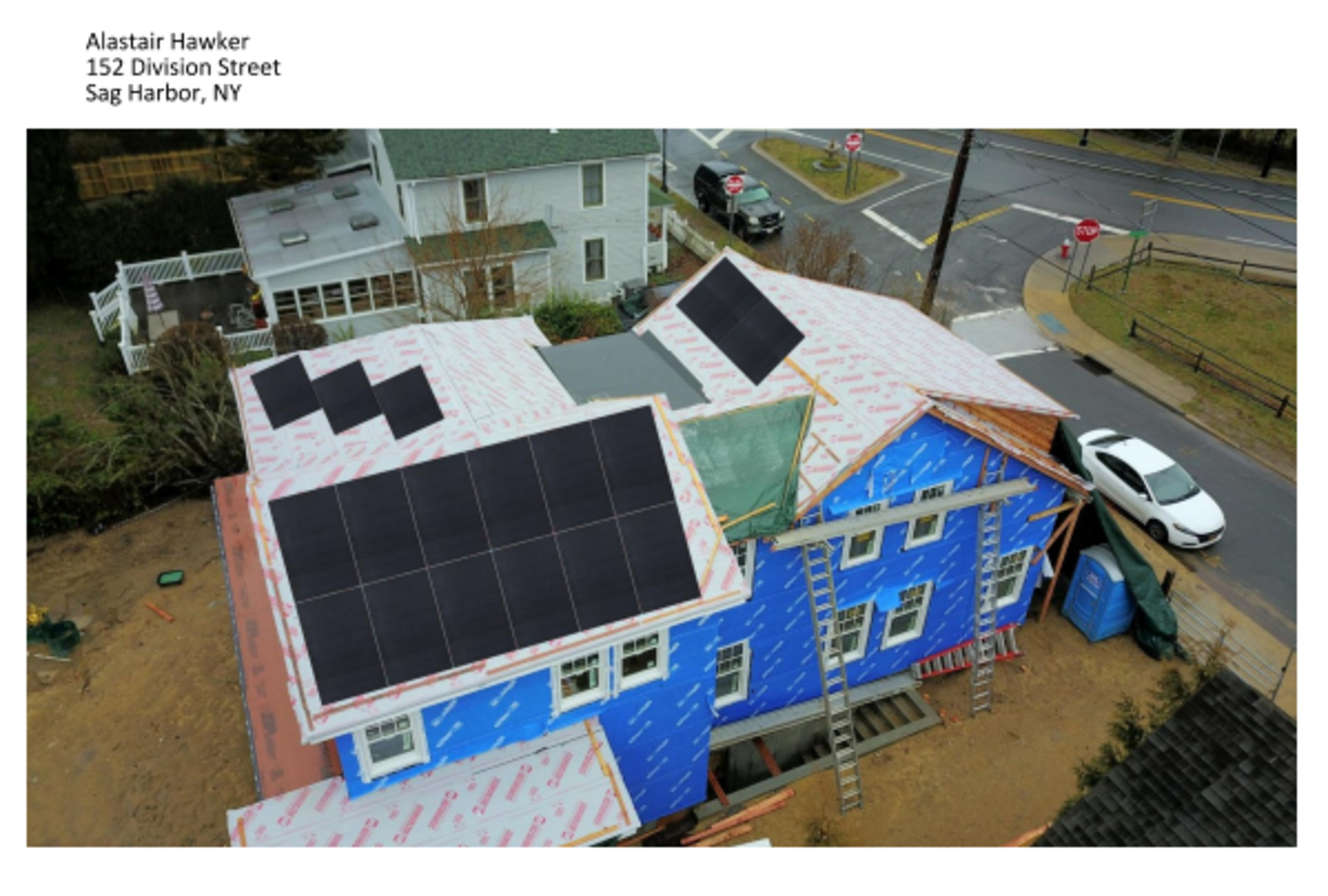
A rendering of the proposal at 152 Division Street.
Despite concerns expressed by Chairman Steve Williams in March, the Sag Harbor Village Board of Historic Preservation told the owners of the 19th-century house at 152 Division Street — in the historic district — that the panel would likely approve their plan for a rooftop solar panel array.
For the board, the issue was just how visible a south-facing array on a new rear addition would be to neighbors and from the street. Village Attorney Liz Vail explained last month that the village code prohibits the board from approving a solar array visible from the street on an historic house.
Alastair Hawker has an application before the Zoning Board of Appeals to seek a waiver from the rule. He and his wife, Aja DeKleva-Cohen, appeared before the board on April 11 to argue their case and gain a sense of the HPARB’s willingness to approve the plan if the ZBA waiver comes through.
At the April 11 meeting, Williams told applicant Hawker and his wife that he and the board’s historic architectural consultant, Zachary Studenroth, had visited the property. Despite his concerns about setting a precedent that future applicants might seek to exploit, he said, “Specific to this case, I have no objections.”
He noted that the solar panels, which Hawker told the board would be visible only “from one small spot” on the street, will be on a new addition, “so it really is not historic, so to speak.”
Member Bethany Deyermond noted that the board years ago approved solar panels for a previous owner of the historic Methodist Church building. They were never installed.
“I have mixed feelings about the solar” on an historic building, she said, “but part of me feels that it’s coming and … it should be encouraged.” She noted that the application file contains letters from neighbors supporting the project.
“I’m with Bethany,” Judith Long said. “I’m ambivalent. I love the idea of solar panels. I think it’s the right thing to do. On the other hand, this is historic, and I believe if you were walking down Division Street you would look up and you would see” the panels on the south-slopping roof. “It’s mitigated, though, because you say the roof will be black, so maybe they won’t be so noticeable.”
She cautioned that any approval should contain language discouraging future applicants from seeking further exceptions from the rules.
The board gave Hawker and DeKleva-Cohen a firm “no” in response to their additional idea of replacing the front door and the glass around it with a new entryway copied from another historic house.
As member Meghan Toy explained, design elements of an historic house that are too decayed to restore must be replaced in kind. “You are not allowed to do away with this … whatever you created needs to look exactly like” the original.


