


 1 Photo
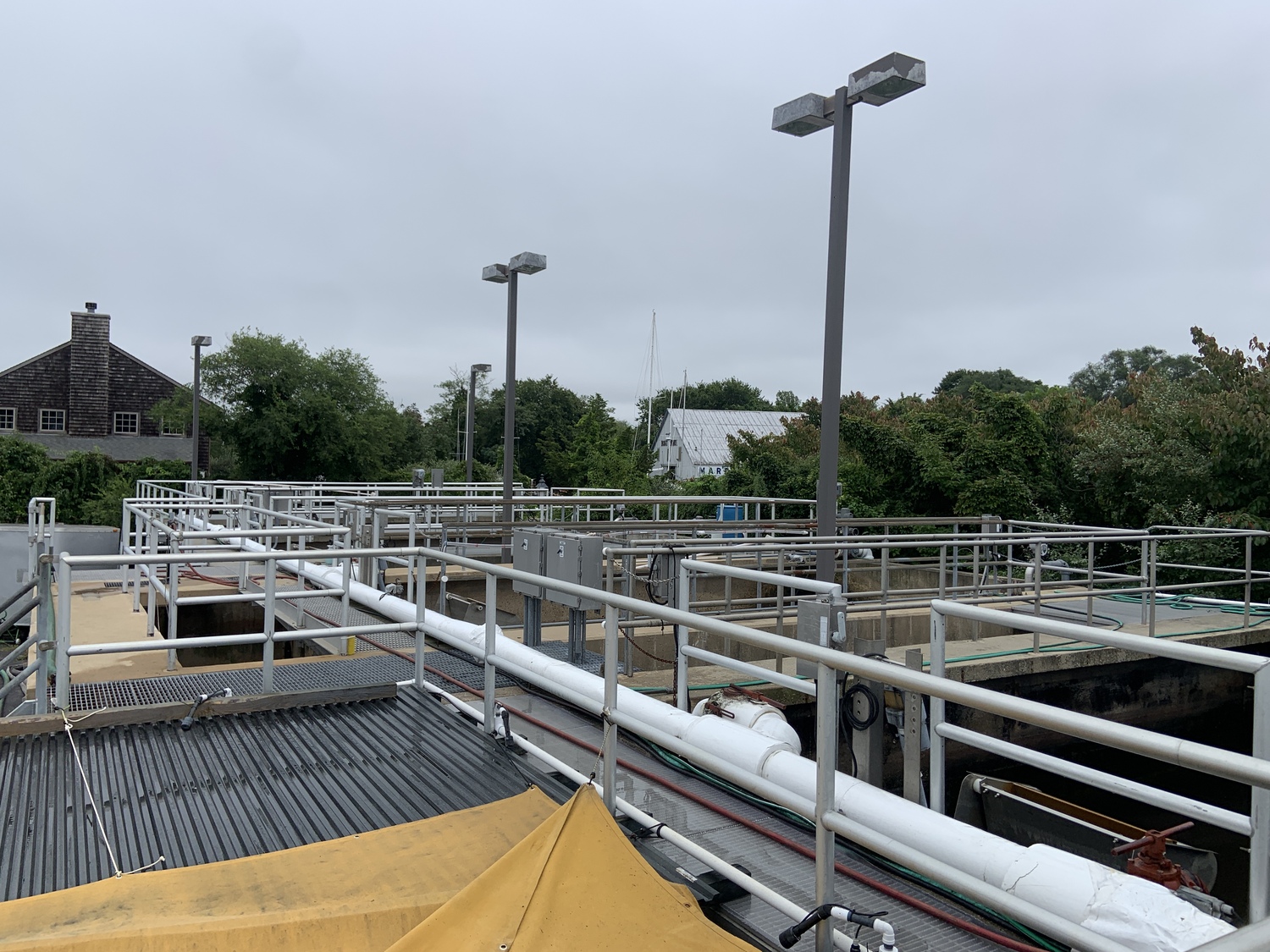
The Sag Harbor sewer treatment plant. STEPHEN J. KOTZ
Sag Harbor Village has won a nearly $6 million New York State grant to help upgrade its aging sewage treatment plant.
“It’s pretty exciting to get $6 million from New York State. I don’t think it’s ever happened before,” said Trustee Aidan Corish, who serves as liaison to both the sewage treatment plant and the village’s grant-writing efforts. “This is great news.”
For several years, the village has been aggressively seeking funding from everywhere from the East Hampton and Southampton Community Preservation Funds to the federal government to help pay for a multimillion-dollar upgrade that will allow it to increase the capacity of its 1970s-era sewage treatment plant. It currently has awards to cover approximately $16 million for varying phases of the design and construction work.
The plant currently serves the village’s business district and some nearby residential properties. But most properties in the village are not connected to the sewer line. Instead, they rely on traditional septic systems, which can help filter out toxins such as a fecal coliform but which do nothing to eliminate nitrogen from the wastewater flow. Some of that nitrogen eventually finds its way into the bay and coves, where it can lead to unhealthy algal blooms and other pollution.
Working with Cameron Engineering, the village has been exploring ways to reduce that flow of nitrogen. A major study the company completed in 2022 divided the village into 16 different “sewersheds.” The initial goal, Corish said, will be to connect those properties that are closest to the waterfront, have the highest groundwater tables, and are closest to the plant.
The nearly $6 million grant the village learned about this week will pay for the cost of extending the sewer lines in the two areas — sewersheds K and L — the study concluded were the most likely to pollute the bay and are closest to the treatment plant.
Sewershed K covers the area around Meadow, Rose, Spring and Garden streets, just west of the Main Street business district. Sewershed L covers Division Street to the Sag Harbor Learning Center and the area around Rysam Street.
All told, the two areas include nearly 60 single-family homes, seven multifamily residences, and 16 commercial buildings.
Although some have questioned whether it would be easier to require homeowners to transition from septic systems to modern wastewater treatment systems that can remove a large amount of nitrogen from effluent, Corish said that is not feasible because many lots are too small to provide the space for individual treatment systems and, in many cases, the water table is too high for them to be effective.
Despite the good news, Corish said it was still too early to offer an estimated timetable or total cost for the work. But he said the expansion would be one of the largest public works projects in the village’s history, with a total cost exceeding the village’s annual budget.
Corish has been lobbying for the village to hire a village manager, who would be responsible for coordinating the project and other village business. The Village Board has yet to begin the hiring process for that position, and, it still must adopt the Cameron engineering study, which Corish said he expected the board to do at its February meeting.
As part of that study, Cameron is putting together bid packages for various components of the work, at which point it will be able to provide an estimate for the various phases of the work.


 Stephen J. Kotz on Feb 21, 2024