


 1 Photo
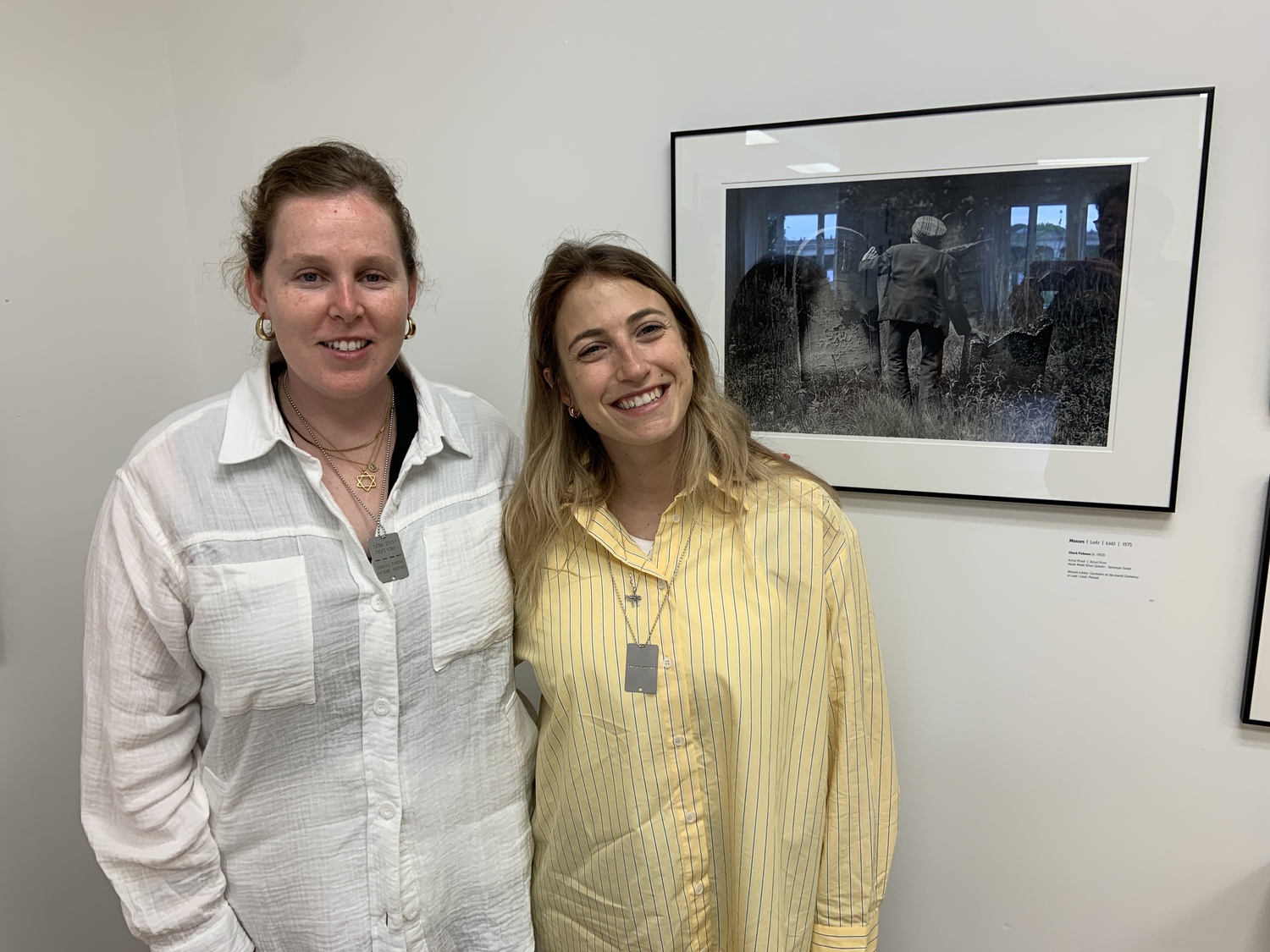
Eden Gafner, right, a survivor of the October 7 terrorist attacks in Israel, spoke at the Center for Jewish Life in Sag Harbor last week. She is with Doron Gertzovski of Faces of October 7, an organization that was organized to share the stories of survivors of the attack. STEPHEN J. KOTZ
Eden Gafner, a 28-year-old Israeli who survived the October 7 Hamas terrorist attacks on Israel, was the guest of the Center for Jewish Life in Sag Harbor last weekend, where, after Rabbi Berel Lerman presided over Shabbat services on Friday and Saturday, she described her family’s harrowing experience that day.
Gafner’s two-week visit to the United States was sponsored by the organization Faces of October 7, which has sought to keep the focus on the attacks that killed more than 1,200 Israelis and saw hundreds more taken hostage, but which have been largely overshadowed by the war that has followed.
In an interview before her presentation, Gafner said she and her boyfriend had traveled from Tel Aviv to Kibbutz Re’im to visit her family and see friends during the Simchat Torah observance, which celebrates the completion of the annual cycle of reading the Torah. She described it as “the happiest day” for the Jewish people.
On the way to the kibbutz, she said they passed the Nova music festival, where so many would be killed the following day. It was a surprise, she said, to see that type of event near the kibbutz.
Early Saturday morning, the family was awakened at about 6:30 by the sound of sirens, something it had grown used to over the years of living in what’s called the Gaza Envelope, an area within seven miles of the border. “It means you have 15 seconds to run into the safe room,” she said. “You stay in the safe room until you hear the fall of the missiles.”
But on this morning, the siren sounded again minutes after the first one and then again. “We said, ‘Hamas is not going to let us sleep in this morning, so let’s get up and make breakfast,’” Gafner said.
When they turned on the television news, they saw video of a pickup truck filled with terrorists and thought it was an isolated attack. Soon, new video showed another pickup, similarly filled with armed men, driving through the Gaza border.
At that point, Gafner said, the family knew a major attack was underway, although it still had not grasped the gravity of the situation. That began to become more clear, she said, when the family could hear automatic weapons fire on both sides of the kibbutz.
Soon, the kibbutz’s WhatsApp group began to relay messages from some of its 300 to 400 inhabitants. A woman said her ex-husband had been killed and the couple’s two young children had been left alone at home. Similar messages followed.
“We knew we were in trouble,” Gafner said. “The first thing we tried to do is lock the door to the safe room.” But the lock didn’t work. The family did not know that because they had never needed to lock it before.
Gafner’s family then retreated to the attic, although her father stayed on the first floor in what she said was a hopeless effort to protect them. Gafner said the family soon realized they were not safe in the attic.
“We started to think we were going to be murdered,” she said. The Israeli Army had not responded because the nearest base was under attack. “We knew nobody could come to save us.”
Back in the safe room, the family received WhatsApp messages from neighbors reporting the approach of the terrorists. “There was a knock on the door,” she said, “and we knew we were next.”
Moments later, a terrorist shot through the front door and entered the home. He tried the handle of the safe room, but Gafner’s father held on tightly to it for about 10 minutes, which seemed an eternity, until the terrorist finally gave up. For whatever reason, he did not try to shoot through the door, but instead seemingly abandoned his pursuit.
For nearly two hours, the family sat silently in the safe room. Then they heard the sound of their neighbors, who had been routed from their own home. They opened the door and let the other family into the crowded space, where they remained for more than a day until the Army arrived late Sunday morning.
“When I woke up that Saturday morning, I didn’t do anything wrong,” Gafner said. “I just woke up in my bed as a Jew, and these new Nazis, Hamas, wanted to murder me because I’m a Jew.”


 Stephen J. Kotz on May 22, 2024