


 4 Photos
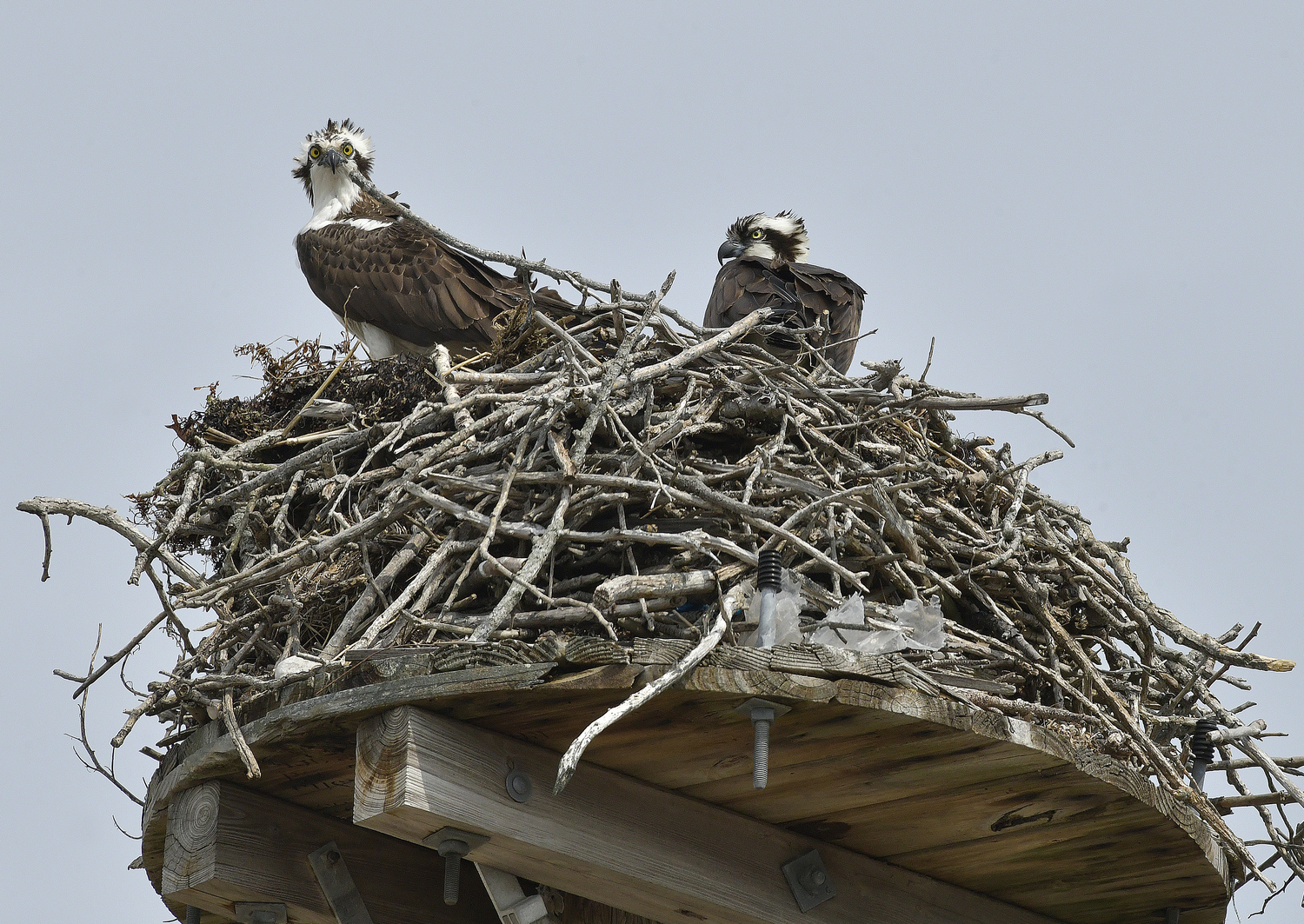
The Group for the East End has documented roughly 200 nesting pairs of ospreys on the East End so far this season. DANA SHAW
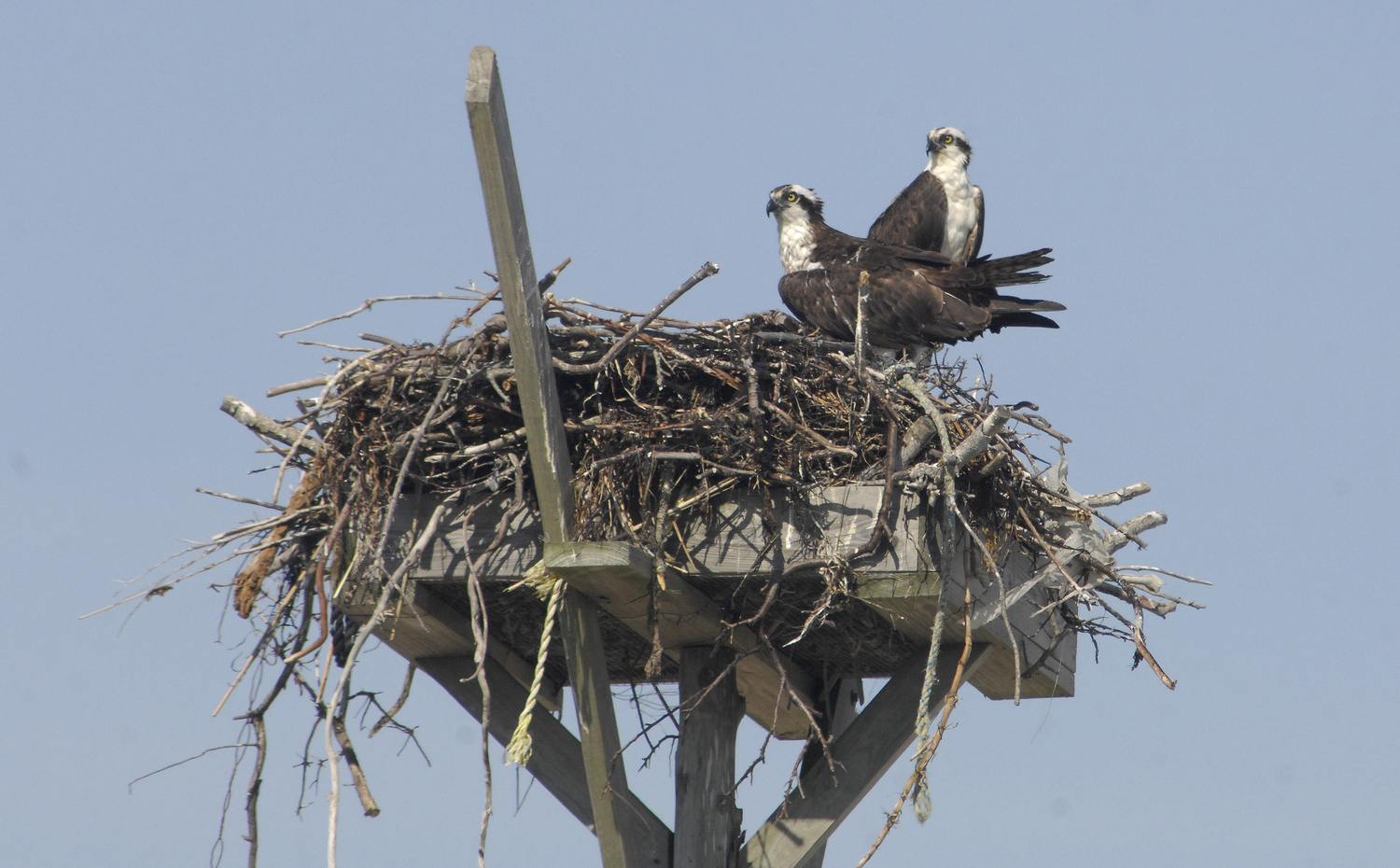
the Group has documented roughly 200 nesting pairs so far
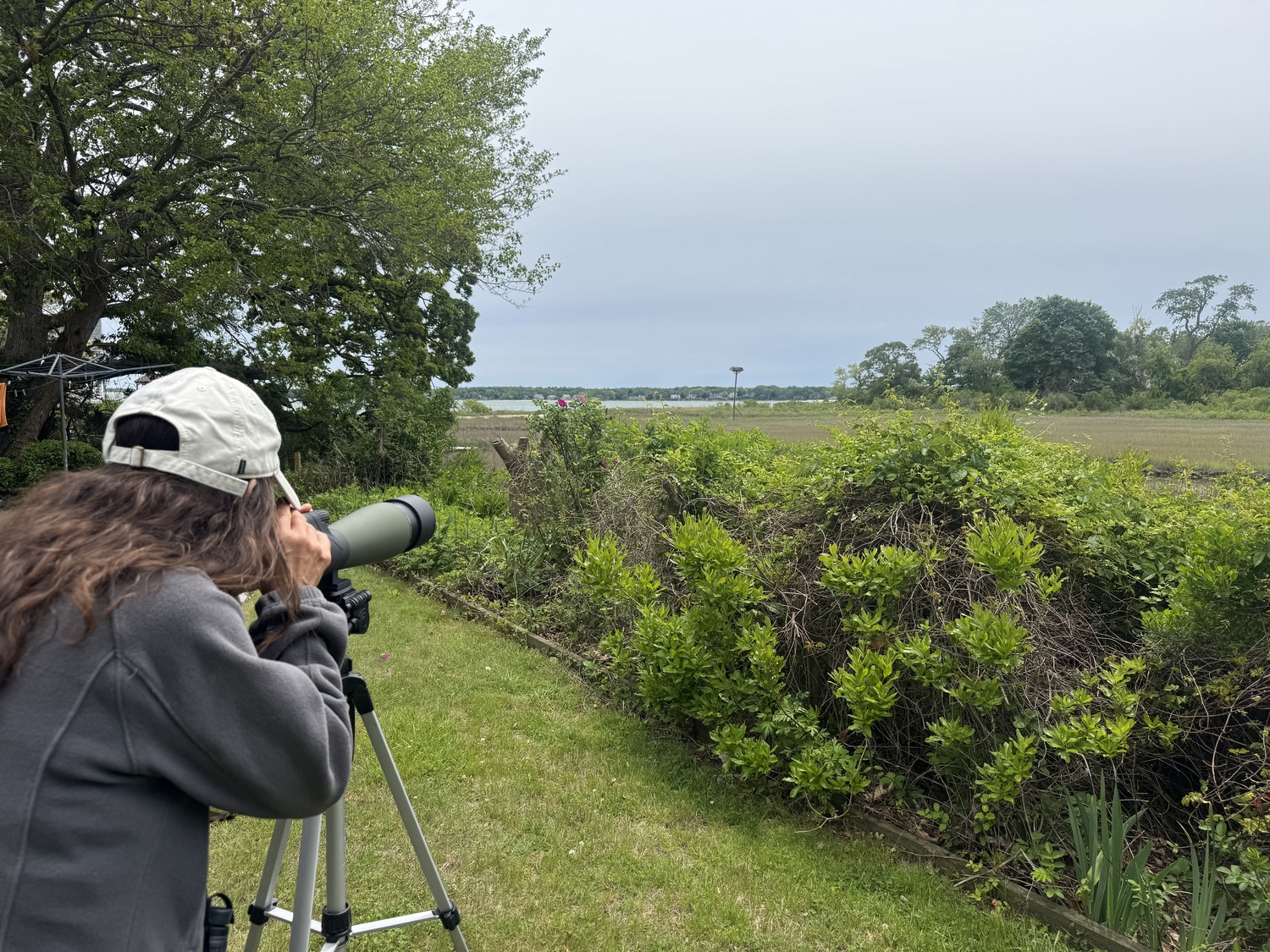
Anita Wright looks for osprey. GROUP FOR THE EAST END

Osprey through the spotting scope. GROUP FOR THE EAST END
Despite three new Long Island species joining New York’s list of endangered and threatened species, all hope is far from lost.
Here on the East End, there is one comeback story of note: the osprey, according to Bob DeLuca, the president of Group for the East End, which had a major hand in saving the bird from potential extinction.
“There are examples of environmental success stories, even though they rarely appear in the news,” he said. “I always like to think that, when these designations are made, just like with the osprey and other species, there’s an opportunity for people to come forward and say, ‘All right, look, enough is enough. We got to start doing something here.’”
The osprey decline began in the 1950s and accelerated through the 1970s with the increased use of DDT, an insecticide that resulted in eggshell thinning, causing them to be more easily crushed during incubation. In 1976, the apex predators were listed as endangered in New York State, only rebounding in the early 1980s after DDT was banned.
In 1983, the level of concern for ospreys was downgraded to “threatened,” and by 1995, there were 230 breeding pairs on Long Island. Four years later, the white-bellied birds were downgraded once more, this time to species of special concern, which is the osprey’s current status.
“These designations, it’s a mixed bag because on the one hand, any species that gets to this point is in real trouble,” DeLuca said. “On the other hand, it is those types of designations that begin to call broader public attention to the need for these species to get some help.”
This summer, Group for the East End is conducting its triennial osprey monitoring program, visiting approximately 500 osprey nests across the East End, from East Hampton, Riverhead and Shelter Island to Southampton and Southold. Alongside expert birders and volunteers, the organization has documented roughly 200 nesting pairs so far as part of phase one, which ran from Memorial Day weekend through early June.
Phase two will begin in July, when they return to the same nests to look for fledglings. This data will be compiled and shared with New York State, which keeps track of the local population.
“Our last monitoring year was 2022, so it is exciting to see how many nesting pairs are back now three years later and what areas within the East End they congregate in,” explained Jen Skilbred, senior environmental specialist at Group for the East End, in a press release. “Visiting their nests is always interesting, as well. The same pair will return to a nest every breeding season, adding sticks, grass, and whatever else they can find, so the nests can become quite large.
“It’s also a good reminder to make sure we don’t litter,” she continued, “or our old fishing line and plastic bags may end up as a dangerous addition to an osprey nest.”
While birding with her children during the COVID-19 pandemic, Margarette Doyle bumped into Anita Wright, the assistant director of environmental education at Group for the East End, who told her about the osprey monitoring program.
Doyle immediately signed on — “and since then, I have been hooked,” she said in a statement.
“I have always been fascinated with ospreys and their story,” she said. “I love spotting my first returning osprey of the season — their arrival signals the end of winter and the start of spring with longer days and warmer weather. And they are fascinating to watch.
“I once saw an osprey and a bald eagle battle with each other over a fish that the osprey had just caught in Accabonac Harbor,” she continued. “The osprey, although smaller, was too quick and agile for the eagle and eventually outsmarted him. The fish was his. The osprey was king.”
For more information and answers to common questions, such as what to do if an osprey nests on a home structure, or if a nest appears to be in danger, visit thegroup.org/initiatives/osprey-conservation.


 Michelle Trauring on Jun 22, 2025