


 3 Photos
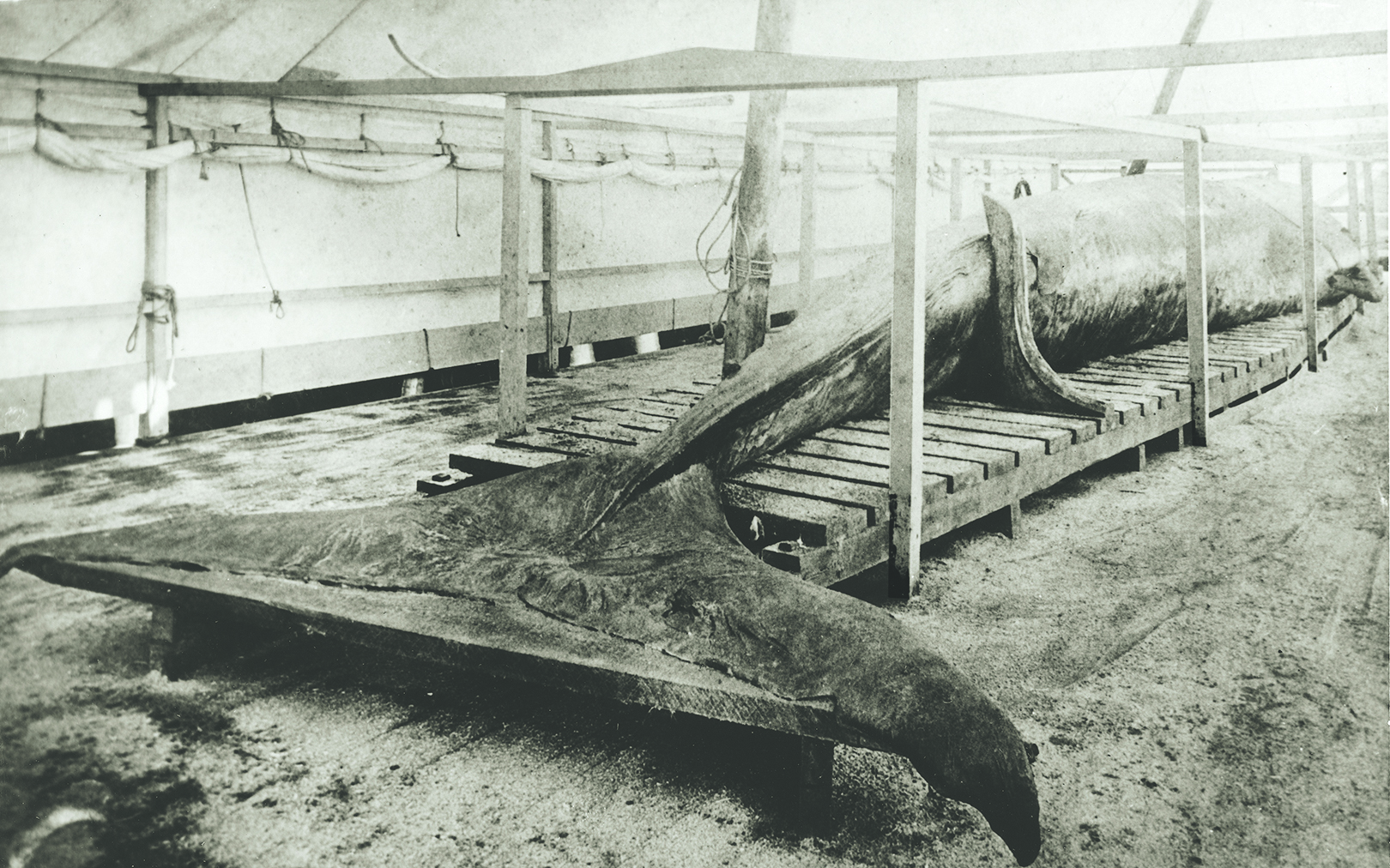
A 70-foot embalmed finback whale was exhibited at Sag Harbor's Long Wharf in 1888. COURTESY ESTATE OF GEORGE FINCKENOR
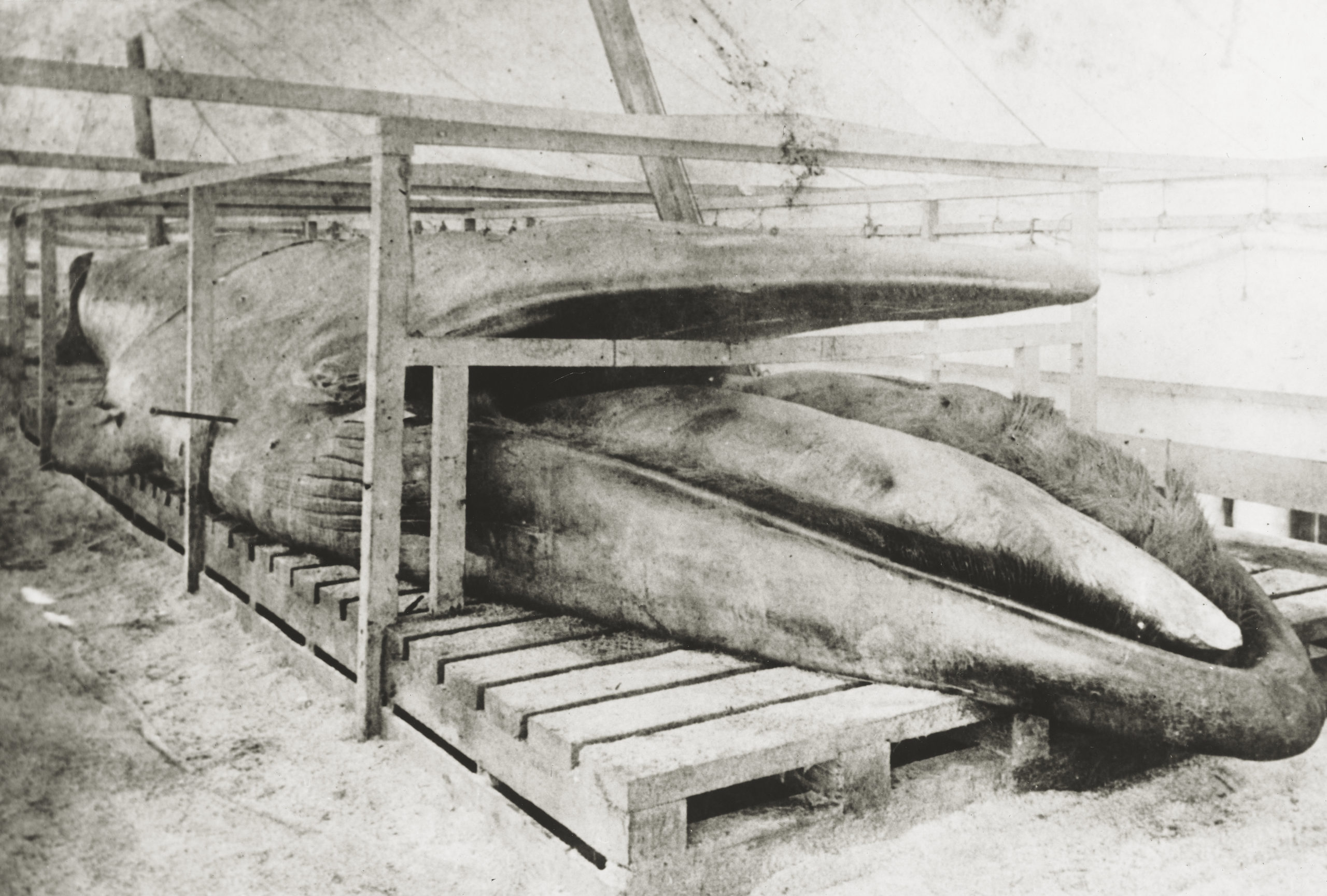
A 70-foot embalmed finback whale was exhibited at Sag Harbor's Long Wharf in 1888. COURTESY ESTATE OF GEORGE FINCKENOR
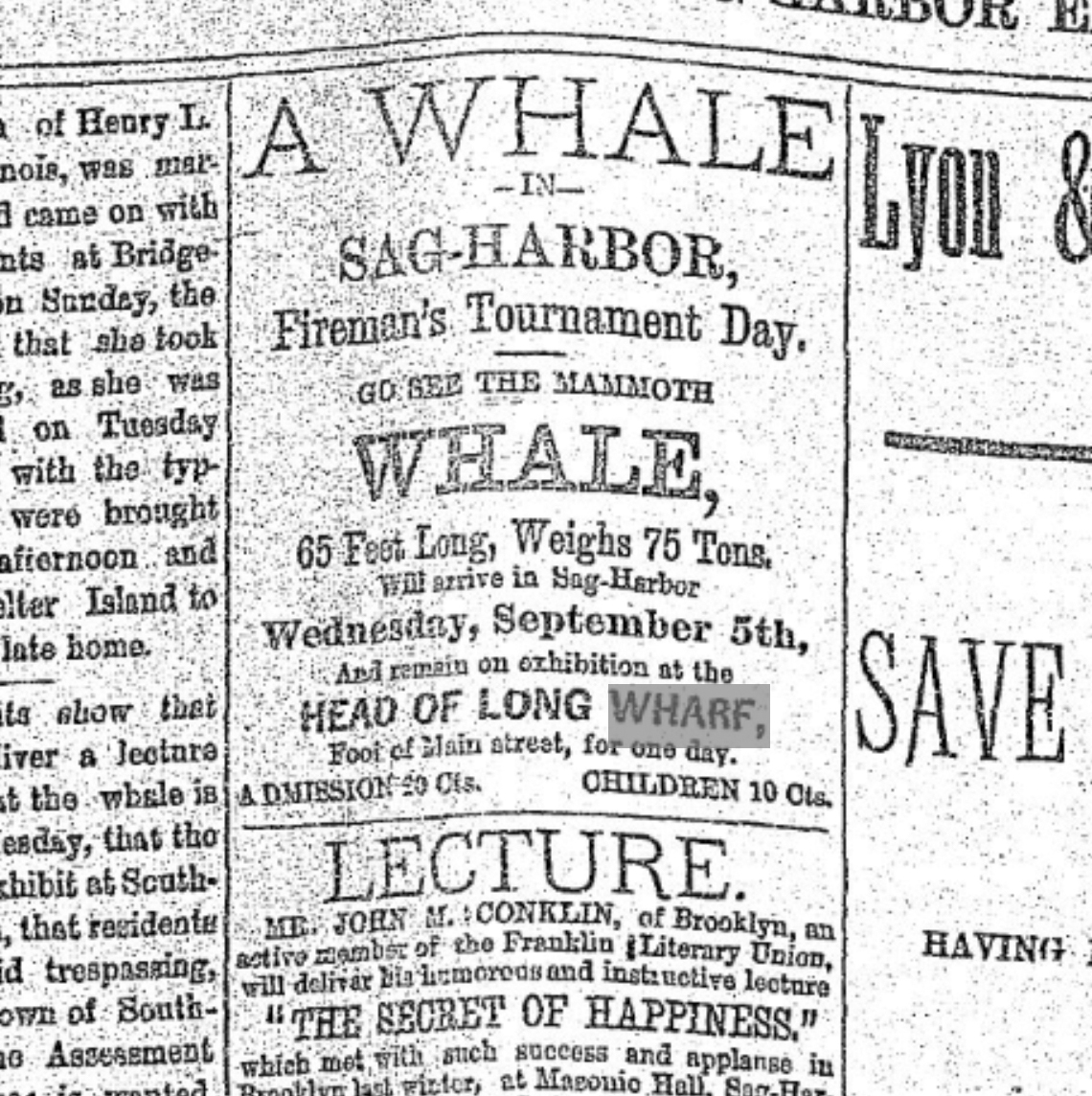
An advertisement that appeared in the August 6, 1888 edition of The Sag Harbor Express for the whale exhibit.
Of all the attractions to be tied up at Long Wharf, from mega yachts to classic sailboats, it’s a safe bet that the giant finback whale that made an appearance in Sag Harbor during a fire department tournament in September 1888 ranks as the most unusual.
The floating sideshow was the idea of Addison Youngs of Sag Harbor, whose family owned the American Hotel, and Edwin P. Rogers of Bridgehampton. They were later joined by other investors, including William French and “Eggie” Williams of Sag Harbor.
By some accounts, Youngs and Rogers got the idea from Gil Payne of North Haven, who supposedly tried his own luck at profiting off a dead whale exhibit in New York City — but was forced to tow its rotting carcass out to sea before the money started to roll in.
To escape Payne’s fate, the two entrepreneurs first had their whale towed to Boston. The beast, which was just shy of 70 feet long and weighed an estimated 75 tons when it was killed off Cape Cod earlier that summer, was embalmed there by Dr. George Sherive of the Egyptian Chemical Company for the sum of $1,500. (Even though that much money could buy you three or four nice houses in Sag Harbor back then, it still seems like a paltry sum for such a disgusting job.)
Despite the enormity of that task, the whale did not stink, if you believe an account that was published in the July 19, 1888, edition of The New York Tribune shortly after the cavernous cadaver was put on display at a pier on Fulton Street in the East River in Manhattan.
“Considering the hot weather, the great fish is singularly inoffensive to the nostrils, and there is not the slightest danger of nausea,” The Tribune reported. “The Board of Health yesterday sent Inspector Moran and Inspector Nicholson to see about this, and they were perfectly satisfied with their examination.”
Others say that was really not the case.
According to an article that appeared in the February 9, 1961, edition of The East Hampton Star, W.F. Youngs, who was a child when his grandfather and his partners brought the whale to New York, said there was no need for advertising: “You just had to follow your nose to find the whale.”
The whale’s giant jaws were propped open, and a platform with chairs was installed in the mouth, so visitors could sit inside and imitate the biblical Jonah, who was said to have lived for three days inside the belly of a similar leviathan.
If the whale was big news in New York — the Tribune article referred to it as “the Prince of Whales” and described it as “lying in state” on a tent-covered barge — it had to be an even bigger one here in Sag Harbor. Yet its arrival is heralded only by a modest advertisement, noting that it would be on display for two days, September 5 and 6, and it would cost 20 cents for adults and 10 cents for children to view it.
In the paper, the whale’s presence is listed amid the local news items. Underneath one announcing that “The ladies of the Presbyterian Society of Bridge-Hampton hold a cake and ice cream sale this evening in Atlantic Hall” is an even shorter one noting, “The whale, exhibited alongside Long Wharf yesterday, will also be exhibited today.”
After its visit to Sag Harbor, the whale was displayed up and down the Atlantic Seaboard. But then disaster struck, according to an article that appeared in The Express on February 19, 1953.
When it was being towed to Philadelphia, the barge it was riding on capsized, and the whale sank to the bottom. By then, Oaks “Ollie” Anderson, who had joined the show as a partner and the barker when it was on display, took control of the operation. He had the whale raised from the bottom at considerable expense and went on with the show.
“Eventually Anderson managed to have his attraction transported to the Great Lakes, but just how this was done we do not know,” The Express continued. “Some say it was done by rail, and others by way of the Hudson and the Erie Canal. But no matter how the feat was accomplished it brought disaster to the Long Island showman. During a storm on one of the lakes, his son, also known as Ollie, was lost off the boat.”
Over time, the finback turned into something of a white whale … er, elephant … for Anderson, because, despite his efforts, he could not sell it, and it was too valuable to get rid of.
In 1903, 15 years after the whale was unveiled in New York, Anderson left it tied up on the Monongahela River outside Pittsburgh and returned to the East End for a long visit. But, like Captain Ahab, he was tethered to his whale and returned to it for several more seasons, dying in 1909.
The 1953 Express article noted that Anderson was known as Long Island’s last whaleman “and undoubtedly the only one who made a sizable fortune out of a single whale.”


 Stephen J. Kotz on Feb 19, 2020