


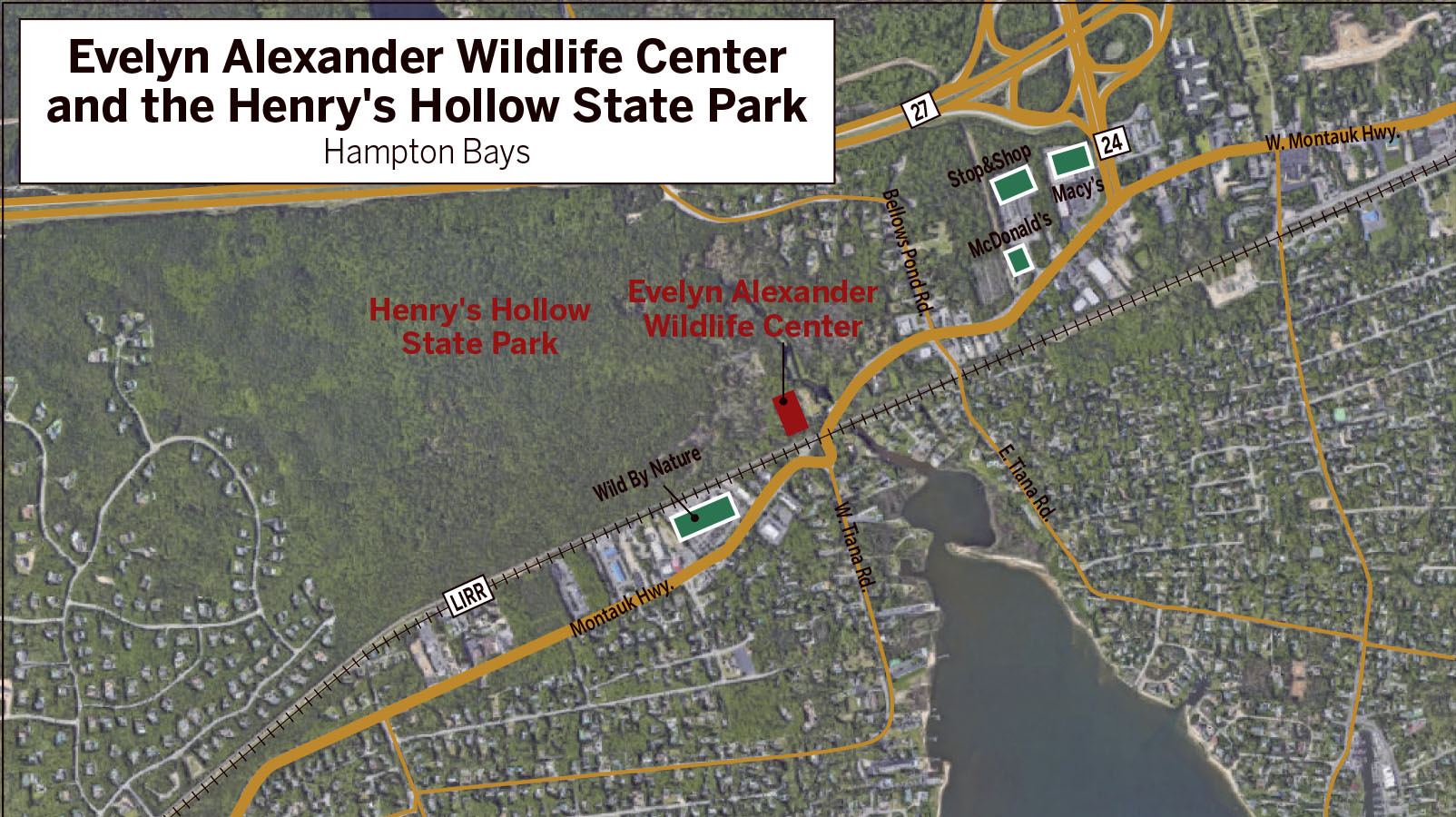
 4 Photos
Hunting is permitted on the state property that abuts the wildlife rescue center.
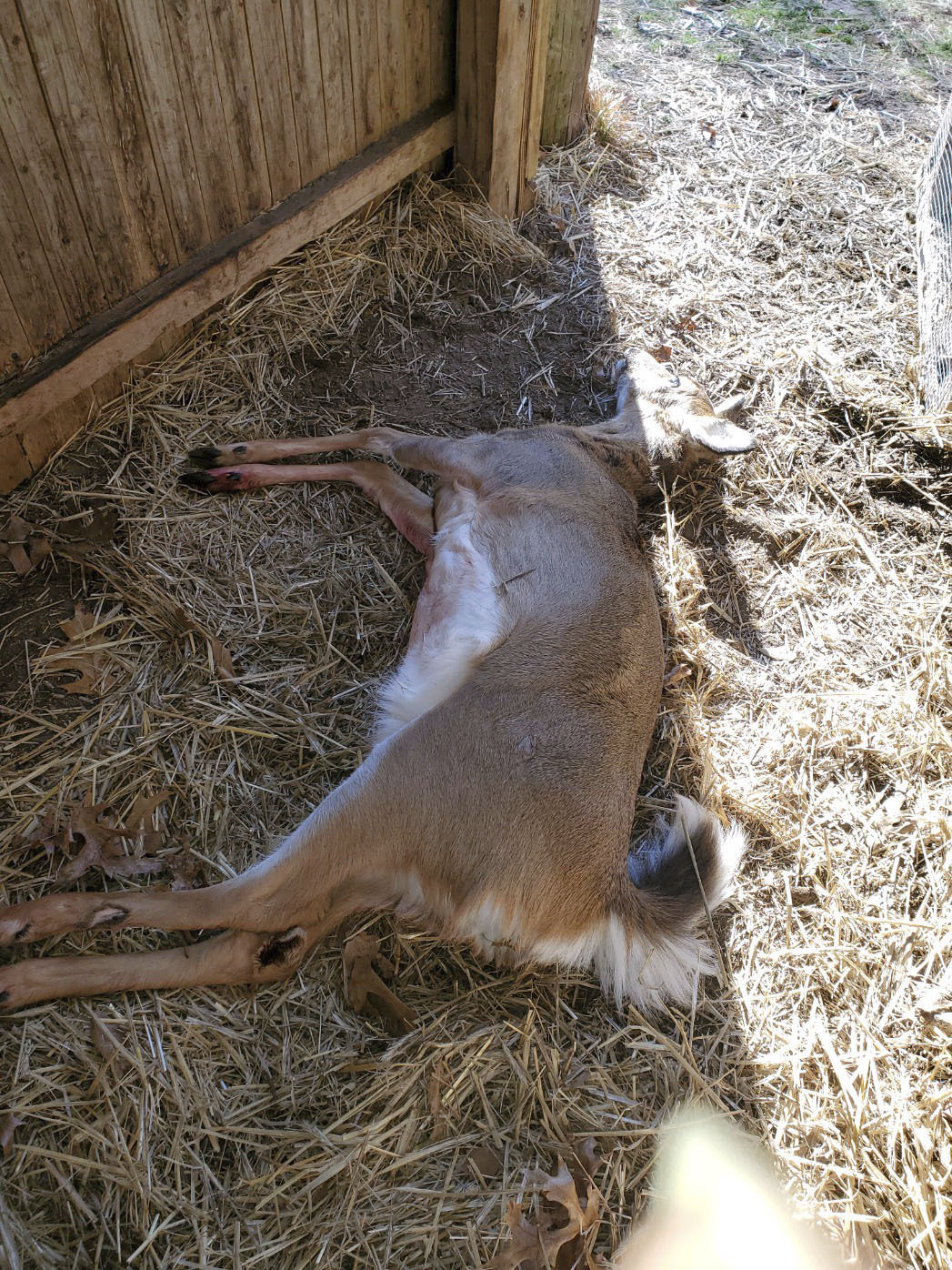
The fatally wounded deer. COURTESY GINNIE FRATI
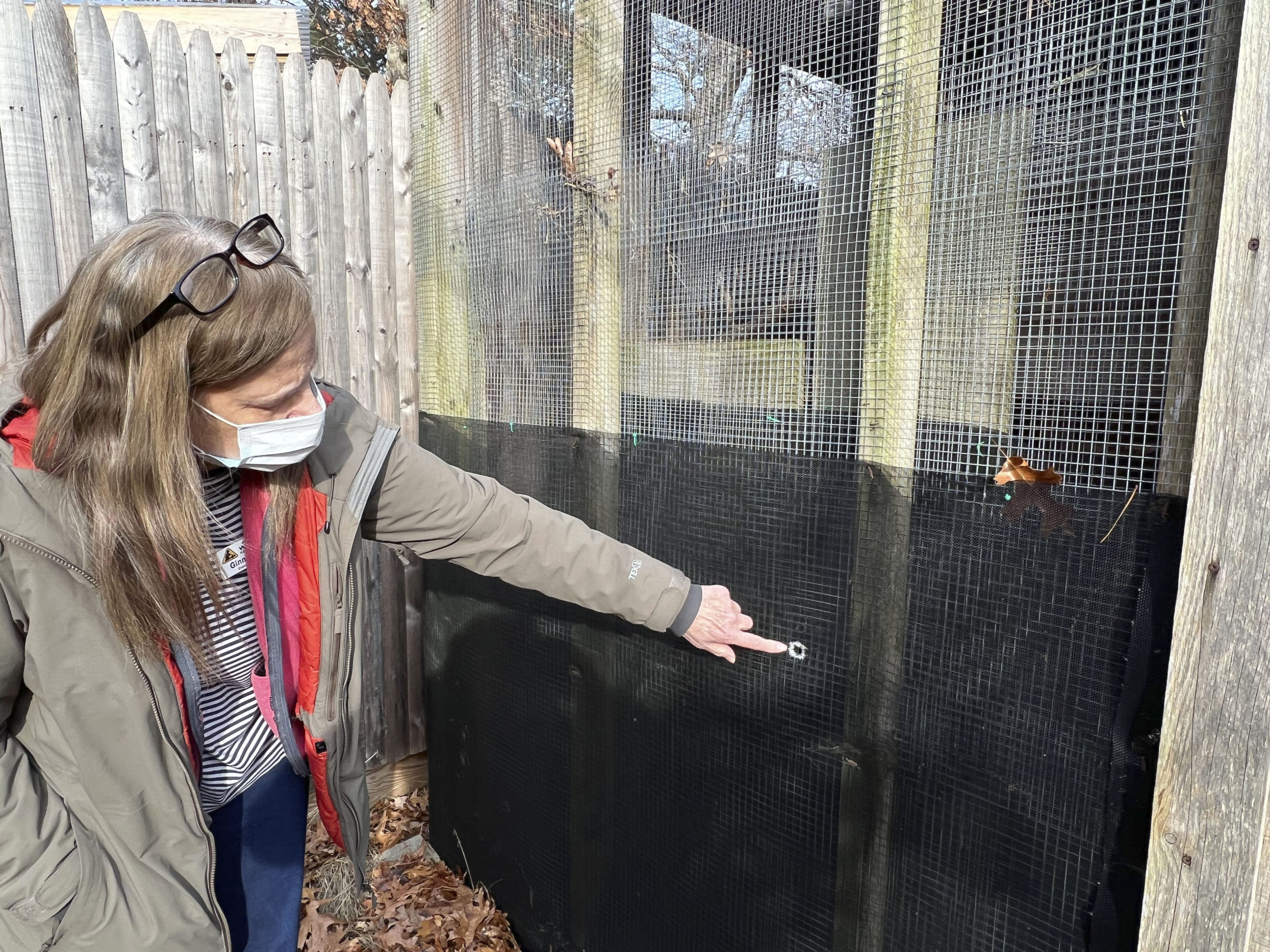
Evelyn Alexander Wildlife Rescue Center Executive Director Ginnie Frati points to the bullet holes that passed through one of the animal enclosures. DANA SHAW
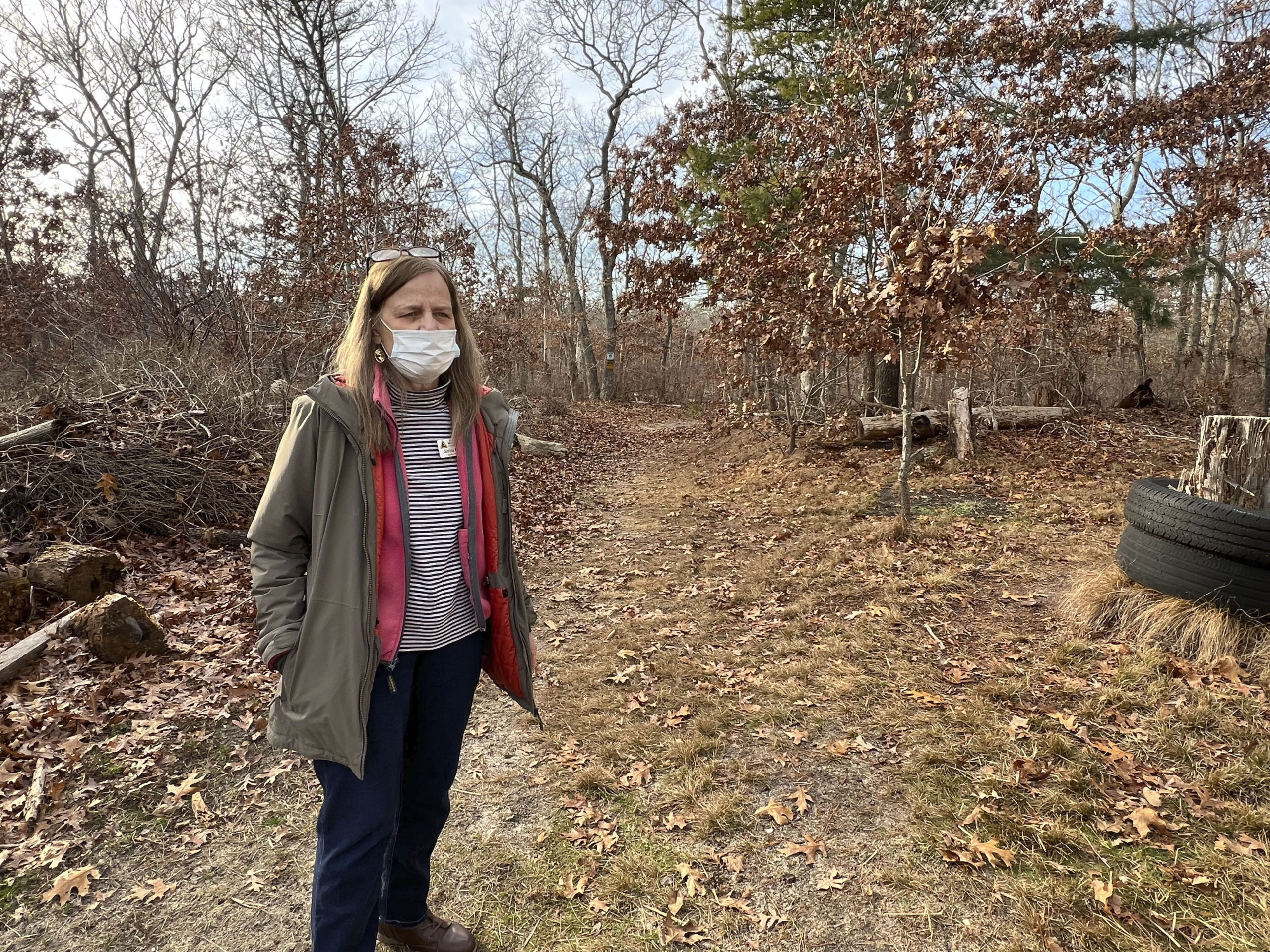
Evelyn Alexander Wildlife Rescue Center Executive Director Ginnie Frati near the area where she discovered the fatally wounded deer. DANA SHAW
Kimberly Dash, an employee at Evelyn Alexander Wildlife Rescue Center in Hampton Bays, raised the animal from infancy, giving it a second chance at life — only to learn that the 7-month-old fawn was shot and killed mere feet from the sanctuary that nurtured it.
She was among a contingent of wildlife advocates who appeared before the Suffolk County Legislature’s Environment, Parks and Agriculture Committee on Monday, January 24, urging lawmakers to take action in the wake of the shooting earlier this month.
They want the Legislature to rescind a 2003 agreement that allows hunters to traverse Munn’s County Park to Henry’s Hollow, a landlocked state hunting grounds in Hampton Bays that abuts the Wildlife Rescue Center property, as well as a popular nature trail. Hunting is not permitted in Munn’s County Park.
Wildlife Rescue Center Director Virginia Frati took the podium at the committee’s meeting and related the details of the incident when the deer was shot on center property.
Two of the slugs, fired from a shotgun, that missed the deer, instead smashed through animal enclosures and missed hitting a worker who was outside by mere feet. Dash also spoke of confronting the gruesome tableau of her director covered in the animal’s blood after a fruitless effort to save it.
Speakers emphasized that they weren’t on hand — at the committee meeting in Hauppauge, and remotely via Zoom teleconference — to debate the morality of hunting. Rather, they focused on the danger inherent in having the wildlife center, and especially the popular nature trail, right next to hunting lands.
More than one speaker raised the specter of rehabilitators and volunteers working in fear of deadly projectiles whizzing by.
“We are putting humans in danger,” volunteer Deborah Falzarano said. A retired teacher, she noted that children frequently participate in the center’s educational programs, which include walking the nature trail. It runs north almost all the way to Sunrise Highway, Frati explained, adding, “There’s no buffer.”
Hunters don’t follow the rules, and there’s no one to enforce them, she declared.
Falzarano noted that of the 50,000 deer harvested in Suffolk County, only nine had been killed at Henry’s Hollow since 2003.
South Fork Legislator Bridget Fleming reported that both she and State Assemblyman Fred W. Thiele Jr. asked officials at the Department of Environmental Conservation, which oversees the site, to suspend hunting pending the investigation of the case. As of this week, it has not. Nor, Ms. Fleming said, would it release the police report about the incident to her, an attorney whose past experience includes working as a prosecutor.
On January 13, the hunter, Isidoro Scarola Sr., 75, of Islip Terrace, turned himself in at the Riverside State Police Barracks. State Department of Environmental Conservation police officers, working in conjunction with the Suffolk County district attorney’s office, arrested him on four charges, misdemeanor criminal mischief in the fourth degree, along with three violations of environmental conservation law. They include engaging in a posted activity in a restricted area, discharging a shotgun within 500 feet of a farm structure, and the illegal taking of protected wildlife. The hunter is scheduled to appear in Southampton Town Court on Wednesday, February 2.
Fleming said she expects to meet with DEC and Suffolk County Parks officials to continue discussions of the agreement. There is “not a lot of clarity” in the terms of the agreement that, inked in 2003, allows hunters to walk across the county land to get to hunting grounds, she said.
Reached for comment last week, Thiele said he was eager to meet with county and state officials to see what to do next. Like Frati and others who spoke on Monday, he noted that the January 4 shooting wasn’t the first incident of hunter incursion at the center.
“The most recent incident was the worst, but it was not an isolated situation,” he said. Frati mentioned finding arrows on center grounds in the past.
Speaking of options for resolving the situation, Thiele said the agreement could be nullified, or a larger buffer could be required.
At the committee meeting, Legislator Robert Trotta said the problem seemed like an easy thing to fix: A path could be built into the hunting grounds across the county property, and hunters could drive in. Parks staff could “post like crazy,” he said, meaning erecting signs making clear where hunting could and could not occur. A 5- or 10-acre buffer could be required.
The county could put up a hundred signs, yet wildlife rehabilitator Carly Sallee said she would not feel safe. People are afraid to walk on the nature trail now, she said.
Two retired law enforcement officers spoke to the committee. Tim Huss, a retired DEC officer, cautioned that facts about the specific case are still being collected. He suggested that the hunter was charged appropriately and faces “an arduous future” due to the incident. He noted that hunters are highly regulated.
Not regulated enough, though, for one speaker.
Lisa Jaeger, a retired NYPD firearms trainer and sharpshooter who now is a wildlife rescuer, made note that the hunter missed the deer twice. She advocated for stricter regulation of who can and cannot handle a rifle.
“Make sure they can hit the broad side of a barn,” she said.


