


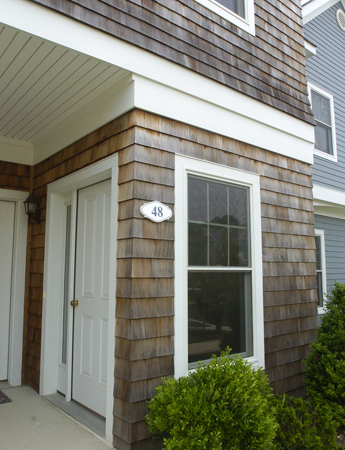
 2 Photos
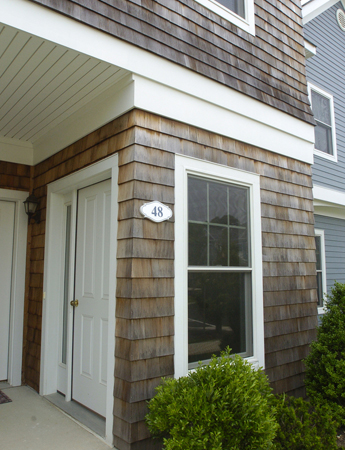
Despite the recession and a drop in the real estate market, home prices on the East End are still relatively high, but some affordable housing units are still available in Southampton.
Of the 50 units in the Courtyards at Southampton, located at 1020 Majors Path in North Sea at the site of a former junkyard, 14 were designated as affordable. Of those 14 units, four are still up for grabs, according to Diana Weir, the executive vice-president of the Long Island Housing Partnership, the agency in charge of handling the applications of prospective affordable occupants.
Construction on Courtyards began in June 2006, two years after the Southampton Town Board approved a zone change of the former junkyard property, according to Tony Panza, one of the project’s principal developers. Residents began moving into the complex in late 2007, Mr. Panza said, shortly before work on the complex was finished in 2008.
The four remaining affordable homes are classified as “middle-income” units, which means that to qualify, applicants cannot earn more than 120 percent of the median income for Suffolk and Nassau counties. That breaks down, Ms. Weir said, to $97,800 for a couple and $110,000 for a family of three, family sizes for which the units are most suited. The units range from 1,200 to 1,400 square feet and are all located on the upper level of the complex. One of the units is a three-bedroom and the other three are two-bedrooms. All have two baths, basement access for laundry and storage, and occupants have full access to the property’s amenities, such as the playground, outdoor basketball court and swimming pool.
The four available units are selling for $316,500, Ms. Weir said.
The purpose for designating some of the affordable units “middle-income,” according to Mr. Panza, is to provide home ownership opportunities to a wider range of residents. As he explained, some may earn too much to qualify for the lowest tier, but still are unable to afford a market-priced home. Building the 14 affordable units into the complex was mandated by the Southampton Town Board, according to Mr. Panza.
“It was one of the concessions for the zoning change,” he said.
Even though the units are listed for considerably less than the standard units, which were listed between $650,000 and $850,000, Southampton Town Housing Director John White said the economy might be one of the factors explaining why the units are still available.
“There is more of a demand for the lower units that go to those at the 80 percent of the median income bracket,” Mr. White said. “The units in the lower income groups have all sold.” Those lower-tier units sold for $202,000, according to Ms. Weir.
Another possible reason some turn away from purchasing the units, Mr. Weir speculated, is that some prospective buyers hope to eventually sell the units for a profit, but lose interest after learning that the units must always remain classified as affordable. In addition, the units must be purchased as the primary residence and cannot be rented out for supplemental income. Mr. Weir said that not everyone seeking an affordable home is aware of the requirements before submitting an application.
However, if a family’s income increases after qualifying for and purchasing a unit, their status in the unit will not be jeopardized. “Once you get in, you can earn whatever you want,” Ms. Weir said. “We just want to get you in a home.”
Ms. Weir also speculated that with the current mortgage crisis and the rise of foreclosures, banks have become more restrictive in approving home loans. With affordable units being at premium, those applying are subject to a lottery. But the lottery for the Courtyards complex has been exhausted, Mr. White said.
“For whatever reason, those chosen in the lottery did not qualify for the middle income units or were no longer interested.” Now, according to Ms. Weir, it’s a matter of “first come, first serve.”
Ms. Weir said she received around 120 applications for the 14 affordable units, all of which had to be postmarked by September 28, 2008. In December, those applications were drawn in a lottery, which created a ranking system. The first picked in the lottery was the first to receive a unit, assuming that applicant qualified.
Along with meeting the median income requirements, to qualify for one of the units, an applicant must also be a first-time home buyer, possess a valid social security number, have good credit, and must not have had any foreclosures or filed for bankruptcy in the last five years.
“There are also asset restrictions,” Ms. Weir said. “If someone earned the median income but had a million dollars in the bank, then they wouldn’t qualify.”
The differences between the 14 affordable units and the rest of the units in the complex are subtle, according to Ms. Weir. “There’s some minor differences in the tiles and such, but the appliances and amenities are the same,” she said.
And while the available middle income units cost more than the other lower tier affordable units in the complex, they are drastically less than the market rate apartments. And despite a general drop in real estate values, Ms. Weir said anyone in the market for a home in Southampton would not be able to find a better deal than the Courtyard units.
“Home prices are still very high in Southampton, especially east of the canal,” she said. “So, even though there are restrictions, you’re buying a unit where the surrounding units are worth so much more.”
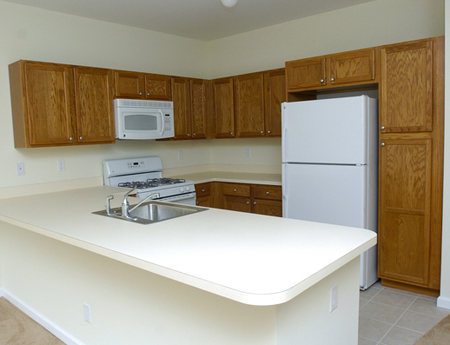
What makes the affordable units in the complex different from the standard, Mr. Panza said, are subtleties in construction, such as lesser quality trim used around door frames and on tiling in bathrooms, Formica kitchen countertops instead of granite and lower grade cabinets. The quality of the construction, however, Mr. Panza added, is the same throughout the entire complex, with “sound deadening” cement built into the floors and “double-thick” walls separating the units. “From the exterior, you can’t tell which are the affordable units,” Mr. Panza said.
For more information, visit lihp.org.


 Brian Bossetta on Jul 28, 2009