


 5 Photos
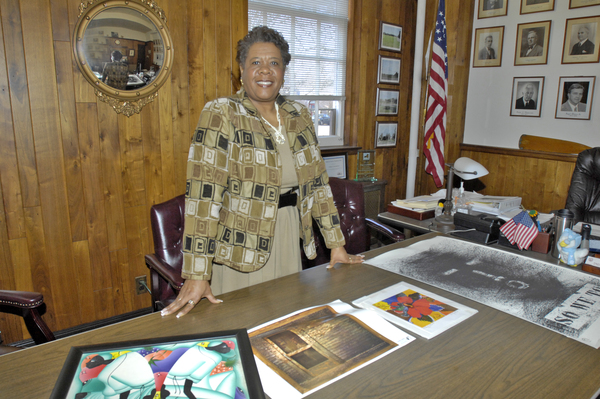
Brenda Simmons with some of the items that will be on display at the African American Museum of the East End. DANA SHAW
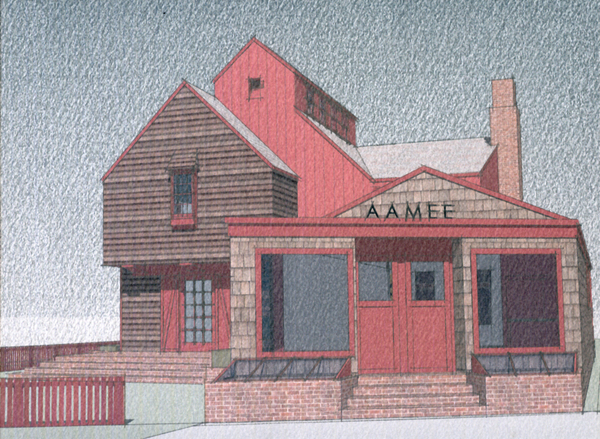
A rendering of the what the African American Museum of the East End will look like. COURTESY SIAMMAK SAMI ARCHITECT
MISAO GRIVAS
MISAO GRIVAS

MISAO GRIVAS
Last winter, an unassuming former barbershop and beauty parlor in Southampton Village earned landmark status from the village—one step on the path to becoming a home for a planned African American Museum of the East End.
One year later, the doors to the single-story shingled structure on North Sea Road remain closed, but action is quietly taking place behind the scenes to prepare for an eventual opening.
“We’re moving forward,” said Brenda Simmons, the chairwoman of the museum, as well as one of its co-founders. “I’m real excited.”
The goal is to transform a historically significant spot, a one-time central meeting place for the local black community—where Ms. Simmons herself recalled getting her hair straightened with a hot comb while learning about etiquette—into a cultural cornerstone once again.
From its heyday as a barbershop and beauty parlor in the latter decades of the last century, the tiny building has been shuttered in recent years and was once threatened with the prospect of demolition. In 2006, the village and Southampton Town purchased the property, which amounts to less than a tenth of an acre, for $500,000 with proceeds from the Community Preservation Fund. Both have agreed to lease the building as part of a stewardship agreement with the museum.
Ms. Simmons said she envisions the renovated museum including art galleries, a place for musical events or art exhibits, plenty of educational programs and even weddings.
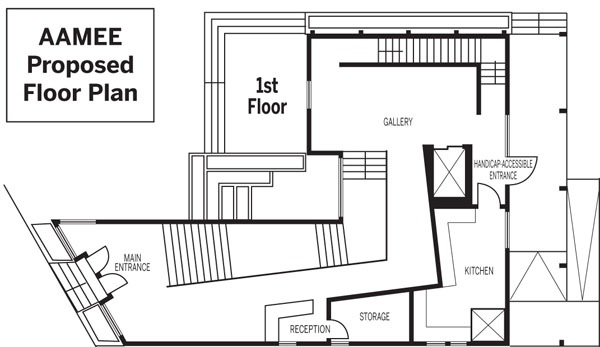
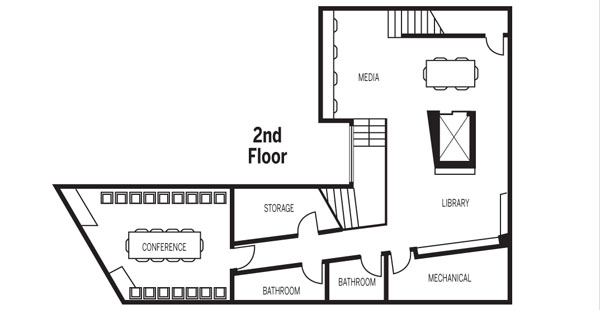
Plans call for more than tripling the size of the roughly 800-square-foot building by adding an 1,825-square-foot addition with a full basement. The main level would feature about 72 linear feet of display space, a 126-square-foot reception and administration area and a 215-square-foot kitchen. A lower level would feature a computer terminal and media area and a 357-square-foot conference room, while an upper level would include about 46 linear feet of display space, as well as private office space.
The implementation of the plan is still a ways off, however. Ms. Simmons estimated that it could be another two years before the museum would open at its future home.
Although museum representatives gave an unofficial presentation of their plans to the Village Board of Historic Preservation and Review, or ARB, they have not yet officially submitted the plans, which would also need to win approvals from the Village Zoning Board of Appeals and the Village Planning Board. She said she expects plans to be filed with both the ARB and the ZBA within the next few months.
Museum officials are currently in negotiations with their neighbor to the north, the Suffolk County National Bank, to acquire some additional land that they said they might need to satisfy parking requirements.
In the meantime, the focus is on the cultural.
The museum held its first oral history presentation last month, Ms. Simmons said. The Reverend Frank Bryant, pastor of the First Baptist Church of Bridgehampton, along with other church leaders and Sunday school students, visited the site one Saturday and listened as Ms. Simmons gave an oral history of the museum. Randy Conquest, a village resident who owned the barbershop from the late 1970s until he retired and sold it in 2006, happened to drive by and stopped—an exciting, personal touch to the presentation, Ms. Simmons said.
Part of the mission of the museum is to provide educational programs highlighting the contributions of African-Americans that may be missing from many local school curriculums.
“Locally, many African-Americans migrated from the South, worked and contributed to the thriving Hamptons farming and retail industry. Some were domestic workers, some were entrepreneurs and some founded and built churches. We intend to record and archive this history,” reads the museum website.
The biggest challenges in making its new home boil down to understanding the process involved with getting off the ground, Ms. Simmons explained.
“I have a love for the arts, poetry, history and community, but I have had to learn the process. It’s a little challenging, but rewarding at the same time,” she said, adding, with a laugh, “I’m like a sponge.”
Ms. Simmons praised numerous local people for their help in finding the museum a home and securing its future. “That’s the key to this whole mission,” she said. “It’s not just the black community. It’s the whole community.”


