


 16 Photos
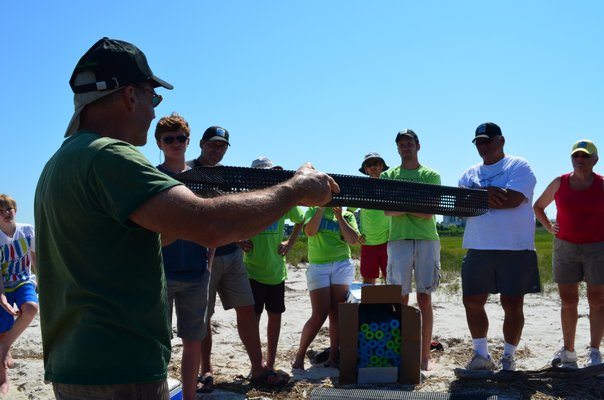
Kim Tetrault, left, demonstrated how to make the oyster farm containers on Saturday morning. Alexa Gorman



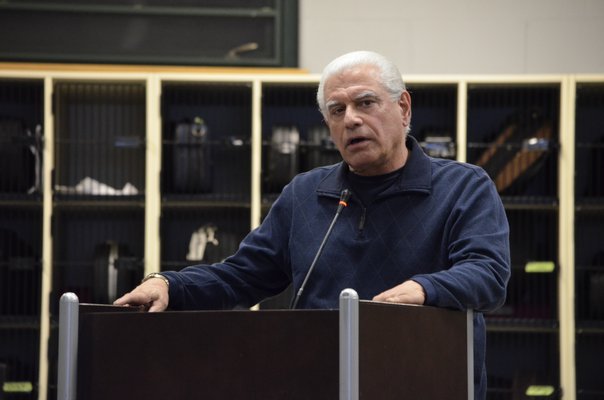
Louis Gallo, a Miller Place resident, urged the board to put Columbus Day back on the school calendar on behalf of the Order Sons and Daughter of Italy in America. ANISAH ABDULLAH

Students from the Hampton Bays High School band march during the St. Patrick's Day parade. AMANDA BERNOCCO

Chickpea spinach chicken soup. JANEEN SARLIN

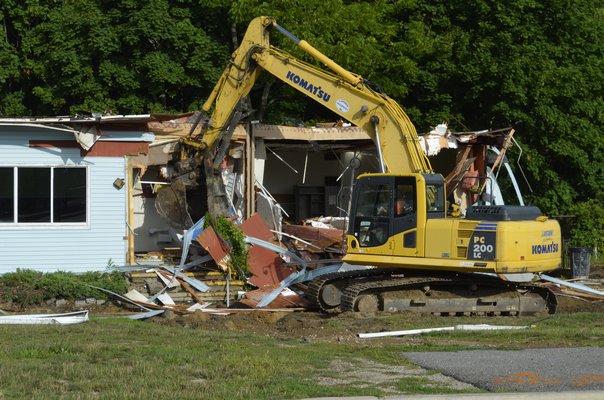
Demolition of the portables at Easport Elementary School began Monday morning. ALEXA GORMAN

Superintendent Lars Clemensen stands in front of the enterance of the Hampton Bays High School, which will be under construction starting on June 26. AMANDA BERNOCCO

Westhampton Primary Care Center staff having their daily huddle in the morning. ANISAH ABDULLAH
Voters in all five East End towns overwhelmingly approved propositions on Tuesday to extend the Peconic Bay Community Preservation Fund and allow as much as 20 percent of its future proceeds to be used to improve water quality.
Southampton Town voters approved the measure with 80.15 percent of the vote, East Hampton with 78.19 percent, Riverhead with 74.72 percent, and Southold with 79.76 percent. The proposition passed overwhelmingly in all five towns, with the lowest percentage—69.5 percent—coming in Shelter Island Town.
“We can now take the first step forward to remediation of our water quality on the East End,” State Assemblyman Fred W. Thiele Jr., who helped craft the legislation creating the CPF, was quoted as saying in a Wednesday morning press release from The Nature Conservancy. “More still needs to be done,” he said. “This vote sends a strong message to county, state and federal government leaders that they must also step up and partner with us on this issue.”
Also on Wednesday morning, Kevin McDonald, a conservation policy adviser for The Nature Conservancy and a proponent of extending the CPF, said the margins of approval were “just terrific.”
“We had reasonably good information that told us we were in a good position, but we took nothing for granted,” he said
Money for the CPF is raised through a 2-percent tax on most real estate transactions and is used to purchase and preserve open space, farmland, historic resources and community spaces. Since it went into effect in 1999, the program has generated more than $1.1 billion across the five towns and has already been extended through 2030. Now it will run until 2050.
According to Mr. Thiele, extending the CPF an extra 20 years could generate an estimated $1.5 billion, conservatively, for more preservation, and the towns will be able to borrow now against that future revenue.
Along with extending the program, each of the five towns now has the option to use as much as 20 percent of CPF revenues for water quality programs.
Water bodies throughout the region in recent years have been listed by the State Department of Environmental Conservation in the summer as having algae blooms known as cyanobacteria, or blue-green algae, which has been linked to elevated levels of nitrogen from outdated septic systems as well as road runoff and fertilizers. The towns can use the 20-percent portion of CPF revenue to help homeowners upgrade septic systems, as well as to restore aquatic habitats and take measures to prevent water pollution.
“We’re really pleased with the results,” said Mr. McDonald, a Hampton Bays resident. “We’re really pleased that the public continues to strongly endorse the protection of land and water quality.”
Calls to Mr. Thiele on Wednesday morning were not immediately returned.
The legal framework for the CPF was founded by state legislators in 1998 and went into effect the following year. Proponents predicted that it would generate as much as $15 million annually for the five towns over the 11 years for which it was originally approved. The program far surpassed those expectations and has been extended twice by voters.


 Greg Wehner on Nov 9, 2016