


 2 Photos
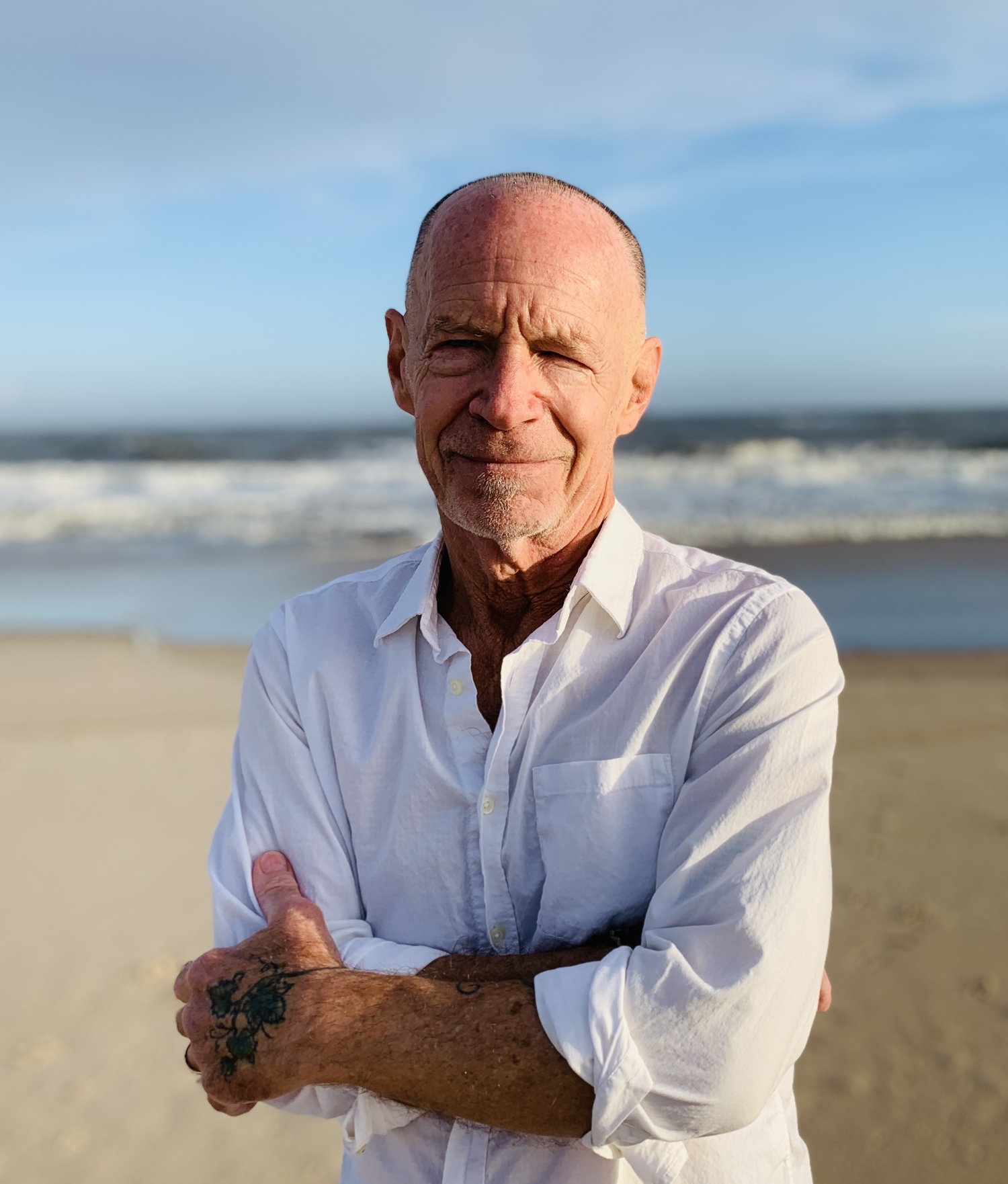
Lyle Greenfield at the beach in East Hampton. COURTESY LYLE GREENFIELD
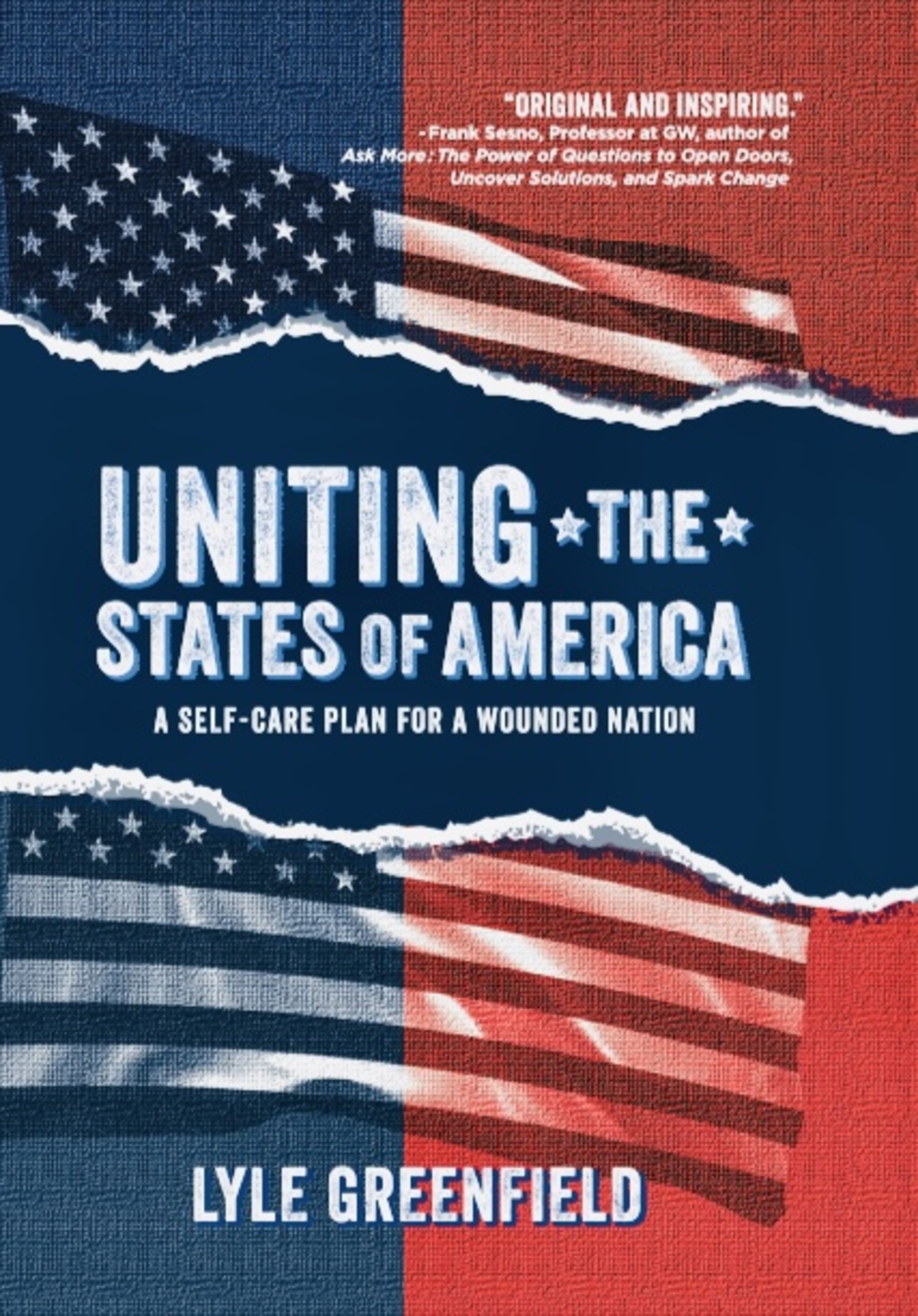
Greenfield's book offers a roadmap to healing a divided country.
In his self-published book released in July, Lyle Greenfield, a longtime Amagansett resident, takes readers on a tour of democracy’s fault lines — the rise of partisan hostility and the prevalence of the silent majority — while ultimately praising the nation’s bedrock.
The author of “Uniting the States of America: A Self-Care Plan for a Wounded Nation” says that if citizens are given institutional frameworks to find common ground, the country has a built-in potential to rise above its current state of disunity.
Greenfield frequently contributes to the commentary section of The East Hampton Star and was the founder of the Bridgehampton Winery, now the site of the South Fork Natural History Museum & Nature Center.
He has been an East End enthusiast since 1976, when he fell in love with the hamlet of Amagansett. It’s where he purchased a beloved beachside bungalow, which he kept for 42 years, and where he met his wife, Mary Jane Greenfield, on a blind date at Nick & Toni’s in East Hampton, he said.
“To live in a place surrounded by so much natural beauty, on land, sea and bay, in a place populated with so many good people — educated, interesting, engaged — is a rare thing,” Greenfield said. “We often say, ‘Look where we live!’ in wonder.”
“Uniting the States of America” is Greenfield’s fourth self-published release, following “The Soul Mate Expeditions” (2019), “What Vienna Saw” (2020), and “1,000 Days in St. Barth” (2022).
Greenfield explained that he began his career as a writer and creative director in various ad campaigns for accounts such as Ford and Jeep. He is also the founder of Bang, a New York-based music production company. His publishing ventures are focused on self-expression.
“Writing independently of any commissioned ‘assignment’ has been extremely gratifying,” he said, reflecting on his books as “the summary of my life experiences.”
When Greenfield began pondering how to write “Uniting the States of America” almost three years ago, he felt “a sense of urgency” and “a need to articulate and understand the circumstances of the American political system.”
Rather than leaving readers stranded in the doom of disunion, Greenfield decided to approach two unwieldy questions in unison: How did we get here? And, most importantly, where do we go from here? To that end, he concludes his independent title with 10 solutions to today’s disarray.
As the book overview posits, the 10 next steps are “common-sense solutions to our problems that require simply the decency and will of our elected leaders, and the active participation of our citizens.”
The online overview describes Greenfield’s book as “an educational resource and a call-to-action for citizens concerned about the politically and culturally divided state of our union.”
When asked to summarize that call to action for two archetypes, fervent activists and passive voters, Greenfield responded that no matter an activist’s standpoint, it is essential that they are not so fixed in their views that they overlook their rivals’ humanity and history. It is critical, he said, that all citizens in our democracy look at their opponents and ask: “Well, what is the motivation for this group of people in a red or blue state? Why do they feel how they feel?”
Regarding passive voters, the silent majority, Greenfield said that “even if someone doesn’t march in a protest, they still, at the very least, should vote.”
“We all have a moral obligation in a democracy, that is of the people, by the people, and for the people, to exercise our privilege, which is our right to vote.”
Since “Uniting the States of America” is told through a decidedly personal lens, its progression is grounded in an awareness of past generations and an obligation to future ones. Hence, there are two consecutive chapters: “Meet My Mom” and “Meet My Granddaughter.”
Chapter 12 of Greenfield’s book, called “You Are Here,” begins with the line, “Every one of us has a unique connection to the past.” When responding to the question of how his mother’s generation can offer perspective while looking to the future, Greenfield responded: “Studying history in school can seem abstract, something simply to be memorized (or forgotten). But if we put history in the context of our loved ones, as I have with my mother and my granddaughter, it becomes deeply personal.”
By making the context more personal, he explained, not only is it easier to feel moved by the gravity of major historical events, but we can appreciate the significance of present-day events. More importantly, considering history in a personal context inspires a sense of obligation to leave our world in a better state than it was found.
“Uniting the States of America” ends with Greenfield’s 10 statements about ameliorating discord in the U.S. The ending also features 14 interviews with folks across the country, ranging from Texas to Iowa to Maine and back to Long Island.
Terry Hooks, an Amagansett postal worker, told Greenfield that she grew up in North Carolina, and her father was in the Marine Corps. She spoke to the author about the value of promoting kindness and finding common ground with people of different backgrounds: “It would be nice to see people come together to genuinely help others all the time, not just when something terrible happens. We all have struggles in life and need to be empathetic and compassionate to others. We never know when our circumstances can change.”
“We’re all never going to agree on everything, but that’s okay as long as we’re communicating,” Hooks also said in her conversation with Greenfield. “Let’s learn to have an open dialogue that allows each of us to share and … engage in collaborative results that benefit all people.”
Greenfield agreed that exposure to and communication with people of diverse backgrounds is at the core of healing: approaching wide-ranging communities with kindness and an open mind.
“It’s important that we’re not all just listening to people who already represent our thinking and prejudices,” he said. “We should be proud of our diversity. There is a purpose to understanding your neighbor instead of feeling threatened by them.”
To continue his conversation about healing the nation’s democracy, Greenfield is participating in a handful of author talks and podcasts. He will attend “Author Talk” at the Amagansett Free Library on October 19, at 3:30 p.m. and will appear on the Becoming Bridge Builders Podcast with Keith Haney on December 17. On September 18, Greenfield also spoke on Positive Talk Radio, which can be streamed at youtube.com/watch?v=cdb0eWu1EWk.


