


 4 Photos
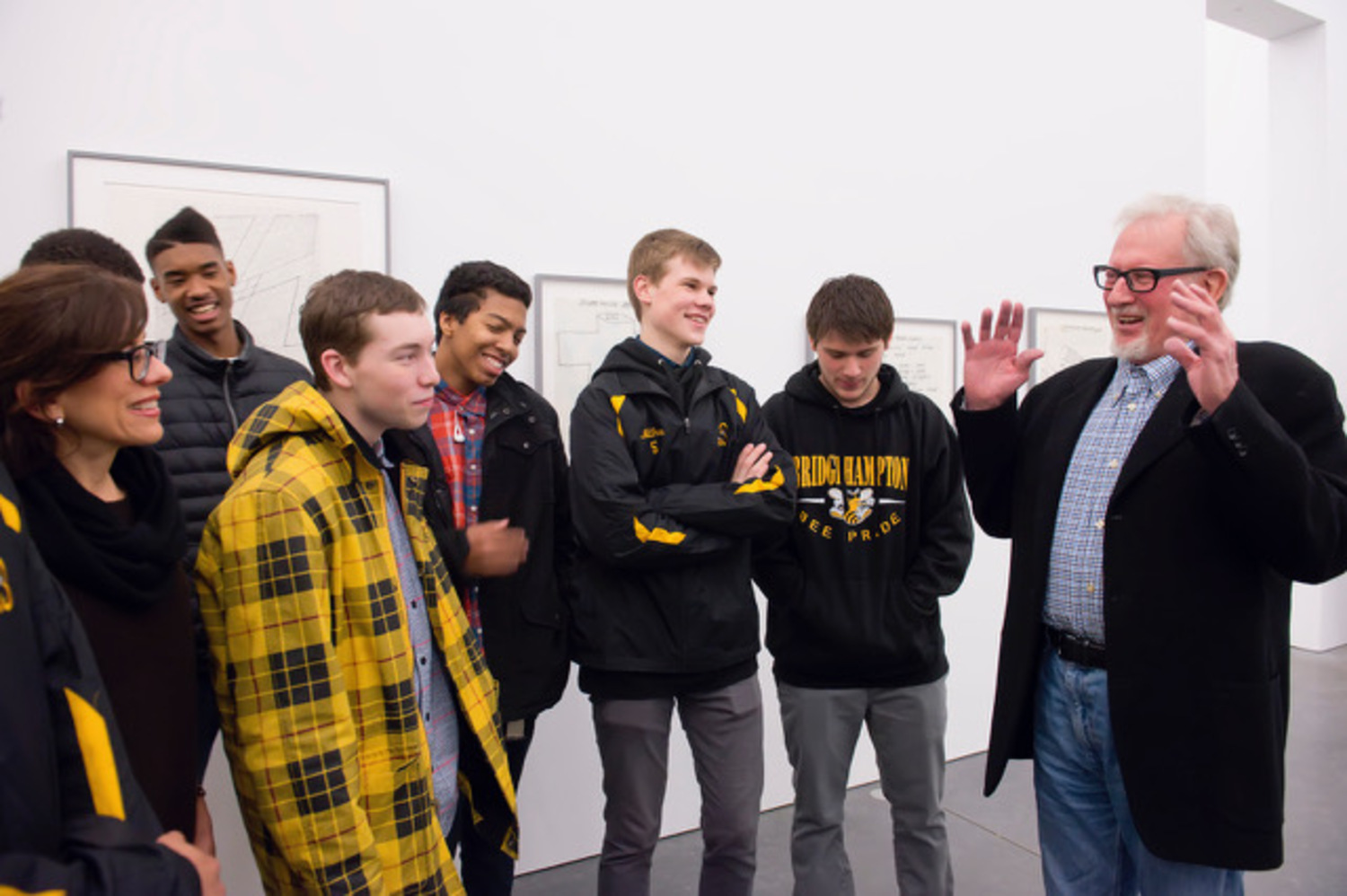
The artist Joe Zucker discusses his work with members of the Bridgehampton High School's boys basketball team. COURTESY BRITTA LE VA
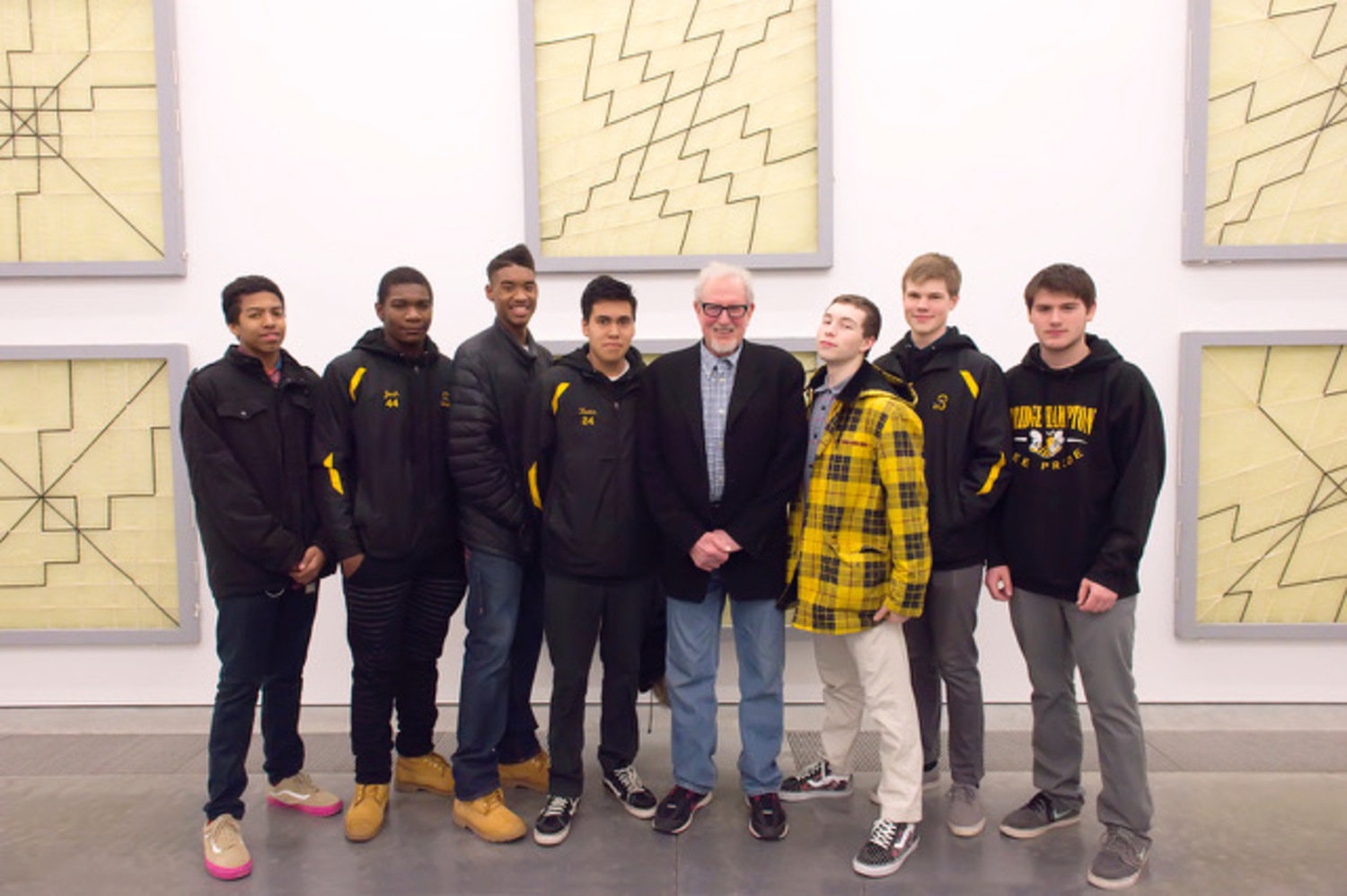
The artist Joe Zucker with members of the Bridgehampton High School's boys basketball team at the Parrish Art Museum. COURTESY BRITTA LE VA
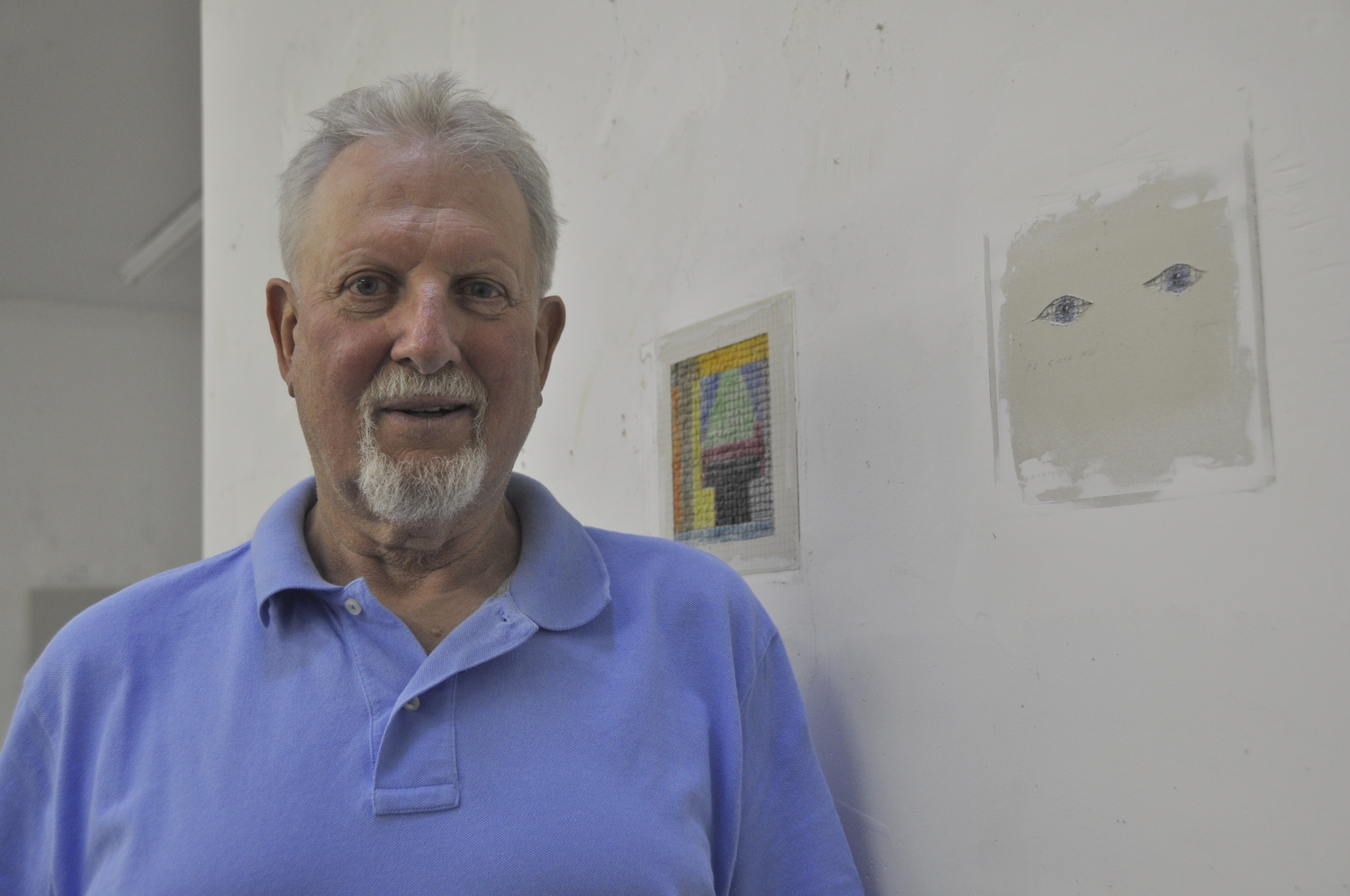
Joe Zucker at his home in East Hampton. PRESS FILE PHOTO
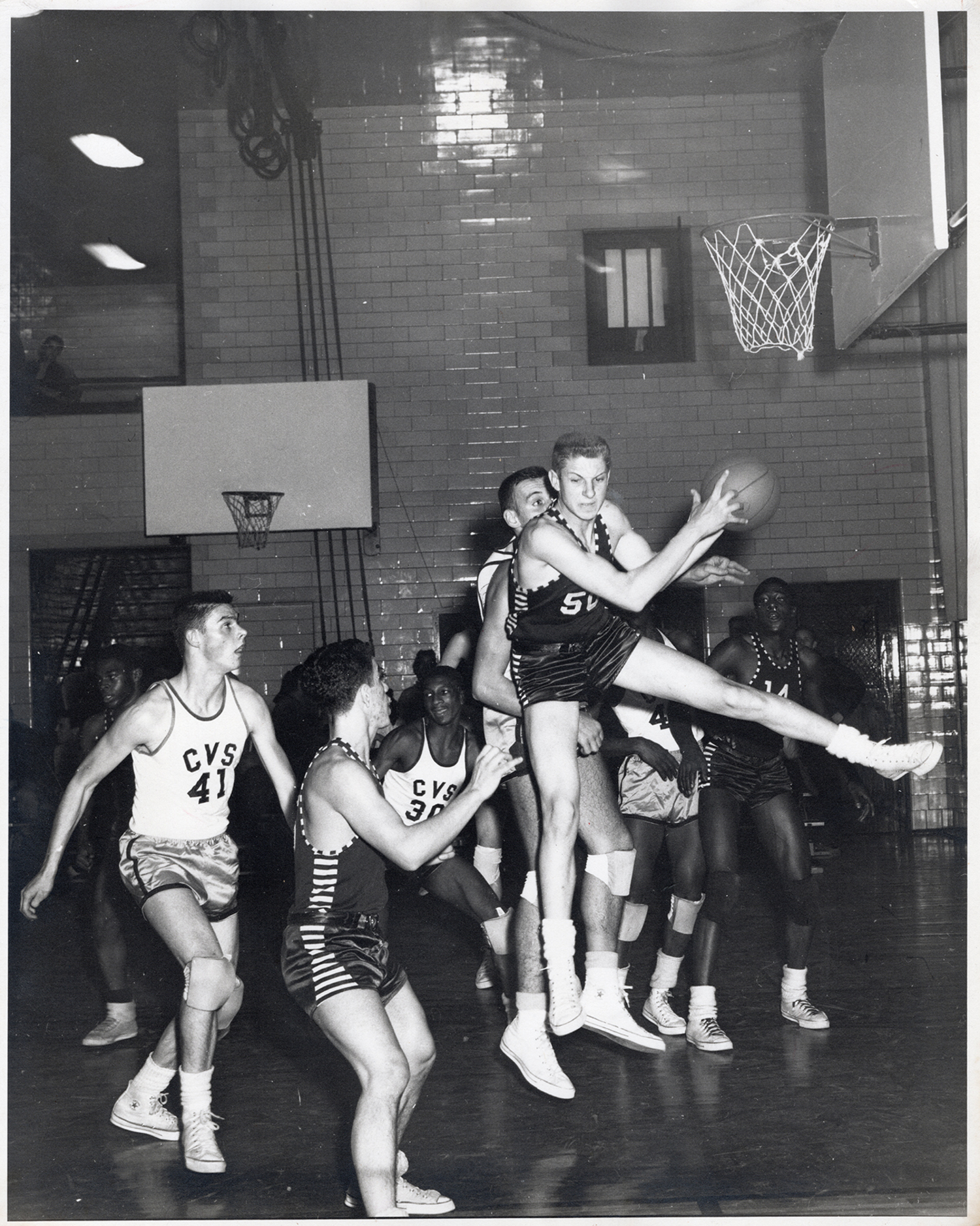
Joe Zucker, as a star basketball player for Emil G. Hirsch School in Chicago. COURTESY BRITTA LE VA
Joe Zucker, a highly regarded and prolific artist, who was even better known locally for his many years of serving as the voluntary assistant coach of the Bridgehampton boys basketball team, died at his home in East Hampton’s Northwest Woods on May 15.
Zucker, who was 82, had suffered a number of health issues after being injured in a car accident in 2022, and died of multiple organ failure, said his wife, Britta Le Va.
A native of Chicago and a graduate of the School of the Art Institute of Chicago, Zucker established himself in the New York art world soon after moving to the city in 1968, with his work being shown at Klaus Kertess’s Bykert Gallery and other influential galleries, Le Va said.
Zucker was noted both for the variety in materials he used in his work as well as his adherence to his process.
“It can be complicated, but it always has that formula,” he said of his approach in a 2011 interview with The Southampton Press. “That the work has something to do with how it’s made, what it’s made of, or a combination. And there’s no style. My style changes constantly. It’s like I’m working on one lifetime painting.”
One of Zucker’s best-known works is “100-Foot-Long Piece,” a series of panels using different materials, which he completed in 1972 and continued to work on later in life.
For one series, he used cotton balls extensively in works such as “Paying Off Old Debts,” which depicted a Black man moving an enormous bale of cotton.
Le Va said Zucker had created more than 80 different series of works during his 60-year career, the last being “Detritus,” for which he used leftover materials he found around his studio during the COVID-19 pandemic.
“I wish there would be just one more,” she said.
As it is, Zucker’s work is in more than 50 museums and public collections, including the Metropolitan Museum of Art, the Museum of Modern Art, the Whitney Museum of American Art, the Art Institute of Chicago, the Australian National Gallery, the High Museum, and the Museum Ludwig. His work has been included in many solo and group exhibitions nationally and internationally, including three Whitney Biennials and two Venice Biennales.
A few years after Zucker and La Va moved to East Hampton in 1982 in search of a larger studio space, he found a second career: as an assistant coach with the Bridgehampton Killer Bees.
Coach Carl Johnson said he recognized Zucker from the stands, and that one day he simply introduced himself and said, “I really don’t know too much about X’s and O’s, but I would love to volunteer.”
Johnson took him on.
He said Zucker quickly established a bond with the players, who looked up to him as a father figure. “He had an interest in everything they did off the court, and he stayed in contact with them after they left school,” Johnson said.
One player who was influenced by Zucker was Nick Thomas, the star guard of the 1996 state championship team, who went on to play at New York University. He said Zucker drove in from East Hampton to attend his Senior Night.
“Joe was cut from the same cloth as every banner that hung in the gym,” he said. “His genuine spirit embodied everything about the program and the community. I’m thankful that our relationship extended beyond our meeting in Bridgehampton.”
In an interview with Brooklyn Rail in 2010, Zucker explained his attraction to coaching. “I guess I like coaching basketball because there’s something about basketball that’s very systematic, which relates to how I think as a painter,” he said.
One thing Zucker didn’t do much of while coaching at Bridgehampton was talk about his life outside the gym. “He told me he was an artist,” Johnson said, “but I didn’t really know what that meant. Then a guy — I guess it was one of his collectors — asked me, ‘Do you realize who you have on the bench with you?’ When he described it, I was blown away.”
Nor did Zucker talk much about his past as a basketball player. In fact, he had been the seventh-highest scorer in the City of Chicago when he played for Emil Hirsch High School on the city’s South Side in the late 1950s.
Zucker’s basketball prowess was explored in the 2017 documentary “Killer Bees” by Benjamin and Orson Cummings, which followed the 2015-16 Bridgehampton boys basketball team’s quest for a state championship.
In the film, Zucker recounts how a player on the team, surprised to learn he had once played ball, asked him if he was any good. “I was better than you!” came the indignant retort. Zucker went on to describe having to play against legendary Chicago Bears linebacker Dick Butkus.
Zucker attended high school at a time when white flight from the city to the suburbs was just beginning. But his brother, Charles Zucker, said the family attended Chicago Sinai Congregation, a Reform Jewish synagogue on the South Side. “We were exposed to very liberal values, and I think that played a role in how we reacted to the racism of the South Side,” he said.
There was a third element to Zucker’s life. “He was a hardcore fisherman,” said his brother.
He explained that the passion began when the two boys spent summer vacations at a lake in central Wisconsin near their mother’s childhood home, where they angled for yellow perch.
“My brother was unusual in that he was terrific at whatever he decided to put all his energy and passion into,” he said.
That childhood interest continued to grow, with Zucker fishing for freshwater game fish such as muskellunge and northern pike, and, later, trout and walleye. He was so proficient that he earned the nickname “Walleye Joe” from residents of a small town in Minnesota, where he used to spend a part of each summer, his brother said.
After moving to East Hampton, Zucker bought a boat, The Rodfather, and became a skilled saltwater fisherman as well, Le Va said.
She recalled a day when he went out with a commercial fisherman friend in search of tuna. When afternoon turned to evening and he still had not returned, she began to grow anxious. Finally, late that night, he appeared outside the house — a huge tuna slung over his shoulder.
Zucker was born on May 21, 1941, to Irving Zucker and the former Leah Pride, in Chicago.
His mother was a nurse and as part of her training, she was required to take extra classes. She chose to take classes at the School of the Art Institute and brought her 5-year-old son along to enroll him in the children’s program.
Le Va said the exposure to the museum’s galleries helped influence her husband’s development as a painter. Charles Zucker said he believed his mother took his brother to the Art Institute because “she knew she had a prodigy on her hands.”
Irving Zucker, who had a successful career selling industrial metals, had earlier worked for the Chicago Cubs, and his two sons developed a passion for the team, despite the fact that they grew up on the South Side, traditionally the stronghold of the Chicago White Sox.
After graduating from Hirsch High School, Zucker turned down a basketball scholarship to the Illinois Institute of Technology and enrolled at Miami University in Ohio, where he walked on to the basketball team. He soon returned home, however, and enrolled at the School of the Art Institute, where he received a Bachelor of Fine Arts degree in 1964 and an MFA in 1966.
Zucker then moved to Minneapolis, where he taught for two years before moving to New York City.


 Stephen J. Kotz on Jun 4, 2024