


 1 Photo
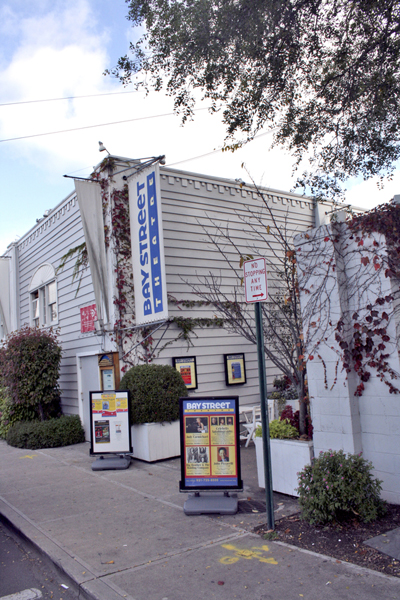
The directors of the Bay Street Theatre in Sag Harbor announced this week that they will close the theater after the 2012 season, and will be seeking a new location at which to continue their theater productions and cultural programming.
The theater’s executive director, Tracy Mitchell, and creative director, Murphy Davis, made the announcement at a meeting of the Sag Harbor Village Board on Tuesday evening, saying that the rent at the building the theater has occupied since 1992 has gotten too high for the organization to sustain in the face of falling ticket sales and climbing production costs.
The theater currently pays some $186,000 per year in rent. As of May 2013, that rent would go to just over $200,000 per year. The increase, along with the assurance of continued hikes in the future, convinced the theater’s board that trying to hang on at the Long Wharf theater was not viable.
“Our rent is extremely, extremely high, and we’ve been trying to deal with this in various ways,” Mr. Davis said. “Basically, we have to leave the space. That decision has been made by our board of directors. We’re going to see our lease through to May 2013, and we’re in the process of trying to evaluate where we are going to go. We’re committed to staying here in Sag Harbor.”
Ms. Mitchell said that the theater has been trying to find ways to cover the rent at the current building, which is owned by Patrick Malloy III, but has been hamstrung by lagging ticket sales that have forced it to muster more than $1 million in private donations each year to cover operating expenses already. She said that in recent years the theater has sold fewer than half the tickets available to its productions, on average, and sought to quell rumors that the theater was suffering from wasteful spending.
“We run a good business,” she said. “We cut our budgets the last three years. We’re down as low as we can go.”
Ms. Mitchell said the board has discussed buying the theater from Mr. Malloy and even offered to rename it in his honor in exchange for a preferential lease, to no avail. Ms. Mitchell noted that Mr. Malloy is the theater’s biggest financial supporter but also has been unwilling to budge on the business side of the theater’s lease.
“To be fair to Pat, the cost per square foot is not out of line with the rest of the village—it’s just not in line with our business to be operating here,” she said. “We’re looking for a long-term fix. At the end of the day, we want to have a permanent home. If you don’t have a permanent home, it makes it very hard for people looking to invest in you. It puts a real crimp on your fundraising abilities.”
She noted that the cost of housing for cast members and staff and a set construction studio in Riverhead typically equal the rent on the theater.
A year ago, Ms. Mitchell and the board of directors chairman, Frank Fillipo, lamented that hand in hand with the lagging ticket sales has been an increasing difficulty in raising funding privately as well. At the time, the pair hoped that the apparent start of economic recovery might buoy sales and philanthropy. But it hasn’t happened.
The theater has been on the brink of a move before. In 2006, the theater and Southampton Village discussed moving the theater group to the Parrish Art Museum building, which the museum is scheduled to vacate in 2012 when it moves to its new facility on the outskirts of the village.
Southampton Village Mayor Mark Epley said this week that the village is still very interested in having the theater take over the Parrish space.
“We would love to get them in there,” he said.
The Bay Street lease with Mr. Malloy, whose company, Malloy Enterprises, owns several waterfront properties along Bay Street and Long Wharf, was initially set to expire in 2010. In 2008, the theater negotiated a three-year extension that at the time the directors said they hoped would mean a long future at the foot of the Long Wharf. Theater officials said at the time that the central location of the theater was important both for its business and for the Sag Harbor community.
“We are eternally optimistic,” Ms. Mitchell said on Wednesday morning. “I have no doubt that we are going to land on our feet. Who wants to live in a village without art and culture?”


