


 3 Photos
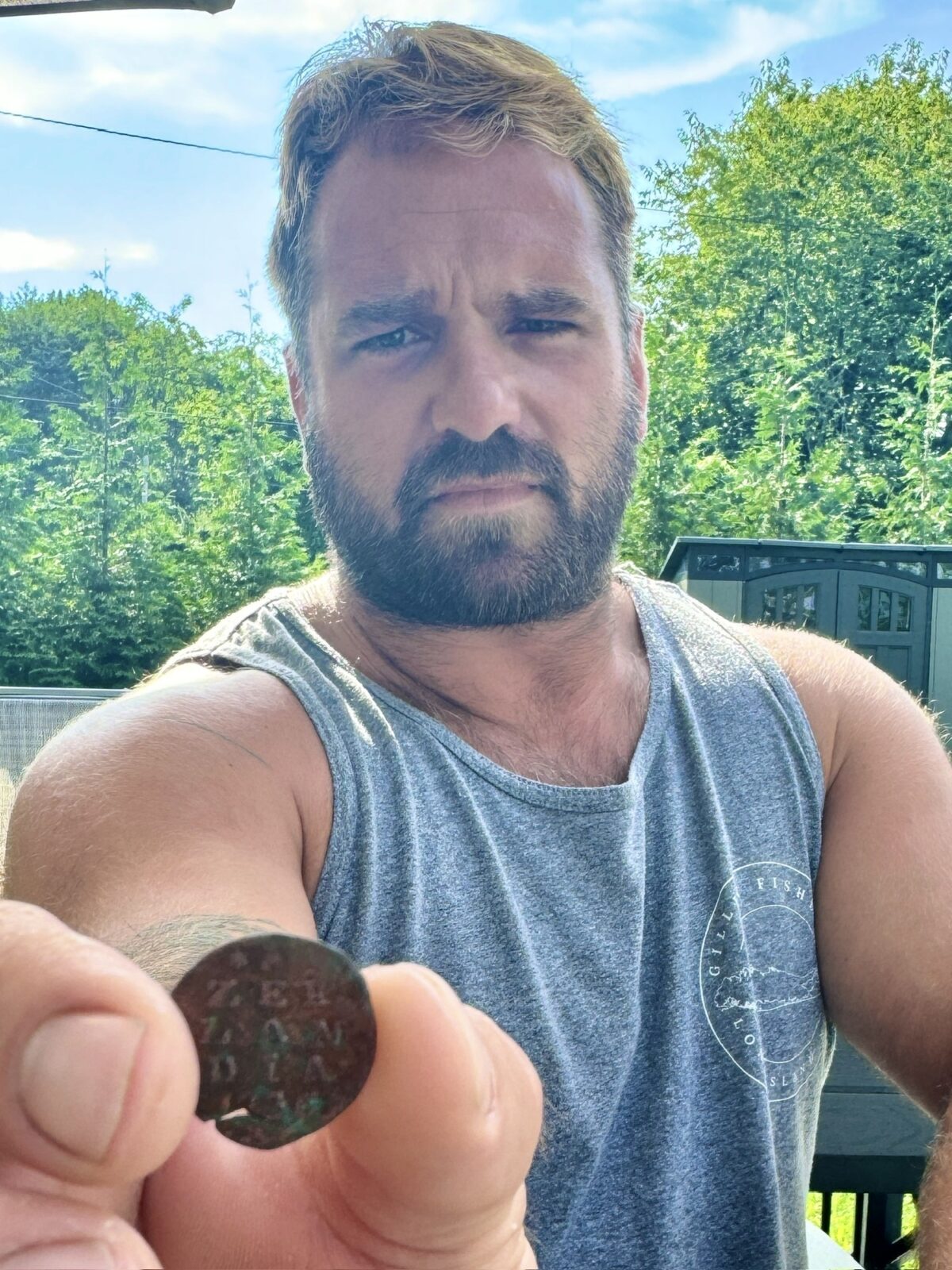
Westhampton bayman John Gillen and his cousin EJ Gillen dug up the coin while clamming in Shinnecock Bay last week. MICHAEL WRIGHT
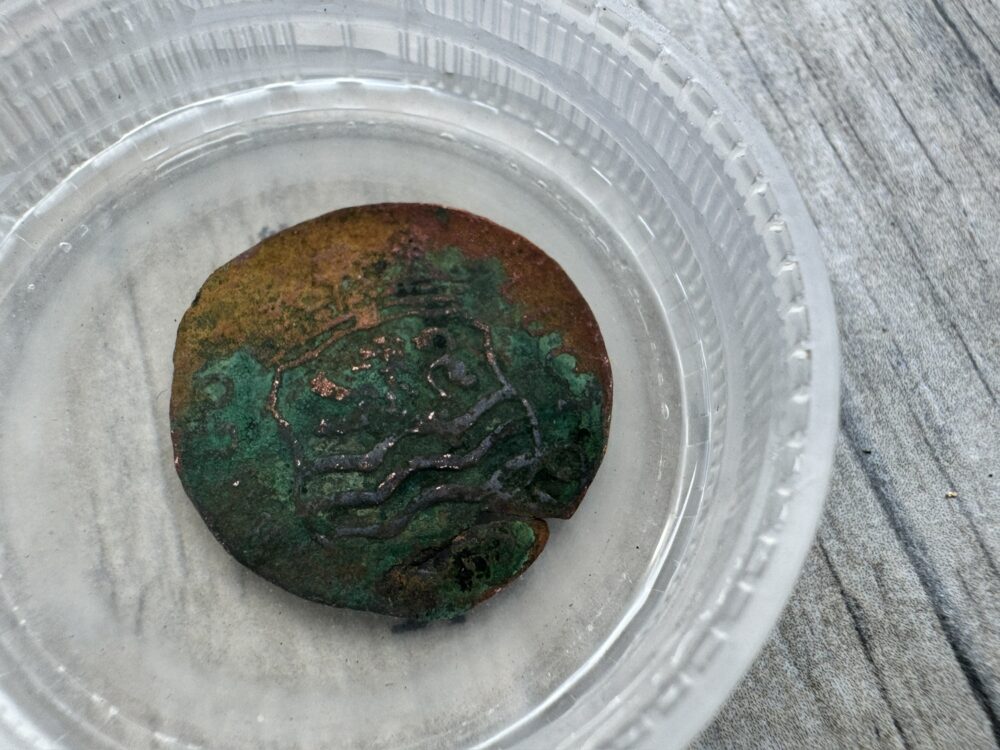
The Duit Zeeland coin from 1736 found in Shinnecock Bay earlier this month is a rare coin issued by the Dutch East Indies Company as currency in the years before the British colonies started minting their own coins.
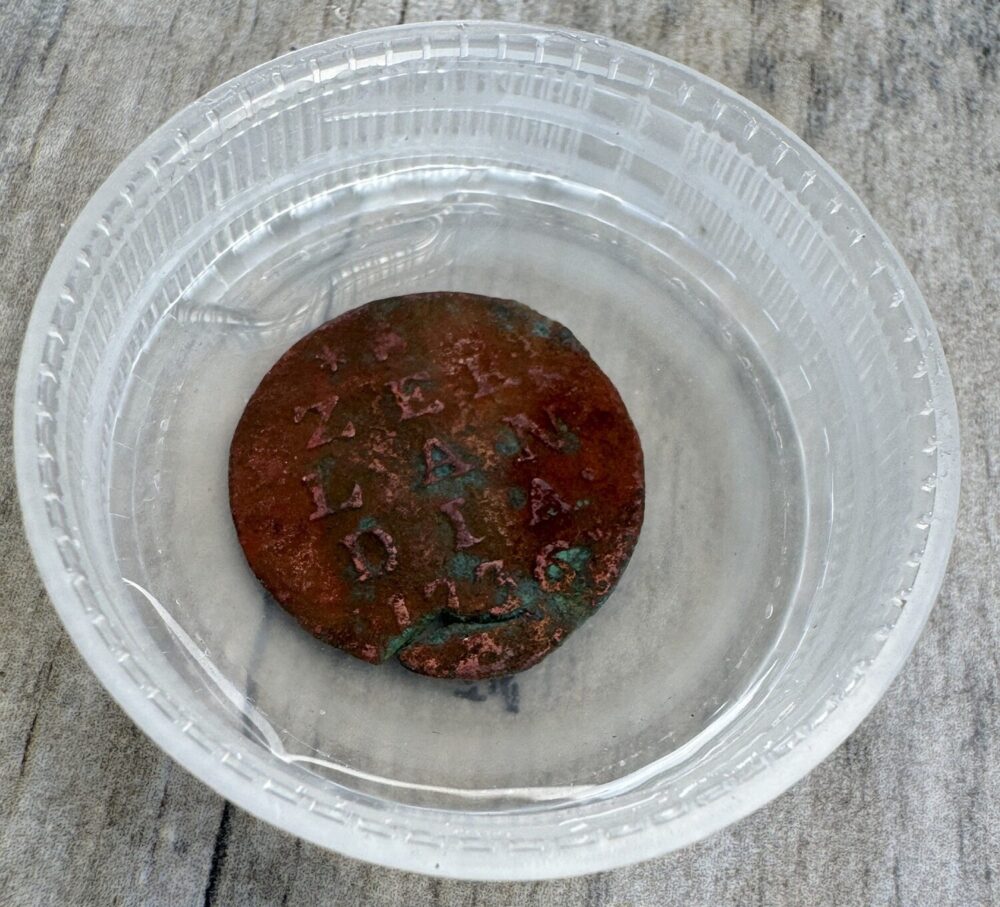
The Duit Zeeland coin from 1736 found in Shinnecock Bay earlier this month is a rare coin issued by the Dutch East Indies Company as currency in the years before the British colonies started minting their own coins.
Two baymen pulled a coin minted in 1736 — a duit, or one-cent piece, stamped with the crest of the Dutch East India Company, the currency of record in the years before the British colonies began minting their own money — out of the mud of Shinnecock Bay last week.
“This is by far the coolest thing I have ever found out there,” Westhampton bayman John Gillin, who is accustomed to finding all sorts of human artifacts and detritus at the bottom of his steel clam rakes, said of the coin that came up riding on the side of a clam in the shadow of Shinnecock Hills.
Gillin and his cousin E.J. were digging clams together in eastern Shinnecock on August 13. Gillin was working the rake, muscling it through the sandy bottom to scrape up clams burrowed within. Every so often, he would lift the rake out of the water, give it a good shake and a couple of dunks in the water to wash away mud and sea grass then dump it into a basket, which his cousin would then heft over a sorting tray, to separate the marketable clams from rocks, crabs, detritus and clams too small to sell.
On this Tuesday afternoon, as E.J. dumped the basket onto the sorting tray, he saw something sticking up out of a clump of mud that had managed to stay clung to the shell of a clam.
“He said, ‘Whoa, what the heck is that?’” Johh Gillin recalled. “It was sticking straight up like it was in a coin slot.”
The pair marveled at the coin, worn down at its edges but still clearly displaying an etching on one side and three words on the other and the stamped date 1736.
“It stayed in the clam rake, which has 1-inch spacing between the bars, got shaken out at the rail then dumped into a basket and dumped onto the cull box, which also has 1-inch spacing,” Gillin said in disbelief at the odds of the find. “For it to have gotten through all that and to end up for him to see it, it’s unbelievable.”
The pair sent a photo of the coin to a friend who does archaeological work locally and quickly responded with an identification and explanation of the coin’s origins.
It is a Zeeland duit coin made of copper and minted in the Netherlands. The stamp on one side read ZEE-LAN-DIA on three lines with 1736 below it. The other side is stamped with the coat of arms of Zeeland, a province in the Netherlands, and that of the Dutch East India Company, one of the first international trading companies, which was based in Zeeland.
Coins like it had been the currency in the Dutch colonies and continued to be used on Long Island into the 18th century.
While still on the boat amazed by their discovery, the Gillins thought to put the coin into a bottle of bay water so that it would not be exposed to the air for long after nearly three centuries preserved in mud. Gillin says he is going to take the coin to a rare coins specialist in Patchogue for advice on how to best preserve it from corrosion.
“I’m going to get some advice on what to do so I don’t lose it — you can see it’s already starting to get some corrosion on it,” he said. “What this coin had to go through to end up in our hands is really amazing — 288 years that it was kicking around on the bottom.”


 Michael Wright on Aug 21, 2024