



 5 Photos
The site of the old Bel-Aire Cove motel in Hampton Bays continue to deteriorate.

The site of the old Bel-Aire Cove motel in Hampton Bays continue to deteriorate. Courtesy Mary Pazan

The site of the old Bel-Aire Cove motel in Hampton Bays continue to deteriorate. COURTESY MARY PAZAN

The Town of Southampton purchased the Bel-Aire Cove Motel in Hampton Bays in 2019. COURTESY Mary Pazan
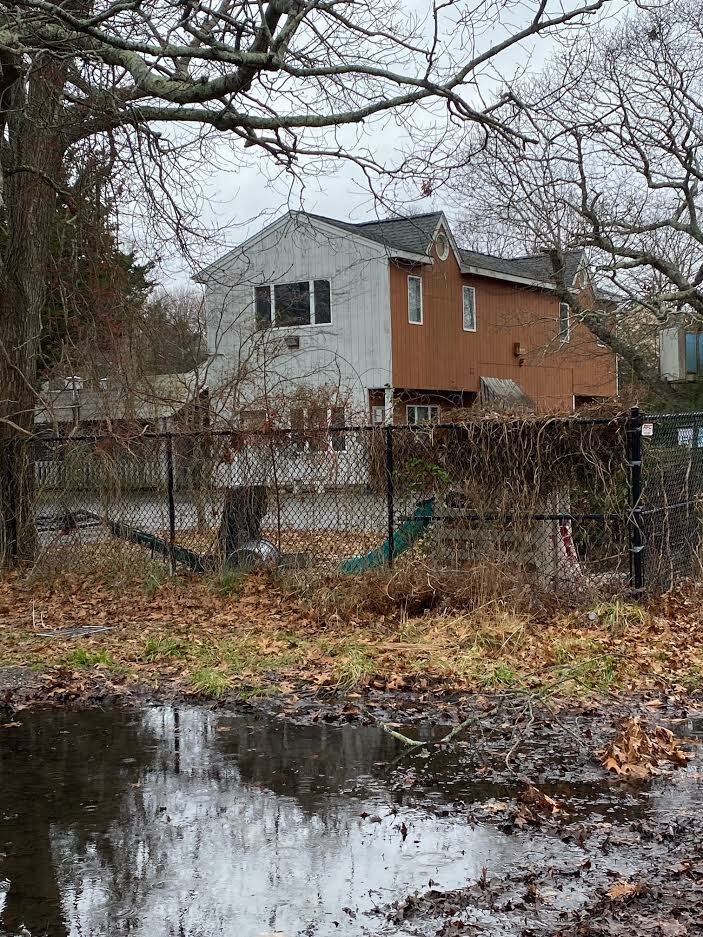
The site of the old Bel-Aire Cove Motel in Hampton Bays continues to deteriorate. COURTESY MARY PAZAN
It doesn’t feel like a loss to Mary Pazan, even though the judge dismissed the suit looking to overturn a plan to renovate the blighted Bel-Aire Cove Motel that she, Liz Hook and Doreen Bartoldus brought against Southampton Town. Given all the documents they’ve tracked down and amassed, the Hampton Bays trio — two attorneys and one engineer — say they will be well equipped to sue again when the time is right. “We are ready,” Ms. Pagan said this week.
Filed in August 2019, the Article 78 suit sought to nullify the adoption of the Hampton Bays Waterfront Resort Revitalization Plan and the selection of the Bel-Aire Cove Motel property on Shinnecock Road as the first urban renewal area targeted within the plan. Southampton Town Supervisor Jay Schneiderman espoused a vision that would transform the dilapidated motel into luxury condos or a boutique hotel. The town purchased the property in 2019, paying $1.06 million for the 1.47acres located at the tip of Penny Pond.
The resolution adopting the waterfront plan, passed by the Town Board the same night as the motel purchase, asserted that it would have no adverse environmental impact and therefore did not need extensive review under the State Environmental Quality Review Act. The women disagreed and hoped to force the town to undertake a more stringent review of the plan under SEQRA and to enjoin the town from spending any money on the project.
An engineer with expertise in SEQRA review, Ms. Bartoldus spoke of driving to the site and “it didn’t take more than 10 seconds” to make note of a variety of environmental concerns — like erosion control, the location of the cesspool, a bulkhead in disrepair. “The property was in very bad shape,” she said, offering that any plan would need a “really good SEQRA review and really good environmental controls.” A more thorough environmental review was warranted, the trio felt, Ms. Pazan describing the town’s environmental review as “perfunctory.”
State Supreme Court Justice Sanford Berland disagreed.
He dismissed the proceeding in late December, offering a verbal determination. He said it was premature, Ms. Hook explained. The judge said the town’s plan was “nothing but an aspirational goal,” and the review was adequate, Ms. Pazan explained. There doesn’t need to be a more detailed review until a site plan is filed for the property, Ms. Hook informed.
An eyebrow-raising aspect of Supervisor Schneiderman’s vision for the property as a family-centric tourism locale that would comprise either 20 luxury motel units or 12 high end condominiums, was the notion of the town crafting the site plan for the property. Town officials would shepherd the project through the site plan process overseen by its own town planning board.
Forwarding his initiative in 2019, the supervisor — and, later the adopted plan — said the town would craft a design for the land, which is currently home to a two-story residence and about 20 units. The units, he said this week “are in pretty bad shape.”
The town would buy the property, which it did, then tear down the old buildings, which it has not yet done. The plan states the town will ensure the correct zoning and permits are in place before putting the development of the “shovel ready” property out to bid. Mr. Schneiderman said this week, however, that officials may simply sell the land to a developer and let the developer take a project through the town’s planning process.
“If we sell at the end of the [planning] process with every approval in place, obviously it would sell for more money,” Mr. Schneiderman said. “But,” he added, “I would like to dispose of it sooner rather than later.”
Speaking to the lawsuit, the supervisor emphasized, “There would be a SEQRA review in any actual site plan process.”
He explained the building had not yet been razed because the site needs to undergo an assessment by the Suffolk County Department of Health to determine the correct sanitary flow for the pre-existing, nonconforming use. Any new development that takes place would include the installation of a modern septic system.
The environmental impact of the plan wasn’t the only concern for the litigants. During settlement talks — described as “endless” by Ms. Hook — that wore on for months, the women tried to get town officials to ensure that the Bel-Aire would be the only waterfront motel targeted for purchase and so-called revitalization.
While the town’s Coastal Resources Plan makes note of the concern that individual projects may not present an adverse impact, but when combined with other, nearby development could harm coastal resources, the Waterfront Plan fails to do so. In fact, it calls for development that cumulatively could result in an adverse impact, the litigants say.
“The Town Board has failed to consider the effects of the Waterfront Plan’s goal to transform multiple properties in Hampton Bays,” the court papers declare. In fact, the plan “specifically states that its goal is to increase development and redevelopment in Hampton Bays waterfront properties in direct conflict with the zoning laws and the 2016 Coastal Resources Plan that were designed to curb and control such development.”
But it may not conflict with the wishes of Hampton Bays residents. Ms. Pazan, Hook, and Bartoldus favor a park at the locale, and noted another sticking point during settlement talks was the town’s refusal to consider public use and public access during any future environmental review — “that was where the talks broke down in my opinion,” Ms. Pazan said.
Mr. Schneiderman countered, “I have talked to many many people, and people in Hampton Bays don’t think they needed a park there.” He described the neighborhood as “sort of a commercial area,” and said “People seem to embrace creating family-friendly tourism in Hampton Bays, and this is an opportunity site.”
Looking at still another facet of their legal effort, Ms. Pazan pointed to the money the town has spent so far, between buying the land, losing three years’ tax income, defending the lawsuit. “All this money to see if this aspirational goal is doable,” she said. She believes the town is wasting money in pursuit of something that is probably not feasible.
The supervisor disagrees.
Hampton Bays is a “hot spot” right now and the time is right, he said, offering, “this will have a happy ending, I’m confident.”
Asked what happens now, Ms. Hook said, “We wait.” Ms. Pazan recounted what Judge Berland said in offering his dismissal. “He said his decision by no means signals the end of the controversy over what to do with the property.”


