


 1 Photo
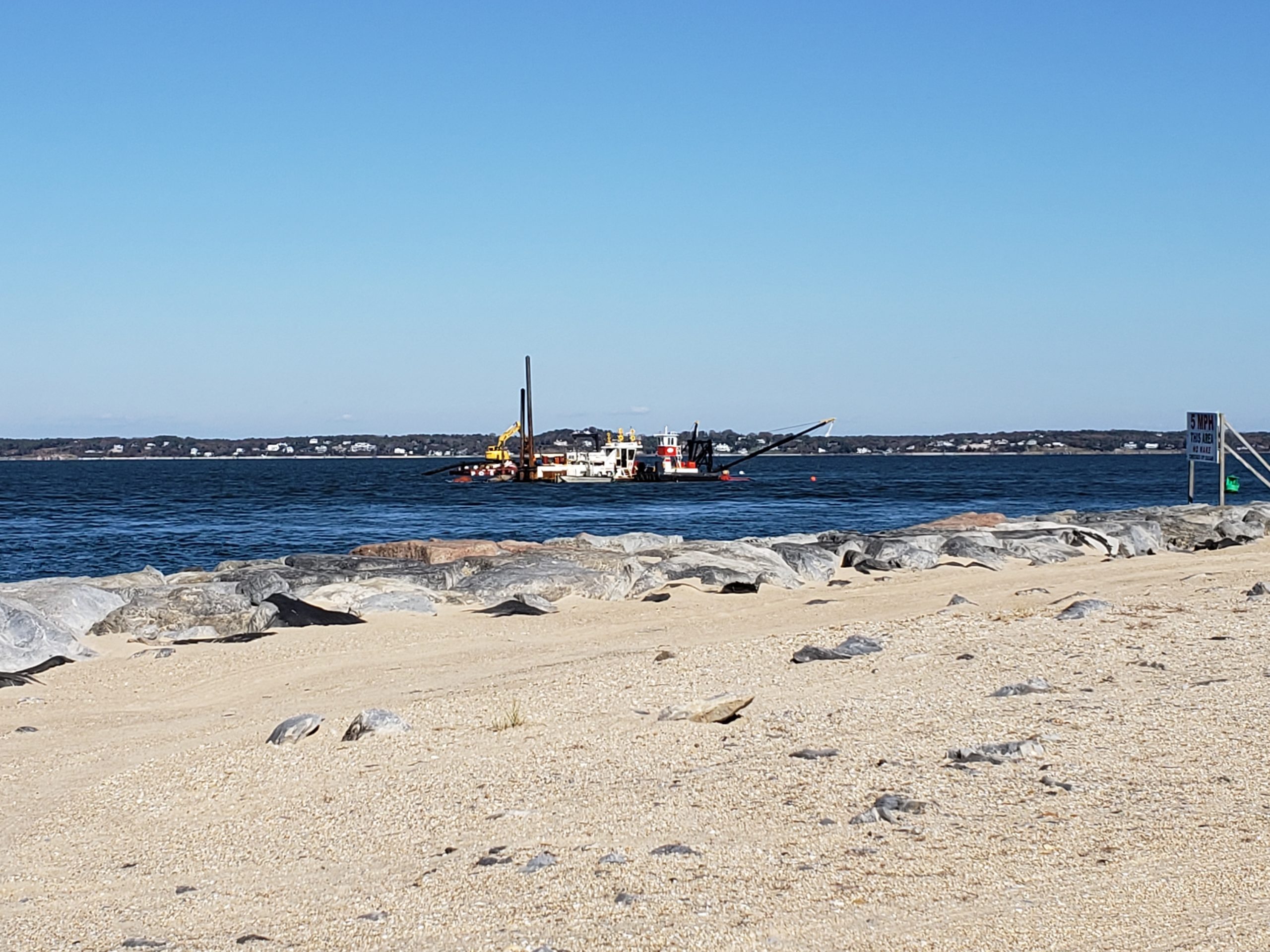
Southampton Town Supervisor Jay Schneiderman said this week that the Suffolk County dredge damaged the underwater water main in Shinnecock Bay.
The dredge did it — it knocked the water main “way out of whack,” Southampton Town Supervisor Jay Schneiderman confirmed on Thursday, December 19.
The Southampton Town Board at a meeting on Thursday voted to allocate $100,000 for the repair of the Hampton Bays Water District water main that officials said was damaged on December 10 by the Suffolk County dredge working in Shinnecock Bay. The underwater pipe supplies water to the eastern end of Dune Road in the hamlet, near the Shinnecock Inlet.
That Thursday night, the supervisor predicted that the dredge contractor’s insurance would cover the repair. H&L Contracting from Bay Shore handled the work.
There’s plenty of evidence to substantiate a claim, he explained. “It’s pretty straightforward,” he said.
Town officials know exactly when the damage occurred, because that’s when the water pressure dropped on Dune Road. There was an eyewitness account of the time a tugboat hauling the dredge pipe went under the Ponquogue Bridge and when it passed beneath the Post Lane Bridge in Quogue. The dredge pipe the tug was pulling also showed signs of having scraped against something, the supervisor said.
“We’re going to file a claim against the private company and hope their insurance pays it. Hampton Bays Water District ratepayers shouldn’t have to bear the cost of this,” Mr. Schneiderman said. “We’ll do our best to reclaim these funds for water district users.”
Suffolk County hired a subcontractor to dredge sand from inside Shinnecock Bay to the ocean-facing beach between the west jetty and Ponquogue Beach facility at the beginning of November, in an effort to slow down the erosion process. Approximately 90,000 cubic yards of sand was expected to be mobilized over the ensuing month; a quarter of it washed out to sea during subsequent storms.
The water main supplies water to the area near the Shinnecock Commercial Fishing Docks, Oakland’s and Sundays by the Bay in Hampton Bays. The morning of the incident, staff from East End Dive Services conducted visual and video surveys of the break. The 8-inch main was located about 15 feet underwater in the navigable channel of the bay and from the north side to the south side of the Old Ponquogue Bridge.
The day of the break, Walter Britton, owner of East End Dive Services said that although visibility was poor, it appeared as if the pipe had been dragged. Pieces of it were “offset,” he said.
This week, the professional diver said a 60-foot-long section of pipe “quite clearly” was dragged along the sea bottom, coming to a rest some 40 to 60 feet away from the main pipe. It “plowed its way into the mud,” Mr. Britton said.
Still, the pipe is “very rugged river pipe” built to survive heavy current. It’s salvageable, Mr. Britton said. Once the team of seven experienced divers and dive instructors pulled the broken pipe section to the surface, they found that a repair sleeve had been installed during an earlier break a few years ago. The pipe can be refurbished. “They don’t have to buy a new one — that saves a fortune,” Mr. Britton said.
Sleeves, known as repair glands, slide over the existing pipe, which comprises several tons of material. They’ll be used to join the separated parts of pipe as a coupling might.
Mr. Britton explained that there is a special cold weather process for working underwater in the wintertime, with specific steps taken to make sure sections of the dive gear doesn’t freeze. “It’s a bit of a challenge,” he acknowledged.
For each separate task, the appropriate diver in the right equipment is assigned, with some working underwater untethered. Wearing commercial grade equipment in the 45-degree water is key, Mr. Britton said.
“You try to stay as comfortable as you can,” he said.
East End Dive Services planned to work through the weekend to complete the repair by Monday or Tuesday.
At the Town Board meeting on Thursday, Mr. Schneiderman said he didn’t know whether $100,000 would be enough to cover the cost of the repair. “It might not be,” Mr. Britton agreed.
He was reluctant to offer an estimate of the cost, however. Too many unexpected factors, such as the weather, could play a part in the final cost of the project.
Nevertheless, the supervisor emphasized, “accidents happen.”
“We’re extremely grateful to Suffolk County for the work they did for navigational purposes and to rebuild the beach,” he added. “We’re really thankful. It’s unfortunate this occurred, but it doesn’t diminish how grateful we are.”


