


 1 Photo
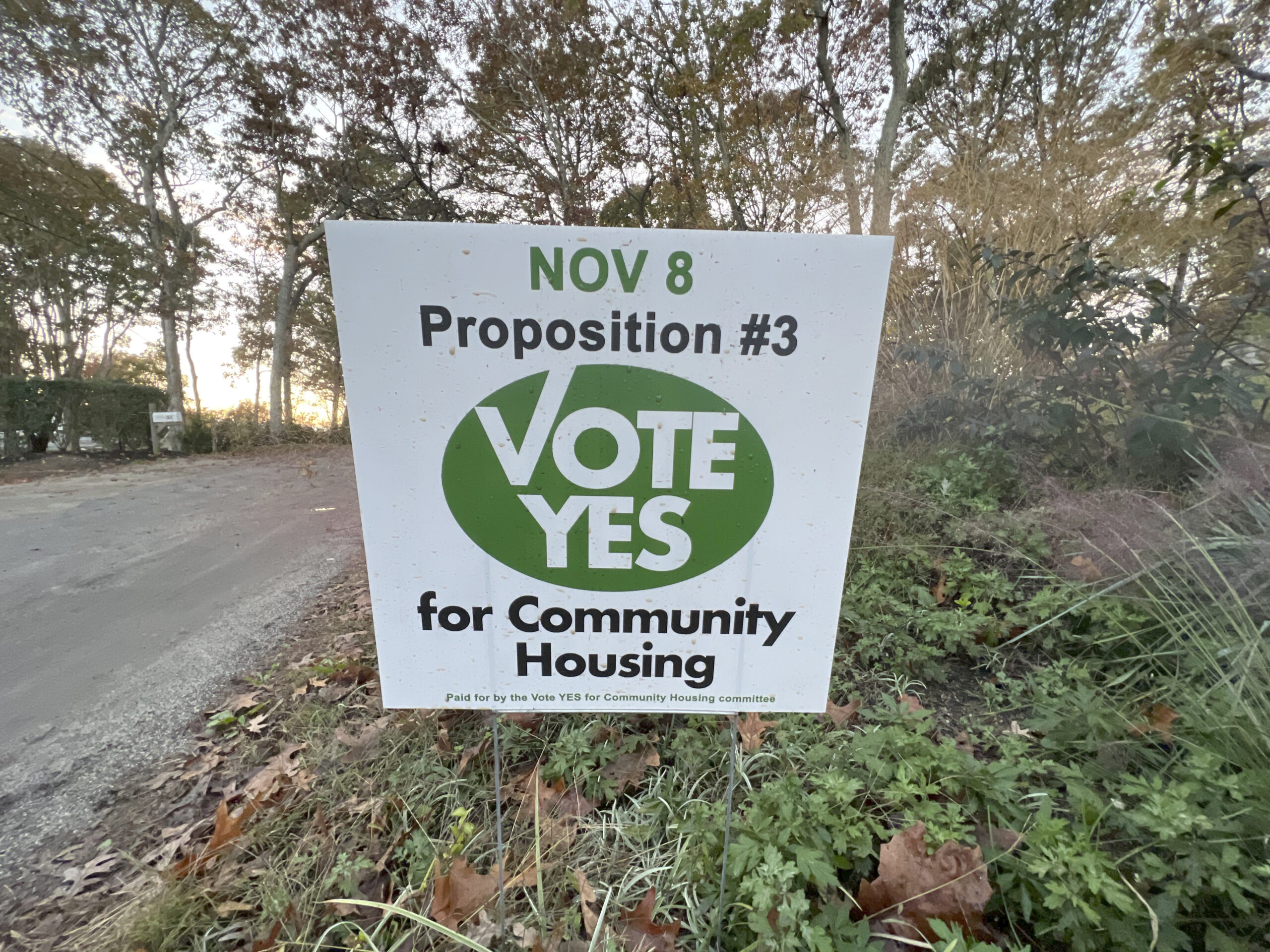
Voters in Southampton East Hampton and Southold approved the Community Housing Fund on Tuesday.
Southampton and East Hampton voters on Tuesday approved the creation of a Community Housing Fund, establishing a new pool of revenue from real estate sales taxes that will help the municipalities create more affordable housing opportunities through a variety of programs ranging from financial assistance for homebuyers to funding the construction of new apartment complexes.
In East Hampton Town, where many residents pay as much as 50 percent of their income for housing — the national average is 30 percent — the measure passed with resounding support from more than 68.5 percent of voters, 7,106-3,262.
In Southampton Town, the support was more tepid, 12,469-10,883, or about 53 percent in favor.
Southold Town residents also approved creating their own fund, and in Shelter Island the outcome is still uncertain: Residents there appear to have defeated the measure by just eight votes, though the tally is still unofficial.
Riverhead was the only East End town that did not put a Community Housing Fund referendum on the ballot this year.
The proposition on the ballot asked voters to approve the creation of the fund after the New York State Legislature and Governor Kathy Hochul gave the five towns permission to do so, contingent on voter approval, earlier this year. It was the second time the legislature had approved the measure; former Governor Andrew Cuomo had vetoed it in 2019.
The approval will now allow the towns to impose a new 0.5 percent tax on most real estate transactions over $400,000.
The approach is modeled after the hugely successful Community Preservation Fund created in 1999 that has raised nearly $2 billion on the East End for open space and historic preservation and water quality improvement projects. The CPF, which tacks on a 2 percent tax on real estate transactions, raised nearly $100 million in East Hampton in the last two years alone and nearly $200 million in Southampton Town.
But the same super-heated real estate market that has driven the soaring preservation revenues — as well as the removal of thousands of acres of land from development by the CPF itself — has pushed the cost of buying a home far out of reach of many local residents, and at the same time the rise of Airbnb and other rental sites has deleted thousands of units of formerly year-round rental housing from the market. The resultant crunch has left business shorthanded, families unable to remain in the region and led to gridlocked traffic on roadways as workers flood in from affordable towns to the west to work on the service-intensive homes in the Hamptons.
The housing fund was the brainchild of State Assemblyman Fred W. Thiele Jr., who also authored the CPF.
“I am thrilled that voters decided to tackle the affordable housing crisis head on by approving the Community Housing Fund,” Thiele said on Wednesday morning. “The need for housing is clear. The sustainability of our community depends on it. The referendum approval provides a new and important tool in the toolbox to provide our local families with new housing opportunities.”
State Senator Anthony Palumbo, who co-sponsored the CHF legislation said on Wednesday that he, too, was glad to see it approved by voters in the three towns.
“I am pleased to see the residents in several towns have approved our Community Housing Fund,” he said. “This fund will help to provide reasonably affordable homes to our children and workforce that we so desperately need on the East End.”
Each town will be able to begin taking out the additional tax as of January 1, 2023. The towns must adopt a strategic management plan for the use of the money, laying out exactly how the funds will be used.
Both towns have already presented plans that call for the use of money to bankroll the construction of rental apartments, purchase small homes on the open market that can then be sold with controls over their cost, help new and existing homeowners fund renovations or extensions to homes to allow for additional dwelling units, and, potentially, to help would-be homebuyers with down payments.
“This fund will create opportunities that will set the town on a path toward a sustainable future,” Southampton Town Director of Housing and Community Development Kara Bak said. “I am looking forward to the work ahead and working with the advisory board to create ways in which housing can be more affordable for the residents and workers of the town.”
Southampton Town Supervisor Jay Schneiderman said he was hopeful that the CHF “is as successful in creating housing opportunities as the CPF has been in preserving open space.”
East Hampton Town Supervisor Peter Van Scoyoc said that he is proud of the robust support East Hampton voters threw behind creating the fund. “We will now have additional resources to address the housing crisis, which has threatened to unravel the fabric of our community,” he said on Wednesday. “East Hampton has a big heart.”


 Michael Wright on Nov 9, 2022