


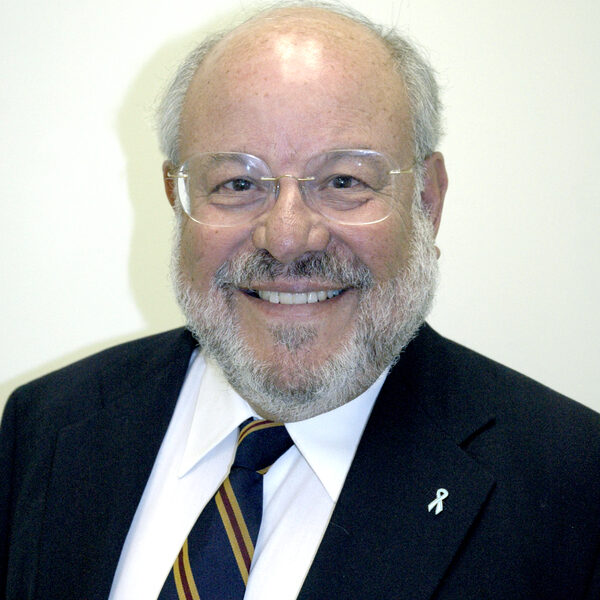
For Robert Vasiluth, it began on 9/11.
The operating engineer from Suffolk County was in Manhattan hoisting a section of a sign high up on the Renaissance Times Square Hotel when, just a few miles to the south, he saw the World Trade Center being struck.
“I saw the second plane hit,” recounted Vasiluth last week.
He went home to his family in Commack, he said, feeling “so terrible.”
And the next day, he was at Ground Zero, part of a “bucket brigade” that, hand to hand, was moving debris. Soon, his task was “cutting steel” so corpses could be found in the pile.
“This was the city I love,” said Vasiluth. And he was “seeing what the world destroyed looks like.”
From that experience, he committed himself to “saving life.”
Several weeks later, he was at Sunken Meadow State Park, and an alewife, a species of herring that returns to where it was born to lay eggs, had jumped out of the water and “was wriggling on the ground.” It had been blocked from getting to where it was born by a dam.
He picked up the alewife “so it could get back on its way.” It “swam away. I couldn’t get it out of my head. This fish needed help.”
Since, Vasiluth has been pushing for pathways so alewives can get around the dams, which, he said, exist now on Long Island in virtually all waterways in which alewives seek to return to spawn.
Then he joined with the organization Save the Sound to plant spartina grass to restore wetlands. And he began thinking about the vegetation beyond wetlands — notably, eelgrass.
He asked himself: How could eelgrass beds best be restored?
Eelgrass “is the foundation in the shallow sea,” notes Rob. “It’s a nursery ground for juvenile fish. It’s where scallops can thrive. Eelgrass produces oxygen. It slows down erosion. It’s a natural buffer. It neutralizes acidification. It absorbs carbon.”
But “95 percent of eelgrass in New York waters is gone,” he said.
There have been attempts to plant eelgrass seeds, but they have largely been unsuccessful. He studied the issue for months.
And then he came up with an idea: Using a glue to affix eelgrass seeds to clams. The clams with the seeds would, he figured, bury themselves in the sea bottom, and this way the seeds could far better germinate rather than just being scattered in the water, as was being tried.
Chris Pickerell, marine program director at Cornell Cooperative Extension of Suffolk County, opened its laboratory in Southold to Vasiluth for experimentation of the concept. And it worked.
The glue used? Cyanoacrylate. That’s the stuff that is the basis for Crazy Glue.
The germination rate of gluing eelgrass seeds to clams — five to 10 per clam — to produce eelgrass has turned out to be “phenomenal,” said Vasiluth. Eelgrass seeds, he explains, “are very similar to caraway seeds on the everything bagel.”
He has been involved — with Cornell Cooperative Extension, Save the Sound, The Nature Conservancy, Seatuck Environmental Association and the Stony Brook University School of Marine and Atmospheric Sciences — in the planting of eelgrass seeds on clams widely in waters off Long Island.
These include waters of the Long Island Sound off Stony Brook, in Sterling Harbor off Greenport, in the Great South Bay off Fire Island, and in Shinnecock Bay, assisted by the Science Club of Hampton Bays schools.
Last year, a major eelgrass seed collection initiative furthering Vasiluth’s concept began off Fishers Island, the little island two miles off Connecticut that’s part of Suffolk County. Save The Sound, in an online article on the project — which includes a photo of Vasiluth in a mask and scuba gear in the water holding up a bag of eelgrass seeds — notes that it is aimed at increasing “eelgrass propagation … using clams as an alternative to traditional planting methods.”
Fishers Island, the piece says, “is the home of the last best eelgrass habitat in the Long Island Sound due to the work of the Fishers Island Conservancy Eelgrass Management Program.”
An operating engineer skilled with working heavy equipment, age 53, the father of three, Vasiluth has invented a hugely important process for bringing back that vital aquatic vegetation, eelgrass.
From the devastation at Ground Zero, he is bringing back life to the sea.
More Posts from Karl Grossman


