


 3 Photos
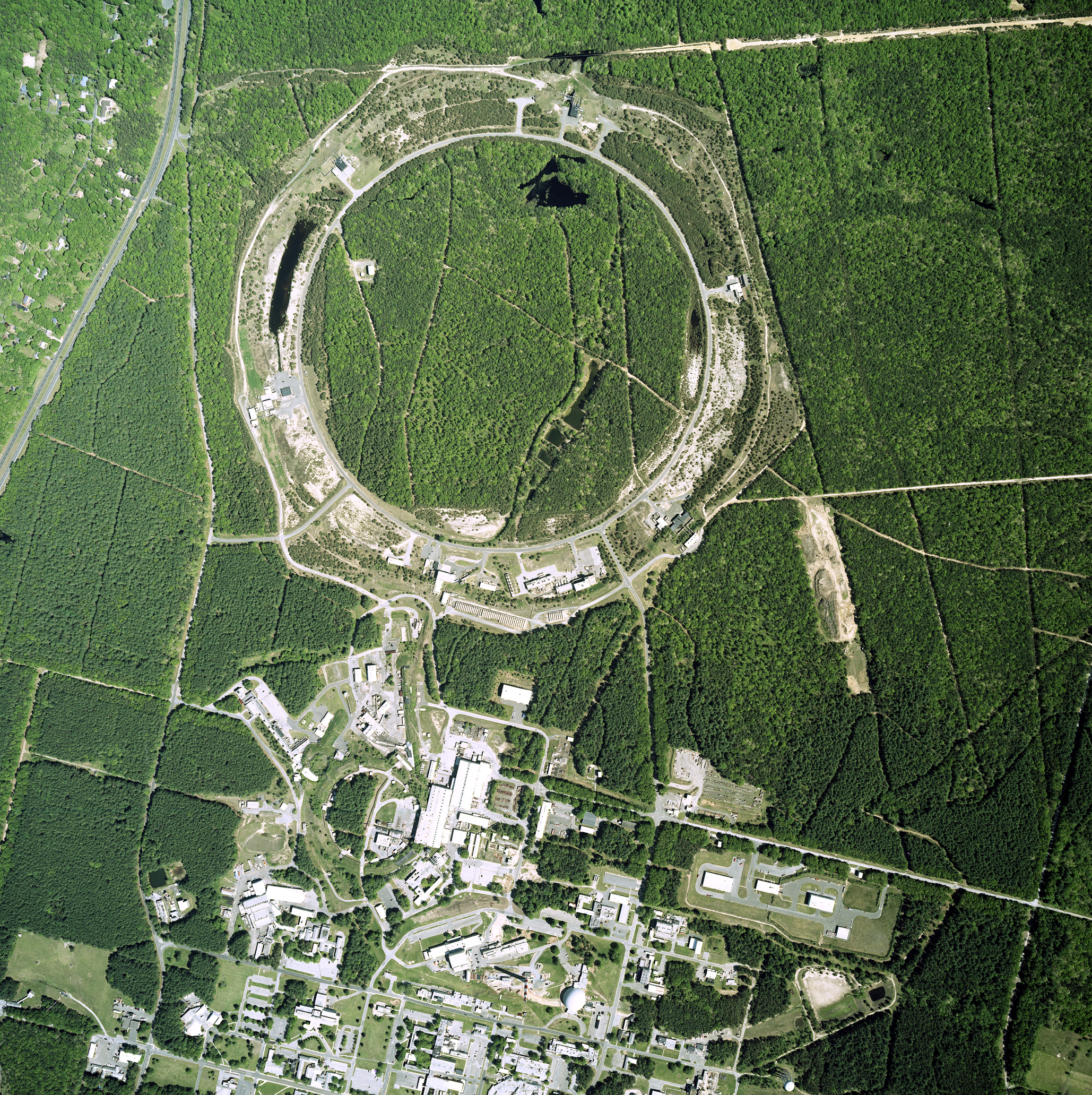
Brookhaven Lab anticipates new facility for Electron-Ion Collider.
Brookhaven Lab anticipates new facility for Electron-Ion Collider. COURTESY OF BROOKHAVEN NATIONAL LABORATORY
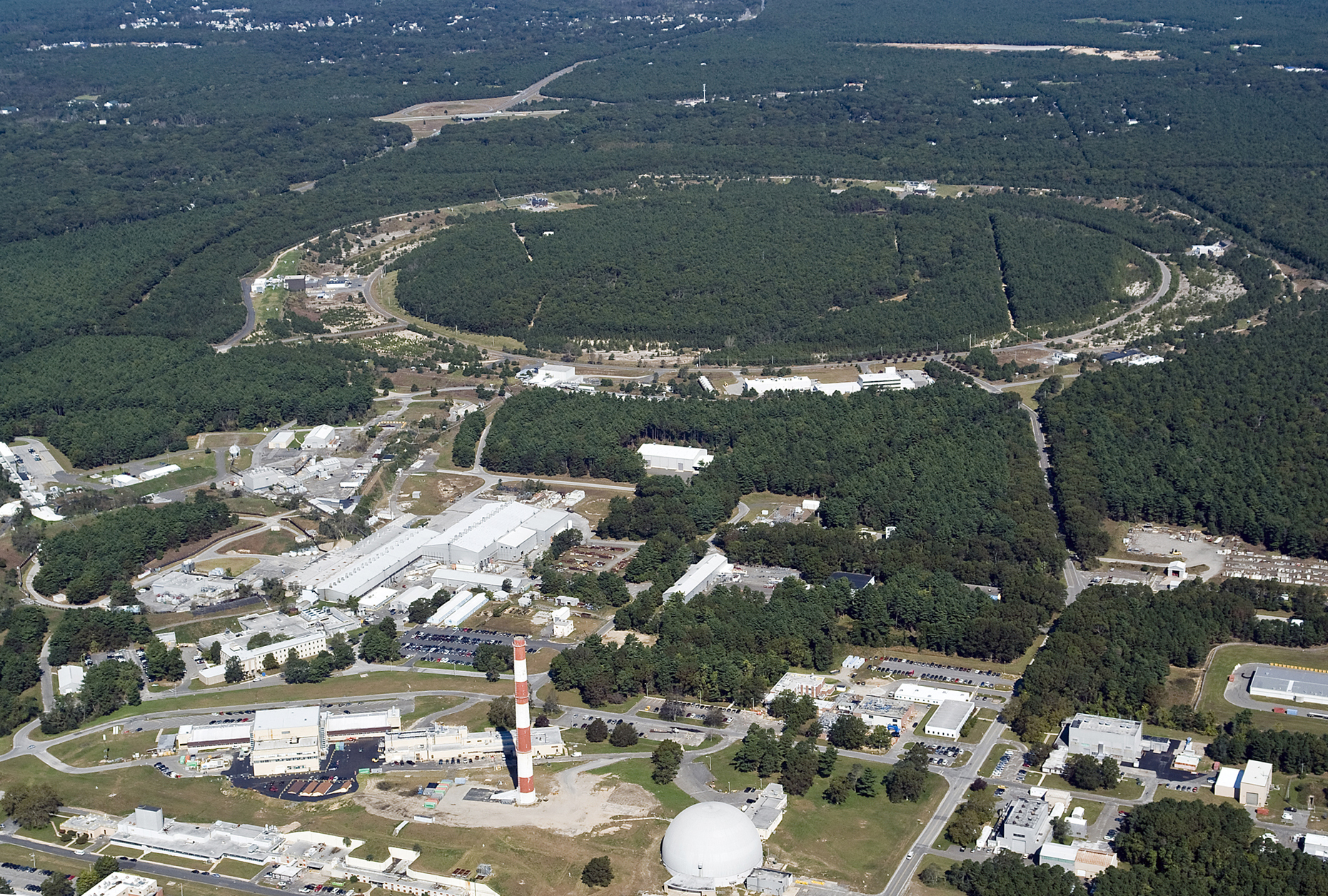
Brookhaven Lab anticipates new facility for Electron-Ion Collider. COURTESY OF BROOKHAVEN NATIONAL LABORATORY
Last week, the U.S. Department of Energy selected Brookhaven National Laboratory to be the home of an Electron-Ion Collider.
The $2 billion EIC — a particle accelerator that collides electrons with protons and nuclei to produce snapshots of those particles’ internal structure — is designed to give scientists the ability to more closely examine protons and neutrons.
Officials at BNL said the EIC would be a discovery machine for unlocking the secrets of the “glue” that binds the building blocks of visible matter in the universe, and will trigger technological breakthroughs that have broad-ranging impact on human health and national challenges.
The EIC will allow scientists to examine the smallest building blocks in the universe by colliding electrons with protons and nuclei to produce 3D images of their internal structure.
“The EIectron-Ion Collider will open up a new frontier in nuclear physics that will expand our knowledge of the fundamental constituents of the nuclei at the core of the atoms that make up all visible matter in the universe today, as well as the strong force that holds it all together,” laboratory spokesman Peter Genzer said. “These capabilities will unlock the secrets of the strongest force in nature and answer other longstanding questions in physics, including how the internal components of the proton generate its ‘spin’ and mass.”
According to officials at the lab, the EIC will allow scientists to look inside a nucleus to view gluons — particles that bind protons and neutrons of atomic nuclei — with a force 100 times stronger than the force that binds electrons to nuclei.
When more is learned about gluons and the strong force they have, scientists will better understand the universe, as well as discovering potential advances in technology.
The EIC can be compared to a hybrid of a CT scanner and MRI machine for examining nuclei.
The nuclear physics research facility has been discussed for over two decades. Mr. Genzer said the nuclear physics research facility is expected to be designed and constructed over a 10-year period, with intentions to be operational by early in the next decade, subject to congressional appropriations.
The EIC was recommended to the Department of Energy by the Nuclear Science Advisory Committee in 2015 as a high-priority for new facility construction.
In 2018, a National Academies of Science panel concluded that the construction of the EIC would ensure the continuation of the United States’ lead in nuclear science, accelerator science and technology of colliders.
In August 2019, Brookhaven and Jefferson labs submitted responses to the DOE’s proposal for construction of an EIC at the respective labs.
This week, the long wait for a final decision from the DOE ended.
“I’m thrilled that Brookhaven National Lab was chosen for this groundbreaking and important project and for the good-paying jobs and economic activity it will create right here on Long Island. We’ve always been a premier research corridor and this project furthers that end,” said Suffolk County Legislator Bridget Fleming.
U.S. Senator Kirsten Gillibrand was also pleased to hear the announcement.
“I am very pleased that Brookhaven National Laboratory was chosen to host a new, nuclear physics research facility that will help us understand the science that binds us together. The Electron-Ion Collider will help Brookhaven continue to push boundaries and be at the forefront of scientific progress, attract world-class scientists to Long Island, and grow the local high-tech economy,” she said in a press release.
U.S. Representative Lee Zeldin said he anticipates the many jobs the EIC will create for the district. “This cutting-edge project will inject billions of dollars and an extensive number of jobs into New York’s 1st Congressional District, all while churning out scores of scientific discoveries that help us understand the world around us,” he said in a press release.
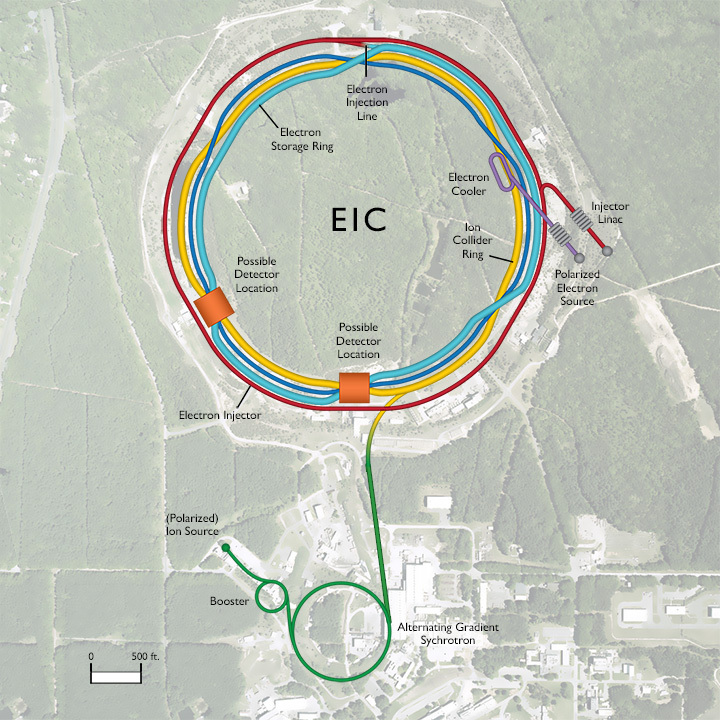
The EIC is composed of many parts. Brookhaven already has a Relativistic Heavy Ion Collider — a machine that is capable of colliding heavy ions to observe their reaction, and the EIC will add a new electron storage ring and electron accelerator to the existing framework of the RHIC.
According to Mr. Genzer, the EIC will fit within RHIC’s tunnel — reusing essential infrastructure and will also include at least one detector that will record the interactions between electrons and ions.


