


 1 Photo
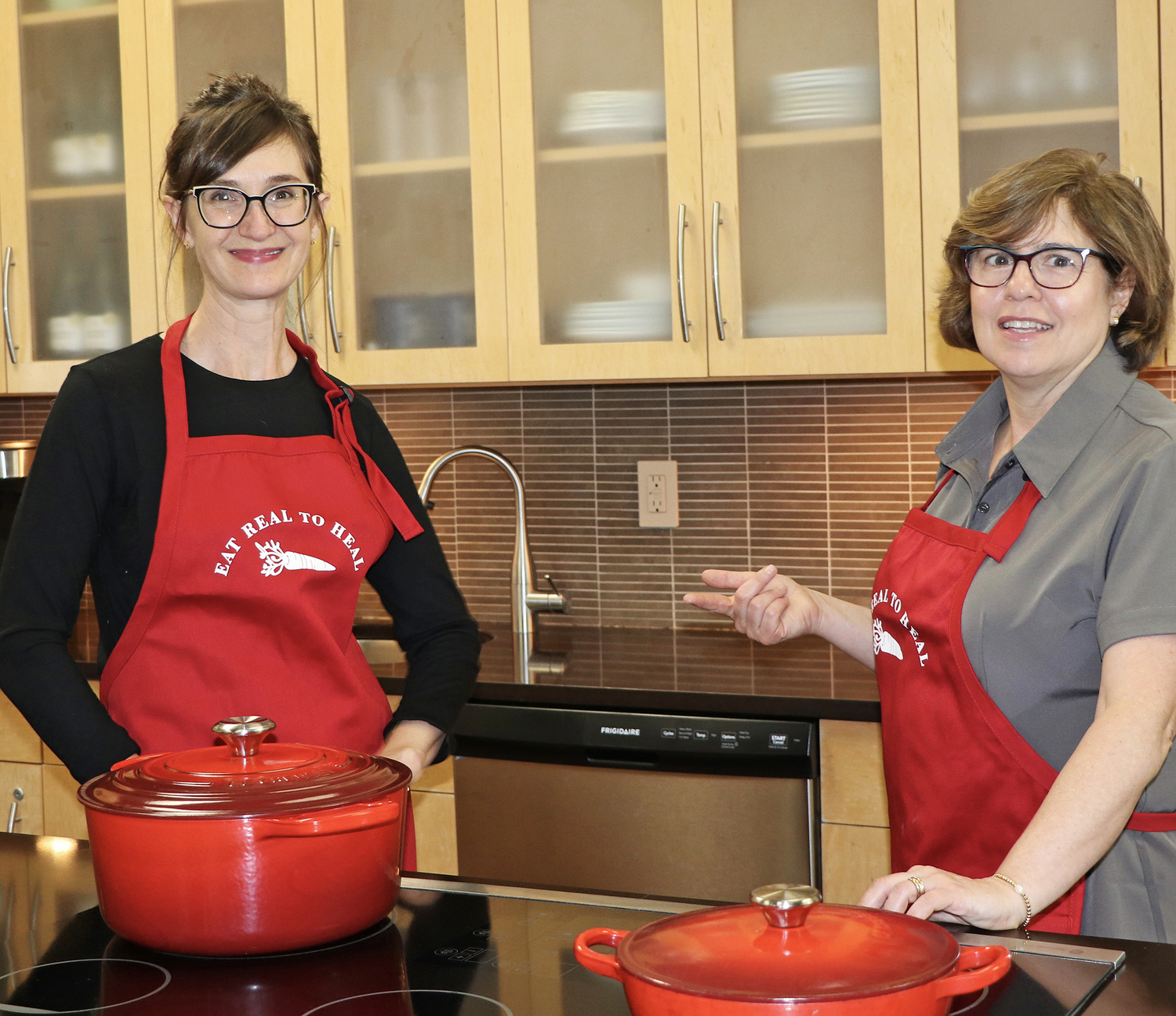
Sarah Cohen and Paula Montagna on the set of "Eat Well" at LTV Studios. BARBARA JO HOWARD
When physical therapist Sarah Cohen started the Center for Parkinson’s Disease at Stony Brook Southampton Hospital in 2017, the physical therapist launched with two programs: Rock Steady Boxing and Paint at the Parrish.
Over the past seven years, it has grown to host many more. And all of them are free.
“Word of mouth has enabled a lot of people living with Parkinson’s disease to know about us and to access our programs,” Cohen said, “and from that, we’ve adjusted and shifted based on what the community has identified as their needs or their wants, what they’re looking for.”
At any given moment, the center offers between nine and 11 programs, Cohen said. In addition to Rock Steady Boxing, fitness classes include chair yoga, Tai Chi and Qi Gong, and Be Fit, a 45-minute, virtual strength training class that helps improve strength, power, and functional mobility.
The center also holds support groups for not only the Parkinson’s community but their caretakers, as well. A unique offering, Movement and Mindfulness for Care Partners, helps promote healing and relaxation for loved ones.
“As we search for a cure, which I’m very hopeful will come, it’s important as health care providers that we support people living with Parkinson’s disease and their care support team, so that they can live their best lives,” Cohen said. “And there’s good evidence to suggest that people with Parkinson’s disease who exercise regularly do better than those who don’t.”
The third annual Virtual Walking Challenge is officially underway, she said, and will culminate at the end of April, which is Parkinson’s Disease Awareness Month. Last year, the group logged over 2,000 miles, she said.
“I encourage our community to walk, or step — so for people who are seated, they can step sitting and still track their steps,” Cohen said. “At the end of the month, we’re gonna go bowling and have an award ceremony and announce the winners.”
The center also holds workshops, like Drumming at the Parrish, a five-week session that will likely return in the fall, Cohen said. This spring, she expects the Water Mill museum will host a dance class pop-up for the Parkinson’s community, alongside its recurring painting classes.
Cohen is also rolling out “A Matter of Balance,” a national evidence-based falls prevention program for the general population, which she has helped adapt for the Parkinson’s community.
“To date, we have launched four virtual pilot workshops,” she said. “We’re still in the test, retest phase of the project, but we’re starting to look at the data and hopefully if we can show that it’s as effective as the general program that’s offered to the older adult community more broadly, we’ll be able to roll it out on a larger scale, which would be exciting.”
Last Monday, the Eat Well with Parkinson’s program, which focuses on nutritional concepts to optimize health and well-being, entered its next phase of growth when Cohen and Paula Montagna, director of clinical nutrition at Stony Brook Southampton Hospital, filmed the first episode of a nine-part series on Parkinson’s nutrition that will debut in May on LTV.
The hope is that it will expand its reach and audience, Cohen said, as the Sing Loud for PD did when it migrated to Zoom during the start of the COVID-19 pandemic and never left. Now, every week, over 200 singers register for class from across 42 states and six continents, she said.
“I receive emails from folks saying, ‘Please don’t stop this, because I don’t have Parkinson’s specific programs in my rural community,’” she said. “It’s been a real gift to be able to offer that to the broader community.”
For more information about programs designed specifically for individuals with Parkinson’s disease and their care partners, call 631-726-8800, or visit southampton.stonybrookmedicine.edu/services/parkinson-disease.


 Michelle Trauring on Apr 10, 2024